Australian Shepherd Dog: Exercise, Training, and Care Guide
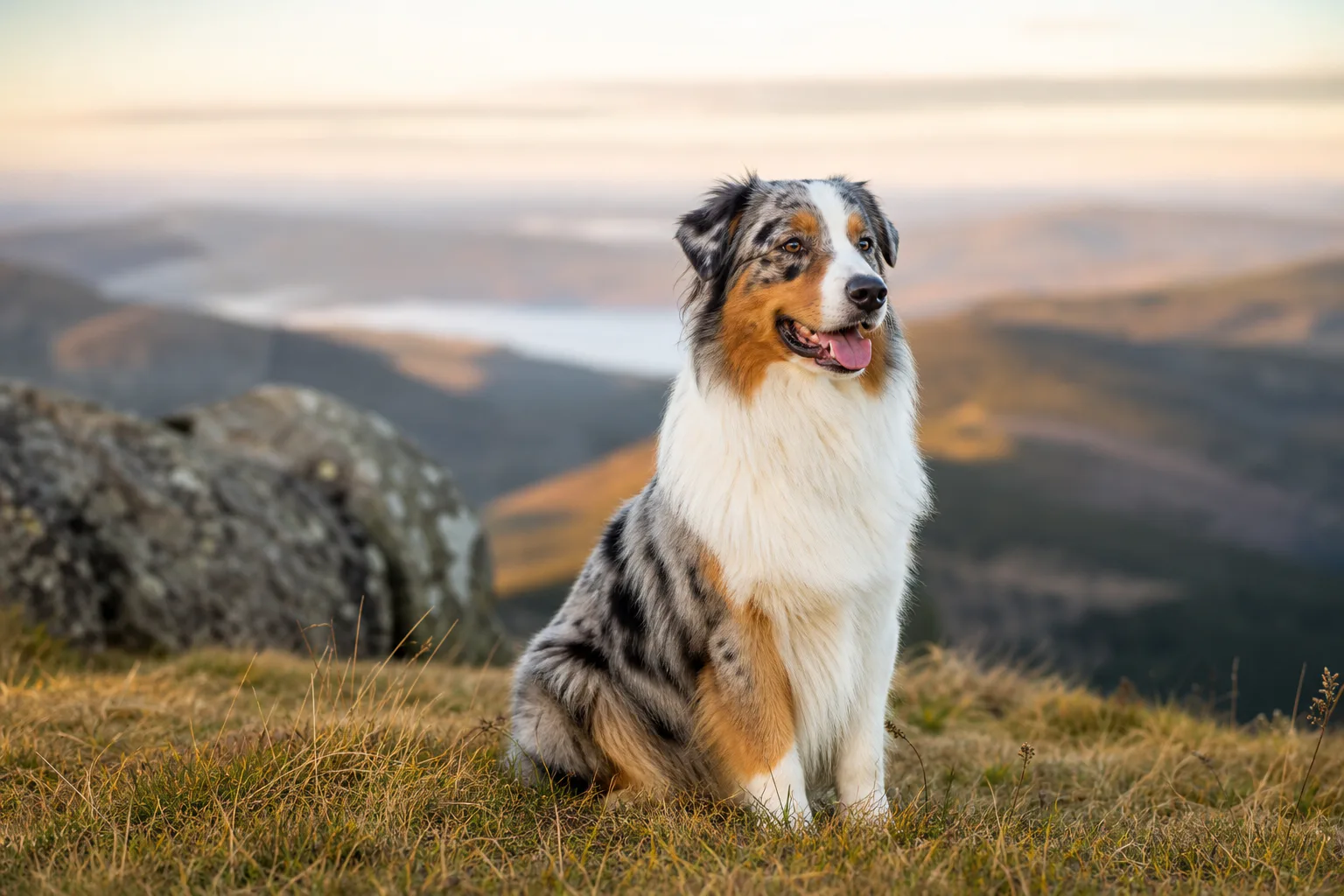
The Australian Shepherd Dog, often called the Aussie, is an intelligent, athletic herding breed developed in the United States. It suits active households that can provide daily exercise, structured training, companionship, and regular coat care, but it can become frustrated in a sedentary home.
This guide explains the breed’s size, temperament, exercise needs, grooming, health considerations, training priorities, and what to check before choosing an Australian Shepherd puppy or adult rescue.
Breed Profile
| Characteristic | Australian Shepherd |
|---|---|
| Common nickname | Aussie |
| Origin | United States |
| Height | Males: 20–23 inches; females: 18–21 inches |
| Weight | 35–70 pounds |
| Coat | Moderately long double coat |
| Recognized colors | Blue merle, red merle, solid black, and solid red, with possible white markings and tan points |
| Primary historical role | Herding and ranch work |
Despite its name, the Australian Shepherd was developed in America. Its working background is connected with ranching, sheep herding, and the western rodeo world, so modern Aussies often retain strong instincts to move, monitor, and control activity around them.
Temperament
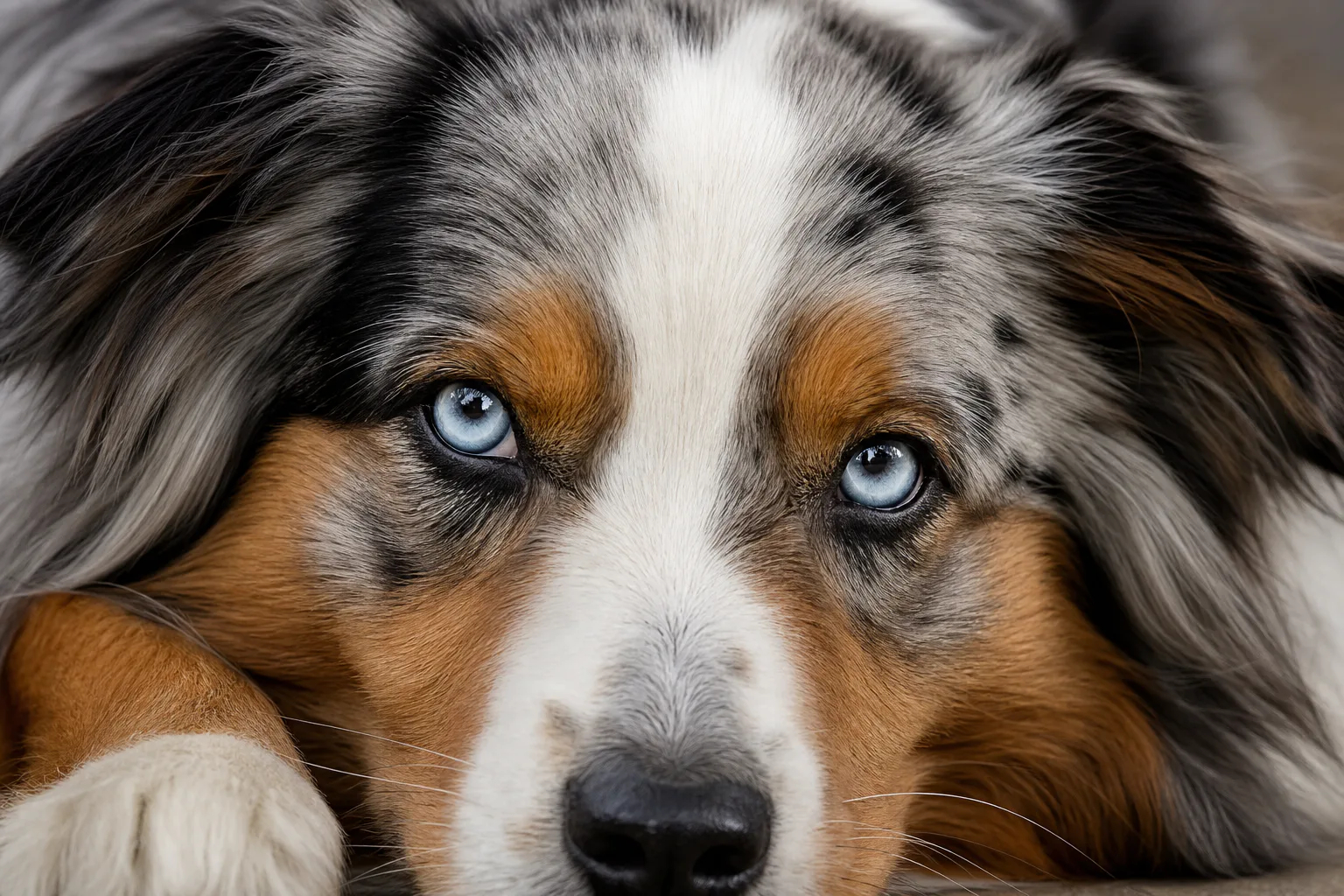
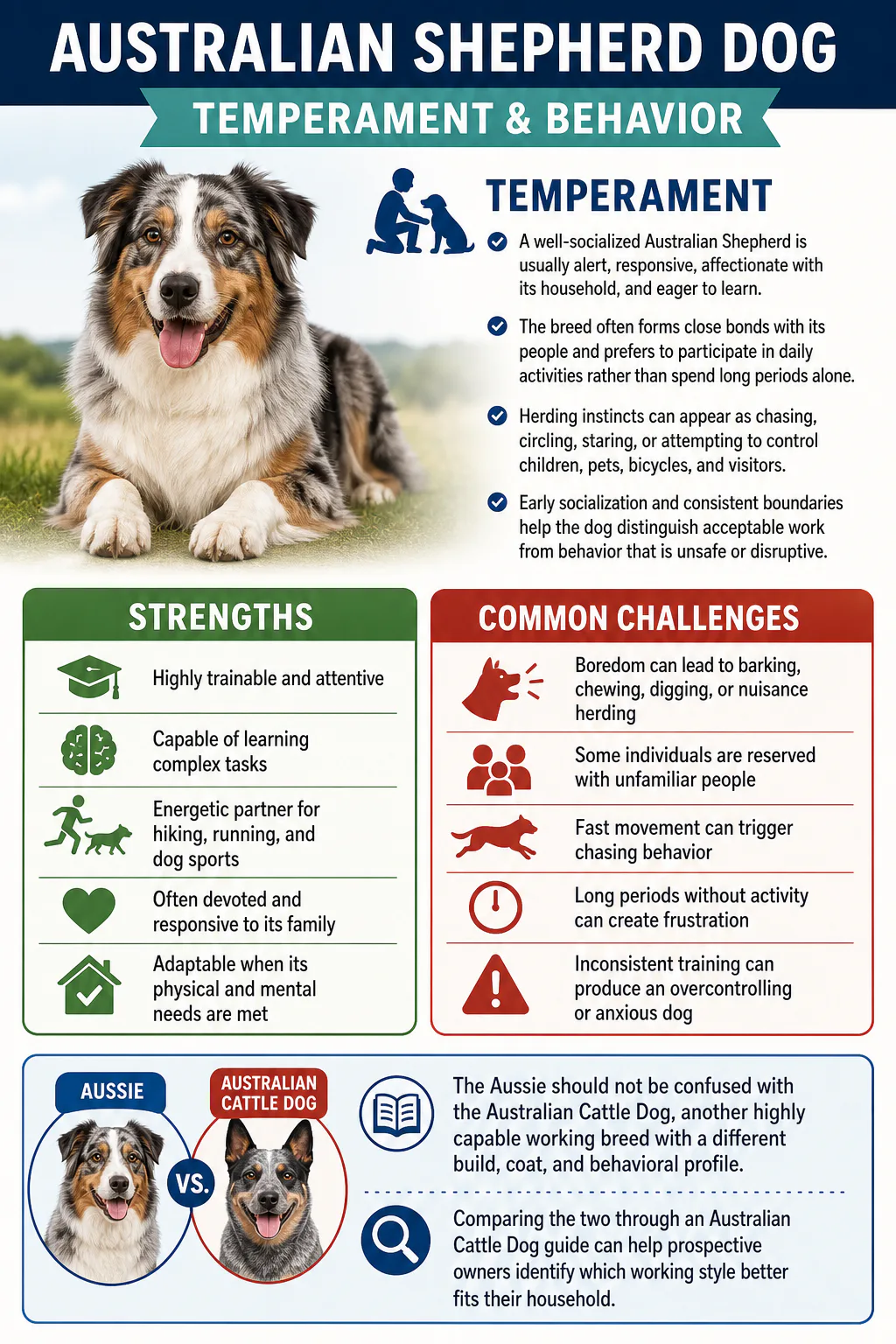
A well-socialized Australian Shepherd is usually alert, responsive, affectionate with its household, and eager to learn. The breed often forms close bonds with its people and prefers to participate in daily activities rather than spend long periods alone.
Herding instincts can appear as chasing, circling, staring, or attempting to control children, pets, bicycles, and visitors. Early socialization and consistent boundaries help the dog distinguish acceptable work from behavior that is unsafe or disruptive.
Strengths
- Highly trainable and attentive
- Capable of learning complex tasks
- Energetic partner for hiking, running, and dog sports
- Often devoted and responsive to its family
- Adaptable when its physical and mental needs are met
Common challenges
- Boredom can lead to barking, chewing, digging, or nuisance herding
- Some individuals are reserved with unfamiliar people
- Fast movement can trigger chasing behavior
- Long periods without activity can create frustration
- Inconsistent training can produce an overcontrolling or anxious dog
The Aussie should not be confused with the Australian Cattle Dog, another highly capable working breed with a different build, coat, and behavioral profile. Comparing the two through an Australian Cattle Dog guide can help prospective owners identify which working style better fits their household.
Exercise Needs
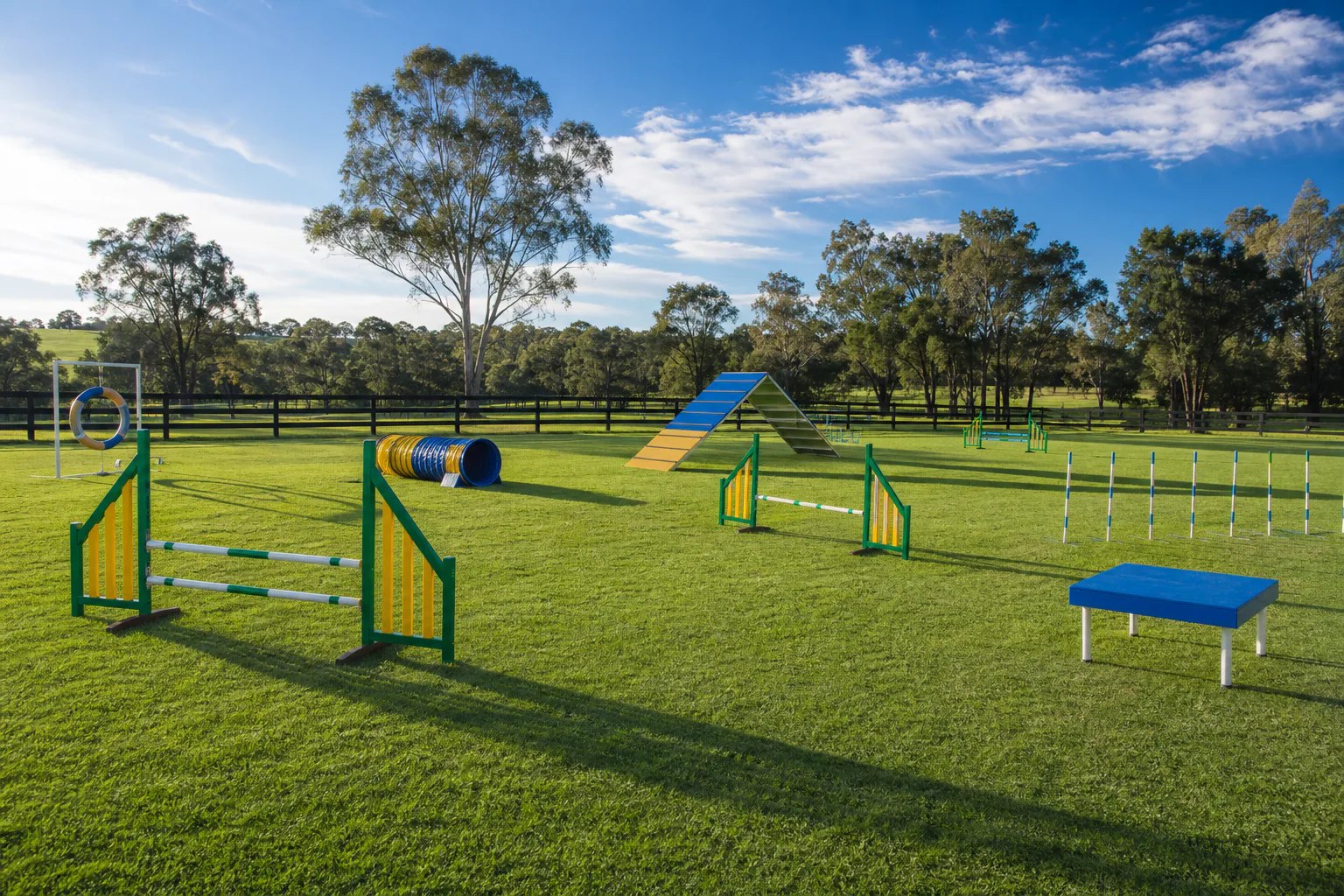
An Australian Shepherd needs more than a short walk around the block. Daily activity should combine physical movement with tasks that require attention, such as obedience practice, scent games, retrieving, agility foundations, or controlled herding activities.
Exercise should match the dog’s age and physical development. Puppies need frequent, brief training and play rather than forced endurance work, while adults generally benefit from a predictable routine that includes both active time and calm periods.
Useful activities
- Structured walks with opportunities to sniff
- Retrieving games with clear start and stop cues
- Obedience and trick training
- Agility, rally, dock diving, or similar dog sports
- Food puzzles and scent-based searches
- Hiking on suitable terrain after physical maturity
The breed’s work ethic resembles that of other demanding herding dogs, including the Australian Kelpie. That comparison is useful because both breeds need owners who enjoy active training rather than simply wanting a dog that looks athletic.
Training Priorities
Australian Shepherds learn quickly, including habits their owners did not intend to teach. Use reward-based training, clear cues, and consistent rules from the beginning. Short sessions repeated throughout the day usually work better than occasional, exhausting drills.
Start with these skills
- Responding reliably to its name
- Coming when called in controlled environments
- Walking without pulling
- Settling on a mat or bed
- Leaving people, animals, and objects alone on cue
- Accepting handling of the ears, paws, coat, and mouth
Recall deserves special attention because an energetic herding dog can move quickly toward roads, wildlife, or unfamiliar animals. Until recall is dependable, use secure fencing or a suitable long line instead of relying on the dog’s willingness to return.
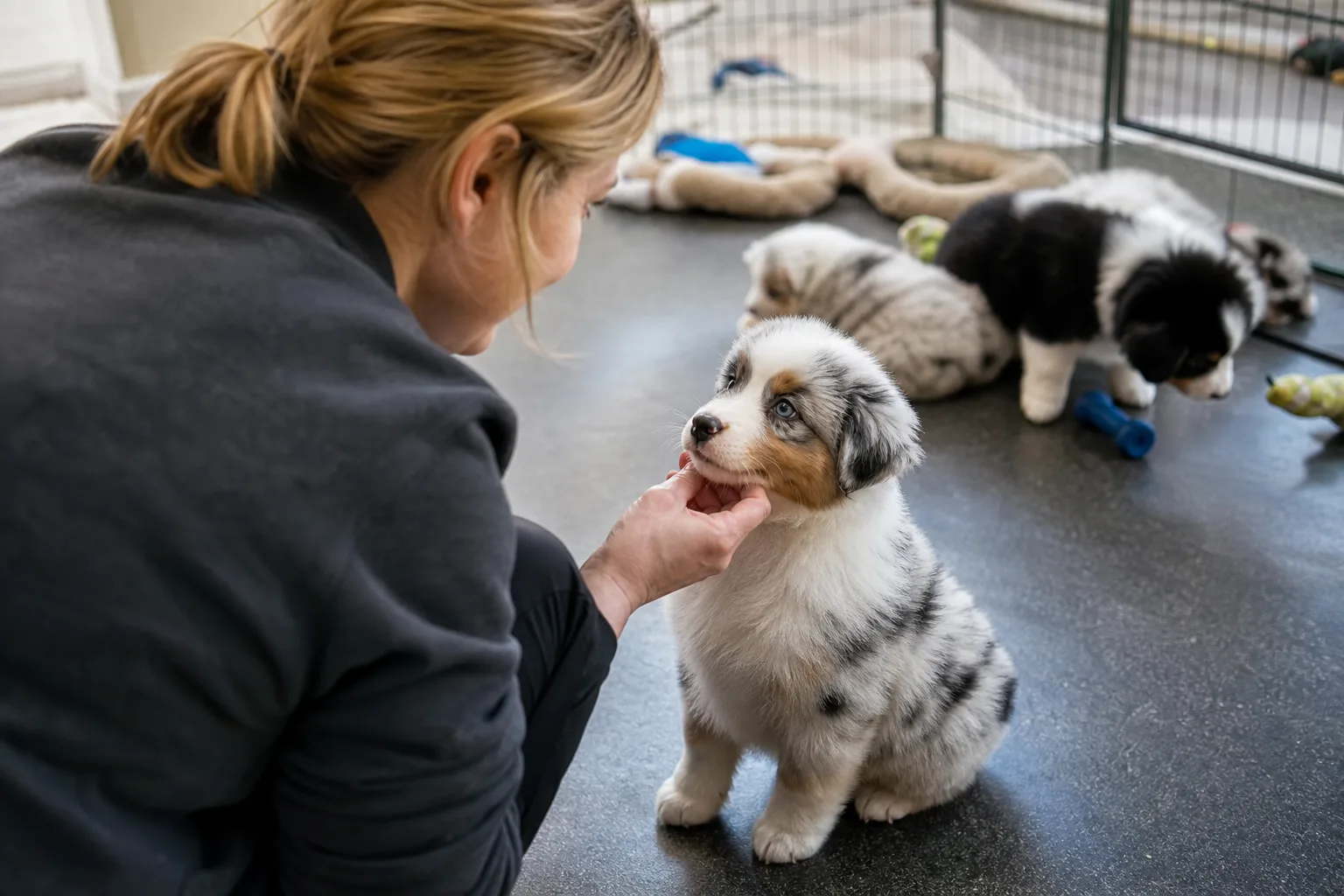
Socialization should expose the puppy to people, surfaces, sounds, vehicles, calm dogs, grooming, and veterinary handling in a controlled and positive way. The aim is not to make the dog greet everyone; it is to build calm, confident responses to ordinary experiences.
Coat Care
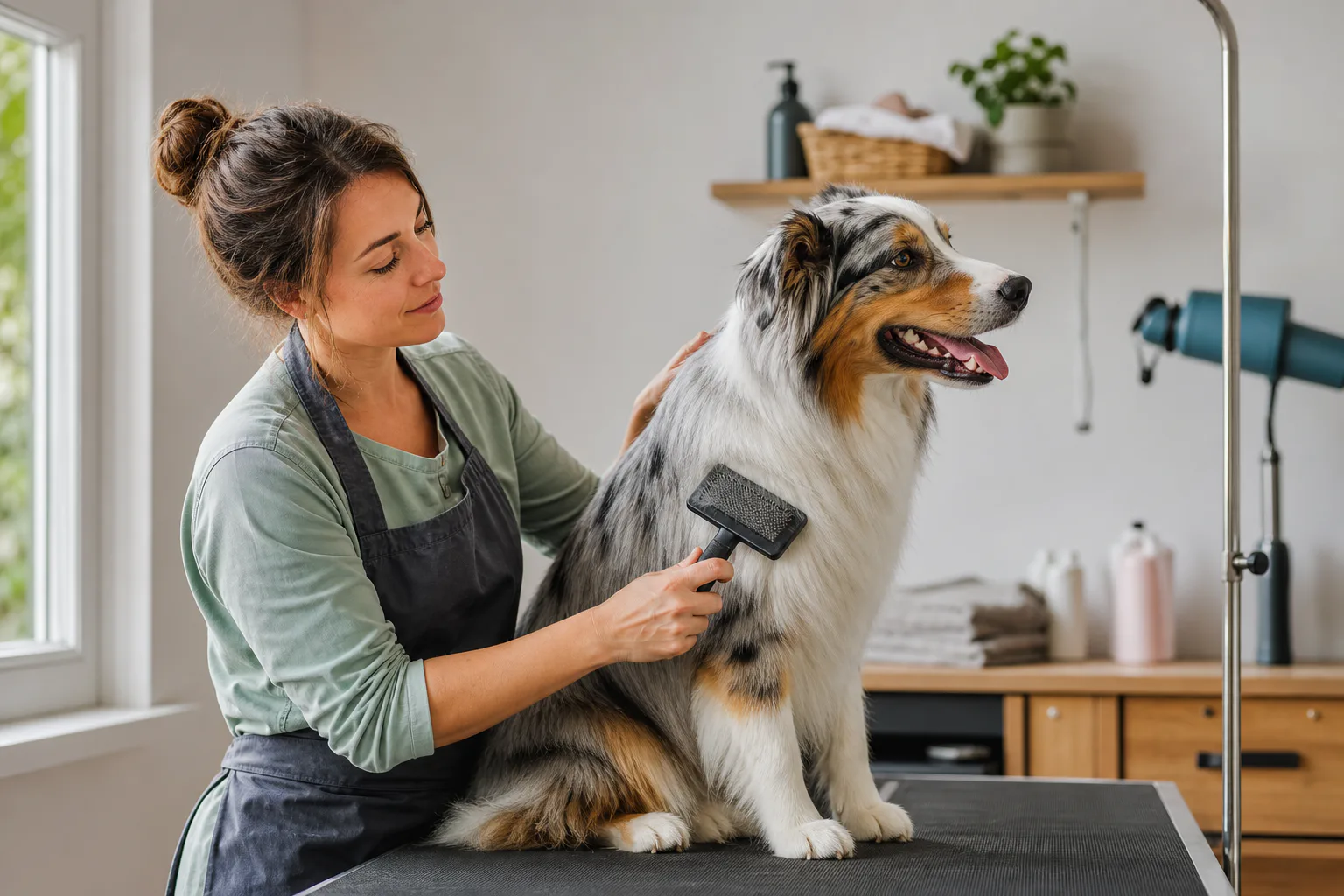
The Australian Shepherd has a moderately long double coat with a dense undercoat and a longer outer layer. The coat helps protect the dog from changing weather, but it also sheds and can form tangles behind the ears, around the collar, in the feathering, and between the rear legs.
Brush through the coat regularly with particular attention to friction areas. Bathing should be based on dirt, odor, and lifestyle rather than a fixed cosmetic schedule. Keep nails trimmed, check the ears, and introduce grooming gradually so routine care does not become a struggle.
Shaving the coat is not a substitute for brushing and can remove natural protection from sun and weather. Exceptions should be discussed with a veterinarian or qualified groomer when a medical problem requires clipping.
Health Considerations
Australian Shepherds can live active lives, but responsible ownership includes preventive veterinary care and attention to inherited conditions. Potential concerns in the breed include hip dysplasia, elbow dysplasia, hereditary eye disorders, epilepsy, and sensitivity associated with the MDR1 gene variant.
MDR1-related drug sensitivity can affect how a dog responds to certain medications. A veterinarian can advise whether genetic testing is appropriate and can record the result before prescribing drugs that require extra caution.
Questions for breeders
- Which health evaluations were completed for both parents?
- Are hip, elbow, and eye results documented?
- Has genetic testing been performed for relevant inherited conditions?
- What health guarantees and veterinary records accompany the puppy?
- How were the puppies socialized and introduced to handling?
- Can you meet the mother and see where the puppies are raised?
Health paperwork should support, not replace, an independent veterinary examination. A new owner should arrange a prompt first visit, confirm vaccination and parasite-control records, and discuss nutrition, growth, exercise, and preventive care.
Australian Shepherd Puppies
A puppy’s early behavior offers useful clues, but it does not guarantee its adult temperament. Look for a puppy that is alert, able to recover from mild surprises, comfortable being handled, and raised in a clean environment with appropriate human contact.
Choose the breeder or rescue organization before focusing on coat color. Blue merle and red merle patterns are attractive, but appearance should never outweigh health testing, stable temperament, sound structure, and careful early socialization.
Be especially cautious about claims involving “teacup” or “toy” Australian Shepherds. The American Kennel Club recognizes the smaller related breed as the Miniature American Shepherd, while teacup and toy varieties do not have an AKC breed standard.
Adoption and Ownership
An Australian Shepherd Dog for sale should come with clear information about age, medical history, identification, temperament, and return arrangements. Avoid making a decision based solely on photographs or coat color, particularly when the seller cannot provide verifiable records or answer detailed questions about the dog’s behavior.
Rescue can be an excellent route for finding an adult Aussie whose personality, activity level, and training needs are easier to evaluate. Ask whether the dog has lived with children, cats, other dogs, or livestock, and whether it shows separation distress, guarding, chasing, or handling sensitivity.
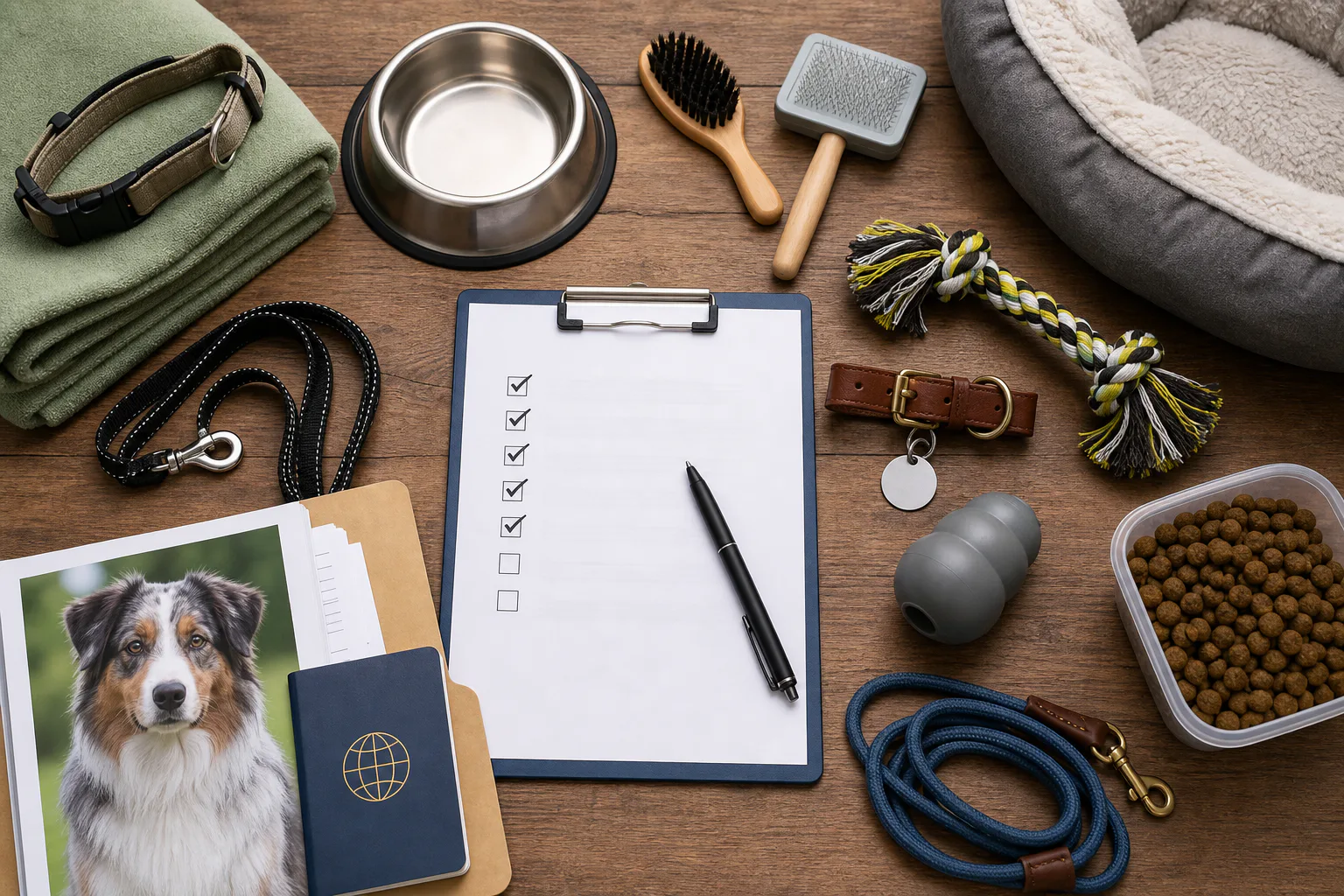
Before bringing one home, prepare secure fencing, a sleeping area, food and water equipment, grooming tools, identification, and a training plan. The household should also agree on rules for furniture, visitors, greetings, jumping, and access to doors or vehicles.
Pros and Cons
| Advantages | Challenges |
|---|---|
| Intelligent and highly trainable | Requires substantial daily engagement |
| Enjoys active outdoor lifestyles | Can develop unwanted behaviors when bored |
| Often deeply bonded with its family | May herd children, pets, or moving objects |
| Versatile in obedience and dog sports | Regular brushing is necessary |
| Can thrive with structure and clear routines | Not ideal for owners seeking a low-activity companion |
Is an Aussie Right for You?
The breed is a strong match for someone who wants an involved training partner and can provide daily physical and mental activity. It is less suitable for a home where the dog will be alone most of the day, receive only minimal exercise, or be expected to remain quiet and inactive without preparation.
Consider your schedule, access to safe exercise, tolerance for shedding, willingness to train, and plans for the dog during travel or long workdays. A realistic assessment before adoption is more valuable than choosing on appearance alone.
Frequently Asked Questions
Is the Australian Shepherd a good family dog?
It can be, especially in an active family prepared to supervise interactions and teach children how to respect the dog’s space. Its herding behavior and energy require training, management, and age-appropriate activity rather than unrestricted play.
Does an Australian Shepherd shed?
Yes. Its double coat sheds, with heavier shedding periods for many dogs. Regular brushing reduces loose hair around the home and helps owners find tangles, skin changes, or parasites early.
Are Australian Shepherds easy to train?
They are generally responsive and quick to learn, but intelligence does not remove the need for consistency. Without clear guidance, an Aussie can learn unwanted behaviors just as quickly as desirable ones.
Can an Australian Shepherd live in an apartment?
Apartment living is possible for an individual dog if the owner provides adequate daily exercise, training, enrichment, and quiet-time practice. A large home does not compensate for insufficient engagement, while a smaller home can work with a carefully planned routine.
Final Recommendation
Choose an Australian Shepherd Dog if you want an energetic, attentive companion and are prepared to make training part of everyday life. Prioritize stable temperament, documented health care, appropriate socialization, and a clear exercise plan over color, size, or impulse.