Alaskan Malamute Dog Breed: Traits, Care, and History
Powerful, independent, and built for endurance, the Alaskan Malamute Dog Breed is a working dog best suited to an active household that can provide daily exercise, training, grooming, and companionship. It is affectionate with its family, but its size, strength, intelligence, and sometimes stubborn nature require thoughtful ownership. This guide explains the breed’s history, appearance, temperament, care needs, health considerations, and suitability for different homes.
Alaskan Malamute At A Glance
| Characteristic | Typical information |
|---|---|
| Origin | Alaska |
| Original purpose | Pulling heavy loads over long distances |
| Height | Males: 25 inches; females: 23 inches |
| Weight | Males: 84 pounds; females: 75 pounds |
| Coat | Thick double coat with a plush undercoat |
| Common colors | Gray, sable, black, red, brown, and all white, usually with white markings |
| Life expectancy | 10 to 14 years |
| State association | State dog of Alaska |
History And Purpose
The Alaskan Malamute was developed by the Mahlemut, a nomadic Inuit people of Alaska. These dogs were valued for their ability to pull heavy loads across long distances, often in severe weather. Unlike lighter sled dogs bred primarily for speed, Malamutes were selected for strength, stamina, and dependable teamwork.
The breed’s dense double coat, furred ears, compact build, and plume-like tail reflect its Arctic working heritage. As sled racing became popular, faster and smaller dogs were crossed with some Malamutes, and the original type declined. Remote Alaskan communities helped preserve the breed, which gained American Kennel Club recognition in 1936.
Appearance And Size
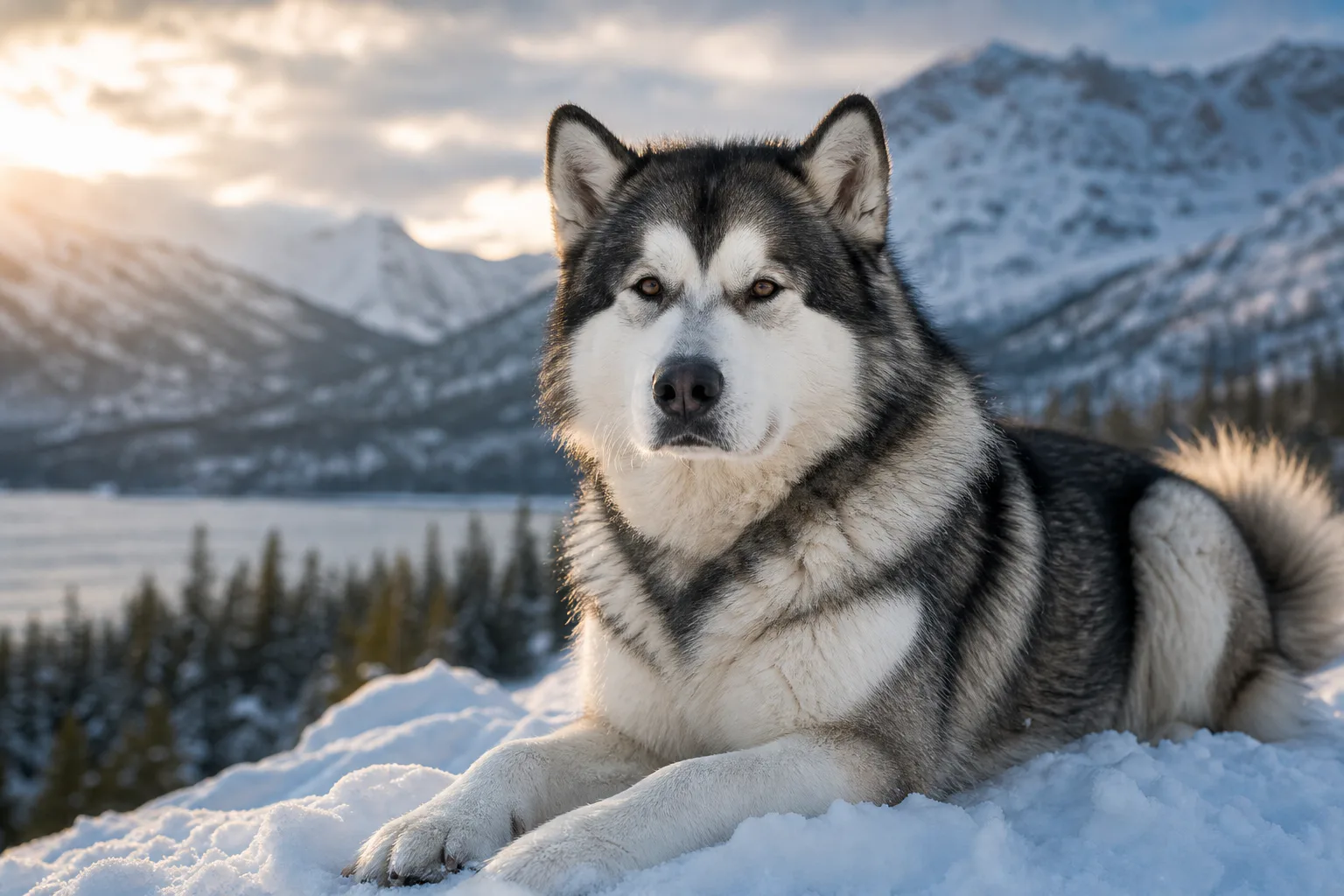
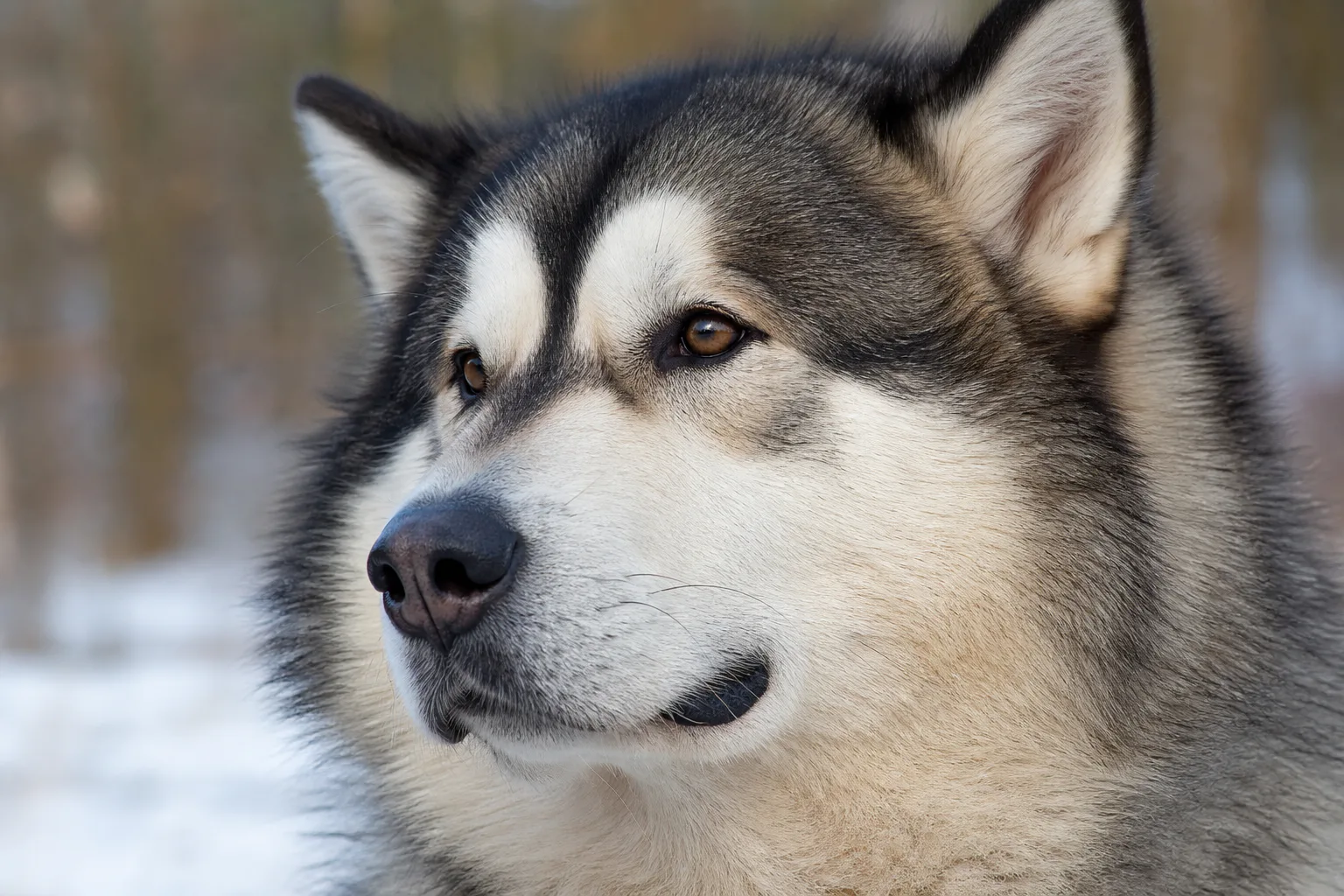
An adult Malamute has a broad head, erect triangular ears, a substantial muzzle, and a strong, muscular body. Its tail is carried over the back in a sweeping plume rather than hanging loosely. The overall impression should be powerful and balanced, not delicate or excessively heavy.
Males commonly stand about 25 inches at the shoulder and weigh 84 pounds, while females commonly stand about 23 inches and weigh 75 pounds. Individual dogs can fall outside these figures, so body condition matters more than a target number. A healthy Malamute should have visible athletic structure without being underweight.
The coat may be gray, sable, black, red, brown, or all white, with white commonly appearing on the face, legs, underside, and parts of the body. The outer coat protects against weather, while the plush undercoat provides insulation. This coat also means the breed sheds heavily, particularly during seasonal coat changes.
Temperament And Behavior
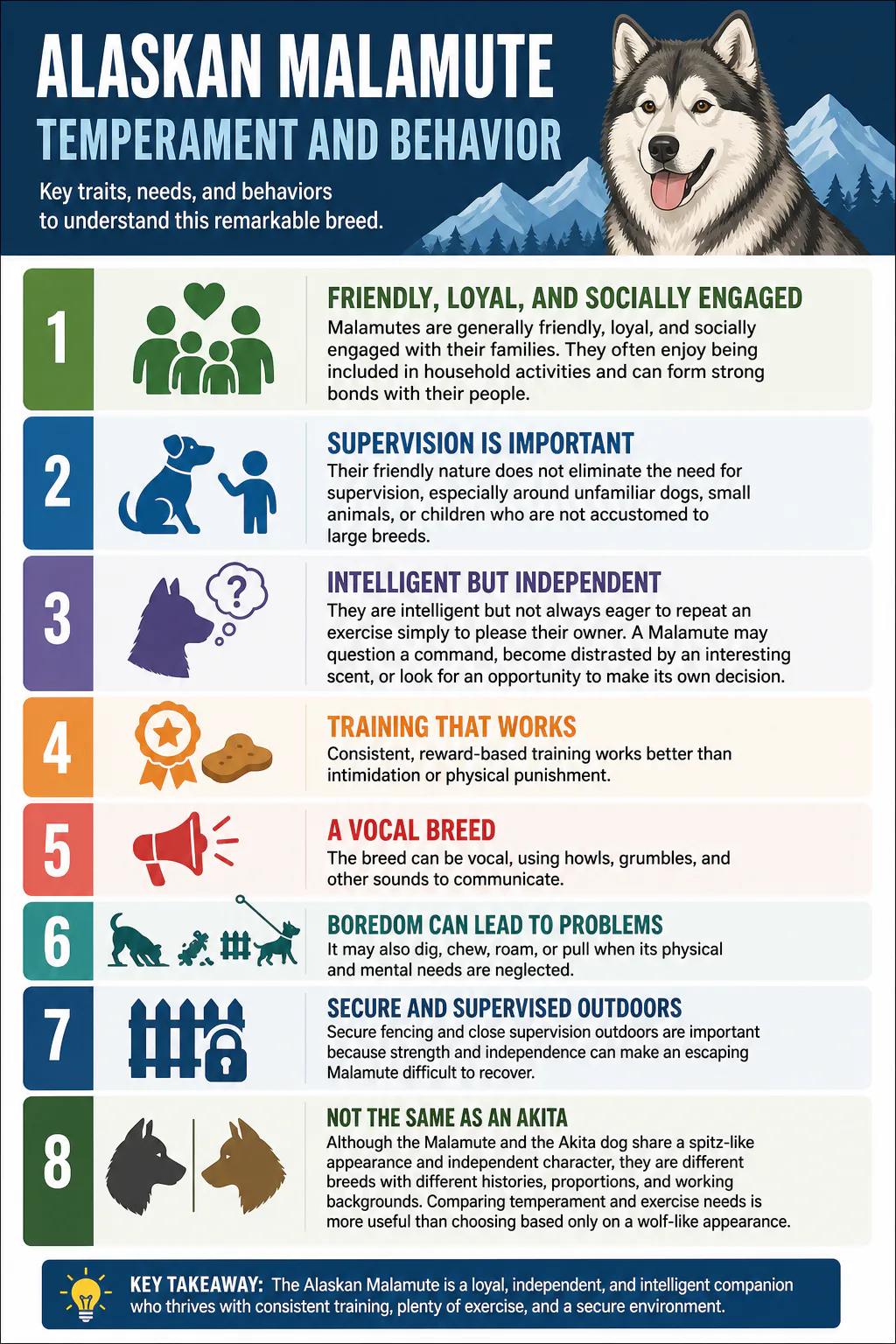
Malamutes are generally friendly, loyal, and socially engaged with their families. They often enjoy being included in household activities and can form strong bonds with their people. Their friendly nature does not eliminate the need for supervision, especially around unfamiliar dogs, small animals, or children who are not accustomed to large breeds.
They are intelligent but not always eager to repeat an exercise simply to please their owner. A Malamute may question a command, become distracted by an interesting scent, or look for an opportunity to make its own decision. Consistent, reward-based training works better than intimidation or physical punishment.
The breed can be vocal, using howls, grumbles, and other sounds to communicate. It may also dig, chew, roam, or pull when its physical and mental needs are neglected. Secure fencing and close supervision outdoors are important because strength and independence can make an escaping Malamute difficult to recover.
Although the Malamute and the Akita dog share a spitz-like appearance and independent character, they are different breeds with different histories, proportions, and working backgrounds. Comparing temperament and exercise needs is more useful than choosing based only on a wolf-like appearance.
Exercise Requirements
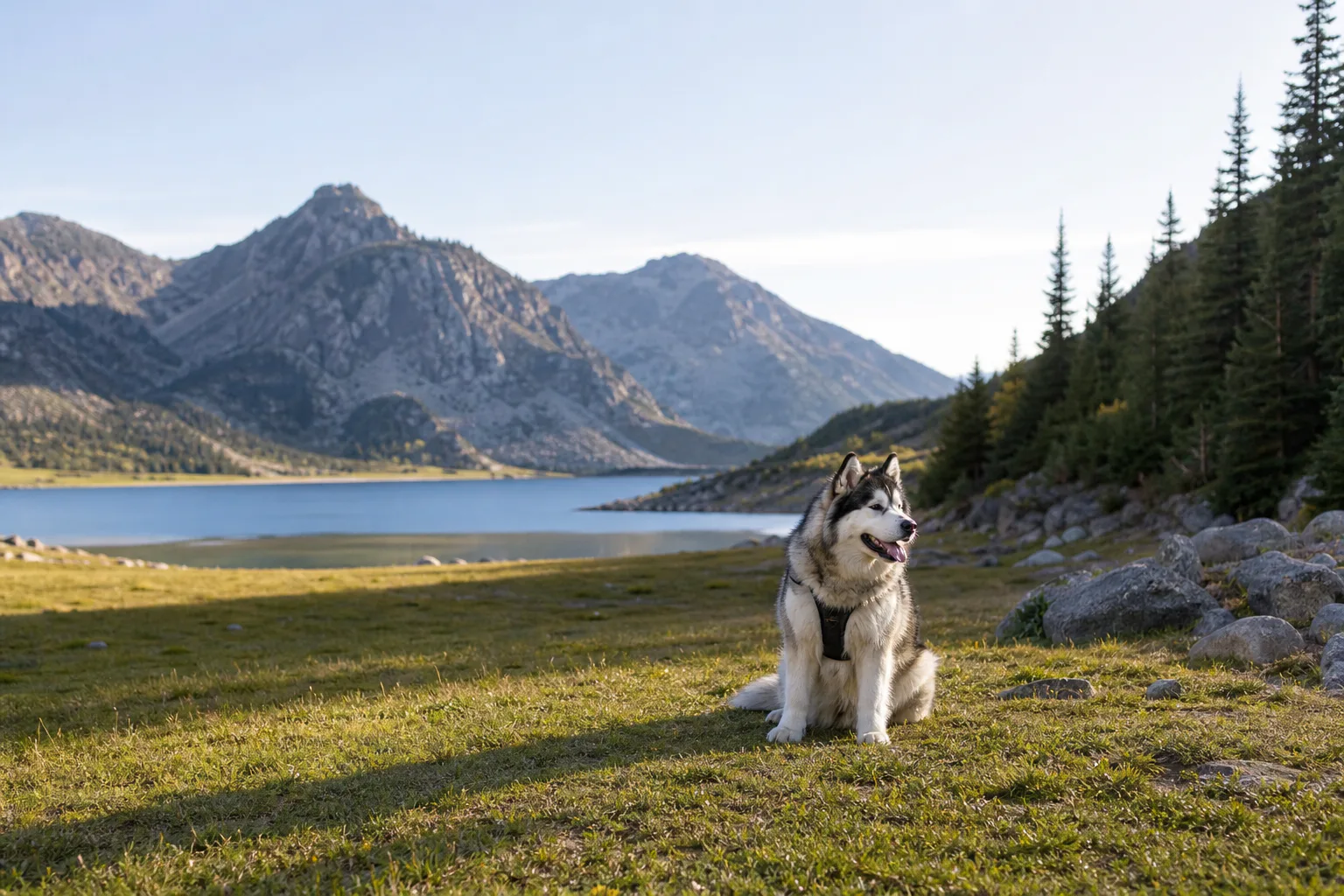
This is an active working breed that needs regular movement and purposeful activity. A short walk alone is rarely enough for an adult Malamute, particularly if the dog spends the rest of the day without play, training, or interaction.
- Brisk walks or hikes suited to the dog’s fitness level
- Structured obedience and scent-based games
- Load-pulling or dog-powered activities under appropriate guidance
- Interactive play that does not encourage unsafe jumping or rough handling
- Training sessions that provide mental challenge as well as physical movement
Exercise should be adjusted for age, weather, body condition, and veterinary advice. Puppies need controlled activity while their bones and joints develop, rather than forced running or repetitive jumping. In hot weather, exercise should take place during cooler periods because the dense coat increases the risk of overheating.
Training A Malamute
Begin training and socialization early, using short sessions with clear expectations. The most important skills include loose-leash walking, recall, staying calm during handling, waiting at doors, and responding reliably around distractions.
Early socialization should expose the puppy gradually to different people, environments, surfaces, sounds, and grooming routines. The goal is confident, controlled behavior, not forced interaction with every person or dog. A well-socialized Malamute still needs boundaries and supervision.
Because the breed is strong enough to pull an adult, leash manners are a safety issue rather than a minor convenience. Training should begin before the puppy reaches full size. Owners should also teach calm behavior around food, toys, visitors, and household handling.
Grooming And Home Care
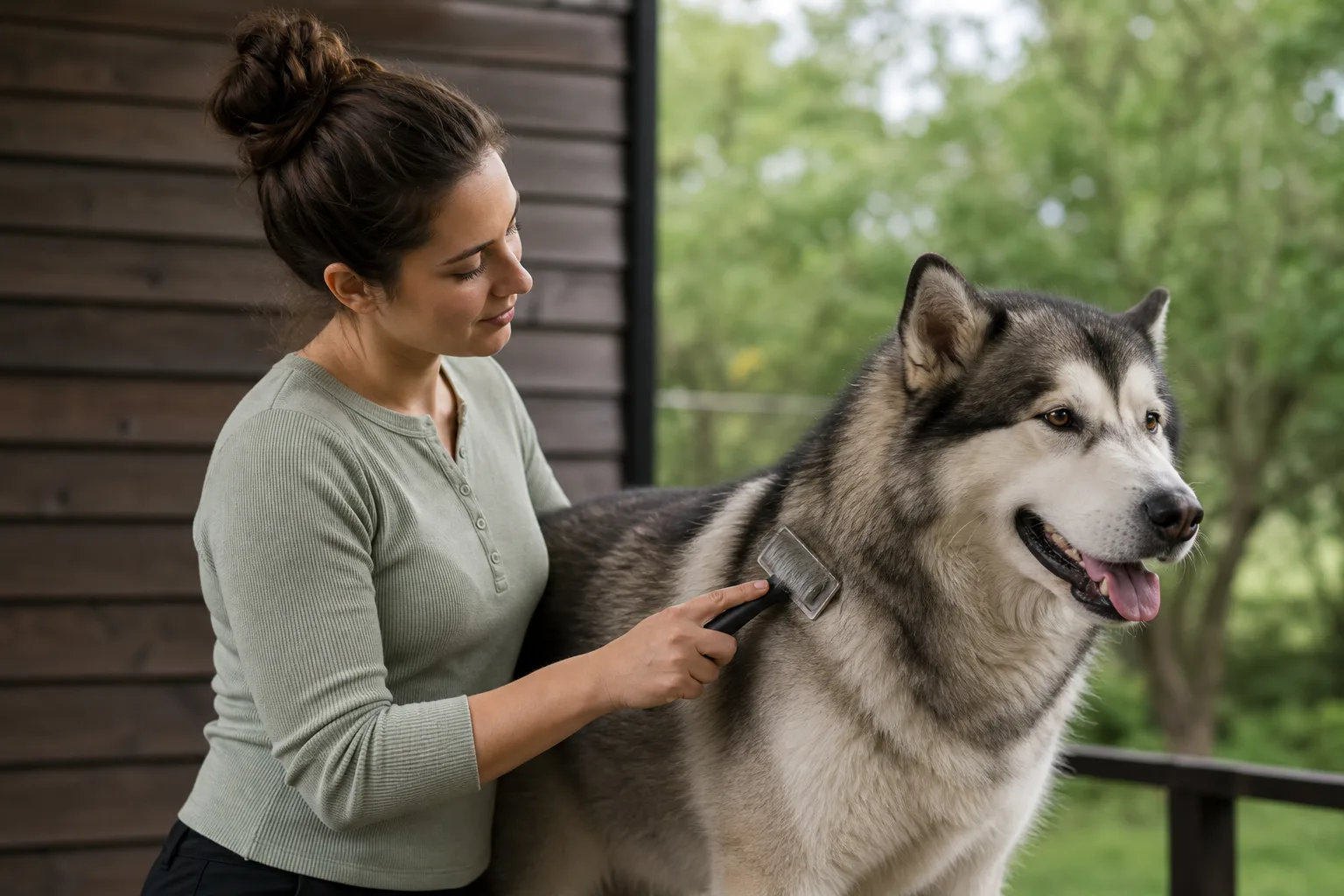
The Malamute’s thick coat needs regular brushing to remove loose undercoat and prevent mats. During heavy shedding periods, brushing becomes more frequent and can produce substantial amounts of hair. A routine that begins in puppyhood makes brushing, nail care, ear checks, and bathing easier to manage.
- Brush the coat regularly, increasing frequency during heavy shedding.
- Trim nails before they become long enough to affect movement.
- Check ears and skin during routine grooming.
- Brush the teeth with a dog-safe product as directed by a veterinarian.
- Use a mild dog shampoo when bathing is necessary.
The breed’s coat should not be shaved for summer. Removing the protective coat does not make an Arctic breed better adapted to heat and can expose the skin to sun and environmental irritation. Shade, ventilation, water, and temperature-aware exercise are safer ways to manage warm weather.
Feeding And Weight
Food portions should be based on the dog’s age, activity, body condition, and the feeding guidance for the selected diet. Malamutes can gain excess weight when meals and treats do not match their activity level. Regular body checks help owners identify changes before weight becomes a mobility problem.
Growing puppies need a diet appropriate for large-breed development, with portion control that supports steady growth. Adult dogs benefit from measured meals rather than unrestricted access to food. Ask a veterinarian to assess diet, supplements, and feeding changes, particularly during growth, pregnancy, illness, or recovery.
A simple age-tracking routine can help owners stay consistent with developmental milestones, preventive care, and changing exercise needs; a dog age calculator can provide a quick estimate for comparing a dog’s life stage with human years. It should complement, not replace, veterinary guidance.
Health Considerations
Like other large, deep-chested dogs, Malamutes require attention to orthopedic health, body weight, and digestive emergencies. Responsible breeders screen breeding dogs according to recognized health practices and provide clear records for parents and puppies. Prospective owners should ask for documentation rather than relying on verbal assurances.
Health concerns associated with the breed can include hip dysplasia, inherited eye conditions, thyroid disorders, and other issues seen in large purebred dogs. This does not mean every Malamute will develop these problems. It does mean that preventive veterinary care, sensible exercise, weight control, and informed breeding choices are important.
Seek urgent veterinary care if a Malamute develops sudden abdominal enlargement, repeated unproductive retching, collapse, severe weakness, breathing difficulty, or intense pain. Large dogs can deteriorate quickly during emergencies, so owners should know the location and contact details of an emergency clinic before a crisis occurs.
Alaskan Malamute Puppies
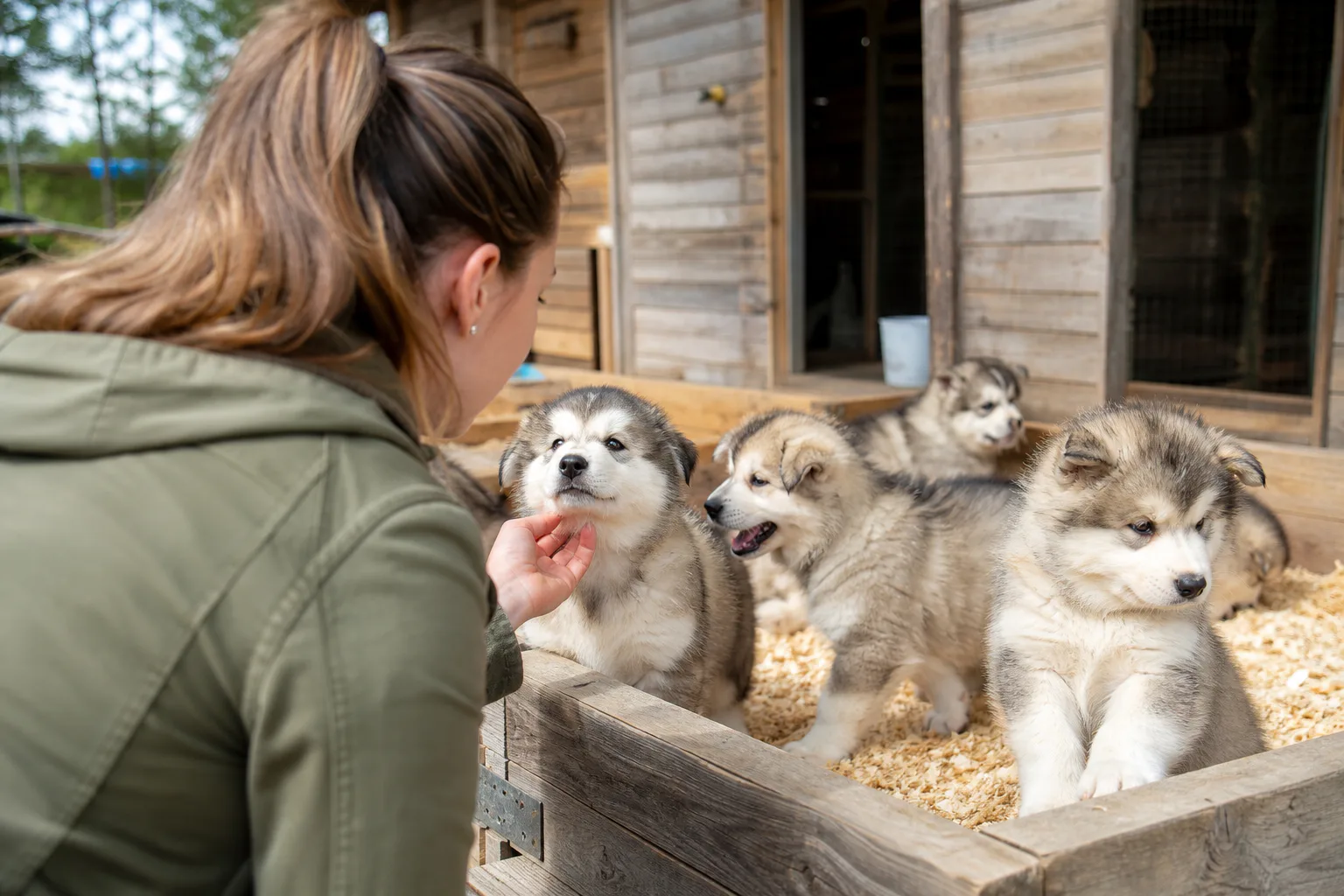
An Alaskan Malamute puppy is appealing because of its plush coat and expressive face, but early cuteness should not drive a rushed purchase. The puppy will grow into a large, powerful dog with substantial exercise, grooming, training, and social needs.
Before committing, evaluate the breeder, living conditions, adult temperament, veterinary records, and willingness to answer detailed questions. A responsible breeder should discuss the breed’s strengths and challenges honestly, allow appropriate interaction with the mother when possible, and provide written health and care information.
- See where the puppies are raised and how they are handled.
- Ask about health screening for the parents.
- Review vaccination, deworming, identification, and veterinary records.
- Ask how the breeder matches puppies with households.
- Be cautious of pressure to pay quickly or meet in an unsuitable location.
Searches for an “Alaskan Malamute for sale” or a “giant Alaskan Malamute” require particular care. Giant is a marketing description rather than a separate universally recognized breed type, and selecting for extreme size can create welfare concerns. Focus on sound structure, stable temperament, health records, and ethical breeding practices.
Malamute Versus Husky
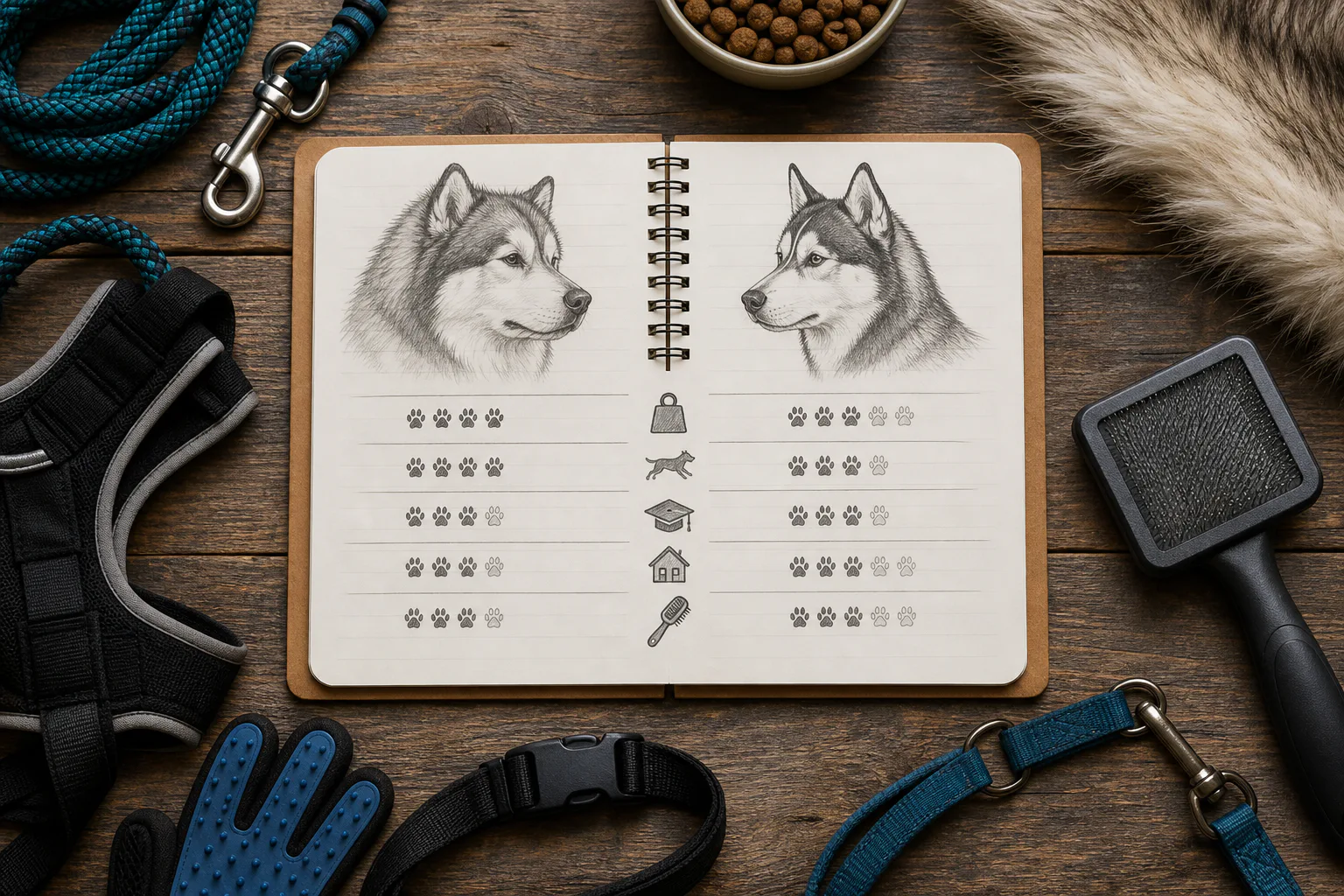
The Alaskan Malamute and Siberian Husky are both northern sled breeds, but their original jobs differed. Malamutes were developed to haul heavier loads over distance, while Siberian Huskies were bred for efficient travel and speed with lighter loads.
| Feature | Alaskan Malamute | Siberian Husky |
|---|---|---|
| Build | Heavier, broader, and more powerful | Lighter and more speed-oriented |
| Original work | Heavy freight over long distances | Efficient sled travel and lighter loads |
| Training style | Independent and strong-willed | Intelligent, energetic, and often independent |
| Household needs | High exercise, secure containment, and regular grooming | High exercise, secure containment, and regular grooming |
Neither breed is automatically easy because it has a friendly expression or attractive coat. The better match depends on the household’s ability to provide daily activity, training, secure outdoor space, and tolerance for shedding and vocal behavior.
Is A Malamute Right For You?
The breed can suit an active owner who enjoys outdoor pursuits and wants a close, involved canine companion. It is less suitable for someone seeking a low-maintenance dog, a reliably obedient dog without structured training, or a pet that can spend most of the day alone.
- Good fit: active households with time for exercise, training, grooming, and companionship.
- Possible challenge: homes with weak fencing, limited space, or little tolerance for shedding.
- Extra planning: families with young children, small pets, or multiple dogs.
- Essential commitment: secure containment and lifelong supervision outdoors.
Owners who are comparing large breeds should also consider how coat care, exercise style, sociability, and trainability differ. An Airedale Terrier, for example, has a very different coat and working profile despite also being an intelligent, active dog, so appearance alone is a poor basis for selection.
Frequently Asked Questions
Are Alaskan Malamutes good family dogs?
They can be affectionate and loyal family companions when their exercise, training, socialization, and supervision needs are met. Their size and strength require adults to manage interactions carefully, especially with young children and other animals.
Do Alaskan Malamutes shed a lot?
Yes. Their thick double coat sheds throughout the year and can shed especially heavily during seasonal coat changes. Regular brushing and realistic expectations about hair in the home are essential.
Can a Malamute live in a warm climate?
A Malamute can live in a warm climate with careful management, but owners must provide shade, water, ventilation, and exercise during cooler hours. Heat exposure should be taken seriously because the breed has a dense insulating coat.
Are Malamutes easy to train?
They are intelligent and capable of learning, but their independent nature can make consistent training challenging. Short, rewarding sessions, early socialization, firm boundaries, and reliable management produce better results than harsh methods.
How long do Alaskan Malamutes live?
The expected life span is about 10 to 14 years. Individual longevity depends on genetics, preventive care, nutrition, body condition, environment, and timely treatment of health problems.
Final Recommendation
Choose an Alaskan Malamute for its working-dog character, not simply its striking appearance. If you can provide daily activity, patient training, regular grooming, secure containment, and lifelong veterinary care, the breed can become a loyal and engaging companion. Meet well-socialized adult Malamutes before choosing a puppy so you can judge whether their real-life energy and independence fit your household.