Labradoodle Dog Guide: Traits, Care, and Choosing Tips
The Labradoodle is a Labrador Retriever–Poodle cross known for intelligence, affection, energy, and a highly variable coat. Before choosing one, consider its adult size, exercise needs, grooming requirements, health screening, and the standards of the breeder or rescue organization. Labradoodles can be excellent companions, but they are not guaranteed to be low-maintenance or hypoallergenic.
Labradoodle at a Glance
| Feature | Quick facts |
|---|---|
| Origin | Australia |
| Parent breeds | Labrador Retriever and Standard or Miniature Poodle |
| Adult sizes | Miniature, Medium, and Standard |
| Typical lifespan | 12–16 years |
| Energy level | Moderate to high; about 60–90 minutes of activity daily |
| Coat | Hair, fleece, or wool; straight, wavy, curly, wiry, soft, or silky |
| Shedding | Highly variable; low shedding is not guaranteed |
| Recognition | Not recognized as a distinct breed by the American Kennel Club |
What Is a Labradoodle? History and Origin
The Labradoodle combines the Labrador Retriever’s trainability and gentle nature with the Poodle’s low-shedding coat. Wally Conron developed the cross in Australia in 1989 while working for the Royal Guide Dog Association of Australia. He was looking for a guide dog suitable for a person with allergies.
One puppy from the first litter, Sultan, became a guide dog for a woman in Hawaii and worked for 10 years. The original project focused on producing a guide dog with a coat that might be more suitable for someone with allergies. Labradoodles later became popular as companion and assistance dogs.
The American Kennel Club and other major kennel clubs do not recognize the Labradoodle as a distinct breed. Australian Labradoodle lines may include ancestry from breeds such as the Cocker Spaniel, Irish Water Spaniel, Soft-Coated Wheaten Terrier, or Curly-Coated Retriever. This helps explain why early-generation dogs can vary widely in size, appearance, coat, and behavior.
Size, Appearance, and Coat Types
Labradoodle size depends on the Poodle parent and the breeding line. Adult dogs are generally grouped into three categories, although individual dogs may fall outside these ranges.
| Size | Height | Weight |
|---|---|---|
| Miniature | 14–16 inches | 15–25 pounds |
| Medium | 17–20 inches | 30–45 pounds |
| Standard | 21–24 inches | 50–65 pounds |
The coat may be straight, wavy, curly, wiry, soft, or silky. Breeders commonly use the terms hair, fleece, and wool, but these labels do not guarantee an adult dog’s texture or shedding level.
Common colors include chocolate, café, parchment, cream, gold, apricot, red, black, silver, chalk, lavender, and bluish gray. Color does not determine temperament, trainability, or health.
Allergy responses vary by individual dog and person. Some Labradoodles shed very little, while others shed substantially, and no coat type makes a dog reliably hypoallergenic because allergies can involve dander, saliva, and other proteins.
Temperament and Family Life
Well-socialized Labradoodles are generally affectionate, social, intelligent, food-motivated, and eager to please. Labrador ancestry often contributes friendliness and enthusiasm, while Poodle ancestry can add sensitivity, alertness, and strong learning ability.
- Children: Many Labradoodles enjoy family life, but young dogs can be bouncy and mouthy. Supervise interactions and teach children not to disturb a dog while it eats, sleeps, or rests.
- Other pets: Early, controlled introductions can improve compatibility. Prey drive and excitement around smaller animals vary between dogs.
- Strangers: Many are social, although some may be reserved or excitable without careful socialization.
- Barking: Alert barking may increase with boredom, anxiety, territorial triggers, or insufficient training.
- Companionship: Many form close bonds with their households and may struggle when left alone for long periods without gradual independence training.
Labradoodles learn unwanted habits as quickly as desirable ones. Jumping, stealing objects, pulling, barking, and frantic greetings become harder to change after repeated practice, so training should begin as soon as the dog comes home.
Exercise and Mental Stimulation
Most adult Labradoodles need about 60–90 minutes of combined physical and mental activity each day. Some individuals manage with 30 minutes to one hour, while young, working-bred, or especially energetic dogs may need more structured activity.
- Brisk walks, jogging, hiking, and supervised swimming
- Fetch, tug, scent games, and retrieve-to-hand practice
- Short obedience sessions using food rewards
- Food puzzles, scatter feeding, and supervised chew activities
- Calm-settle exercises after active play
Match exercise to the dog’s age and physical development. Puppies need brief play and training sessions with plenty of rest, while older dogs may benefit from low-impact walks, scent work, and veterinary-guided activity.
A fenced yard does not replace walks, training, or companionship. Without those, a Labradoodle may become destructive, noisy, or overexcited even when it has outdoor space.
Grooming and Everyday Care
Grooming is one of the biggest ongoing responsibilities of Labradoodle ownership. Most need brushing weekly or every two weeks. Curlier or mat-prone coats may need brushing two or three times a week, and sometimes daily brushing during coat changes.
- Brushing: Work through the coat to the skin, especially behind the ears, beneath the legs, around the collar, and at the tail.
- Clipping: Professional trimming is commonly needed every 6–8 weeks.
- Ears: Floppy ears and excess hair can trap moisture. Check them regularly and dry them after swimming or bathing.
- Nails: Trim nails often enough to prevent clicking, splitting, or an altered gait.
- Bathing: Bathe the dog when it is dirty or as your veterinarian recommends. Rinse and dry the coat thoroughly.
- Teeth: Regular brushing with dog-safe toothpaste and veterinary dental examinations can reduce preventable oral disease.
Do not shave a matted coat at home without guidance. Severe mats can hide irritated skin, restrict movement, and make professional clipping uncomfortable.
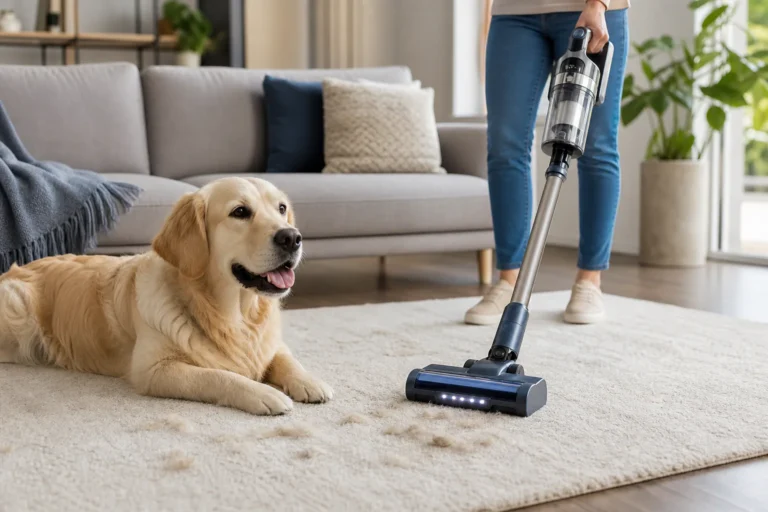
Homes with heavy shedding or muddy paws need a regular cleaning routine. A suitable vacuum for pet hair can help, but it does not replace brushing and coat care.
Training and Socialization
Reward-based training suits the Labradoodle’s intelligence and food motivation. Keep sessions short, reinforce calm behavior, and prevent access to objects or situations that encourage unwanted habits.
- Start with routines: Use consistent meal, sleep, toilet, and exercise schedules from the first day.
- Teach household skills: Prioritize name response, recall, loose-leash walking, drop it, leave it, and a calm settle.
- Socialize gradually: Introduce people, surfaces, sounds, vehicles, grooming tools, handling, and friendly vaccinated dogs at a comfortable pace.
- Use crate training carefully: Make the crate a safe resting area and increase alone time slowly instead of using it for extended confinement.
- Reward alternatives: Reinforce four paws on the floor instead of jumping, an approved toy instead of furniture, and looking at you instead of barking.
Puppy classes can support socialization when they use humane methods and follow appropriate health precautions. Adult rescue Labradoodles also benefit from training, especially when their previous routines, triggers, or household experiences are unknown.
Common Labradoodle Health Issues
Labradoodles can inherit health problems from both parent breeds. Reported concerns include hip dysplasia, elbow dysplasia, eye disorders, retinal dysplasia, cataracts, epilepsy, and Addison’s disease.
A UK study reported multifocal retinal dysplasia in 4.6% of Labradoodles and cataracts in 3.7%. These figures do not predict an individual dog’s health, but they show why eye examinations and documented family health information matter.
- Ask for hip and elbow evaluations from recognized veterinary screening programs.
- Request current ophthalmologist eye examinations for breeding dogs.
- Review DNA tests relevant to the parent breeds and the specific lines.
- Ask about Addison’s disease, epilepsy, eye disease, and orthopedic problems in close relatives.
- Maintain routine veterinary examinations, vaccinations, parasite prevention, dental care, weight control, and age-appropriate screening.
Weight control matters for a large, active dog with retriever ancestry. A veterinarian can set a body-condition target and adjust food as the dog’s activity, age, reproductive status, or health changes.
What do most Labradoodles die from?
There is no single established Labradoodle-specific leading cause of death. Causes vary by age and individual health. Cancer, heart disease, organ disease, and age-related conditions commonly affect dogs in general.
Pet insurance can help with unexpected surgery, chronic disease, and diagnostic costs, although exclusions and waiting periods vary. Compare coverage before a dog develops a condition by reviewing options for pet insurance for dogs.
Finding a Labradoodle Responsibly
Because the AKC does not standardize the Labradoodle, breeder quality varies widely. A responsible program provides verifiable health testing, explains the line’s expected adult size and coat, raises puppies in a clean social environment, uses a written contract, and accepts the dog back or helps rehome it if the owner can no longer provide care.
| Option | Best use | What to check |
|---|---|---|
| Australian Labradoodle Association of America | Evaluating Australian Labradoodle breeders and ethical standards | Membership status, required testing, contract, and current records |
| Worldwide Australian Labradoodle Association | Locating breeders in its network | Parent health clearances, puppy-raising practices, and return policy |
| IDOG Rescue | Adopting Labradoodles, Goldendoodles, Standard Poodles, and Poodle mixes | Foster assessment, medical history, behavior notes, and adoption terms |
| Petfinder | Searching for Labradoodles and Poodle mixes available for adoption | Listing organization, location, veterinary records, and fees |
| Adopt-a-Pet | Filtering adoption listings for Labradoodles and similar mixes | Rescue reputation, health information, temperament, and return policy |
| Good Dog | Finding breeders through a curated marketplace | Listings may include breeder profiles, health-testing information, contracts, and program details |
A marketplace listing, association membership, or “hypoallergenic” label is not a substitute for documented records. Responsible sellers provide health-test results, information about the mother, the puppy’s veterinary care, and a written contract without pressuring buyers to pay quickly.
Adoption applications commonly require references, household information, landlord approval when applicable, an interview, and sometimes a home check.
Labradoodle Home-Fit Checklist
- Plan for at least 30–60 minutes of daily exercise, with some dogs needing more.
- Provide walks, play, swimming, training, or enrichment instead of relying only on a yard.
- Commit to regular brushing and professional clipping, especially if the coat is curly or mats easily.
- Allow time for companionship and gradual alone-time training instead of leaving the dog isolated all day.
- Use reward-based training to address jumping, barking, chewing, and excitement.
- Make sure the household can handle a social, intelligent dog that needs mental stimulation.
Labradoodle Pros and Cons
| Potential advantages | Potential drawbacks |
|---|---|
| Affectionate and people-oriented | Needs substantial daily activity and attention |
| Intelligent and responsive to training | Can learn jumping, barking, and chewing quickly |
| Often adaptable to active family life | Coat texture, shedding, size, and temperament vary |
| Many enjoy retrieving and swimming | Regular brushing and professional trimming can be costly |
| Available through breeders and rescue organizations | Not reliably hypoallergenic and can develop inherited disease |
A Labradoodle suits a household that can provide daily activity, grooming, training, and companionship. It is a poor match for someone seeking a dog that can stay alone all day, needs little coat care, or has guaranteed adult traits.
How Much Does a Labradoodle Cost?
The purchase or adoption fee is only part of the budget. Grooming, preventive care, food, training, equipment, emergency treatment, and insurance may cost more than the initial payment over the dog’s lifetime.
| Expense | Typical US range |
|---|---|
| Reputable breeder puppy | $1,500–$4,000 |
| Health-tested breeder program | Often $2,500–$4,000 |
| Rescue or shelter adoption | $100–$1,000 |
| First-year equipment and medical care | $500–$1,200 beyond the acquisition fee |
| Recurring annual ownership | $1,000–$2,000 for food, veterinary care, preventives, and grooming |
Ask what an adoption fee includes. Vaccinations, microchipping, spay or neuter surgery, parasite treatment, and dental work can materially change the value of a rescue placement.
Set aside additional money for training, boarding, emergency care, coat repairs after severe matting, and senior-dog treatment. A lower acquisition fee does not guarantee lower lifetime costs.
What affects the price of a Labradoodle?
Price depends on whether the dog comes from a breeder or rescue, the breeder’s health-testing program, the dog’s size and coat, and the veterinary care or other services included. Grooming, food, training, insurance, and veterinary treatment add to the total cost of ownership.
Is a Labradoodle a Good House Dog?
A Labradoodle can be a good house dog when its exercise, training, grooming, and social needs are met. Its size and energy still matter indoors, and an under-exercised dog may become noisy, destructive, or restless.
Choose an adult size and temperament that fit your home instead of relying on the Labradoodle label alone. Ask a breeder or foster caregiver how the individual dog behaves around visitors, children, other animals, handling, confinement, and time alone.
Are Labradoodles High Maintenance?
Yes. Labradoodles are often high-maintenance when it comes to grooming and daily engagement. Brushing, professional trimming every 6–8 weeks, ear care, training, and regular exercise are ongoing commitments.
The workload is lower for some straighter coats and higher for dense, curly coats that mat easily. Coat type can vary even among puppies from the same litter.
Labradoodle FAQs
What is the downside to a Labradoodle?
The main downsides are variable shedding and temperament, regular grooming, high exercise needs, inherited health risks, and difficulty coping with long periods alone. Labradoodles are not reliably hypoallergenic or low maintenance.
Are Labradoodles smart dogs?
Yes. Labradoodles are generally intelligent and responsive to reward-based training. Their intelligence also means they can quickly learn unwanted behaviors such as barking, jumping, and stealing.
Do Labradoodles bark a lot?
Some Labradoodles bark frequently when bored, anxious, overexcited, or responding to territorial triggers. Exercise, enrichment, gradual alone-time training, and consistent reinforcement can reduce unnecessary barking.
Are Labradoodles low shedding?
Some Labradoodles shed lightly, while others shed substantially. Hair, fleece, and wool labels do not guarantee a particular adult coat or allergy response.
Where can you find a Labradoodle for sale?
Established breeder networks and marketplaces such as the Australian Labradoodle Association of America, Worldwide Australian Labradoodle Association, and Good Dog list Labradoodle breeders. Responsible listings provide parent health testing, expected adult size and coat information, puppy-raising details, and a written return contract.
Final Recommendation
A Labradoodle is a good fit for a household prepared to provide daily activity, grooming, training, and companionship while choosing a breeder or rescue placement with documented health and behavior information.