Akita Dog: Temperament, Care, Exercise, and Ownership Guide
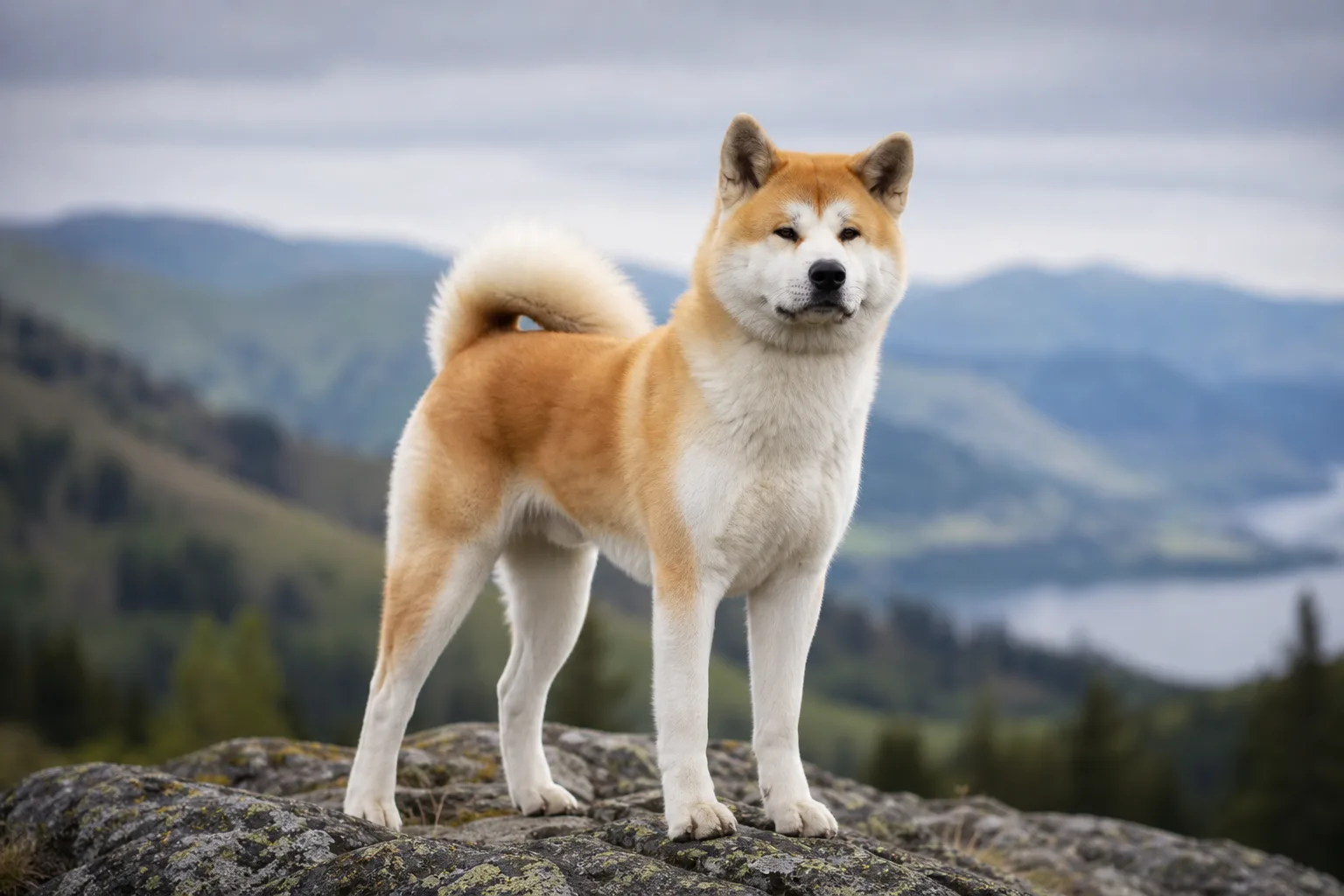
The Akita Dog is a large, powerful Japanese breed known for loyalty, dignity, courage, and a strong protective instinct. It can be a devoted companion for an experienced owner, but its independence, size, and wariness toward unfamiliar people and dogs require early socialization, consistent training, and careful management.
This guide explains the Akita’s appearance, temperament, exercise needs, costs, family suitability, and breed restrictions so you can decide whether this distinctive dog fits your household.
Akita Dog at a Glance
- Origin: Japan
- Size: Large
- Coat: Dense double coat
- Height: Males, 64–71 cm; females, 58–66 cm
- Weight: Males, 27–59 kg; females, 25–45 kg
- Recognized colors: Red, brindle, and white, with white markings on the underside
- Exercise: Plan for substantial daily activity, with about two hours serving as a practical baseline for many healthy adults
- Temperament: Loyal, reserved, independent, and protective
History and Breed Background
The Akita comes from northern Japan and is one of the country’s native dog breeds. Its ancestors were used for hunting large game and later became valued as guardians and household companions.
In Japan, the breed is associated with good health, happiness, long life, loyalty, and protection. The famous story of Hachikō, an Akita remembered for waiting faithfully for his deceased owner, helped make the breed an international symbol of devotion.
Two related types are commonly discussed today: the Japanese Akita Inu and the American Akita. They share ancestry, but their size, head shape, coat patterns, and accepted colors differ under their respective breed standards.
Appearance and Size
Build
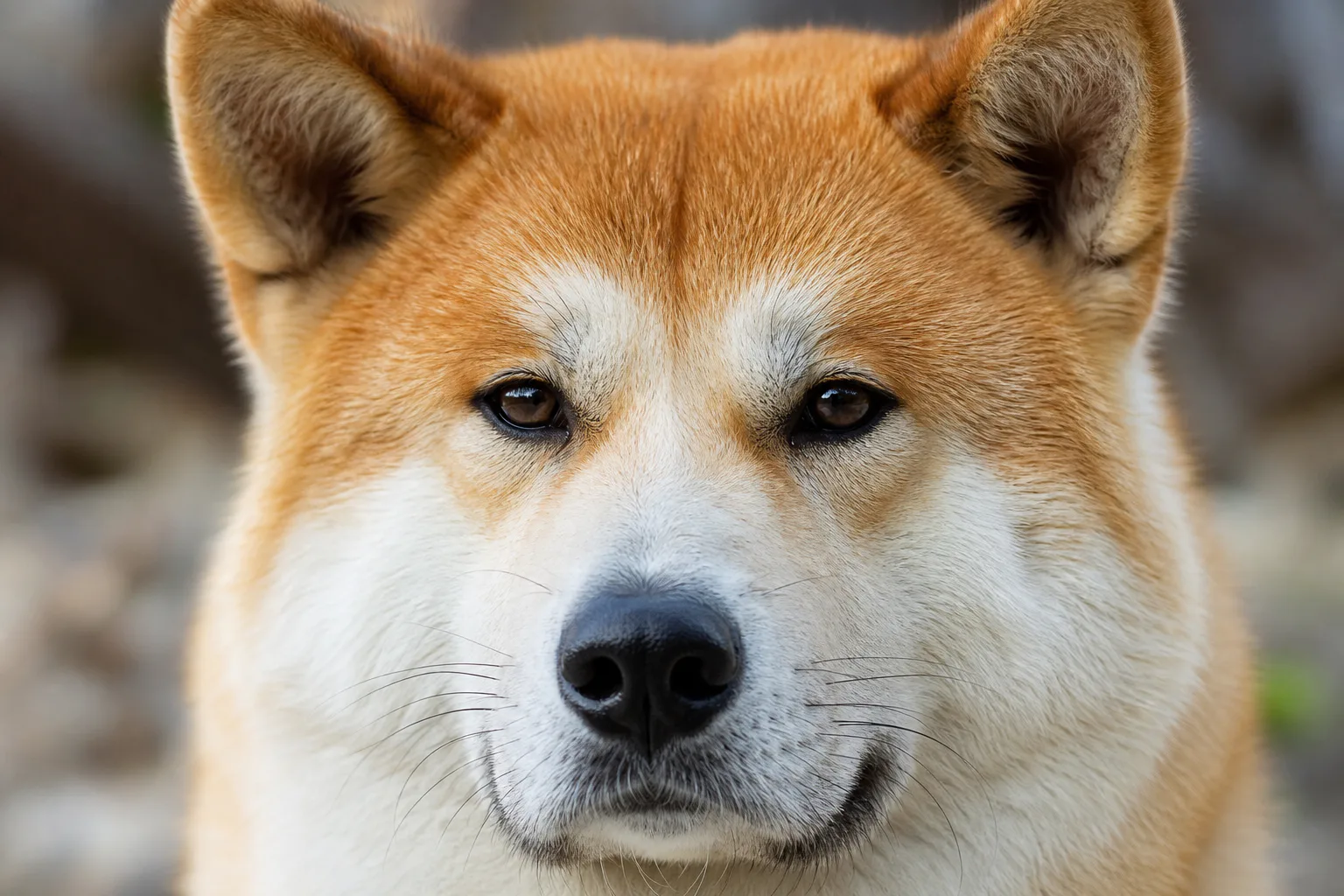
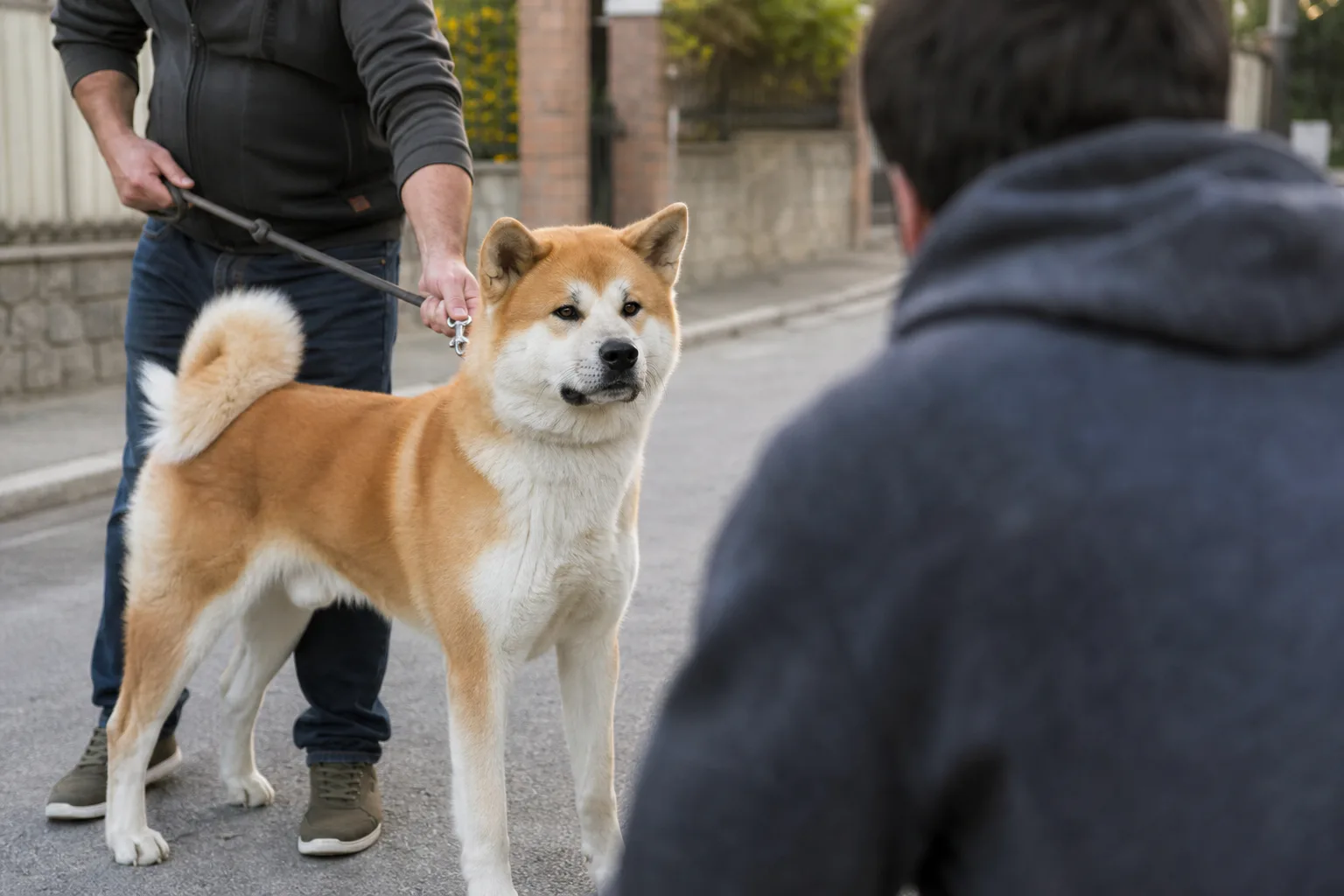
An Akita has a muscular, substantial body, a broad head, small upright ears, and a thick tail that curls over its back. Its expression is alert and composed rather than openly animated.
Males stand 64–71 cm at the shoulder and weigh 27–59 kg. Females stand 58–66 cm and weigh 25–45 kg. Individual structure and condition matter more than weight alone, so a veterinarian should assess whether a dog is carrying a healthy amount of body fat.
Coat and colors
The Akita’s double coat consists of a dense undercoat and a straighter outer coat. The coat provides insulation, but it also produces heavy seasonal shedding that requires regular brushing and thorough cleaning during shedding periods.
Common Japanese Akita colors include red, brindle, and white. Colored dogs have urajiro, the traditional term for white or lighter fur on areas such as the cheeks, chest, underside, and inner legs. White Akitas are striking, but a white coat does not indicate a different temperament or guarantee better health.
Temperament and Behavior
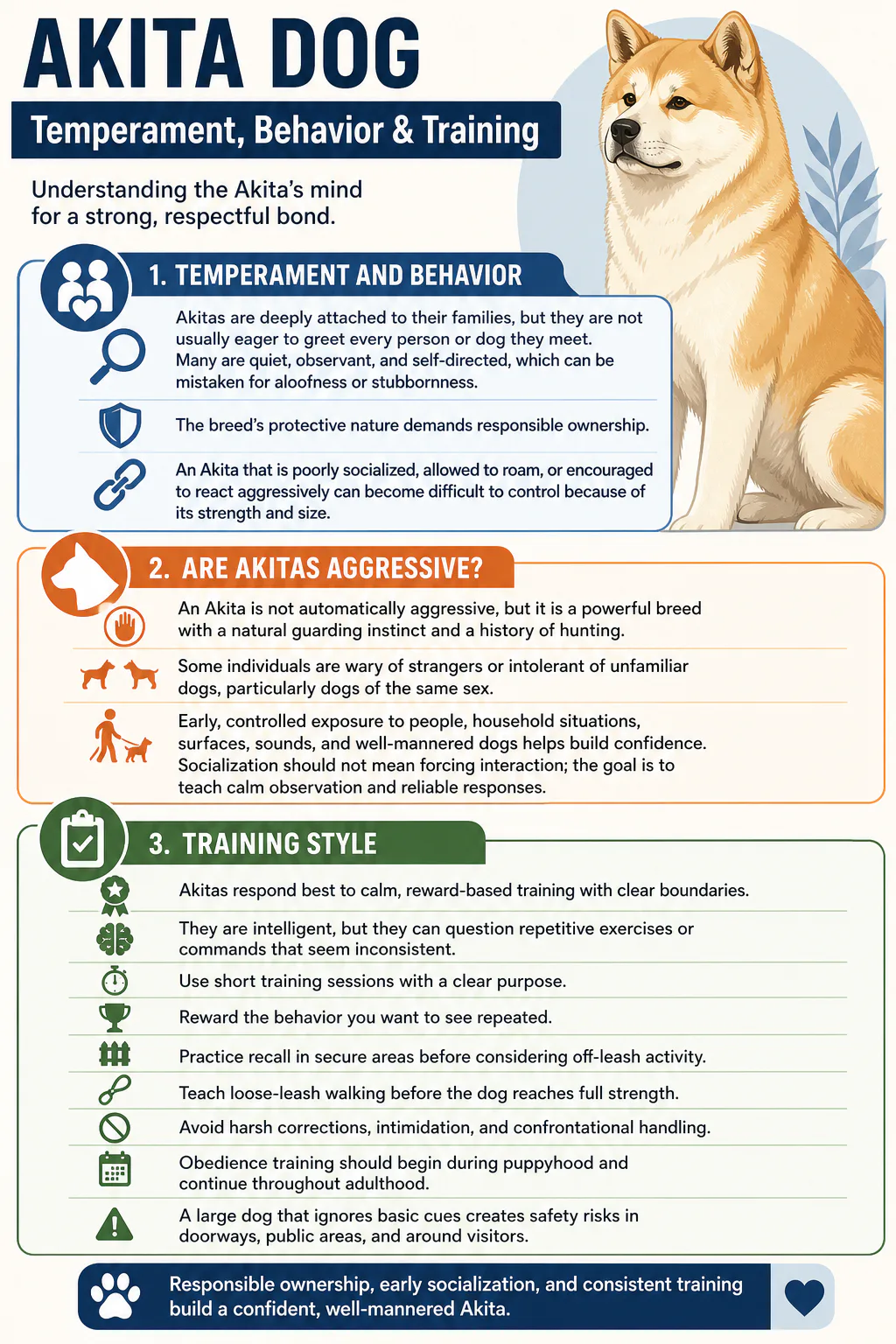
Akitas are deeply attached to their families, but they are not usually eager to greet every person or dog they meet. Many are quiet, observant, and self-directed, which can be mistaken for aloofness or stubbornness.
The breed’s protective nature demands responsible ownership. An Akita that is poorly socialized, allowed to roam, or encouraged to react aggressively can become difficult to control because of its strength and size.
Are Akitas aggressive?
An Akita is not automatically aggressive, but it is a powerful breed with a natural guarding instinct and a history of hunting. Some individuals are wary of strangers or intolerant of unfamiliar dogs, particularly dogs of the same sex.
Early, controlled exposure to people, household situations, surfaces, sounds, and well-mannered dogs helps build confidence. Socialization should not mean forcing interaction; the goal is to teach calm observation and reliable responses.
Training style
Akitas respond best to calm, reward-based training with clear boundaries. They are intelligent, but they can question repetitive exercises or commands that seem inconsistent.
- Use short training sessions with a clear purpose.
- Reward the behavior you want to see repeated.
- Practice recall in secure areas before considering off-leash activity.
- Teach loose-leash walking before the dog reaches full strength.
- Avoid harsh corrections, intimidation, and confrontational handling.
Obedience training should begin during puppyhood and continue throughout adulthood. A large dog that ignores basic cues creates safety risks in doorways, public areas, and around visitors.
Exercise and Daily Care
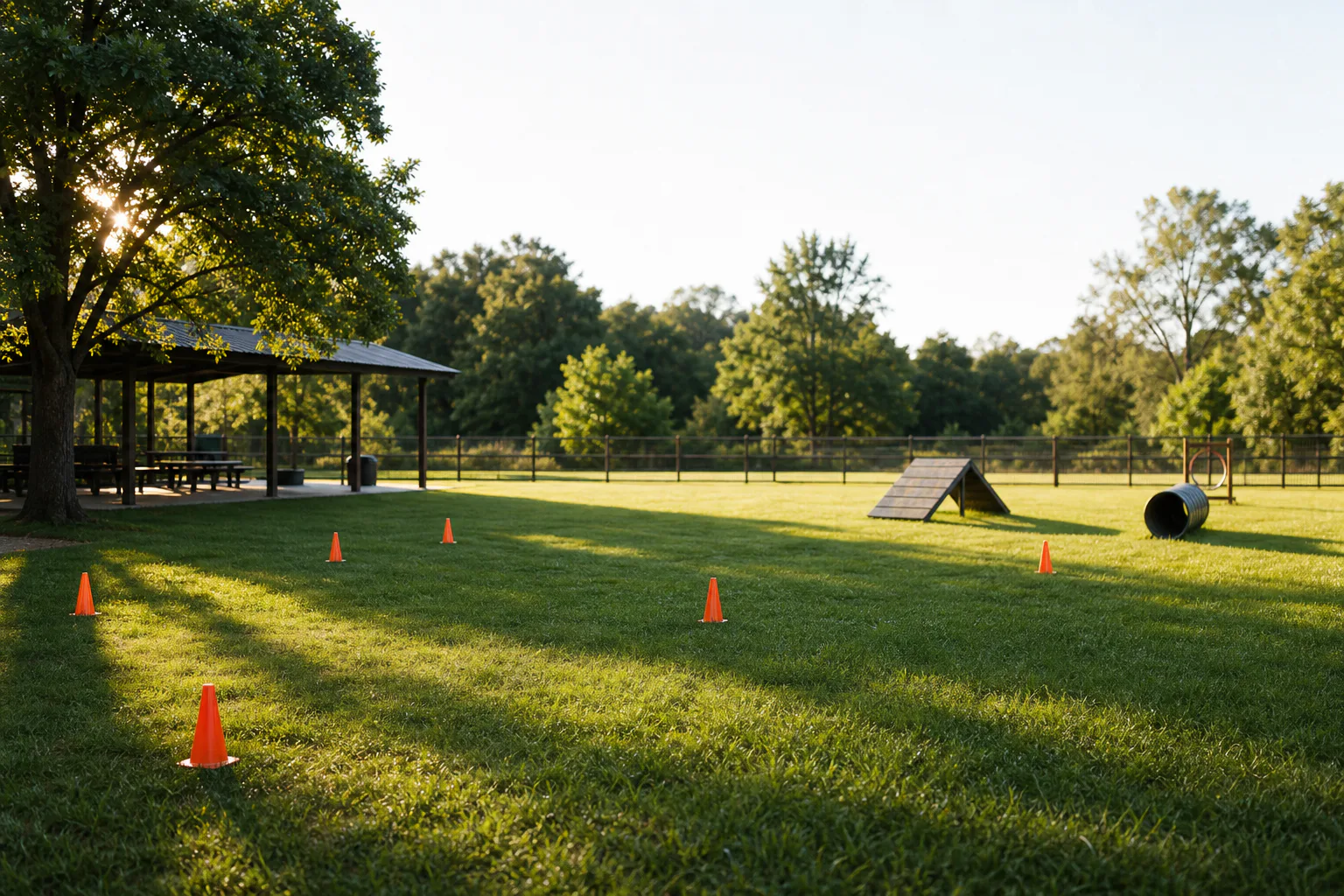
An Akita needs more than a brief bathroom walk. Daily activity should combine purposeful walking, controlled play, training, and opportunities to investigate its surroundings without becoming overstimulated.
About two hours of daily exercise is a practical baseline for many healthy Akitas, although the right amount depends on age, health, weather, and individual energy. Puppies need controlled activity that protects developing joints, while older dogs benefit from steady movement adjusted to veterinary guidance.
Home requirements
A secure, well-maintained yard can make exercise easier, but a yard does not replace walks or training. Akitas should not be left loose in unfenced areas because their independence and prey drive can lead them to travel or chase.
The breed can live in different housing types when its exercise and management needs are met. A calm home with predictable routines is more important than a particular floor plan.
Grooming
Brush the coat regularly to remove loose undercoat and reduce matting. During heavy shedding, more frequent brushing is necessary. Bathe the dog when needed, keep nails trimmed, and check the ears, teeth, and skin as part of routine care.
Do not shave an Akita’s coat for convenience or to manage warm weather. The coat helps insulate the dog, while shade, water, ventilation, and sensible exercise times are safer ways to reduce heat stress.
Health and Veterinary Care
Large dogs require careful attention to body condition, mobility, and growth. Maintaining a lean weight reduces unnecessary strain on joints and makes changes in movement easier to detect.
Routine veterinary care should include preventive examinations, vaccinations, parasite control, dental care, and discussion of breed-appropriate screening. Seek prompt advice if an Akita develops persistent lameness, unusual fatigue, changes in appetite, repeated digestive problems, or difficulty exercising.
Keeping a record of weight, vaccination dates, medications, and health changes gives your veterinarian useful information over time. A dog age calculator can also help families think about how a dog’s needs change from puppyhood to senior years, although it does not replace a veterinary assessment.
Akitas as Family Dogs
An Akita can be a loyal family dog in the right home, especially with adults or older children who understand how to behave around a large, independent animal. The dog should have a quiet retreat and should never be disturbed while eating, sleeping, or resting.
Young children require close adult supervision around every dog. An Akita’s size, strength, and reserved temperament make accidental collisions or unwanted handling more serious than they would be with a small companion breed.
Families should consider an Akita carefully if they have frequent visitors, several unfamiliar dogs, very young children, or limited time for training. A predictable household and an owner prepared to manage introductions are strong advantages.
Akita Dog With Other Pets
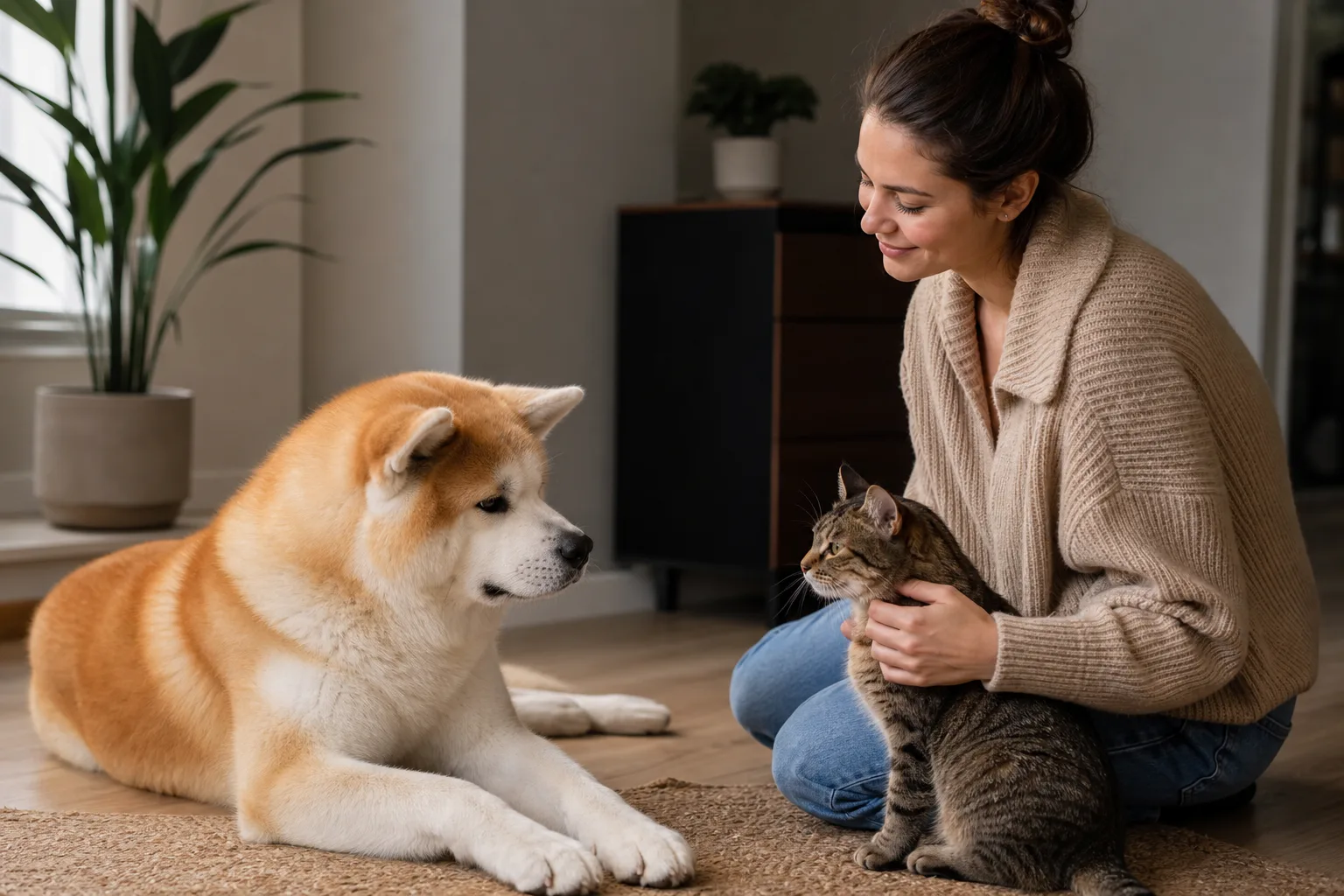
Compatibility with other animals varies by individual, early experiences, sex, and management. Some Akitas live successfully with household pets, while others have a strong prey drive or show conflict with unfamiliar dogs.
Introduce animals gradually through controlled barriers and leashed sessions. Do not leave an Akita unsupervised with another animal until a long pattern of calm behavior has been established.
Breed comparisons should focus on lifestyle rather than appearance alone. For example, an Airedale terrier also needs active engagement, but the two breeds differ in size, guarding tendencies, social behavior, and training expectations.
Akita Puppy Selection
A responsible breeder should discuss temperament, health history, socialization, contracts, and the long-term responsibilities of owning a large guardian-type breed. Avoid choosing solely for a particular coat color or an intimidating appearance.
- Meet the mother and, where possible, other related adult dogs.
- Observe whether the puppies are clean, alert, curious, and comfortably handled.
- Ask for veterinary records and documented health screening.
- Confirm the puppy’s identification, vaccination, and microchip arrangements.
- Ask how the litter has been exposed to household sounds, handling, and different surfaces.
- Be cautious of sellers who pressure you to pay quickly or cannot explain their breeding practices.
Early training should begin as soon as the puppy settles into its new home. Gentle handling, crate or rest training, house training, name recognition, and calm exposure to everyday experiences provide a useful foundation.
Akita Dog Cost
The price of an Akita dog depends on the breeder, location, pedigree, health screening, age, and whether the dog is intended as a companion or for show. The purchase price is only one part of ownership.
Budget for food, routine veterinary care, vaccinations, parasite prevention, grooming supplies, training, secure fencing, travel equipment, and emergency treatment. A large dog also costs more to restrain and transport safely, so a suitable crate, harness, and strong everyday equipment should be included in the planning.
Ask for a complete written breakdown of what is included in the puppy’s price, such as registration, veterinary checks, vaccinations, identification, and breeder support. Local licensing and insurance requirements can also affect the total cost.
Breed Restrictions and Legal Duties
Akitas are restricted in some countries, cities, housing developments, and insurance policies because authorities classify them as powerful guarding or fighting-type dogs. Restrictions are not universal, and the rules can differ even between neighboring jurisdictions.
Possible requirements include registration, permits, liability insurance, secure containment, leash or muzzle rules, and limits imposed by landlords or insurers. Check the law where you live before acquiring an Akita, and confirm the requirements with the relevant local authority rather than relying on a general breed list.
Legal compliance does not replace responsible handling. Owners must still prevent escapes, supervise introductions, maintain control in public, and take the dog’s behavior seriously from the beginning.
Akita Compared With Smaller Breeds
The Akita is sometimes compared with the Shiba Inu because both originated in Japan and share features such as upright ears, curled tails, and an independent temperament. The Akita is substantially larger and stronger, while the Shiba Inu is smaller and generally easier to physically manage.
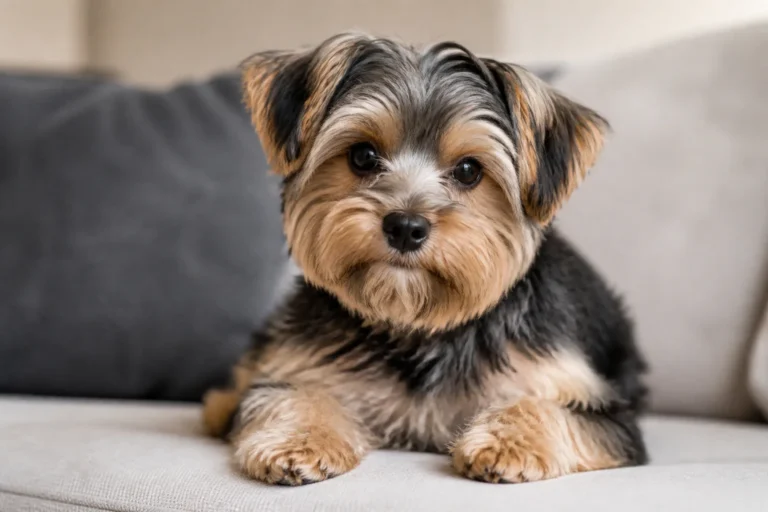
Size should influence every ownership decision, including transport, exercise, feeding, restraint, and the consequences of poor manners. A compact breed such as an Affenpinscher dog presents a very different physical-management challenge, even though both breeds still need training and socialization.
| Consideration | Akita | What owners should plan for |
|---|---|---|
| Physical strength | Very high | Early leash and handling training |
| Stranger response | Often reserved | Controlled visitor introductions |
| Dog-to-dog behavior | Can be selective | Careful socialization and supervision |
| Coat care | Heavy double coat | Regular brushing and seasonal shedding management |
| Training needs | Consistent and reward-based | Clear rules maintained throughout adulthood |
Frequently Asked Questions
Is an Akita considered an aggressive dog?
An Akita is not automatically aggressive, but it is a protective, powerful breed that can be wary of strangers and selective with other dogs. Responsible socialization, training, supervision, and secure management are essential.
Is the Akita a good family dog?
It can be a good family dog for an experienced household that provides structure, exercise, training, and supervision. It is a less suitable choice for families seeking a highly social dog that welcomes every visitor or plays freely with unfamiliar dogs.
How much does an Akita dog cost?
Akita pricing varies by location, breeder, pedigree, health screening, and age. Compare the full ownership budget rather than judging a dog only by its purchase price, and verify exactly what the seller includes.
Why are Akitas a restricted breed?
Some authorities and property providers restrict Akitas because they are large, strong, protective dogs that can cause serious injury if poorly managed. Rules differ by location, so prospective owners should check local laws, housing policies, and insurance conditions before purchase.
Are white Akitas different?
White is a recognized Akita color, and the coat color alone does not determine personality. White Akitas still need the same training, socialization, exercise, grooming, and veterinary care as other Akitas.
Is an Akita Right for You?
Choose an Akita if you want a devoted, dignified companion and are prepared to manage a large dog with independent judgment and strong protective instincts. The breed rewards patient leadership, but it is not an effortless choice for a first-time owner.
Before bringing one home, confirm local restrictions, meet well-socialized adults, assess your ability to provide daily exercise and supervision, and create a training plan for the dog’s entire life. Those steps give an Akita the best chance to become a stable and trusted member of the household.