Mini Berndoodle Overview: Size, Temperament, Care & Health
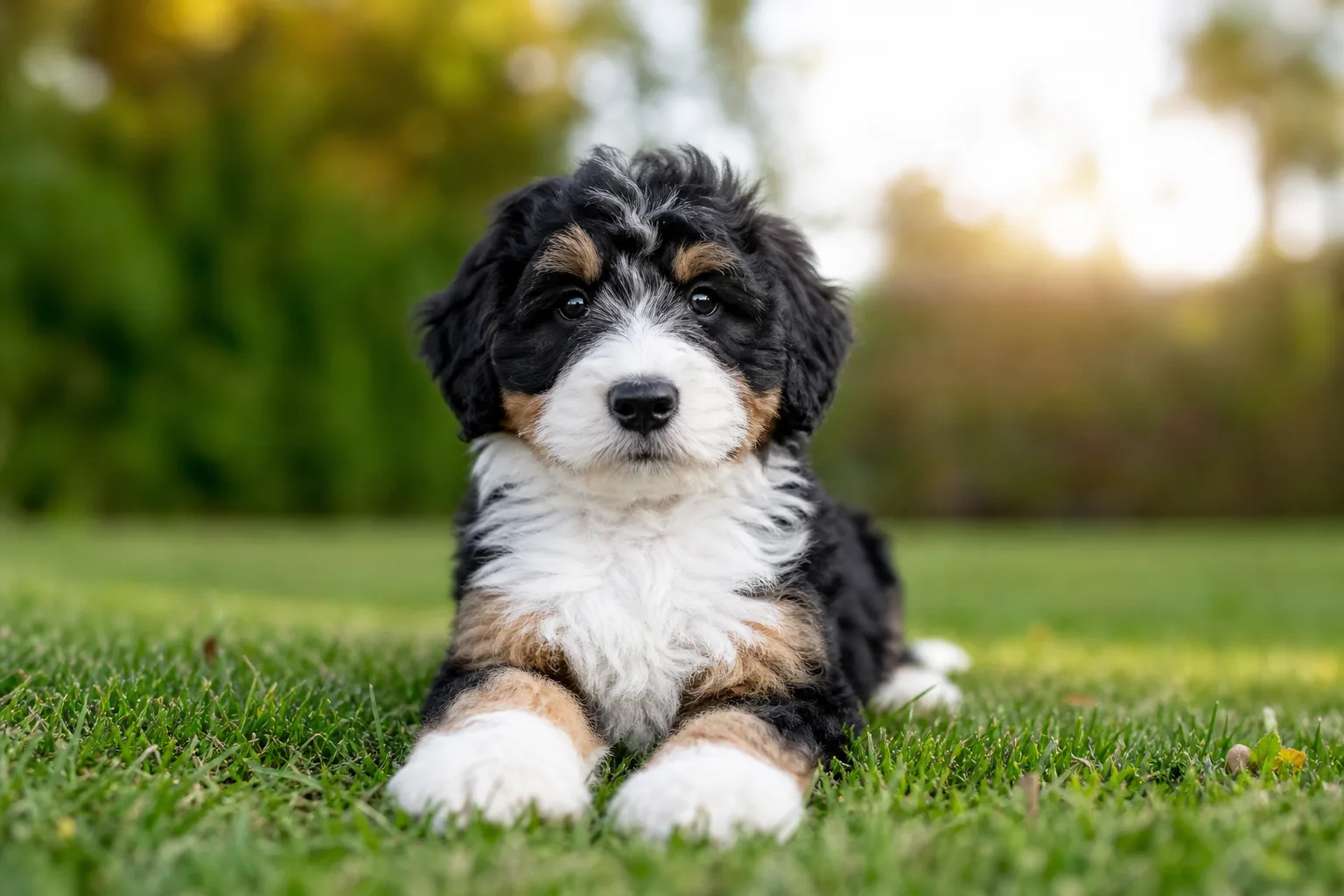
Mini Bernedoodles combine the affectionate nature of the Bernese Mountain Dog with the intelligence and lower-shedding coat of the Miniature Poodle. This Mini Berndoodle Overview explains their size, temperament, exercise needs, grooming demands, health considerations, generation types, and suitability for different homes.
What Is a Mini Bernedoodle?
A Mini Bernedoodle is a cross between a Bernese Mountain Dog and a Miniature Poodle. Because the parent breeds differ substantially in size, adult Mini Bernedoodles do not have one perfectly standardized height or weight.
They are generally social, intelligent, playful, and people-oriented. Their temperament and appearance can vary according to genetics, breeding choices, socialization, and whether the dog is an F1, F1B, or F2 generation.
Size and Appearance
A commonly cited miniature range is 20 to 45 pounds, although some Mini Bernedoodles fall outside that range. Other breeding programs describe dogs from approximately 18 to 65 pounds, with many adults weighing 30 to 45 pounds.
| Feature | What to expect |
|---|---|
| Weight | Often 20 to 45 pounds, with wider variation among breeding lines |
| Build | Compact to medium-sized, with variation from both parent breeds |
| Coat | Wavy, curly, or occasionally straighter |
| Colors | Black, white, and rust patterns are common, but markings vary |
A puppy’s projected adult size is best estimated from the parents, the sizes of previous offspring, and the breeder’s records rather than from the label “mini” alone. A small puppy can still mature into a substantial dog if the breeding line carries more Bernese Mountain Dog size.
Temperament
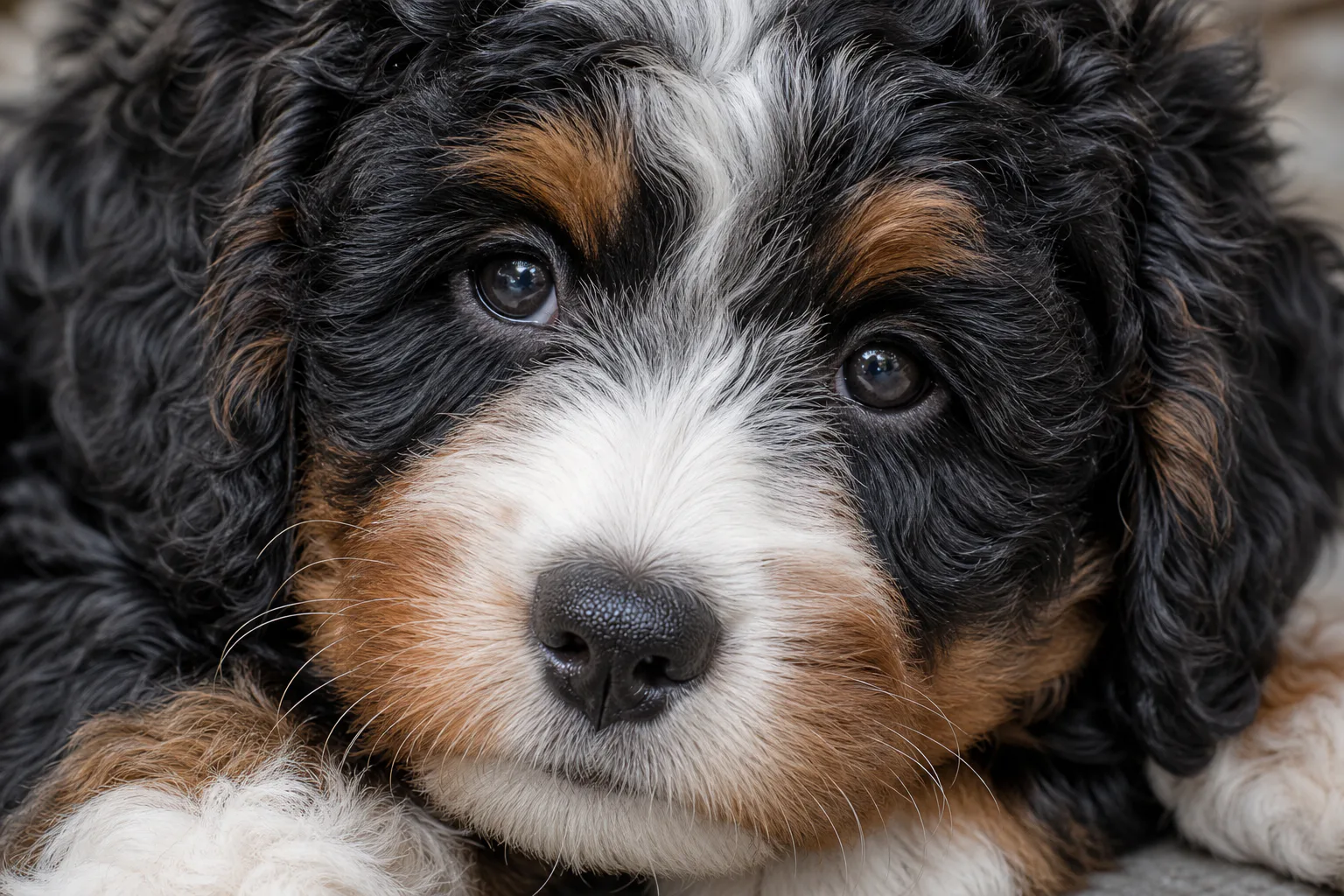
Mini Bernedoodles are usually affectionate and enjoy staying close to their people. Many are friendly with children, dogs, and cats when they receive careful introductions and appropriate socialization.
The Bernese Mountain Dog influence can contribute gentleness and loyalty, while the Poodle influence often adds alertness, trainability, and mental energy. These traits are desirable, but they also mean the dog needs companionship, structure, and regular interaction.
Family suitability
- They can be good family dogs when children are taught respectful handling.
- They can adapt to apartments or houses if their exercise and enrichment needs are met.
- They may struggle in homes where they are left alone for long periods.
- Early socialization helps reduce fear, overexcitement, and poor manners.
Exercise and Training
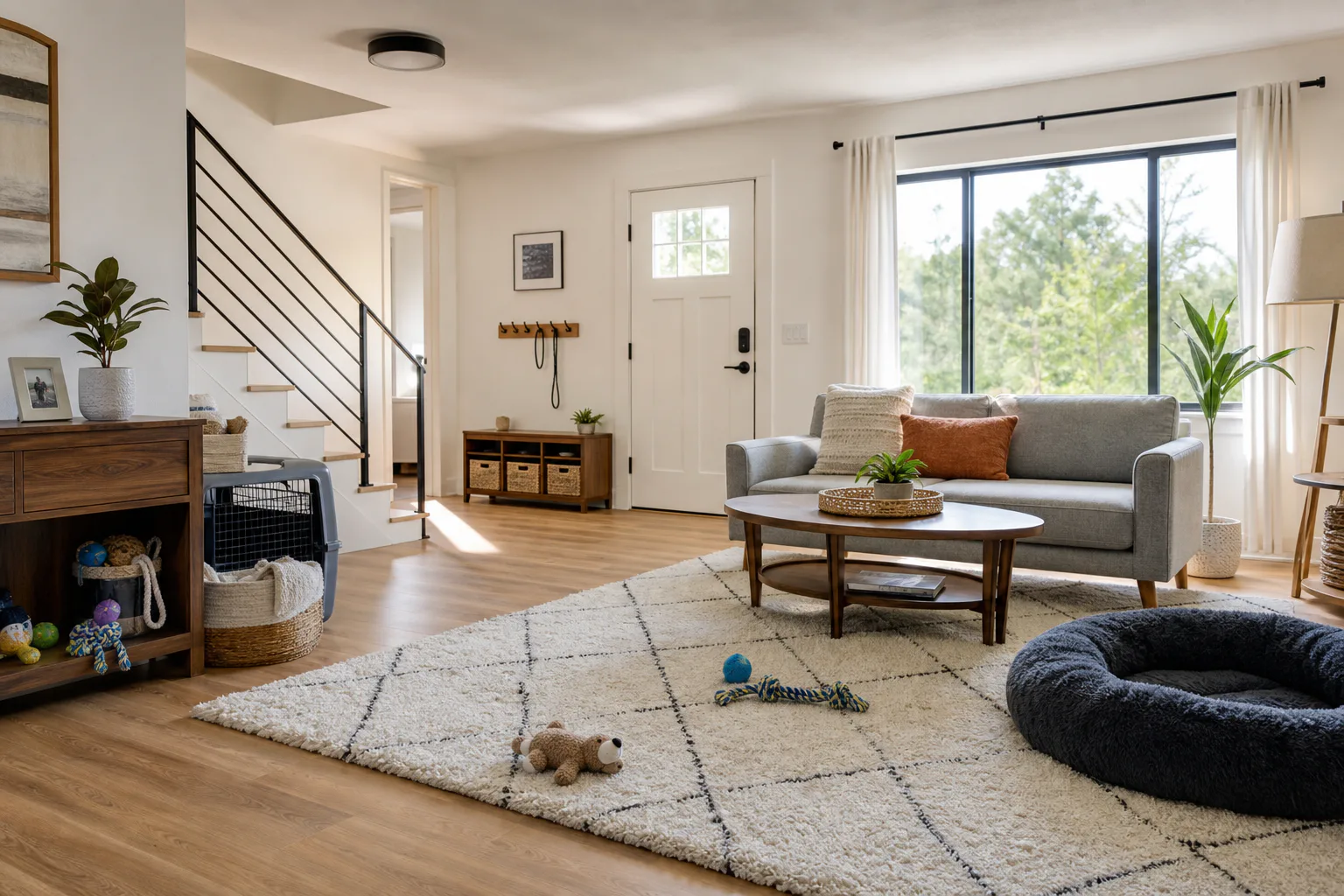
Mini Bernedoodles are moderately active dogs. Around 20 to 30 minutes of daily exercise is a useful starting point for many adults, but individual needs vary with age, health, conditioning, and temperament.
Walks should be combined with play, basic obedience, scent games, food puzzles, and short training sessions. Their intelligence can become a disadvantage if they are bored, leading to barking, chewing, jumping, or other attention-seeking behavior.
When do they calm down?
There is no universal age at which every Mini Bernedoodle becomes calm. Puppy behavior often decreases as the dog matures, but energy levels are influenced by genetics, exercise, training, sleep, and daily routine.
Consistent reinforcement, scheduled rest, and gradual exposure to new situations help a young dog develop self-control. A dog that remains unusually restless, anxious, or destructive should be evaluated by a veterinarian and, when appropriate, a qualified behavior professional.
Coat Care
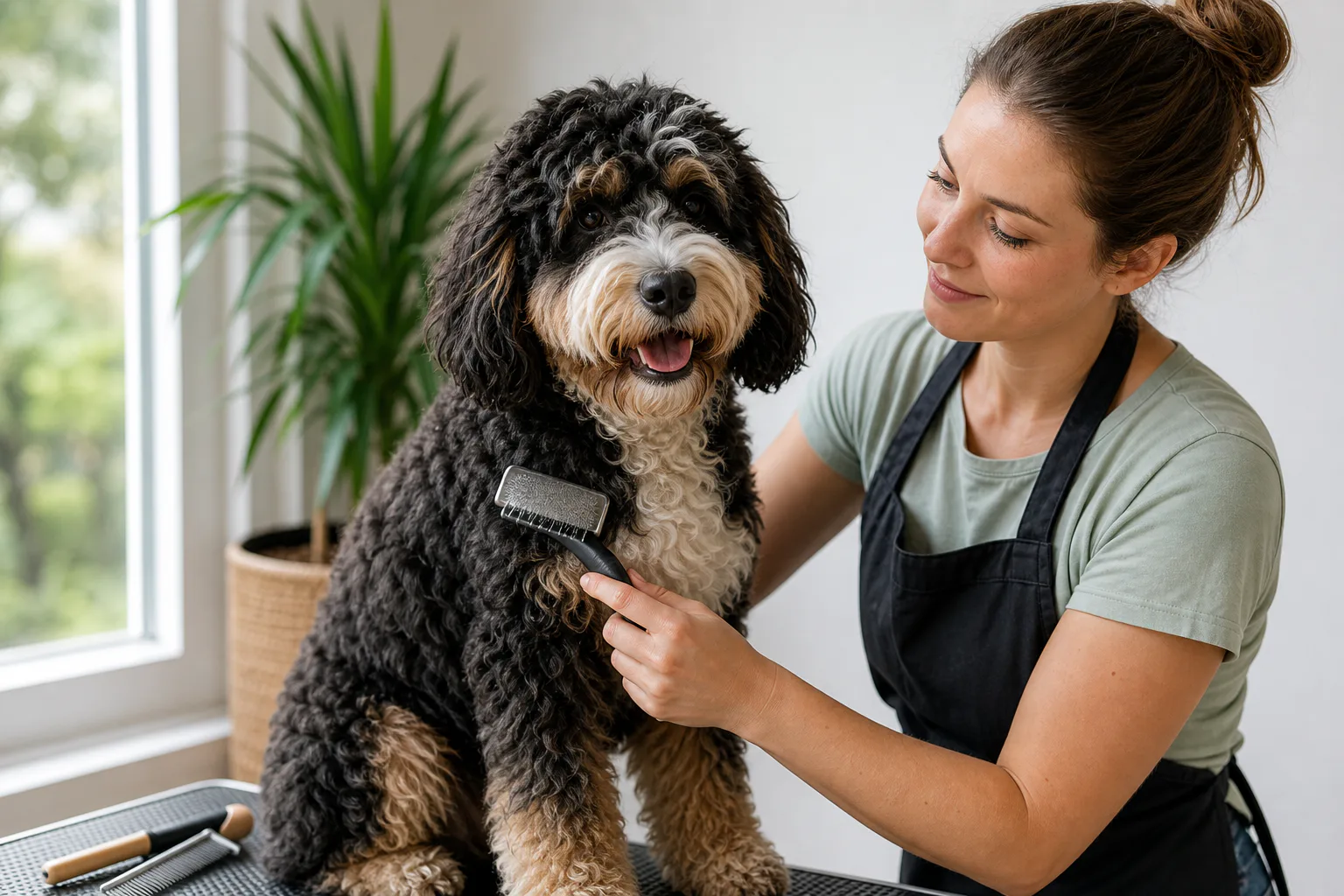
The coat may be wavy, curly, or relatively straight. Curlier coats often shed less visibly, but no dog is completely hypoallergenic, and low shedding does not eliminate dander or allergy reactions.
Regular brushing helps prevent mats, especially behind the ears, under the legs, around the collar, and along the tail. Professional grooming is also part of responsible ownership because coat length and texture can make home maintenance difficult.
- Brush frequently enough to reach the skin without pulling painfully.
- Check for tangles after outdoor play and moisture exposure.
- Keep ears clean and dry, particularly when the coat grows around the ear canal.
- Trim nails regularly and maintain routine dental care.
People comparing similarly sized doodle mixes can also review a mini Goldendoodle guide to see how coat, activity, and temperament expectations differ between the crosses.
Health Considerations
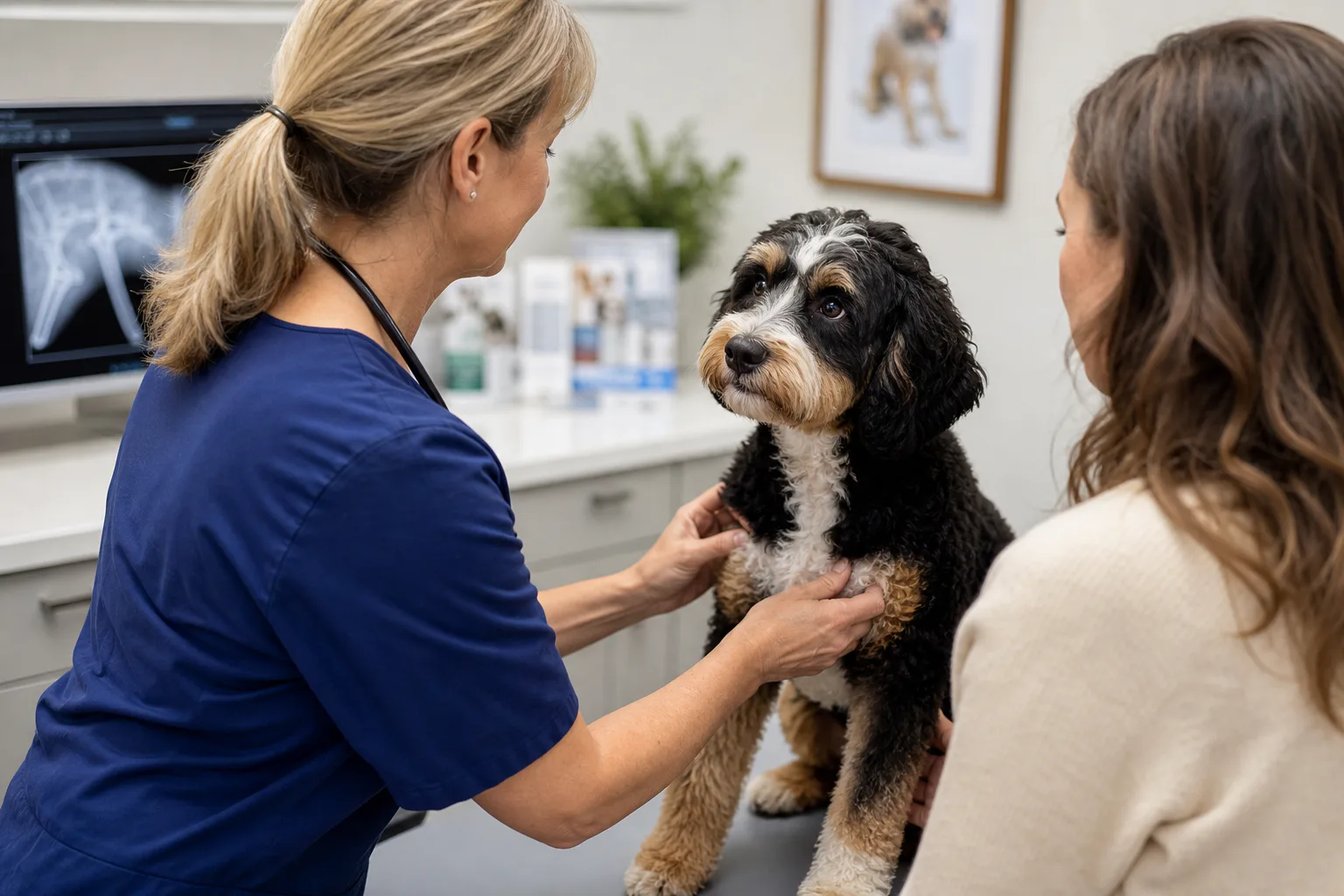
Mini Bernedoodles can inherit health risks associated with either parent breed. Responsible breeding includes health screening, transparent records, and careful selection of breeding dogs rather than relying on coat color or size alone.
- Hip and elbow disorders
- Eye conditions
- Patellar problems
- Allergies and skin irritation
- Ear infections, especially with dense or curly coats
- Inherited conditions associated with Bernese Mountain Dogs or Poodles
Routine veterinary examinations, weight management, dental care, vaccinations, parasite prevention, and prompt attention to changes in movement or appetite all support long-term health. Ask for documented parent health testing and a written contract before placing a deposit on a puppy.
F1, F1B, and F2 Generations
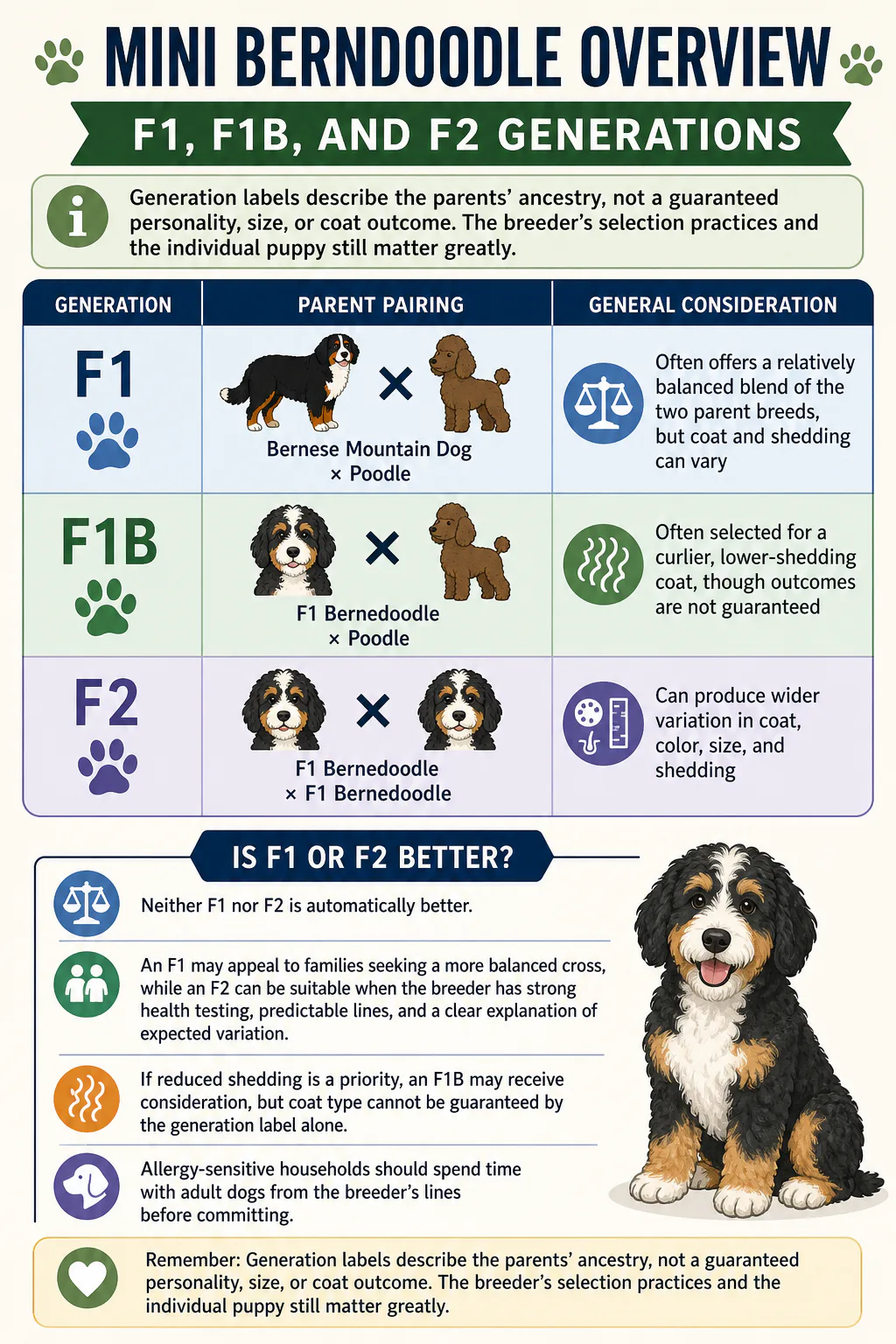
Generation labels describe the parents’ ancestry, not a guaranteed personality, size, or coat outcome. The breeder’s selection practices and the individual puppy still matter greatly.
| Generation | Parent pairing | General consideration |
|---|---|---|
| F1 | Bernese Mountain Dog × Poodle | Often offers a relatively balanced blend of the two parent breeds, but coat and shedding can vary |
| F1B | F1 Bernedoodle × Poodle | Often selected for a curlier, lower-shedding coat, though outcomes are not guaranteed |
| F2 | F1 Bernedoodle × F1 Bernedoodle | Can produce wider variation in coat, color, size, and shedding |
Is F1 or F2 better?
Neither F1 nor F2 is automatically better. An F1 may appeal to families seeking a more balanced cross, while an F2 can be suitable when the breeder has strong health testing, predictable lines, and a clear explanation of expected variation.
If reduced shedding is a priority, an F1B may receive consideration, but coat type cannot be guaranteed by the generation label alone. Allergy-sensitive households should spend time with adult dogs from the breeder’s lines before committing.
Pros and Cons
| Advantages | Challenges |
|---|---|
| Affectionate and people-oriented | Needs regular companionship and interaction |
| Intelligent and trainable | Can become bored without mental stimulation |
| Often adaptable to different homes | Adult size and coat can be difficult to predict |
| May shed less than a Bernese Mountain Dog | Requires consistent brushing and grooming |
| Can be sociable with children and other pets | Still requires supervision, training, and careful introductions |
Common Downsides
The main disadvantages are grooming commitment, variable shedding, the possibility of separation-related behavior, and uncertain adult size. Families sometimes choose a Mini Bernedoodle expecting a small, low-maintenance dog, then find that the adult is larger or more energetic than anticipated.
They are also not automatically allergy-safe. Anyone with significant allergies should test their reaction around adult dogs, bedding, and indoor spaces rather than relying on the term “hypoallergenic.”
Choosing a Responsible Breeder
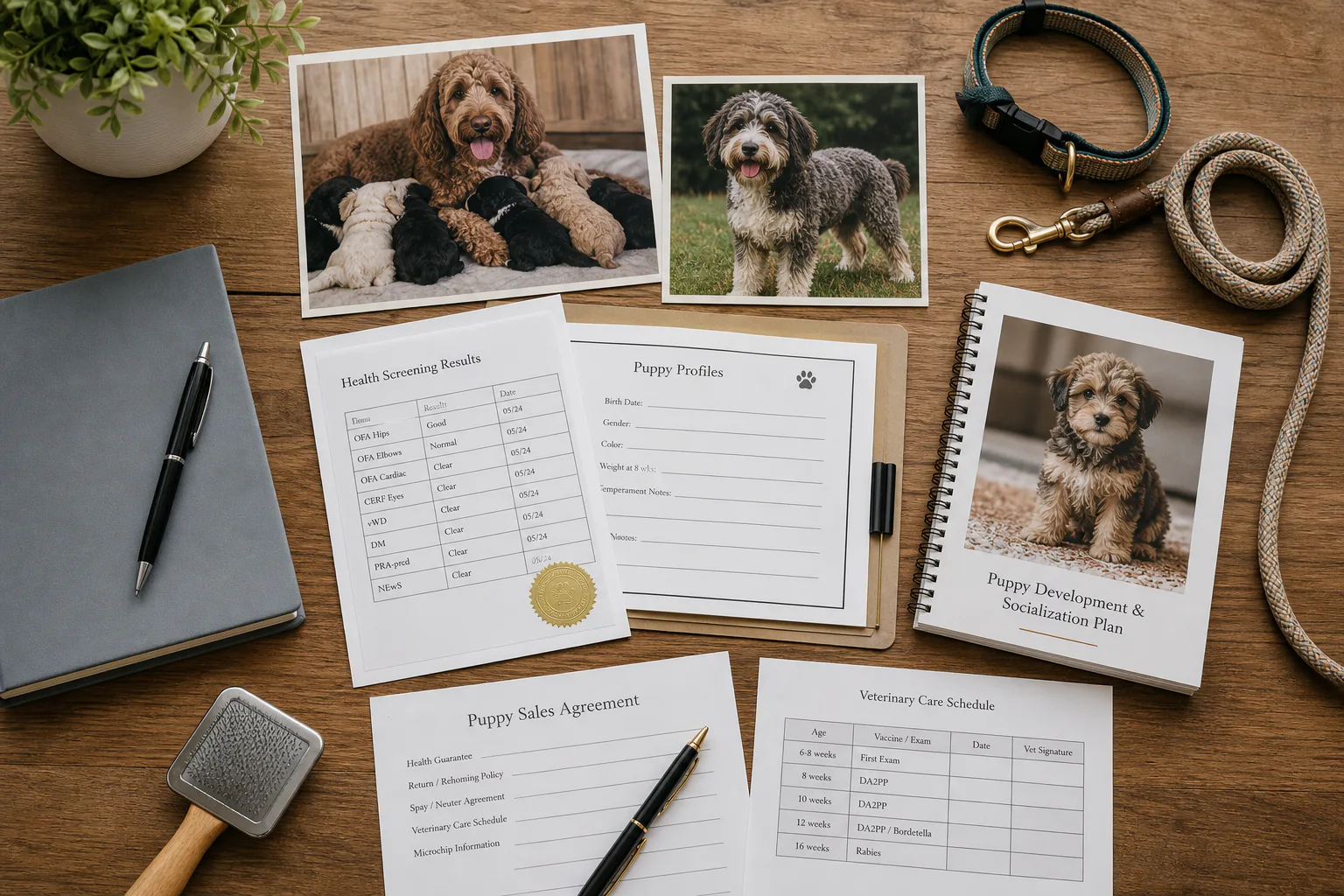
Look for a breeder who prioritizes health, temperament, puppy development, and lifelong support. A responsible conversation should include the parents’ sizes, health-testing documentation, expected adult range, coat-care requirements, socialization plan, and return policy.
- Verify health records instead of accepting verbal assurances.
- Meet the mother and, when possible, observe the father or review reliable records.
- Ask how puppies are exposed to handling, household sounds, grooming, and surfaces.
- Review the contract, veterinary schedule, and rehoming policy before purchase.
- Be cautious of sellers who promise a guaranteed coat, exact adult size, or allergy-free dog.
Frequently Asked Questions
How big do Mini Bernedoodles actually get?
Many Mini Bernedoodles weigh 20 to 45 pounds as adults, while some breeding lines produce dogs from approximately 18 to 65 pounds. Parent size and family history provide more useful information than the word “mini” by itself.
Are Mini Bernedoodles easy to train?
They are often responsive to reward-based training because they can inherit intelligence and eagerness to work from the Poodle side. Training should begin early and remain consistent, with special attention to jumping, mouthing, recall, leash skills, and calm behavior.
Do Mini Bernedoodles shed?
Some shed lightly, while others shed moderately or more noticeably. Coat texture and genetics determine shedding, so curly or wavy appearance alone does not guarantee a low-shedding dog.
What is the Mini Bernedoodle lifespan?
Longevity varies with genetics, body condition, preventive care, and inherited disease risk. A healthy lifestyle and careful veterinary care can support a longer life, but no breeder can guarantee an individual dog’s lifespan.
Is a Mini Bernedoodle Right for You?
A Mini Bernedoodle can suit an active household that wants an affectionate companion and is prepared for training, grooming, and regular social contact. It is a less suitable choice for someone seeking a guaranteed small size, a completely non-shedding coat, or a dog that can remain alone most of the day.
Before choosing one, assess your schedule, grooming budget, exercise routine, tolerance for coat variation, and ability to supervise children or other pets. The best decision depends less on the label and more on the individual dog, the quality of the breeding program, and the match between the dog’s needs and your home.