German Shepherd Overview: Traits, Care, Training, and Health
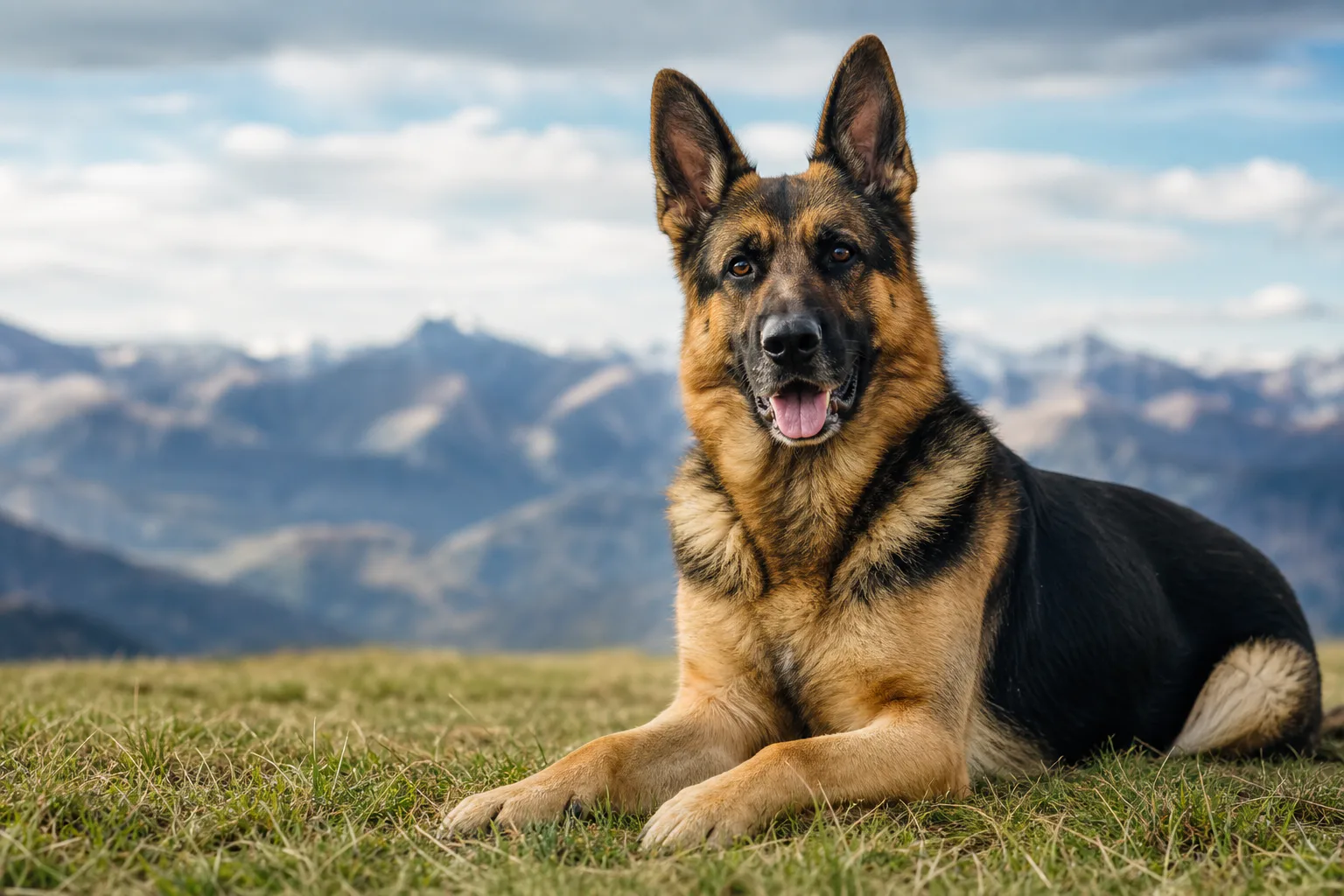
A German Shepherd combines intelligence, athleticism, loyalty, and courage in a single highly capable dog. This German Shepherd Overview explains the breed’s history, appearance, temperament, exercise needs, health considerations, training requirements, and suitability for different households.
At a Glance
| Characteristic | Typical description |
|---|---|
| Origin | Germany |
| Breed group | Herding |
| Adult height | 22 to 26 inches |
| Adult weight | 50 to 90 pounds |
| Coat | Double coat, usually medium length |
| Colors | Black and tan, sable, solid black, or bi-color |
| Typical lifespan | About 7 to 10 years |
| Daily activity | High; many adults need around two hours of exercise |
History and Original Purpose
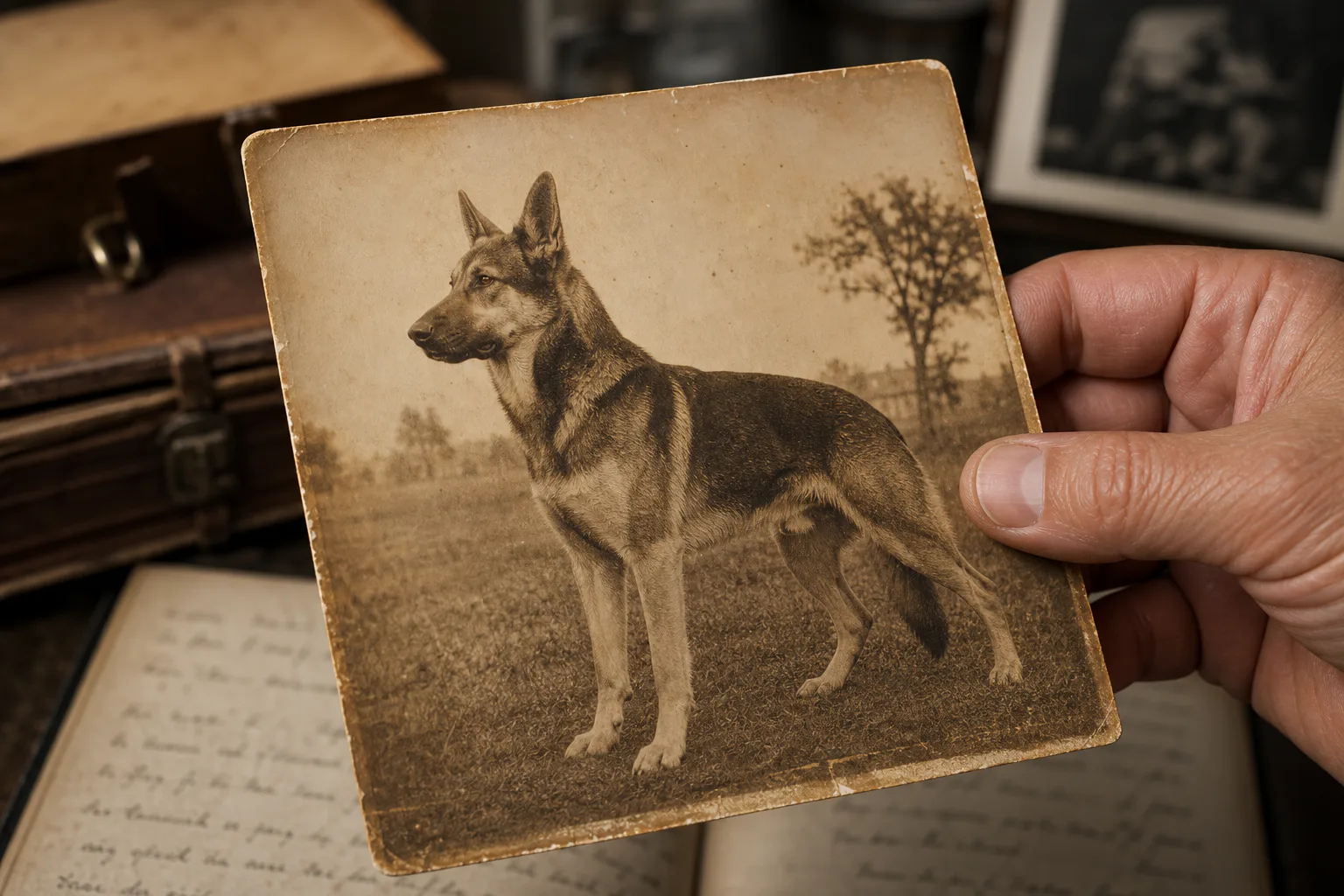
The German Shepherd originated in Germany as a herding and farm-working dog. Breeders selected dogs for intelligence, sound movement, stamina, courage, and the ability to respond closely to a handler rather than for appearance alone.
Captain Max von Stephanitz is widely associated with the organized development of the modern German Shepherd Dog in the late 19th century. As traditional herding work declined, the breed’s trainability helped it move into police work, military service, search and rescue, protection, and assistance roles.
Today, the German Shepherd remains a versatile working dog, but it is also a popular family companion. Its working heritage still influences everyday behavior: the breed often wants a clear purpose, regular interaction, and meaningful tasks.
Appearance and Physical Traits
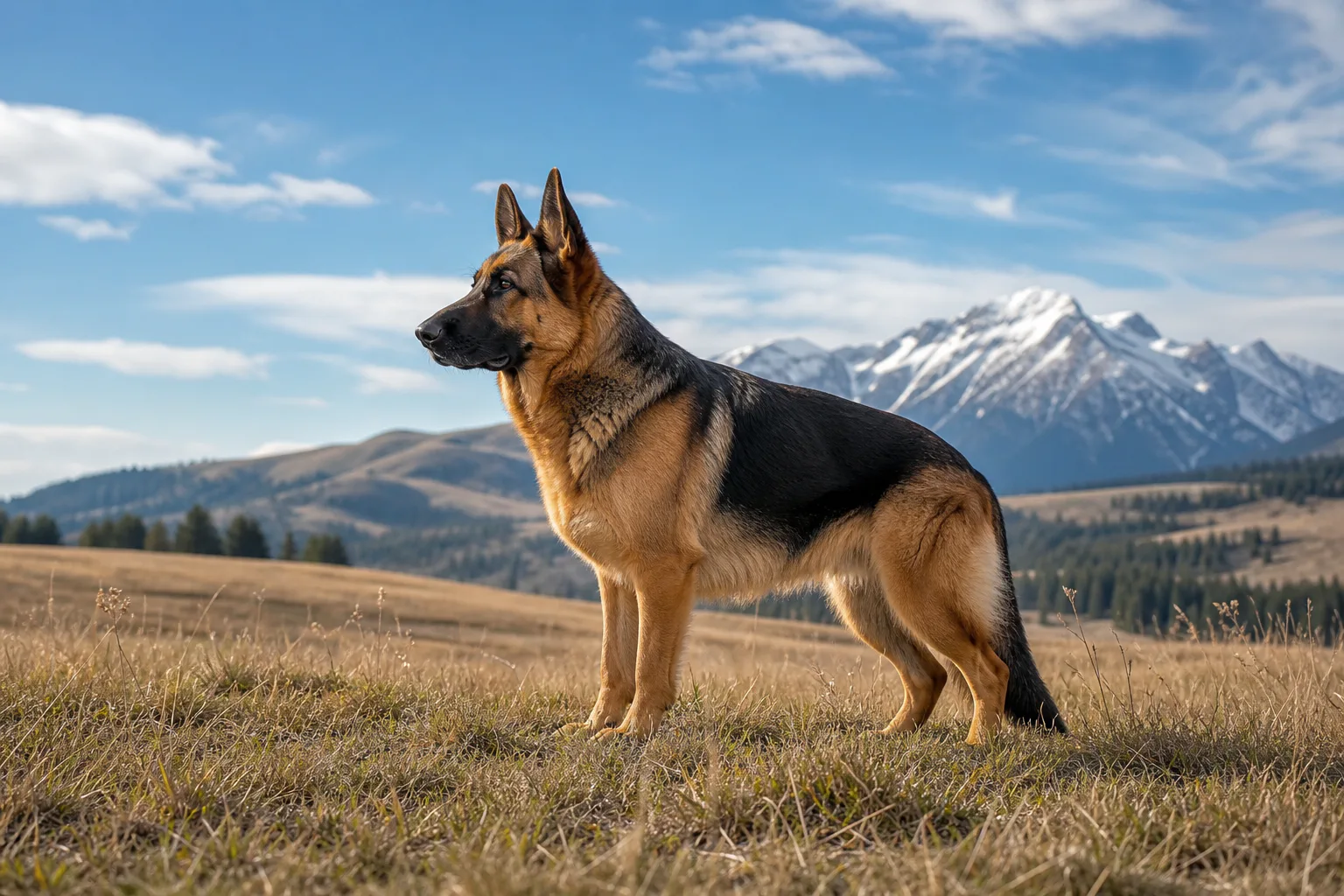
German Shepherds are large, muscular, agile dogs with a balanced outline and an alert expression. Males commonly stand within the upper end of the 22-to-26-inch range, while females are generally smaller, although individual dogs vary.
The breed has a double coat made of a dense undercoat and a protective outer coat. Coat length can range from shorter to longer varieties, but all German Shepherds shed and experience heavier seasonal shedding at certain times of year.
- Common colors: black and tan, sable, solid black, and bi-color.
- Build: strong, athletic, and designed for sustained movement.
- Weight: generally 50 to 90 pounds.
- Grooming: regular brushing is needed to control loose hair and maintain coat condition.
Appearance should not be separated from structure. A healthy German Shepherd needs functional movement, stable joints, and a body condition that supports activity. Excess weight places additional stress on the hips, elbows, and spine.
German Shepherd Temperament
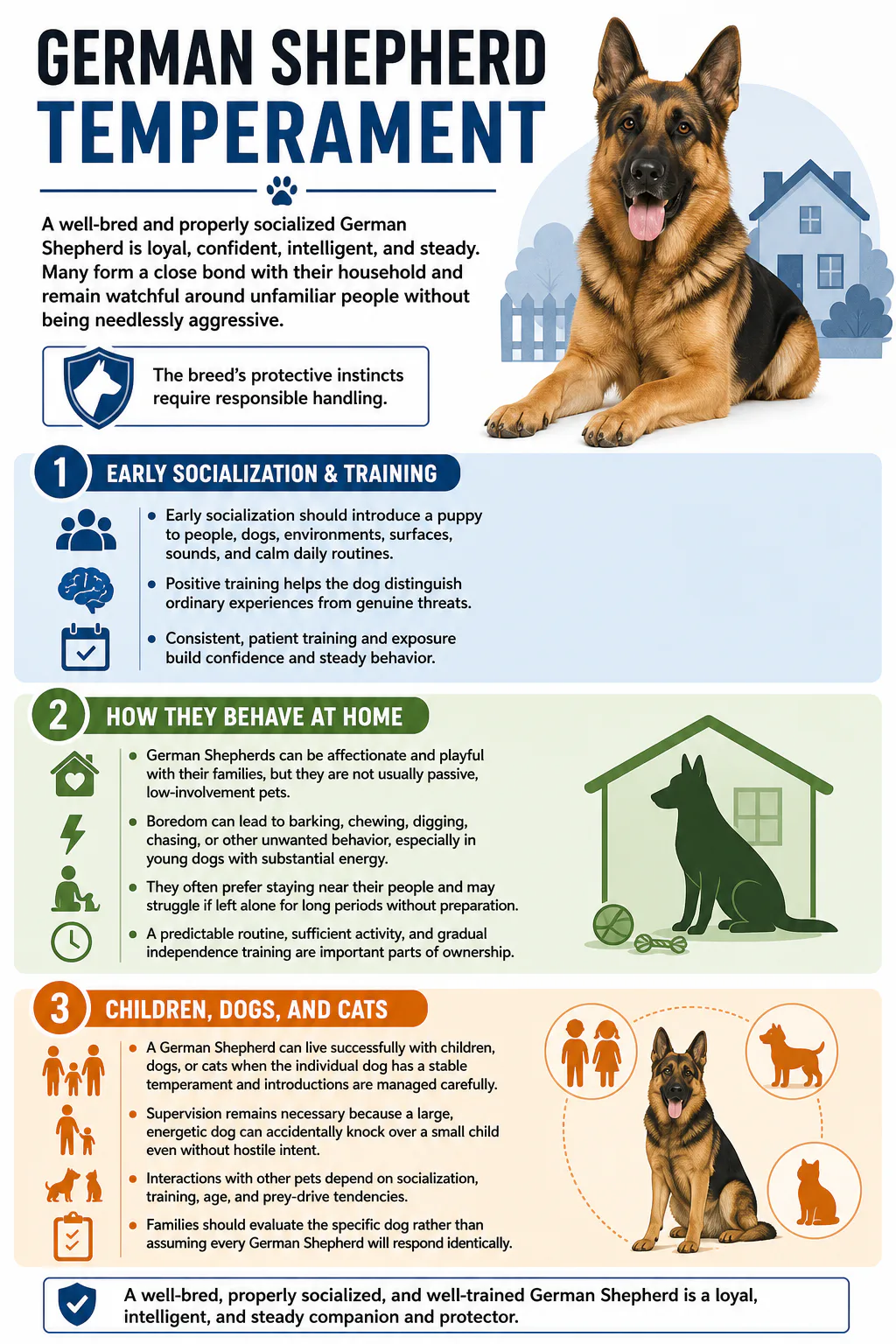
A well-bred and properly socialized German Shepherd is loyal, confident, intelligent, and steady. Many form a close bond with their household and remain watchful around unfamiliar people without being needlessly aggressive.
The breed’s protective instincts require responsible handling. Early socialization should introduce a puppy to people, dogs, environments, surfaces, sounds, and calm daily routines. Positive training helps the dog distinguish ordinary experiences from genuine threats.
How They Behave at Home
German Shepherds can be affectionate and playful with their families, but they are not usually passive, low-involvement pets. Boredom can lead to barking, chewing, digging, chasing, or other unwanted behavior, especially in young dogs with substantial energy.
They often prefer staying near their people and may struggle if left alone for long periods without preparation. A predictable routine, sufficient activity, and gradual independence training are important parts of ownership.
Children, Dogs, and Cats
A German Shepherd can live successfully with children, dogs, or cats when the individual dog has a stable temperament and introductions are managed carefully. Supervision remains necessary because a large, energetic dog can accidentally knock over a small child even without hostile intent.
Interactions with other pets depend on socialization, training, age, and prey-drive tendencies. Families should evaluate the specific dog rather than assuming every German Shepherd will respond identically.
Training and Mental Stimulation
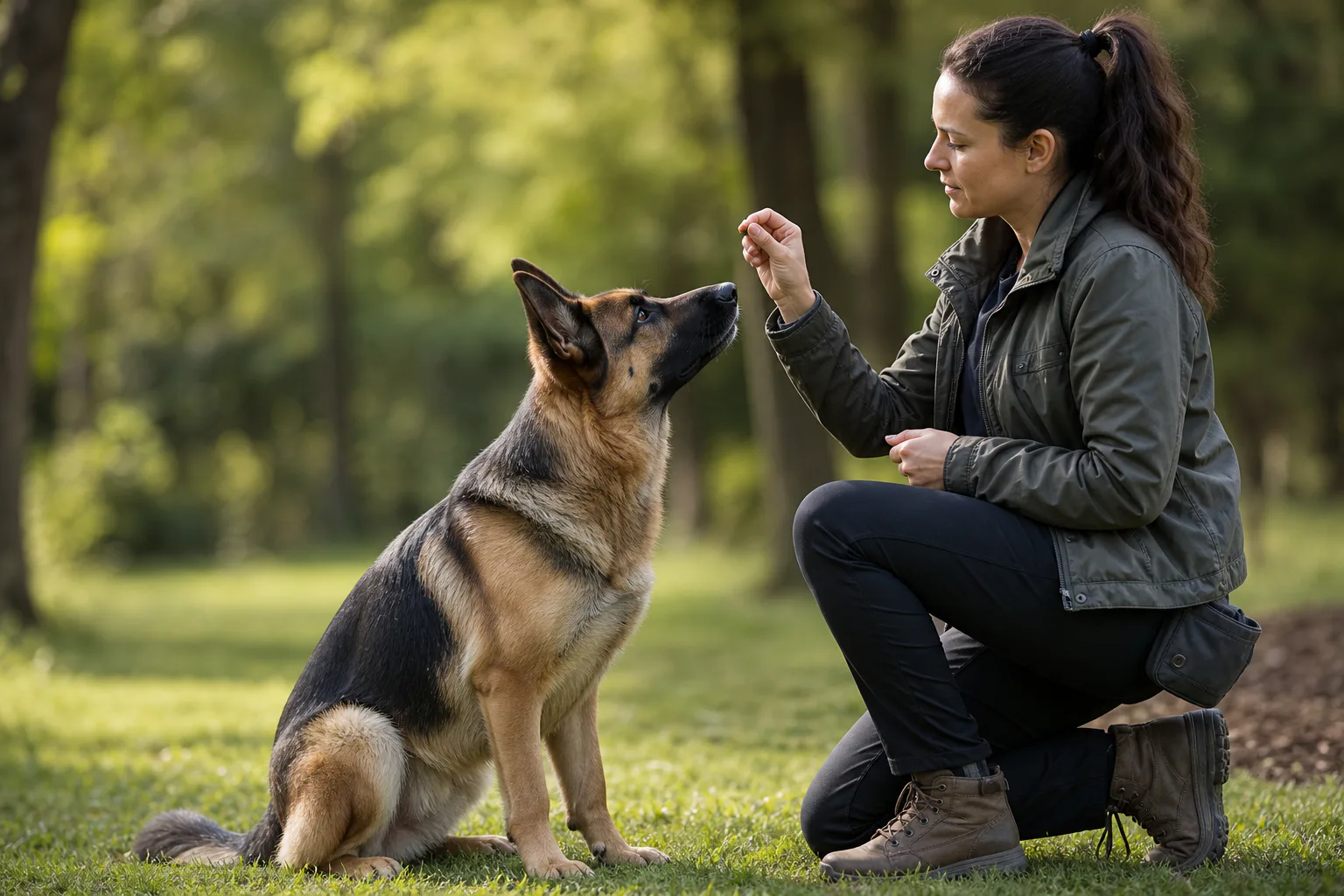
German Shepherds learn quickly and often respond well to reward-based training. Their intelligence is an advantage, but it also means they notice inconsistency and can develop efficient ways to obtain attention or avoid tasks.
- Begin training and socialization early.
- Use short, clear sessions with consistent cues.
- Reward calm behavior, not only high-energy performance.
- Teach practical skills such as recall, loose-leash walking, settling, and polite greetings.
- Increase distractions gradually rather than expecting immediate reliability in busy places.
Mental work can include scent games, obedience exercises, retrieval, tracking, structured problem-solving, and appropriate dog sports. Training should develop self-control as well as drive; a dog that can work intensely should also learn how to relax.
Exercise Requirements
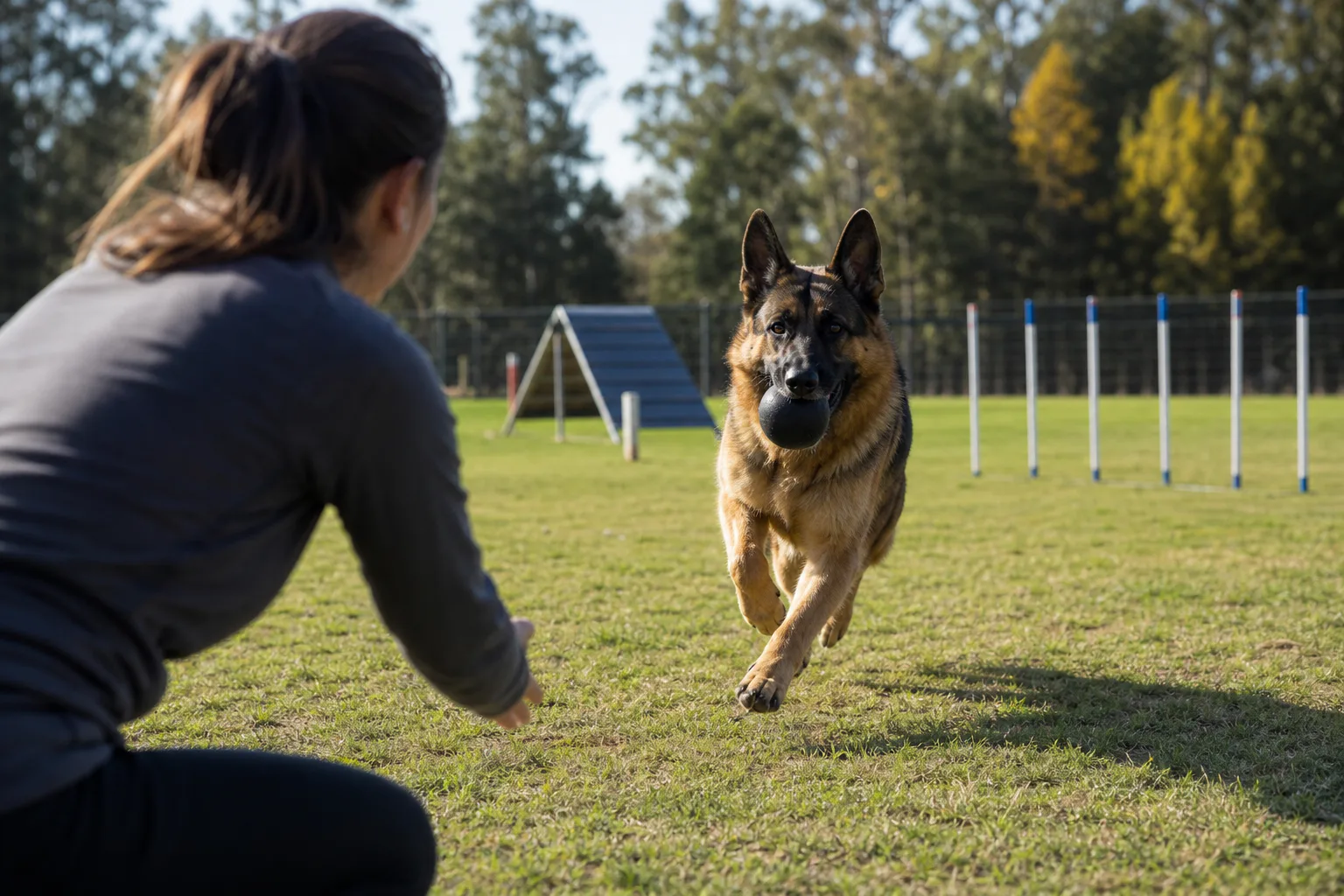
German Shepherds are active dogs that need more than brief bathroom walks. Many require around two hours of daily exercise, although the right amount depends on age, health, conditioning, and the type of activity.
- Brisk walks and hikes
- Retrieving and controlled play
- Obedience or scent-training sessions
- Agility, tracking, or other suitable canine activities
- Supervised off-leash movement in a secure area
Puppies need carefully managed activity because their bones and joints are still developing. Repetitive jumping, forced running, and excessive impact are poor substitutes for age-appropriate play, training, and rest.
For households seeking a generally sociable active companion, a Labrador Retriever may offer a different social profile, while still requiring substantial daily activity.
Health and Daily Care
German Shepherds can be affected by orthopedic, digestive, neurological, and other inherited or acquired health problems. Responsible breeding, appropriate nutrition, weight control, routine veterinary care, and sensible exercise all support long-term welfare.
Common Concerns
- Hip and elbow disorders
- Degenerative spinal conditions
- Digestive sensitivity and gastrointestinal problems
- Skin and allergy-related issues
- Eye problems
- Age-related disease, including cancer
Health screening is important when choosing a puppy. Prospective owners should ask for relevant parental health records, review the breeder’s practices, meet the mother when possible, and avoid selecting a puppy solely for unusually large size, extreme structure, or dramatic coloring.
Grooming Needs
The double coat needs regular brushing, with more frequent grooming during heavy shedding periods. Bathing should be based on the dog’s lifestyle and coat condition, while nails, ears, teeth, and skin should be checked routinely.
German Shepherds usually have low drool compared with many large breeds, but they can be frequent vocalizers. Neighbors and household members should be prepared for alert barking and should train a reliable quiet cue without punishing fear or anxiety.

Pros and Cons
| Advantages | Challenges |
|---|---|
| Highly intelligent and trainable | Requires substantial daily exercise |
| Loyal and closely bonded to family | Sheds throughout the year |
| Capable in many working and sporting roles | Needs early socialization and consistent guidance |
| Alert and naturally protective | Can bark, become overprotective, or develop anxiety without proper management |
| Enjoys learning and purposeful activity | Health and orthopedic concerns require attention |
Male or Female German Shepherd?
Neither sex is automatically nicer. Individual temperament, breeding, early experiences, training, socialization, and the household environment have more influence on behavior than whether the dog is male or female.
Males are often larger and may be more physically imposing. Females are often somewhat smaller, which can make handling easier for some owners, but size and personality vary substantially within both sexes.
Choose the individual dog whose energy, confidence, sociability, and recovery from new experiences fit your home. A responsible breeder or rescue organization should help match temperament rather than promising that one sex is universally calmer or friendlier.
Four Common Breed Types
The phrase “four types of German Shepherd” usually refers to informal line or regional groupings, not four separate breeds recognized in the same way. Labels can overlap, and working ability and health should matter more than a marketing category.
- West German working lines: bred with emphasis on performance, trainability, and working ability.
- West German show lines: selected for conformation alongside temperament and working traits.
- East German or DDR lines: associated with historical working-line development and strong working emphasis.
- American or Canadian show lines: commonly discussed as a separate regional type, with selection often focused more heavily on appearance.
These descriptions do not predict every dog’s behavior. Ask about health testing, titles or working evaluations, temperament, socialization, and the breeder’s goals before relying on a line name.
Is This Breed Right for You?
A German Shepherd is a strong match for an active owner who wants an engaged, trainable dog and can provide daily exercise, companionship, boundaries, and ongoing learning. A secure environment is helpful, but a yard alone does not meet the breed’s need for interaction and purposeful activity.
The breed may be difficult for people seeking a quiet, independent, low-shedding, or low-exercise pet. Owners should also be comfortable managing a large dog with protective instincts and arranging veterinary care for a breed with important orthopedic and other health considerations.
Families comparing large, active companions may also want to consider a Golden Retriever, whose usual social style differs from the more watchful German Shepherd. The right choice depends on the household’s experience, schedule, activity level, and expectations.
Frequently Asked Questions
What are five facts about German Shepherds?
- They originated in Germany.
- They were originally developed for herding and farm work.
- They are highly intelligent and widely used as working dogs.
- They have a double coat and shed regularly.
- They commonly stand 22 to 26 inches tall and weigh 50 to 90 pounds.
What is a German Shepherd’s weakness?
The breed’s main weaknesses are its high exercise needs, regular shedding, protective instincts, and potential health problems. Without enough activity and guidance, an intelligent German Shepherd can become bored, vocal, anxious, or difficult to control.
What are the pros and cons?
The major advantages are intelligence, loyalty, athletic ability, trainability, and versatility. The main disadvantages are the time required for exercise and training, shedding, possible barking or overprotectiveness, and the need to manage breed-related health risks.
What do German Shepherds usually die from?
Causes of death vary by individual dog and age. Serious disease can include cancer, degenerative spinal conditions, digestive emergencies, and other age-related or inherited illnesses. Regular veterinary examinations and prompt attention to changes in appetite, mobility, digestion, or behavior are important.
How much does a German Shepherd puppy cost?
German Shepherd puppy prices vary by location, breeder, lineage, health testing, registration, and early veterinary care. The purchase price is only one part of ownership; food, training, grooming, equipment, insurance, and medical care should be included in the household budget.
Can a German Shepherd live in an apartment?
Apartment living is possible for some German Shepherds when the owner provides adequate daily exercise, training, enrichment, and quiet-time practice. A large home or yard does not replace these needs, while a well-managed dog can adapt better than an under-exercised dog in a larger property.
Final Recommendation
Choose a German Shepherd if you want an intelligent, active, loyal companion and are prepared to invest in training, exercise, socialization, grooming, and health care. Meet the individual dog carefully, investigate the breeder or rescue organization, and prioritize stable temperament and sound health over appearance or popularity.
For owners who want a smaller mixed-breed alternative with some similar companion qualities, a Mini Bernedoodle represents a different size, coat, and activity profile, so the comparison should focus on practical daily fit rather than labels alone.