Labrador Retriever Overview: Traits, Care, and Breed Facts

A Labrador Retriever is a friendly, intelligent, athletic dog suited to active families, working roles, and owners who can provide daily exercise and training. This Labrador Retriever Overview explains the breed’s origins, appearance, temperament, care needs, training demands, and suitability so you can decide whether a Lab fits your household.
At a Glance
| Characteristic | Typical description |
|---|---|
| Other name | Labrador |
| Origin | Newfoundland and the United Kingdom |
| Group | Sporting |
| Male height | 22–22.5 inches |
| Female height | 21.5–22 inches |
| Male weight | 65–80 pounds |
| Female weight | 55–70 pounds |
| Coat colors | Black, chocolate, and yellow |
History and Purpose
The Labrador Retriever developed from working dogs associated with Newfoundland fishing communities. These dogs helped retrieve nets, lines, and fish from cold water before the breed was refined in the United Kingdom as a gun dog for retrieving waterfowl and upland game.
The breed’s physical design reflects that work. A water-resistant double coat, webbed feet, strong swimming ability, and thick “otter tail” helped Labs retrieve objects in difficult water conditions. Their willingness to work closely with people also made them useful beyond hunting.
Today, Labradors serve as family companions, assistance dogs, therapy dogs, detection dogs, and water-rescue dogs. Their working ability remains important, but most Labs live as household pets that need their physical and mental needs met through structured activity.
Appearance and Size
Labradors are medium-to-large, strongly built dogs with a broad head, drop ears, expressive eyes, and a balanced athletic frame. Breed standards emphasize sound movement and functional structure rather than exaggerated features.
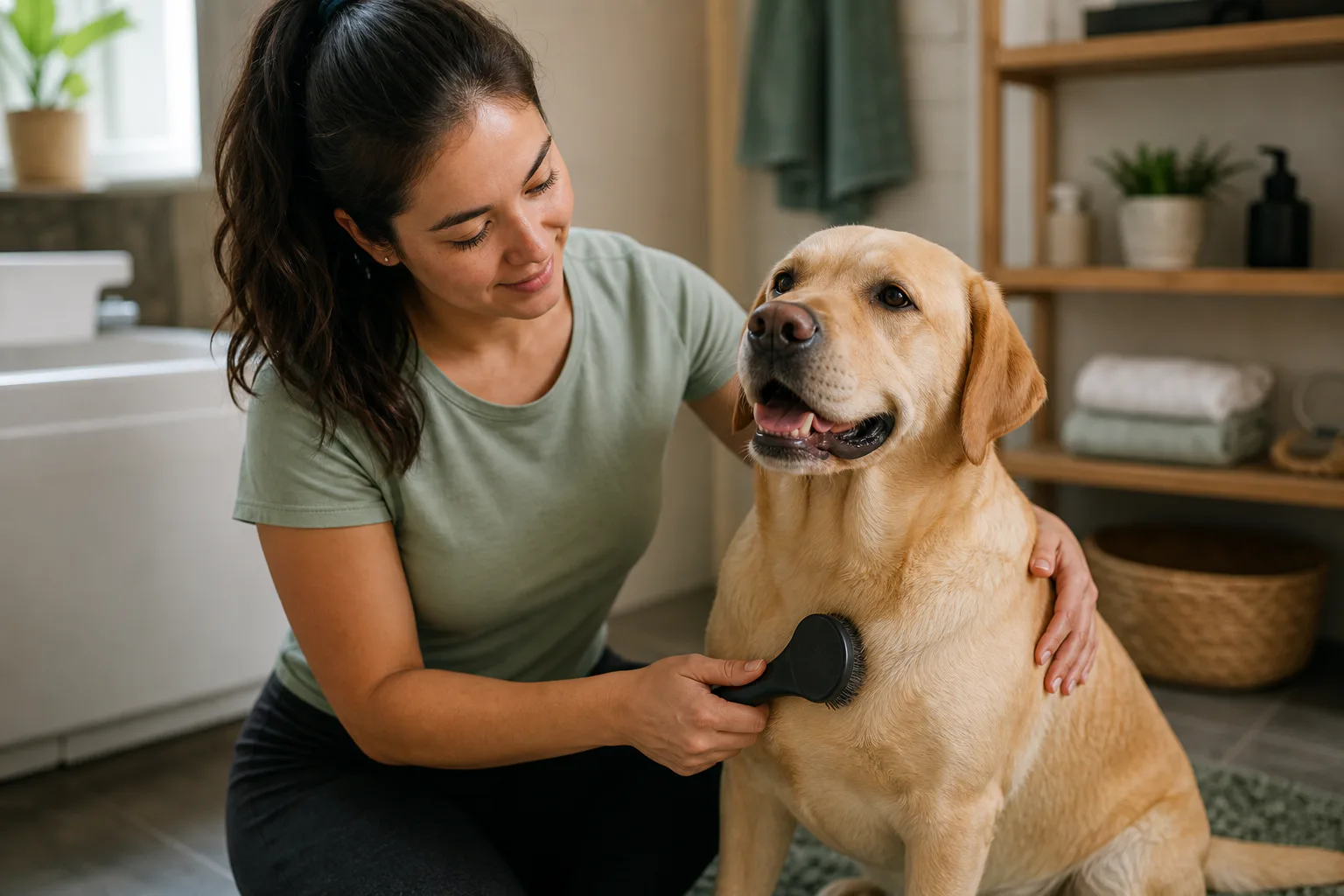
The short, dense double coat provides weather protection and sheds throughout the year. The outer coat feels firm and fairly short, while the undercoat adds insulation. Regular brushing helps remove loose hair, but no grooming routine can eliminate seasonal shedding.
Recognized Colors
- Black: The coat is solid black, although a small white marking on the chest can occur.
- Chocolate: Shades range from lighter milk chocolate to deeper brown.
- Yellow: The color can range from pale cream to richer golden or fox-red shades.
Color does not determine whether a Labrador is affectionate, trainable, or suitable for family life. Structure, breeding, early socialization, training, and daily care have a much greater effect on the individual dog’s behavior and performance.

Labrador Retriever Personality
The typical Labrador is outgoing, affectionate, responsive, and eager to participate in family activities. Labs often enjoy meeting people and playing with other dogs, but friendliness is not a substitute for socialization and supervision.
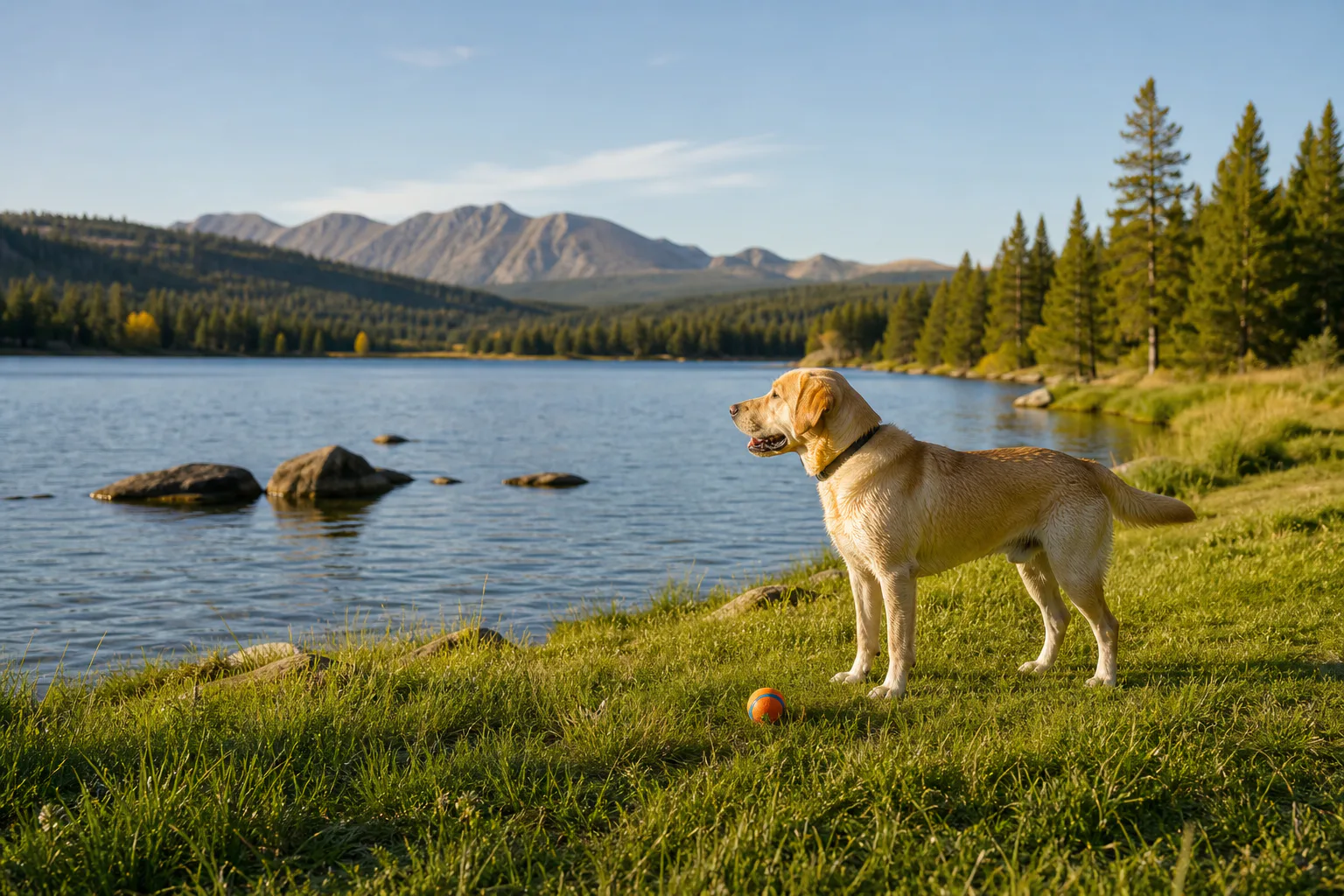
They were bred to retrieve, so many Labs naturally enjoy carrying objects, swimming, searching, and returning items to their handlers. This instinct can make fetch and retrieval games useful training activities, provided play remains controlled and does not become the dog’s only form of exercise.
A young Labrador can be energetic, mouthy, and easily distracted. Consistent boundaries, reward-based training, and suitable chew items help channel that energy into acceptable behavior.
Exercise and Mental Stimulation
Labradors need regular physical activity and purposeful interaction. A short bathroom walk is not enough for many healthy adult Labs, especially those from energetic working lines.
- Brisk walks or hikes
- Retrieval games with clear start and stop cues
- Swimming in safe, supervised water
- Obedience practice and scent games
- Food puzzles and structured problem-solving
Exercise should match the dog’s age, fitness, health, and training level. Puppies need play, short training sessions, and controlled movement rather than forced endurance exercise, while older dogs may benefit from lower-impact walks and swimming.
Training a Labrador
Labs are intelligent and generally motivated by food, toys, praise, or access to an enjoyable activity. Their enthusiasm can make them quick learners, but it can also cause rushing, jumping, pulling, or grabbing if training does not begin early.
Skills to Prioritize
- Responding reliably to their name and recall cue
- Walking politely on a leash
- Waiting at doors, gates, and food bowls
- Greeting people without jumping
- Releasing objects on cue
- Settling calmly indoors
Short, frequent sessions usually work better than long lessons that leave the dog frustrated or overstimulated. Reward the behavior you want, prevent opportunities for unsafe behavior, and increase distractions gradually as the dog becomes reliable.
Care and Grooming
Labrador grooming is straightforward, but the breed’s shedding requires regular attention. Brushing once or twice a week can remove loose coat and distribute skin oils, with more frequent brushing during heavy shedding periods.
- Check and clean the ears as directed by a veterinarian, particularly after swimming.
- Trim nails before they become long enough to affect movement.
- Brush the teeth regularly with dog-safe dental products.
- Use a properly fitted collar or harness and inspect the skin after outdoor activity.
- Keep fresh water available, especially after exercise.
Labradors often enjoy food and can gain excess weight when portions, treats, and activity are not balanced. Measured meals, sensible treats, and routine body-condition checks support mobility and overall health.
Health and Responsible Ownership
A Labrador’s health depends on genetics, nutrition, exercise, preventive veterinary care, and weight management. Prospective owners should ask breeders or adoption organizations about health history, temperament, and the conditions that have affected related dogs.
Common ownership concerns include joint problems, inherited eye conditions, ear irritation, and weight gain. Regular veterinary examinations can identify developing problems early and help establish an appropriate vaccination, parasite-prevention, dental-care, and nutrition plan.
Responsible breeding focuses on stable temperament, functional structure, and appropriate health screening rather than appearance alone. Adoption can also be a good route for people prepared to assess an individual dog’s behavior, energy level, and previous experiences.
Labs With Children and Pets
A well-socialized Labrador can be an excellent family dog because it is generally affectionate, playful, and willing to engage with people. However, a large, energetic dog can accidentally knock over a young child, and no dog should be left unsupervised with children.
Children should learn to leave the dog alone while it eats, sleeps, or rests. Adults should supervise play, manage food and toys, and provide the dog with a quiet space where it can retreat without being disturbed.
Many Labs live successfully with other dogs and household pets, but introductions should be gradual and controlled. A dog’s individual prey drive, social history, and training matter more than breed reputation alone.
American and English Labradors
“American Labrador” and “English Labrador” are informal labels rather than separate breeds. They often describe different breeding preferences: American-type Labs are commonly associated with a leaner, more athletic outline, while English-type Labs are often bred for a heavier build and a more substantial head.
These labels do not guarantee a specific personality or energy level. Ask about the parents’ work, temperament, structure, and health rather than choosing a puppy based only on a regional type.
Labrador Versus Golden Retriever
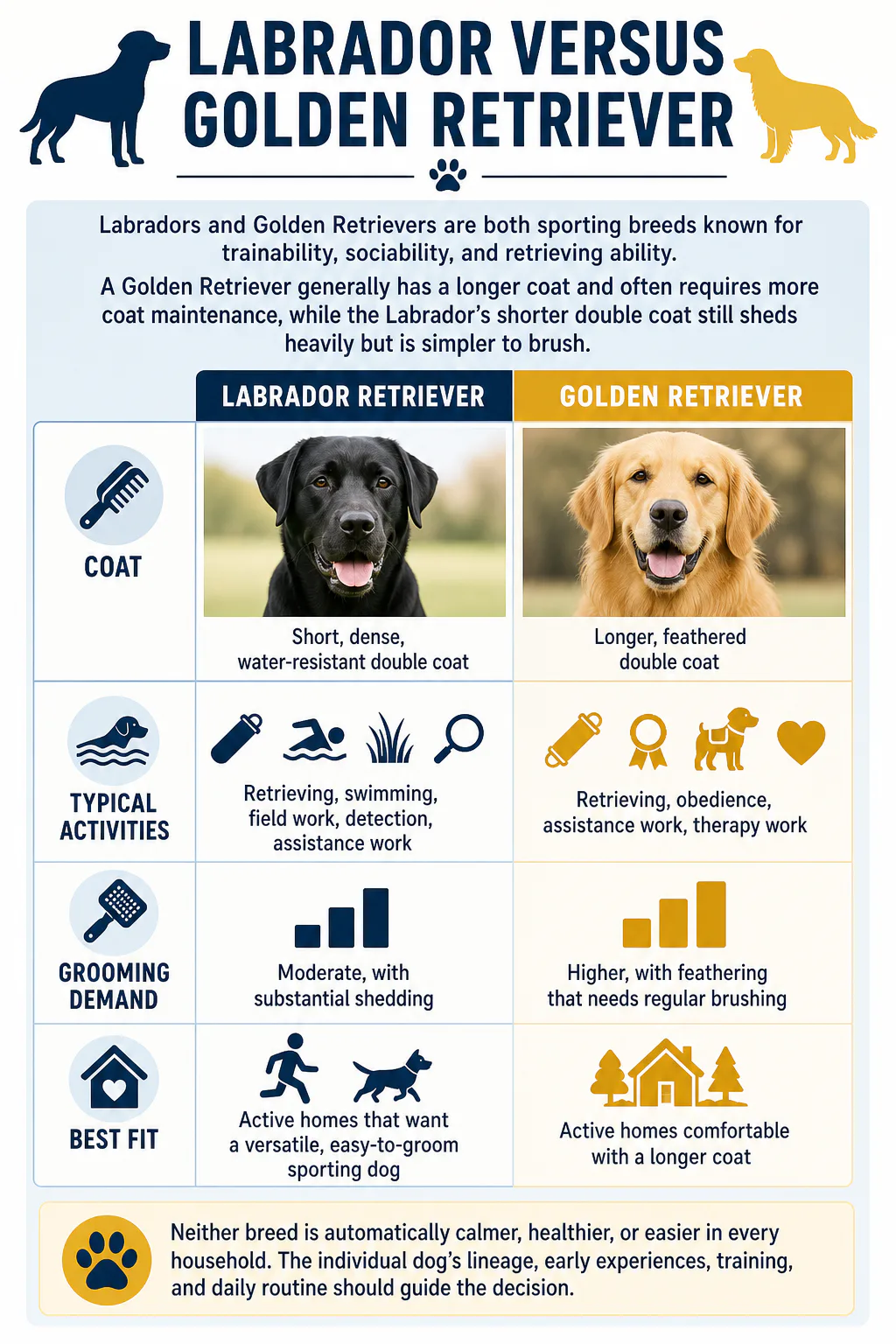
Labradors and Golden Retrievers are both sporting breeds known for trainability, sociability, and retrieving ability. A Golden Retriever generally has a longer coat and often requires more coat maintenance, while the Labrador’s shorter double coat still sheds heavily but is simpler to brush.
| Feature | Labrador Retriever | Golden Retriever |
|---|---|---|
| Coat | Short, dense, water-resistant double coat | Longer, feathered double coat |
| Typical activities | Retrieving, swimming, field work, detection, assistance work | Retrieving, obedience, assistance work, therapy work |
| Grooming demand | Moderate, with substantial shedding | Higher, with feathering that needs regular brushing |
| Best fit | Active homes that want a versatile, easy-to-groom sporting dog | Active homes comfortable with a longer coat |
Neither breed is automatically calmer, healthier, or easier in every household. The individual dog’s lineage, early experiences, training, and daily routine should guide the decision.
Choosing a Labrador Puppy
Before bringing home a Labrador puppy, consider the time required for toilet training, socialization, supervision, exercise, and basic obedience. Puppies need a predictable routine and careful exposure to people, surfaces, sounds, handling, and safe environments.
- Meet the mother and, when possible, observe the puppies in their home environment.
- Look for clean conditions, confident behavior, and willingness to interact without extreme fear.
- Review veterinary records and the health history of the parents.
- Ask how the puppies have been handled and socialized.
- Choose a breeder or rescue organization that answers questions clearly and prioritizes welfare.
Families comparing breeds should evaluate adult size, shedding, exercise requirements, and temperament rather than selecting only by appearance. A mini Bernedoodle, for example, has a different mix of breed traits and care considerations, so crossbreed labels should not be treated as a guarantee of behavior or maintenance.

Is a Labrador Right for You?
A Labrador is a strong match for owners who want an active, people-oriented companion and can provide training throughout the dog’s life. The breed is less suitable for a household seeking a quiet, low-exercise dog that can be left alone for long periods.
- Choose a Labrador if you enjoy walking, outdoor activities, training, or interactive play.
- Plan carefully if you have limited time for exercise and supervision.
- Expect shedding, food motivation, and energetic behavior during the early years.
- Consider an adult Labrador if you want a clearer view of established size and temperament.
People seeking a smaller companion may compare other breeds, but size alone does not predict ease of care. A mini Goldendoodle can differ from a Labrador in coat, grooming, size, and inherited traits, making a direct lifestyle comparison more useful than relying on popularity.
Frequently Asked Questions
Are Labradors good first dogs?
They can be, especially for owners ready to provide daily exercise, consistent training, and close supervision during puppyhood. Their sociable nature and responsiveness are helpful, but their energy and size require active involvement.
Do Labradors shed a lot?
Yes. Their short double coat sheds throughout the year and often more heavily during seasonal coat changes. Regular brushing reduces loose hair but does not stop shedding.
Can Labradors live in apartments?
They can live in an apartment if the owner provides adequate exercise, training, enrichment, and bathroom opportunities. Access to a yard is convenient but does not replace purposeful activity or companionship.
What are Labradors bred to do?
Labradors were developed as retrieving gun dogs, particularly for waterfowl and other game. Their retrieving instinct, swimming ability, trainability, and cooperative temperament also support modern assistance, detection, therapy, and rescue work.
Final Recommendation
The Labrador Retriever is a versatile choice for an active household that values affection, trainability, and outdoor companionship. Before choosing one, assess your schedule, space, tolerance for shedding, and ability to provide structured exercise and lifelong training. The best match is an individual Lab whose energy and temperament fit your daily routine.