Raaw Energy Pet Food Recall: Affected Products, Codes, and Safety Steps
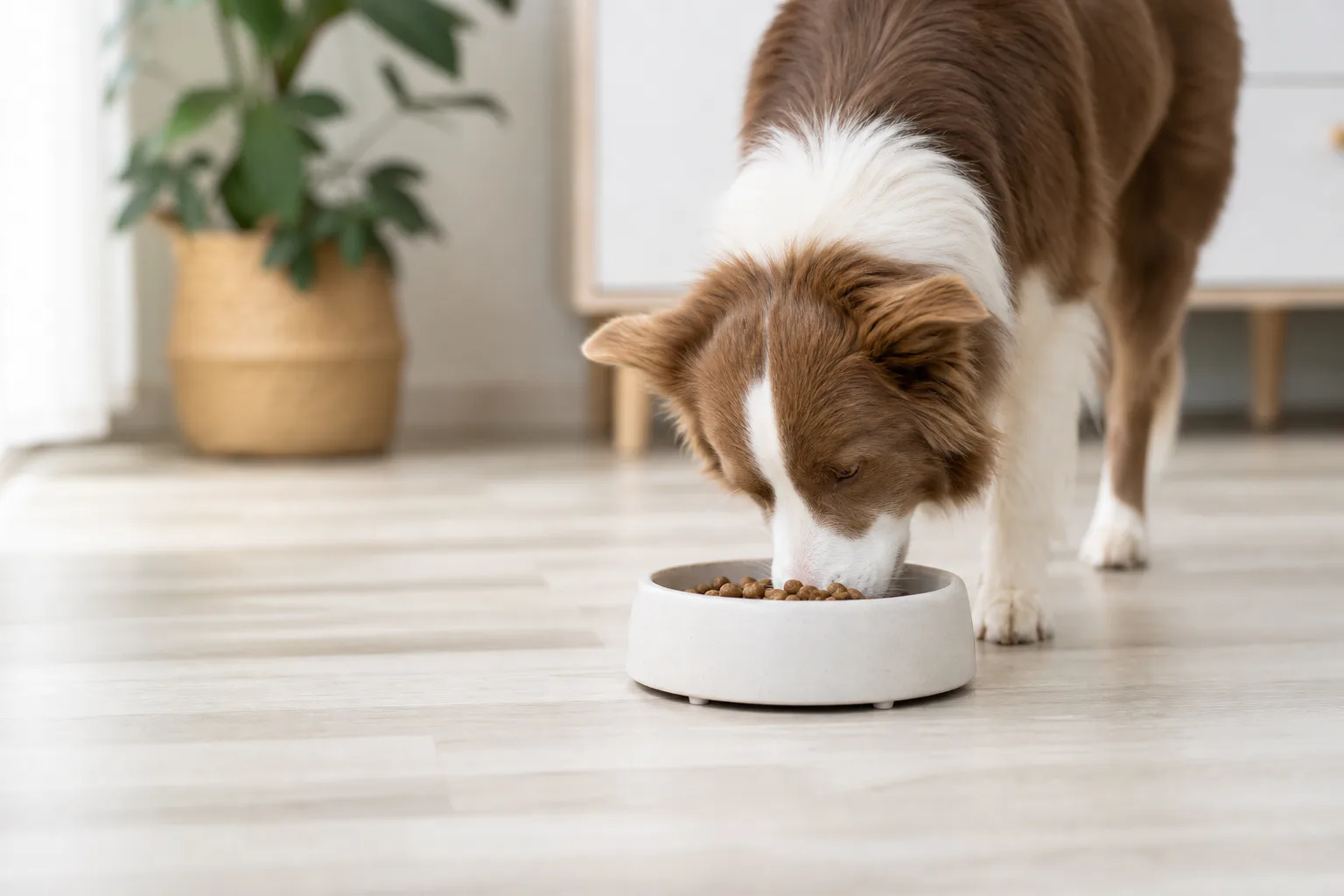
Raaw Energy has expanded a voluntary recall of its raw frozen dog food because of possible contamination with Listeria monocytogenes. The affected production period is July 17, 2025, through December 23, 2025, and an additional Beef and Turkey Medley product with the manufacturing date code 3.31.26 is included. Do not feed, sell, donate, or consume any product covered by the recall. The date code, rather than a conventional lot number, is the key way to check your packaging.
Recall status
The expanded recall covers more than 180 lots distributed to customers in Connecticut, Delaware, Massachusetts, Maryland, New Hampshire, New Jersey, New York, Pennsylvania, and Virginia. Raaw Energy products were ordered through the company website and picked up in person.
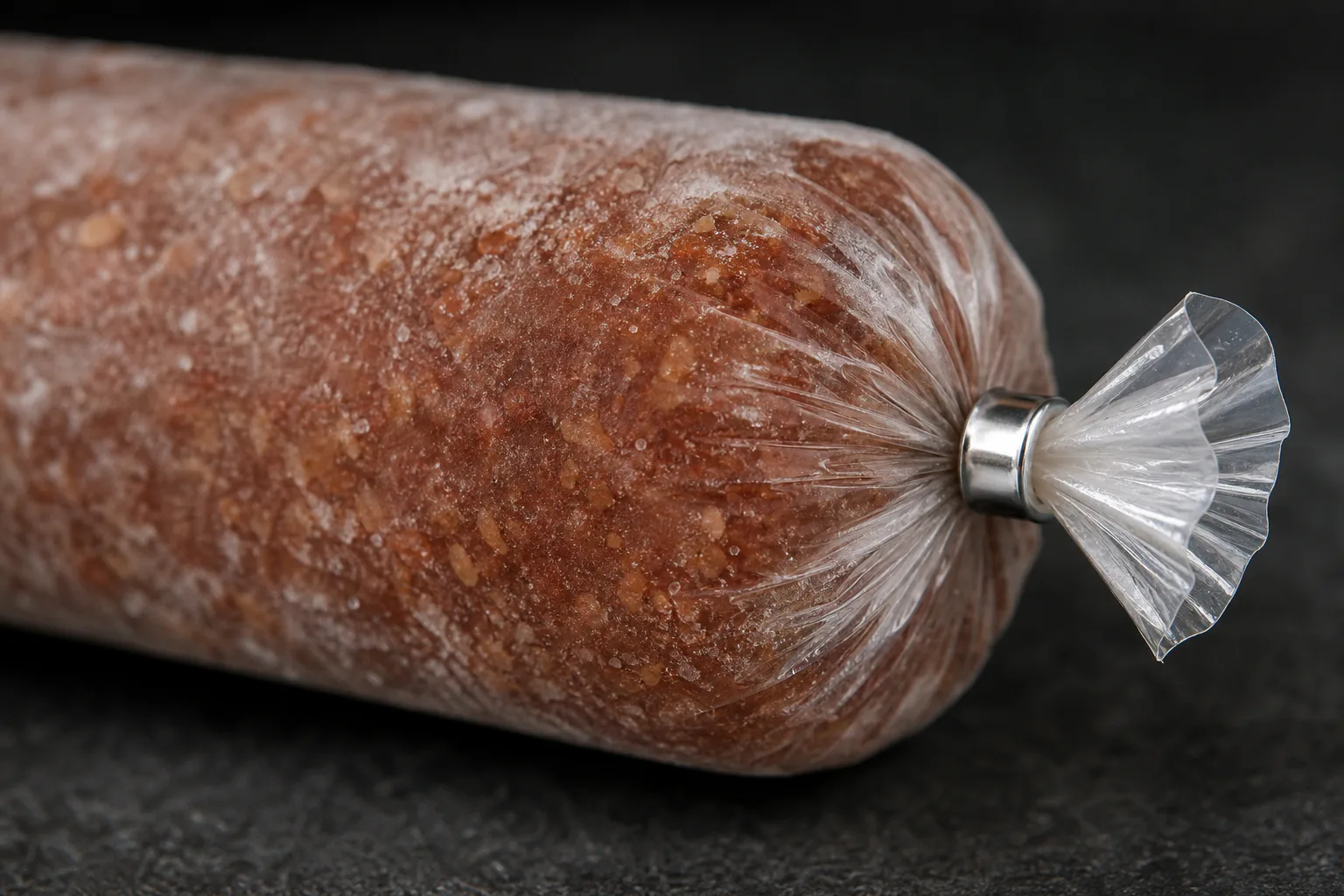
The recalled food was sold frozen in clear plastic tubes sealed at both ends with a metal clip. The tubes were packed in brown cardboard boxes containing approximately 5 to 20 tubes. Raaw Energy stopped production effective May 21, 2026, and announced the expanded recall on May 22, 2026.
Recalled products and codes
Check every Raaw Energy package in your freezer, including partially used tubes. The affected products and identifying information are:
| Product | Package sizes | Manufacturing date code |
|---|---|---|
| Beef and Turkey Medley | 2-pound and 5-pound clear plastic tubes | Produced July 17, 2025, through December 23, 2025; additional code 3.31.26 |
| Chicken Medley | 2-pound and 5-pound clear plastic tubes | Produced July 17, 2025, through December 23, 2025 |
| Salmon, Beef and Chicken Medley | 2-pound and 5-pound clear plastic tubes | Produced July 17, 2025, through December 23, 2025 |
| Beef and Chicken Tripe Medley | 2-pound and 5-pound clear plastic tubes | Produced July 17, 2025, through December 23, 2025 |
Not all products manufactured during the production period were tested. Because of that, consumers were advised to treat products made during that period as potentially contaminated, even when a particular tube has not been individually tested.
How to check your package
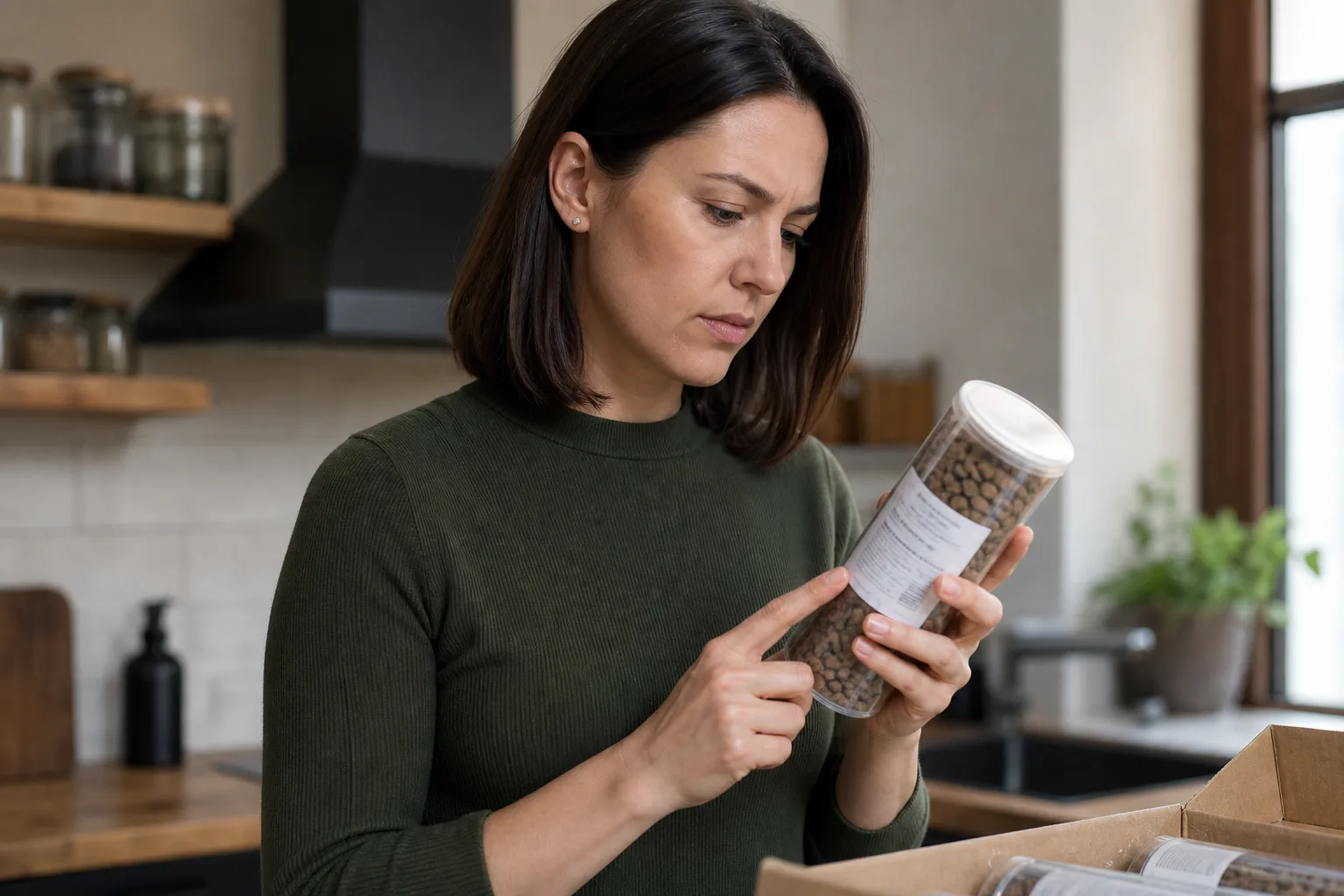
- Find the white stick-on label on the clear plastic tube or its box.
- Identify the flavor and package size.
- Locate the manufacturing date code printed on the label.
- Compare the code with the recalled production period and the additional 3.31.26 Beef and Turkey Medley code.
- If the product matches, stop feeding it and follow the disposal instructions below.
Raaw Energy products did not use conventional lot numbers. The manufacturing date code is therefore the key identifier for the affected products. If the label is damaged or unreadable, do not feed the food. Keep the product isolated in a secure container and retain the packaging for identification by a veterinarian, health authority, or recall representative.
Why the food was recalled
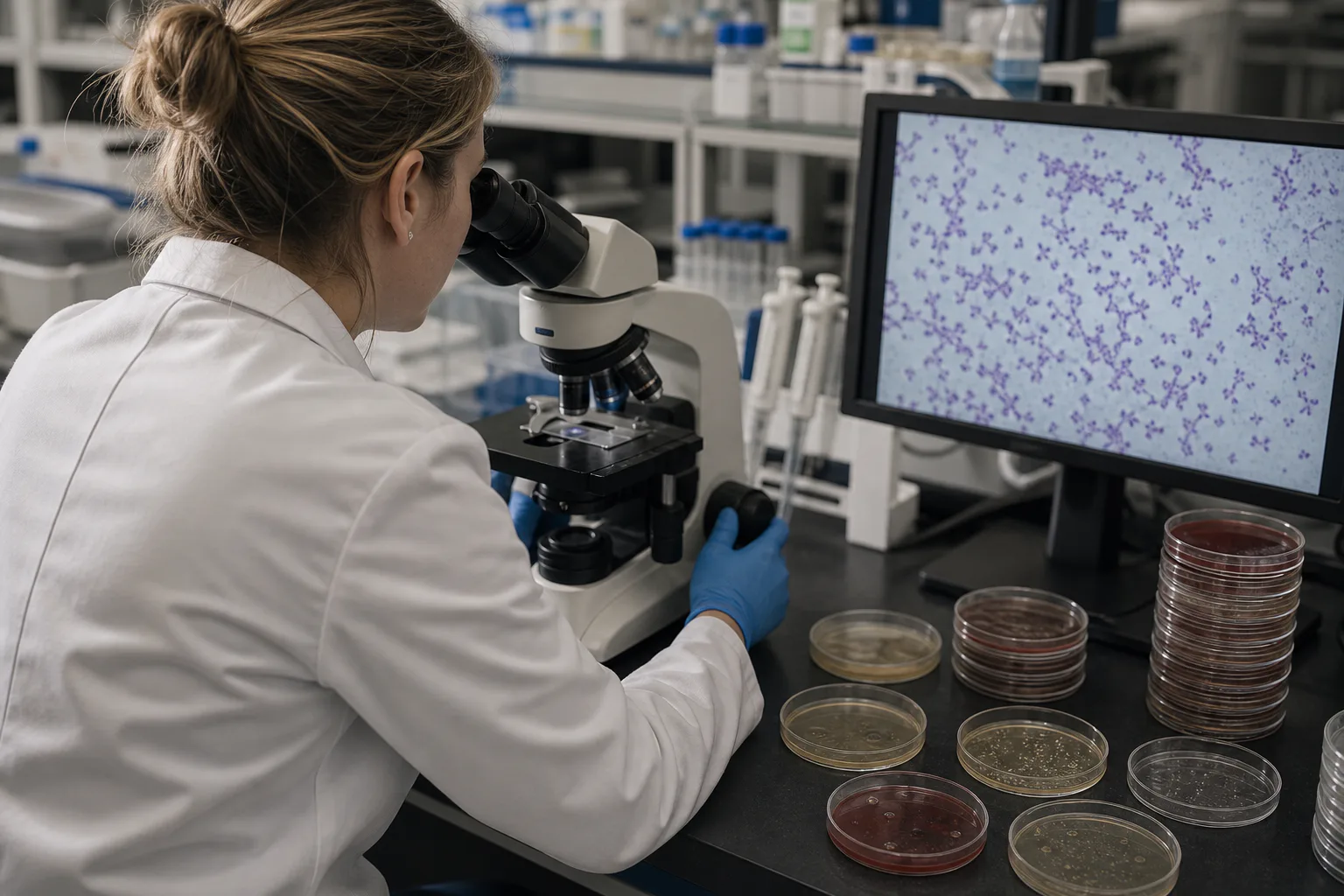
The recall involves possible contamination with Listeria monocytogenes, a pathogenic bacterium that can cause foodborne illness in animals and people. Four additional samples tested by the New Jersey Department of Agriculture during the later recall review tested positive for Listeria monocytogenes.
Earlier New Jersey Department of Agriculture testing and Connecticut Department of Agriculture testing identified pathogenic bacteria in eight unopened samples. Those findings included Listeria monocytogenes, Salmonella, and Campylobacter jejuni; one sample also contained pathogenic Escherichia coli O157, commonly called E. coli O157.
The findings do not mean every Raaw Energy product tested positive. They do mean that products from the affected production period should be treated as potentially contaminated because testing did not cover every product manufactured during that window.
Health risks for dogs and people
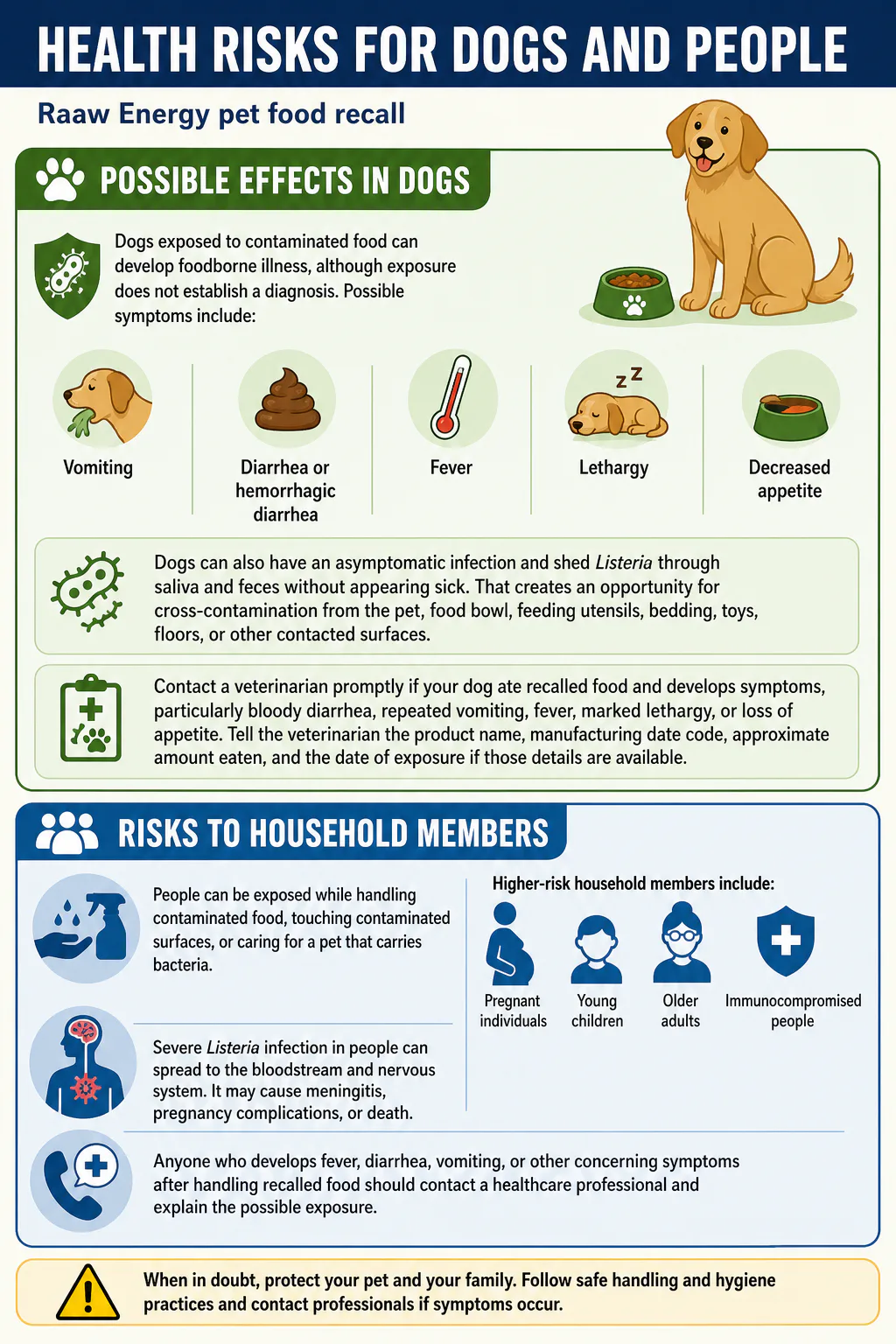
Possible effects in dogs
Dogs exposed to contaminated food can develop foodborne illness, although exposure does not establish a diagnosis. Possible symptoms include:
- Vomiting
- Diarrhea or hemorrhagic diarrhea
- Fever
- Lethargy
- Decreased appetite
Dogs can also have an asymptomatic infection and shed Listeria through saliva and feces without appearing sick. That creates an opportunity for cross-contamination from the pet, food bowl, feeding utensils, bedding, toys, floors, or other contacted surfaces.
Contact a veterinarian promptly if your dog ate recalled food and develops symptoms, particularly bloody diarrhea, repeated vomiting, fever, marked lethargy, or loss of appetite. Tell the veterinarian the product name, manufacturing date code, approximate amount eaten, and the date of exposure if those details are available.
Risks to household members
People can be exposed while handling contaminated food, touching contaminated surfaces, or caring for a pet that carries bacteria. Higher-risk household members include pregnant individuals, young children, older adults, and immunocompromised people.
Severe Listeria infection in people can spread to the bloodstream and nervous system. It may cause meningitis, pregnancy complications, or death. Anyone who develops fever, diarrhea, vomiting, or other concerning symptoms after handling recalled food should contact a healthcare professional and explain the possible exposure.
What to do with recalled food
- Stop feeding it immediately. Do not taste the food or allow another pet to eat it.
- Do not sell or donate it. Recalled food should not be passed to another household, shelter, rescue, or animal organization.
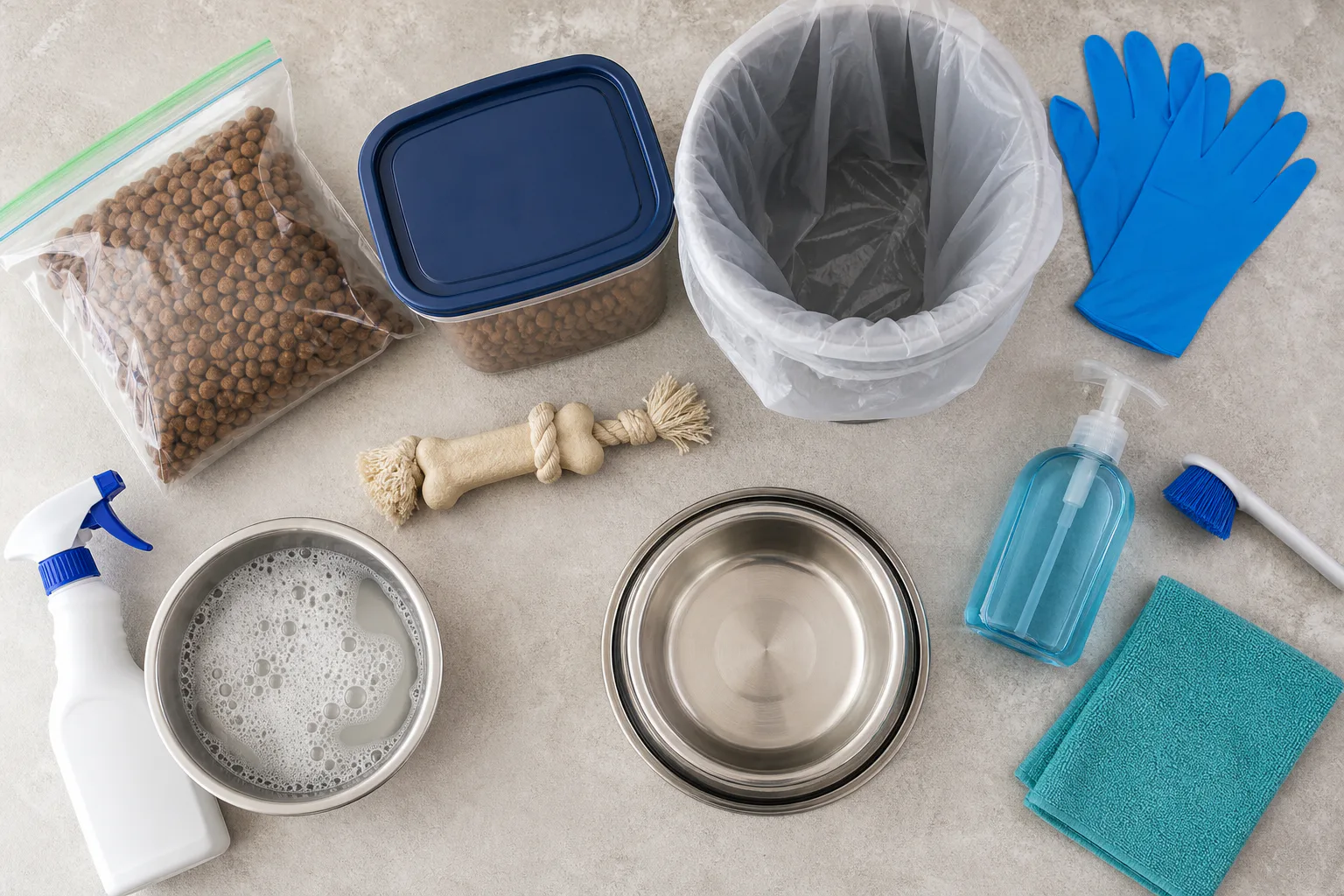
- Secure the product. Place it in a secure container or sealed bag that people, pets, and wildlife cannot access.
- Discard it safely. Follow local waste-disposal requirements and prevent animals from retrieving it from household or outdoor trash.
- Wash your hands. Use soap and water after touching the food, packaging, bowls, utensils, or contaminated surfaces.
- Clean and disinfect. Disinfect bowls and surfaces, including utensils, storage containers, refrigerators, freezers, bedding, toys, floors, and other areas contacted by the food or pet.
- Monitor the pet and household. Seek veterinary or medical advice if symptoms develop.
Freezing does not eliminate Listeria, Salmonella, or Campylobacter contamination. Do not make recalled frozen pet food safe by thawing it, refreezing it, cooking it, or mixing it with other food.
Recall timeline
- Earlier FDA advisory: The Food and Drug Administration warned pet owners after eight samples tested positive for one or more pathogenic bacteria.
- State testing: Connecticut Department of Agriculture and New Jersey Department of Agriculture testing identified Listeria monocytogenes, Salmonella, and Campylobacter jejuni; one sample also contained E. coli O157.
- May 21, 2026: Raaw Energy stopped production.
- May 22, 2026: The company announced the expanded voluntary recall covering products made from July 17, 2025, through December 23, 2025, plus the 3.31.26 Beef and Turkey Medley code.
- Later recall review: Four additional samples tested positive for Listeria monocytogenes.
Planned corrective actions included resurfacing production areas, cleaning drains and sewer lines, improving evaporator cleaning, purchasing a pathogen detection system, and testing every batch before release.
Frequently asked questions
Has Raaw Energy dog food been recalled?
Yes. Raaw Energy issued a voluntary recall for products made from July 17, 2025, through December 23, 2025, because of possible contamination with Listeria monocytogenes. Beef and Turkey Medley with the manufacturing date code 3.31.26 is also included.
What pet food is being recalled right now?
The affected products are Raaw Energy Beef and Turkey Medley, Chicken Medley, Salmon, Beef and Chicken Medley, and Beef and Chicken Tripe Medley in 2-pound and 5-pound clear plastic tubes with the recalled manufacturing date codes.
Does freezing make recalled food safe?
No. Freezing does not eliminate Listeria monocytogenes, Salmonella, or Campylobacter jejuni. Keep matching products away from people and animals and discard them in a secure container.
What if my dog ate the recalled food?
Remove the food, clean and disinfect contacted areas, and monitor your dog for vomiting, diarrhea, fever, lethargy, decreased appetite, or hemorrhagic diarrhea. Contact a veterinarian if symptoms occur or if you are concerned about the exposure.
What are the top three dog foods to avoid?
There is no reliable universal list of three dog foods to avoid. Recalls are product- and date-specific, so check current FDA and company notices rather than judging an entire category or assuming every raw food product is contaminated.
Has 4Health dog food been recalled?
The Raaw Energy recall does not identify 4Health products. Check the current FDA pet food recall information and the product’s exact brand, package, and date code before feeding it.
What pet owners should do now
Check every Raaw Energy tube and box in your possession before the next feeding. If the product falls within the recalled production period or matches the 3.31.26 Beef and Turkey Medley code, do not use it: secure and discard it, disinfect the feeding area, and contact a veterinarian or healthcare professional if illness follows exposure.
For future feeding decisions, keep product packaging and manufacturing date codes until the food has been used. A clear record makes it easier to respond quickly to any pet food safety notice and to provide accurate information to veterinary or medical professionals.