American Staffordshire Terrier Dog: Care, Training, and Temperament
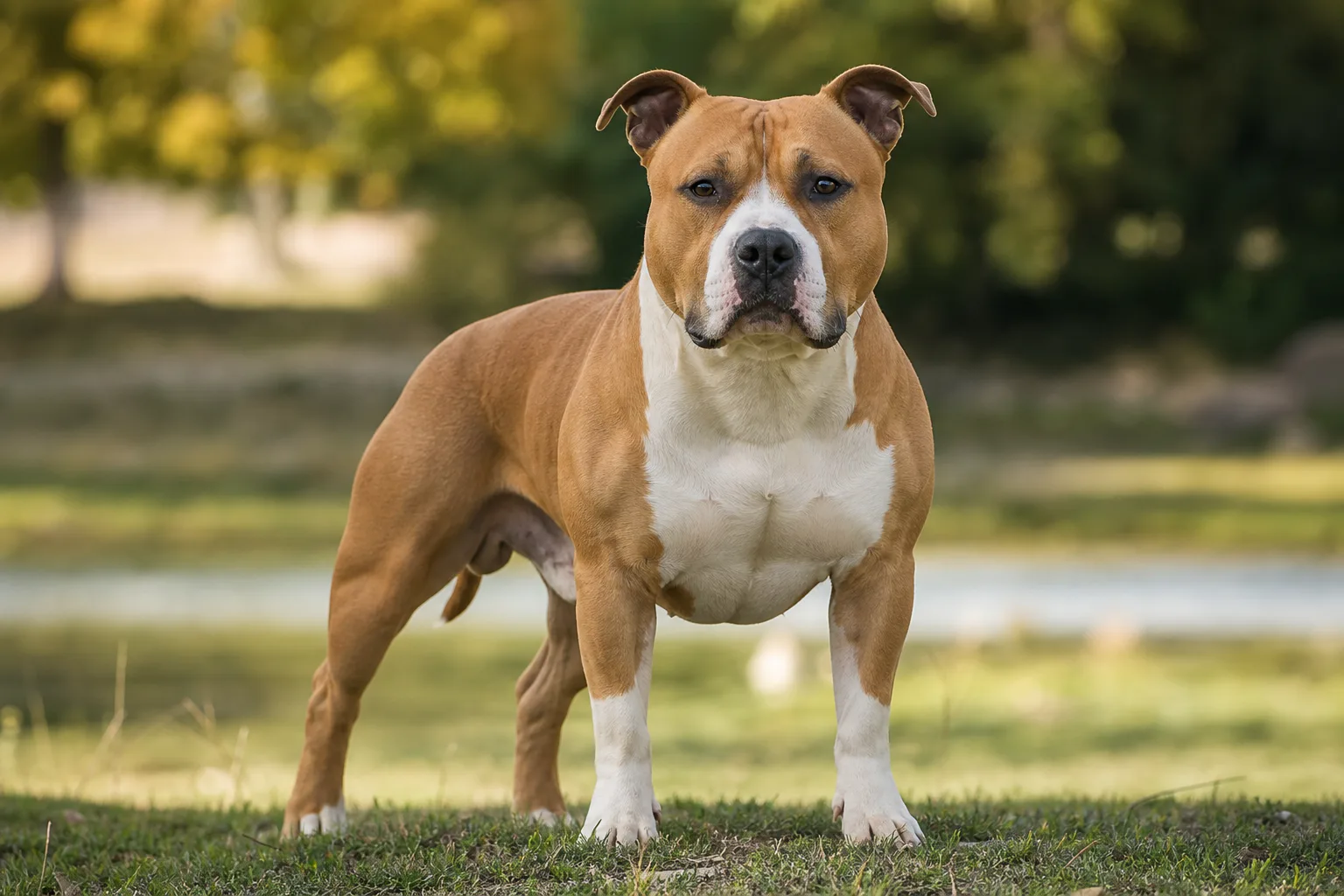
American Staffordshire Terrier Dog Guide
The American Staffordshire Terrier Dog is a muscular, athletic companion known for its strength, intelligence, affection, and eagerness to work with people. With consistent training, early socialization, daily activity, and responsible handling, this medium-sized breed can become a well-mannered family dog and a capable participant in obedience, agility, weight-pull, and other canine activities.
Quick Breed Profile
| Characteristic | Details |
|---|---|
| Origin | United States |
| Foundation stock | Bull-and-terrier dogs |
| Height | 16.9–18.8 inches (43–48 cm) |
| Weight | About 50–80 pounds (23–36 kg) |
| Coat | Short, smooth, and close-lying |
| Life expectancy | Often 12–16 years |
The breed has a broad head, deep chest, powerful shoulders, and a low center of gravity. Despite its solid build, the American Staffordshire Terrier is agile and quick, with a glossy coat that comes in many colors and patterns, including black, fawn, red, white, blue, and brindle.
History and Development
The American Staffordshire Terrier developed from bull-and-terrier foundation stock brought to North America by immigrants. Early dogs were valued for strength, athletic ability, and their capacity to work closely with people. Over time, American breeding programs shaped a distinct breed with an emphasis on stable temperament, structure, and versatility.
Although the breed shares ancestry with several bull-type terriers, the American Staffordshire Terrier has its own recognized breed identity and standard. Responsible modern breeding focuses on producing confident, trainable companion dogs rather than encouraging aggression.
Appearance and Physical Traits
Build and movement
An American Staffordshire Terrier has a compact, muscular body that should appear powerful without being cumbersome. The breed moves with balance and coordination, allowing it to perform activities that require both strength and agility.
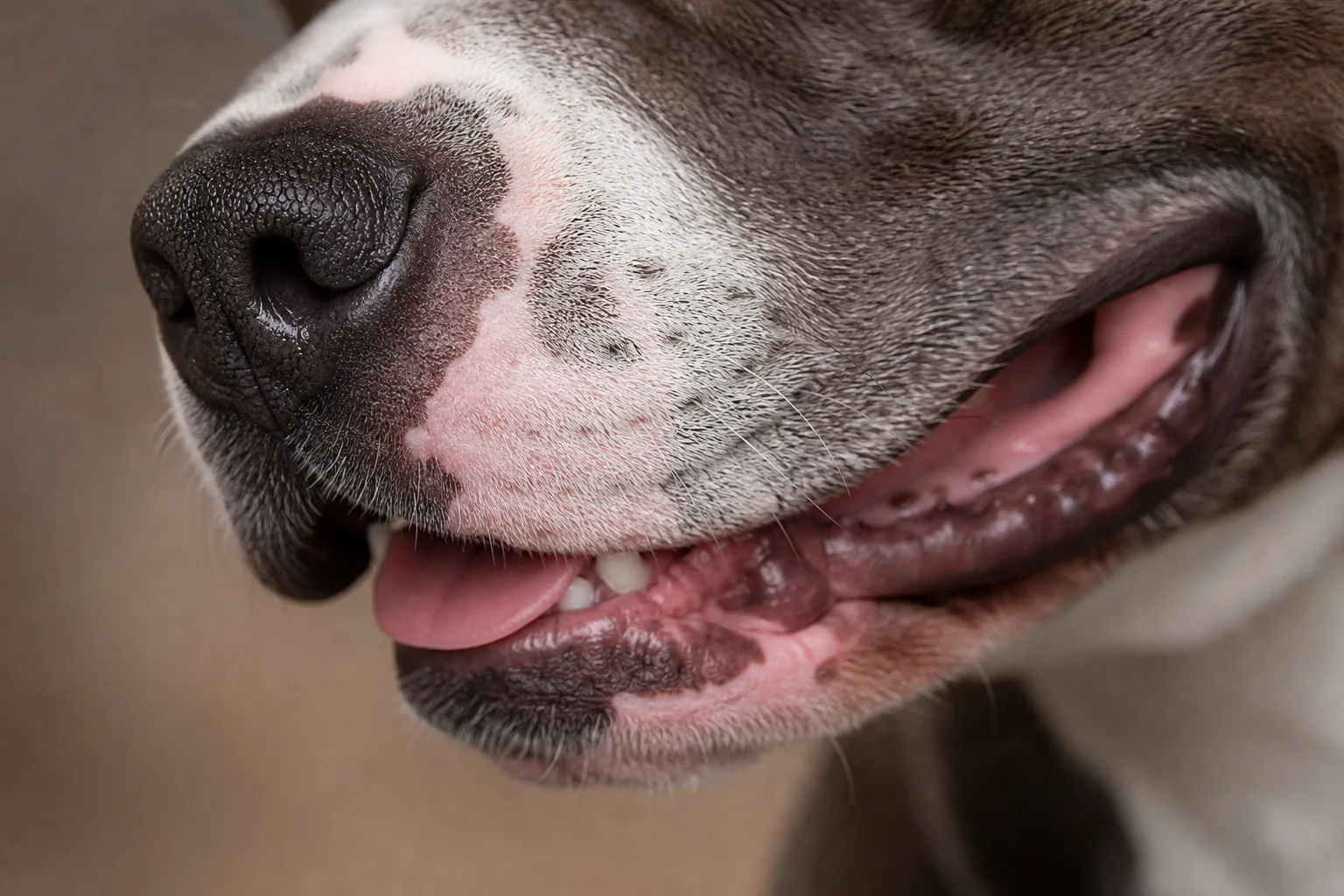
The head is broad, the muzzle is medium in length, and the nose is black. Ears may be naturally rose-shaped; natural ears are preferred over cropping. The tail is short and carried naturally rather than being docked.
Coat and colors
The short coat lies close to the body and has a smooth texture. It requires less grooming than the coat of many long-haired breeds, although loose hair still appears around the home throughout the year.
- Brush the coat weekly with a soft-bristle brush or grooming mitt.
- Bathe the dog when dirty or when an odor develops.
- Trim nails regularly to support comfortable movement.
- Check the ears and clean them only with a veterinarian-approved product.
- Brush the teeth routinely as part of normal home care.
Some color patterns are discouraged in breed standards, including predominantly white coats, black-and-tan coloring, and liver coloring. A responsible breeder prioritizes health, temperament, and sound structure rather than unusual color alone.
Temperament and Behavior
The American Staffordshire Terrier temperament is often affectionate, people-oriented, confident, and energetic. Many individuals enjoy close family contact and actively seek interaction with their owners. Their intelligence and willingness to engage make them responsive to reward-based training.
Breed tendencies do not determine the behavior of every individual dog. Genetics, early experiences, socialization, training, environment, pain, and handling all influence behavior. A strong dog with a powerful bite requires careful supervision and responsible management, regardless of how friendly it is at home.
With children
A well-socialized American Staffordshire Terrier can live successfully with respectful children. Adults should always supervise interactions because the breed is strong, energetic, and capable of knocking over a small child during play.
- Teach children not to climb on, tease, or disturb the dog while it eats or sleeps.
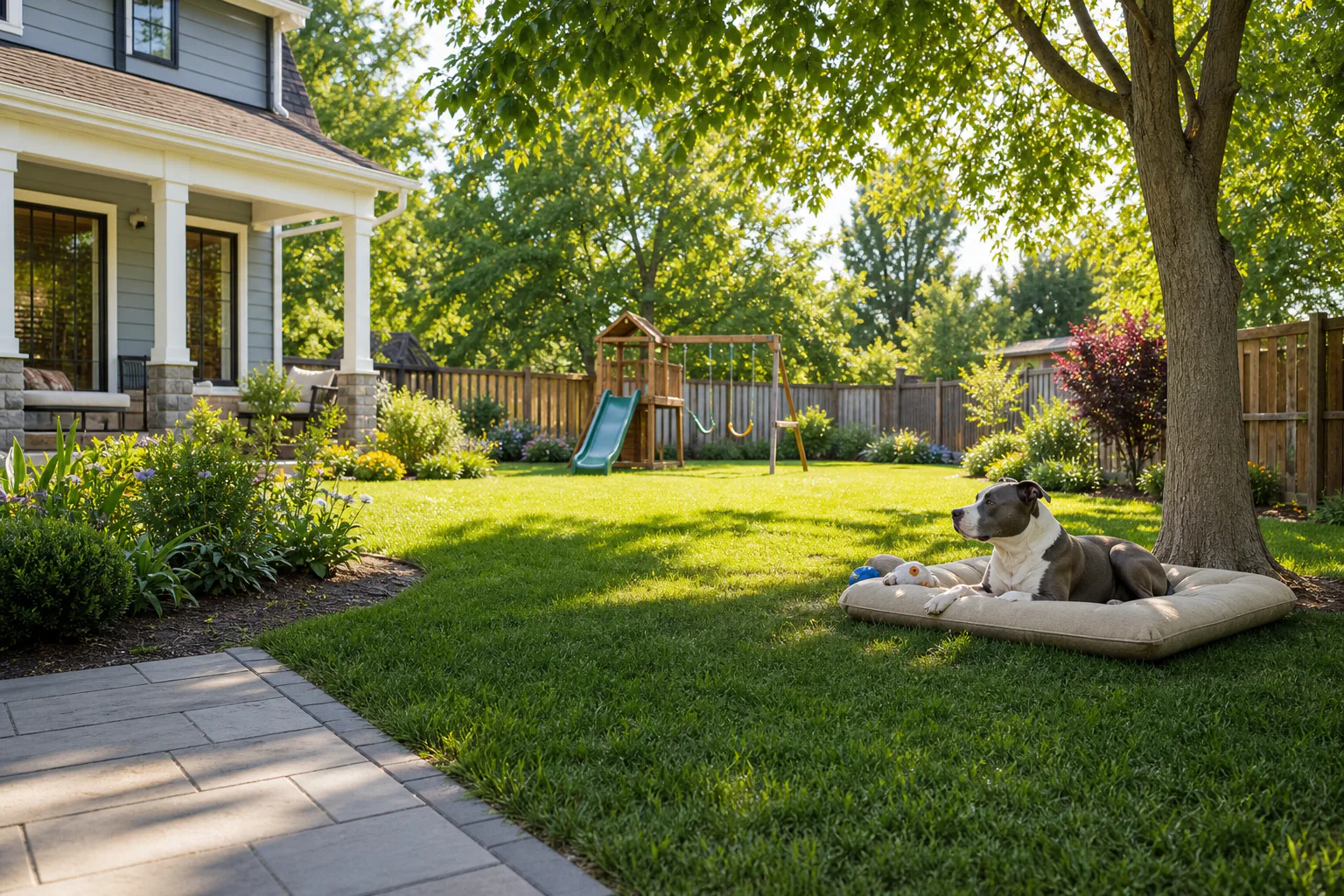
- Give the dog a quiet resting area that children leave undisturbed.
- Keep play structured and stop rough games before excitement becomes excessive.
- Never leave a child and dog together without active adult supervision.
With other animals
Individual American Staffordshire Terriers vary in their comfort around other dogs and household animals. Early, controlled socialization helps build appropriate responses, but it does not guarantee that every dog will enjoy close contact with unfamiliar animals.
Use secure equipment, gradual introductions, and professional guidance when needed. A dog that shows intense fixation, repeated lunging, or unsafe play requires a management plan rather than forced interaction.
Training and Socialization
Training should begin as soon as the dog enters the home. Short, positive sessions work well because they keep the dog engaged while teaching practical behaviors such as name response, recall, loose-leash walking, waiting, and settling on a mat.
- Reward calm behavior before asking for more difficult skills.
- Teach basic cues in a quiet room before practicing outdoors.
- Increase distractions gradually rather than expecting immediate reliability.
- Use food, toys, praise, and play to reinforce correct choices.
- Practice handling of paws, ears, mouth, and collar in brief sessions.
Harsh corrections can increase fear, conflict, or defensive behavior. A qualified force-free trainer can help with leash pulling, overexcitement, guarding, reactivity, and introductions to new people or animals.
Socialization means controlled exposure to people, places, surfaces, sounds, transport, and handling. The goal is not for the dog to greet everyone; it is for the dog to remain composed and responsive in everyday situations. Owners comparing similar strong, active breeds can also learn from a detailed American Bulldog guide when evaluating exercise and training needs.
Exercise Requirements
This breed needs daily physical activity and mental stimulation. A suitable routine can include brisk walks, structured play, obedience practice, scent games, hiking, or dog sports adapted to the individual dog’s age and fitness.
- Provide regular walks with opportunities for controlled sniffing.
- Use puzzle feeders, search games, and short training sessions indoors.
- Choose durable toys that match the dog’s chewing habits.
- Teach polite play instead of encouraging uncontrolled wrestling.
- Allow puppies to grow before introducing strenuous jumping or repetitive running.
Exercise should build fitness without creating constant over-arousal. A dog that is physically tired but unable to settle still needs training in calm behavior, impulse control, and relaxation.
Health and Veterinary Care
Routine veterinary care supports long-term health. Preventive visits should address vaccinations, parasite control, dental care, weight, mobility, and age-appropriate screening. Keeping the dog lean reduces unnecessary stress on the joints.
Health concerns discussed in this breed include orthopedic, cardiac, thyroid, skin, and eye conditions. Responsible breeders use appropriate health screening for their breeding dogs and provide clear records. Prospective owners should ask what examinations were completed, review results, and receive written veterinary documentation.
Seek veterinary attention for persistent lameness, exercise intolerance, breathing difficulty, sudden behavior changes, recurring skin problems, or unexplained weight changes. A healthy-looking dog still benefits from regular examinations because early assessment can improve treatment options.
Feeding and Weight Control
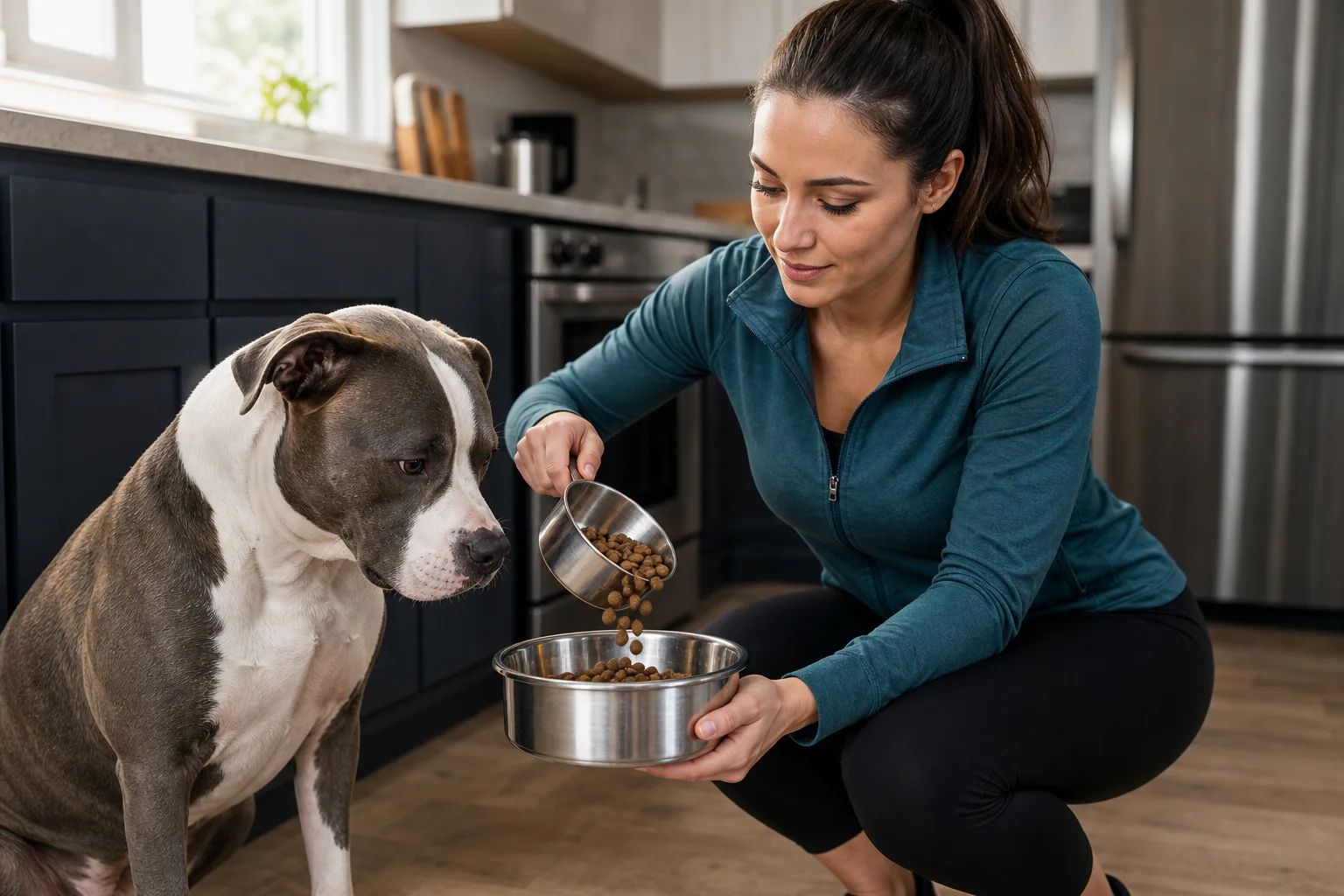
Feed a complete diet appropriate for the dog’s age, activity level, and medical needs. Portion sizes should be adjusted according to body condition, not simply copied from a package label.
Use measured meals and count treats as part of the daily intake. The ribs should be easy to feel beneath a light covering, while the dog should retain a visible waist when viewed from above. A veterinarian can recommend an appropriate diet when allergies, digestive problems, growth, or athletic conditioning are concerns.
American Staffordshire Terrier Versus Pitbull
“Pitbull” is commonly used as an informal umbrella label for several bull-type dogs, while American Staffordshire Terrier is the name of a specific recognized breed. The two can share physical features and ancestry, but a visual label alone cannot reliably identify a dog’s breed or predict its behavior.
Breed names also matter for housing, insurance, and local regulations. Before adopting or moving with an American Staffordshire Terrier, check current rules with the relevant local authority, landlord, insurer, or housing association. Focus on the individual dog’s temperament, documented history, and management needs rather than relying only on appearance.
Finding One Responsibly
Breeders
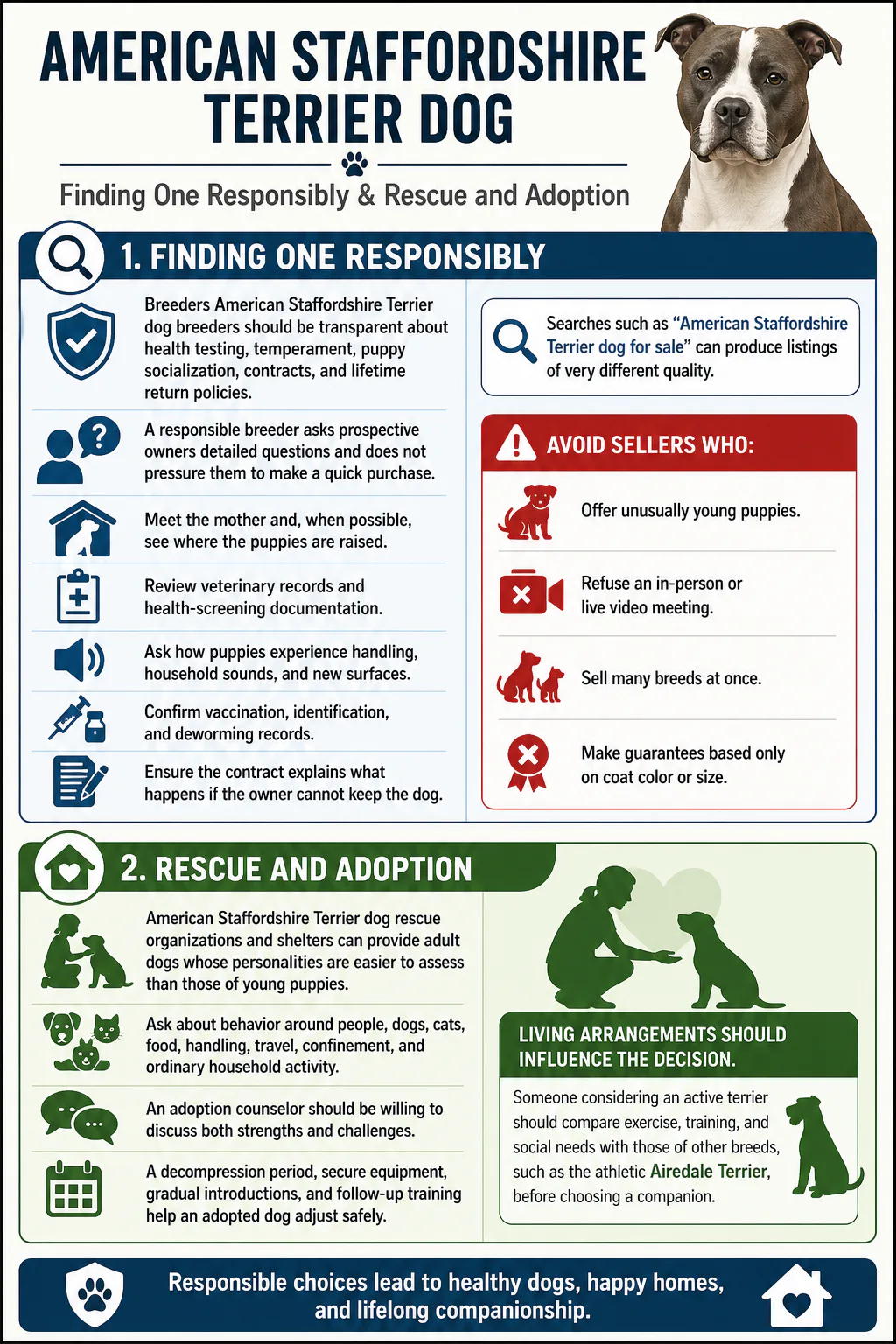
American Staffordshire Terrier dog breeders should be transparent about health testing, temperament, puppy socialization, contracts, and lifetime return policies. A responsible breeder asks prospective owners detailed questions and does not pressure them to make a quick purchase.
- Meet the mother and, when possible, see where the puppies are raised.
- Review veterinary records and health-screening documentation.
- Ask how puppies experience handling, household sounds, and new surfaces.
- Confirm vaccination, identification, and deworming records.
- Ensure the contract explains what happens if the owner cannot keep the dog.
Searches such as “American Staffordshire Terrier dog for sale” can produce listings of very different quality. Avoid sellers who offer unusually young puppies, refuse an in-person or live video meeting, sell many breeds at once, or make guarantees based only on coat color or size.
Rescue and adoption
American Staffordshire Terrier dog rescue organizations and shelters can provide adult dogs whose personalities are easier to assess than those of young puppies. Ask about behavior around people, dogs, cats, food, handling, travel, confinement, and ordinary household activity.
An adoption counselor should be willing to discuss both strengths and challenges. A decompression period, secure equipment, gradual introductions, and follow-up training help an adopted dog adjust safely.
Living arrangements should influence the decision. Someone considering an active terrier should compare exercise, training, and social needs with those of other breeds, such as the athletic Airedale Terrier, before choosing a companion.
Common Questions
Is the American Staffordshire Terrier hypoallergenic?
No. The American Staffordshire Terrier is not hypoallergenic. Its short coat sheds, and people can react to dander, saliva, or other allergens rather than to hair length alone.

Is this breed suitable for first-time owners?
It can suit a first-time owner who is prepared for daily training, careful socialization, secure handling, and regular exercise. The breed’s strength makes basic manners and reliable management especially important.
Can an American Staffordshire Terrier live in an apartment?
Apartment living can work when the dog receives adequate exercise, enrichment, training, and quiet time. Access to a yard does not replace walks or mental activity, and close housing requires especially strong leash manners and consideration for neighbors.
What is an American Staffordshire Terrier pitbull mix puppy?
The phrase usually describes a puppy whose parents or ancestry include an American Staffordshire Terrier and another bull-type dog. Appearance and behavior can vary widely, so evaluate the puppy’s parents, early environment, veterinary care, and individual temperament rather than relying on the label.
How can owners track age?
Calendar age is more useful than multiplying a dog’s age by seven, because canine aging varies with size and life stage. A dog age calculator can provide an estimate, but veterinary advice is more useful for health screening and senior-care decisions.
Is This Breed Right for You?
An American Staffordshire Terrier is a strong choice for an owner who wants an affectionate, active, trainable dog and is ready to provide structure throughout its life. The best match is a home that values positive training, careful supervision, daily activity, and responsible public handling.
Before bringing one home, confirm that the dog fits your housing rules, schedule, budget, experience, and plans for exercise. Meet the individual dog, ask direct questions about behavior and health, and choose preparation and long-term commitment over appearance alone.