Airedale Terrier Dog Overview: Temperament, Care & Needs
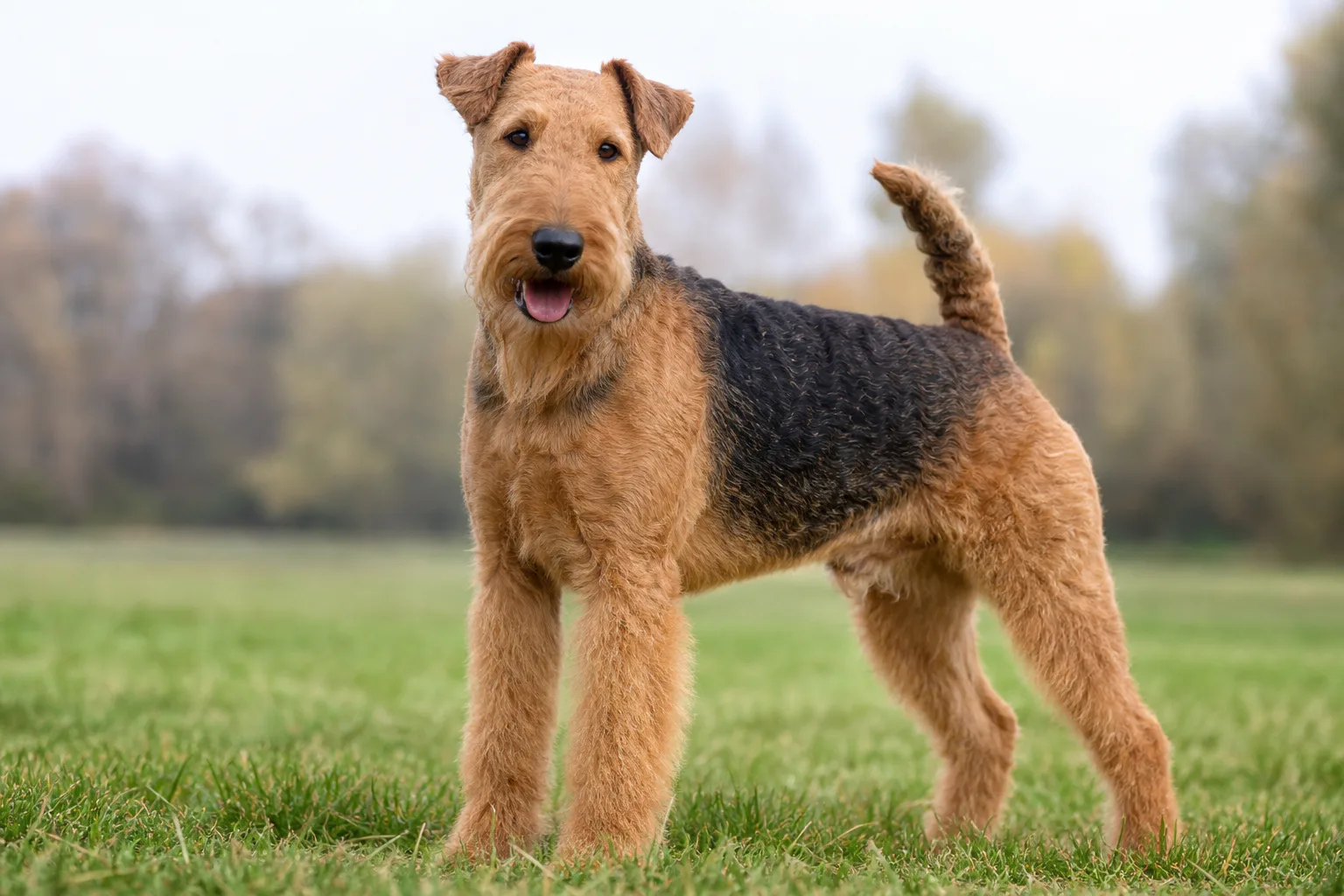
The Airedale Terrier is the largest terrier breed, combining athletic ability, intelligence, independence, and a strong working instinct in one substantial dog. This Airedale Terrier Dog Overview explains the breed’s history, size, temperament, grooming needs, exercise requirements, health considerations, and suitability for different homes.
At a Glance
| Trait | Airedale Terrier |
|---|---|
| Origin | England |
| Other names | Waterside Terrier, Bingley Terrier |
| Nickname | King of Terriers |
| Height | Males: 23–24 inches; females: 22–23 inches |
| Coat | Hard, wiry outer coat with a softer undercoat |
| Typical color | Black or grizzle saddle with tan head, ears, legs, and body areas |
| Activity level | High |
| Grooming | Regular brushing and professional trimming or hand-stripping |
History and Purpose
The Airedale developed in the Aire Valley of Yorkshire, England, where working dogs were used around rivers, farms, and game. Early breeders combined terrier traits with larger hunting dogs to create a capable dog for vermin control, otter hunting, guarding, and general farm work.
That practical background explains the breed’s unusual versatility. Airedales have served as hunters, athletes, police and military dogs, and devoted household companions. Their size, strength, and determined spirit earned them the nickname “King of Terriers.”

Appearance and Size
Athletic proportions
The Airedale has a square, balanced outline, a long flat head, a deep chest, and a strong back. Its muzzle is approximately as long as its skull, the nose is black, and the small, dark eyes contribute to an alert expression.
Males stand 23–24 inches at the shoulder, while females stand 22–23 inches. The breed is large enough to feel imposing but remains athletic rather than heavy, with the structure needed for running, jumping, and sustained outdoor activity.

Distinctive coat
The coat is generally black or grizzle over the saddle, with tan coloring on the head, ears, legs, and other lower-body areas. Its broken, wiry texture helps protect the dog during outdoor work, but it also requires more maintenance than a short-coated breed.
Small V-shaped ears fold forward and slightly to the side of the head. The teeth meet in either a level or scissors bite, and the chest should be deep without making the dog appear cumbersome.

Temperament
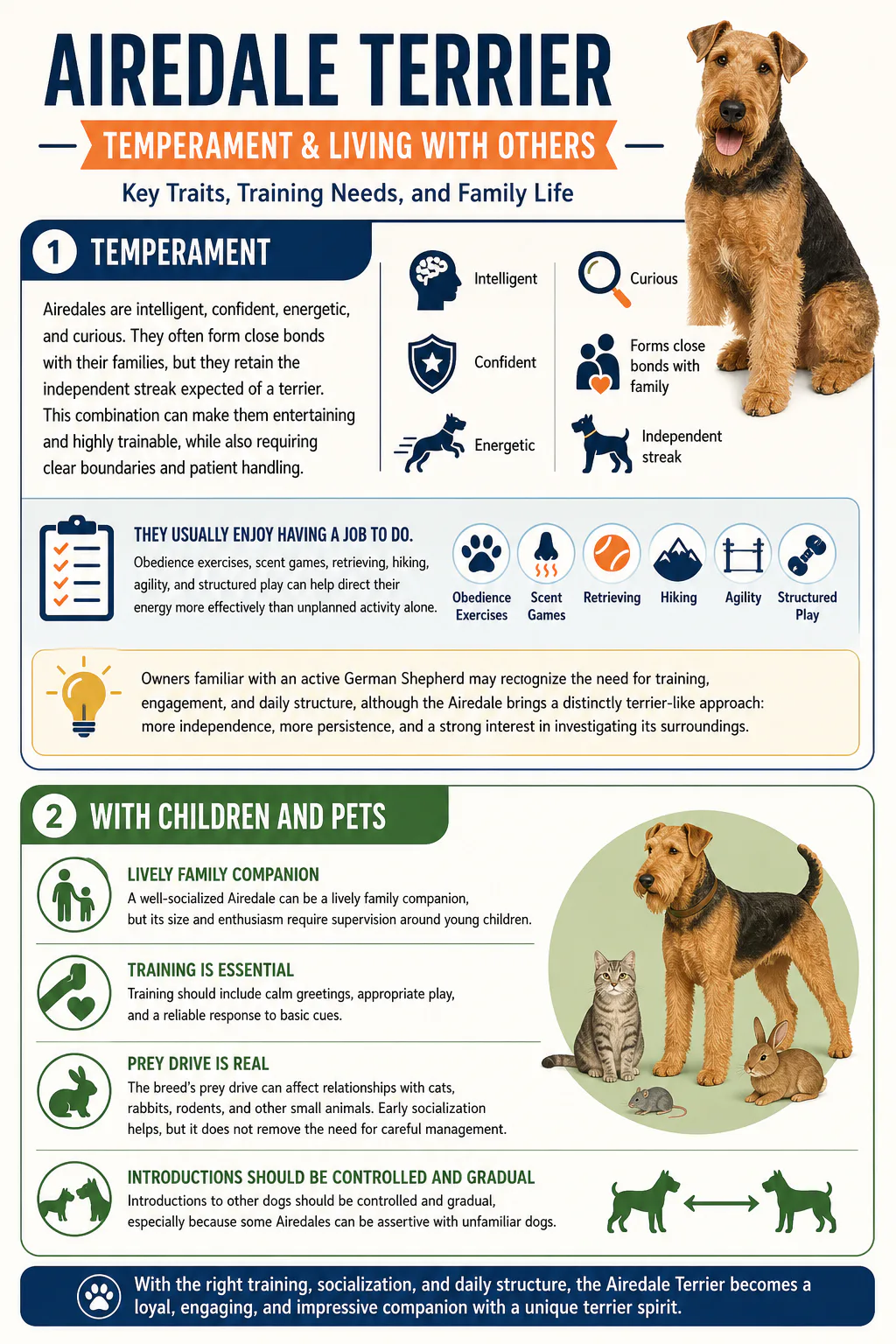
Airedales are intelligent, confident, energetic, and curious. They often form close bonds with their families, but they retain the independent streak expected of a terrier. This combination can make them entertaining and highly trainable, while also requiring clear boundaries and patient handling.
They usually enjoy having a job to do. Obedience exercises, scent games, retrieving, hiking, agility, and structured play can help direct their energy more effectively than unplanned activity alone.
Owners familiar with an active German Shepherd may recognize the need for training, engagement, and daily structure, although the Airedale brings a distinctly terrier-like approach: more independence, more persistence, and a strong interest in investigating its surroundings.
With children and pets
A well-socialized Airedale can be a lively family companion, but its size and enthusiasm require supervision around young children. Training should include calm greetings, appropriate play, and a reliable response to basic cues.
The breed’s prey drive can affect relationships with cats, rabbits, rodents, and other small animals. Early socialization helps, but it does not remove the need for careful management. Introductions to other dogs should be controlled and gradual, especially because some Airedales can be assertive with unfamiliar dogs.

Training Needs
Airedales learn quickly, but intelligence does not always mean automatic obedience. Repetition without variety can bore them, and harsh methods can damage trust or encourage resistance. Short, purposeful sessions using rewards, play, and consistent rules are generally more productive.
- Begin socialization during puppyhood and continue it throughout adulthood.
- Teach loose-leash walking before the dog becomes difficult to control physically.
- Practice recall in secure areas before allowing off-leash freedom.
- Use impulse-control exercises for jumping, chasing, and door manners.
- Provide puzzle-solving and scent activities alongside physical exercise.
Terrier instincts can make an Airedale quick to chase movement or investigate a scent. A secure yard, careful outdoor supervision, and dependable identification are important parts of responsible ownership.
Exercise and Daily Life
This is not a low-energy breed. Airedales need active walks, opportunities to explore, and mentally demanding tasks. A brief walk around the block is unlikely to meet the needs of a healthy adult unless it is supplemented with training, play, or other purposeful activity.
Families who already enjoy long walks or outdoor activities may find the breed a good match. For perspective, the exercise demands differ from those of a Labrador Retriever: both can be active companions, but the Airedale is more likely to combine physical energy with independent terrier problem-solving and pursuit instincts.
Living space
An Airedale can live in a house or a well-managed apartment if its exercise and training needs are met. Access to a secure outdoor area is helpful but does not replace walks and interaction. Boredom can lead to digging, chewing, barking, escaping, or other unwanted behavior.
Grooming and Care
The wiry coat needs regular brushing to remove loose hair, prevent tangles, and keep the furnishings on the legs and face manageable. Brushing every other day is a practical routine for maintaining coat condition between professional appointments.
Many owners use hand-stripping or clipping, depending on whether they want to preserve the traditional hard texture or prefer a simpler pet trim. A grooming professional can recommend a schedule based on the dog’s coat, lifestyle, and tolerance for handling.
- Brush the coat regularly, especially around the beard, legs, and underside.
- Check and clean the ears as directed by a veterinary professional.
- Trim nails before they become long enough to affect movement.
- Brush the teeth routinely with dog-safe dental products.
- Check the skin and coat after outdoor activity for debris or parasites.
Airedales produce little drool compared with many large breeds, but their beards can collect water, food, and dirt. Wiping the face after meals and drinks helps keep the area cleaner.

Health Considerations
Airedales are generally hardy, but no breed is free from inherited or age-related health problems. Hip dysplasia is one recognized concern and can contribute to pain, stiffness, and mobility problems. Responsible breeding includes appropriate health screening, including hip evaluation before breeding decisions are made.
Routine veterinary care should include weight monitoring, preventive care, dental checks, and prompt attention to changes in gait, appetite, skin, digestion, or behavior. A healthy body condition is especially important for an active, large-framed dog because excess weight increases stress on the joints.
Pros and Cons
| Advantages | Challenges |
|---|---|
| Intelligent and capable of learning many activities | Needs substantial daily exercise and mental stimulation |
| Affectionate and engaging with its family | Can be independent, stubborn, or mischievous |
| Versatile working and sporting background | May chase small animals and test boundaries |
| Low drool and a distinctive, protective coat | Requires regular grooming and coat maintenance |
| Strong, athletic companion for active households | Size and enthusiasm require training around children and visitors |
Are Airedales Good House Dogs?
Yes, an Airedale can be a good house dog for an active household that provides structure, training, exercise, and regular grooming. The breed is people-oriented and can enjoy family life, but it is not suited to owners seeking a quiet, low-maintenance companion.
The most important question is not simply whether the home has a yard. It is whether the household can consistently provide physical activity, supervision, socialization, and meaningful interaction.
Frequently Asked Questions
Do Airedale Terriers bark a lot?
Airedales are capable of being vocal, particularly when alerting, excited, frustrated, or under-stimulated. They are not automatically constant barkers, but insufficient exercise, isolation, and weak boundary training can increase nuisance barking.
Do Airedales like to cuddle?
Many Airedales are affectionate and enjoy close contact with their owners, but they are not all constant lap dogs. Their preference can range from cuddling on the sofa to staying beside the family while maintaining some personal space.
What are the main disadvantages of owning an Airedale?
The main challenges are high exercise needs, regular coat care, independent decision-making, prey drive, and the strength to become difficult to manage without early training. Their size and enthusiasm also make manners especially important.
Is an Airedale suitable for a first-time dog owner?
It can be, but the breed is usually easier for owners who are prepared to train consistently and manage an energetic, independent dog. First-time owners should be ready to seek qualified training support and maintain daily routines rather than relying on occasional exercise.
What dogs are similar to the Airedale Terrier?
Dogs such as the Welsh Terrier, Irish Terrier, Giant Schnauzer, Standard Schnauzer, and German Shepherd share some qualities with the Airedale, including intelligence, energy, or working ability. Their grooming, size, sociability, and guarding instincts differ, so similarity should be judged by the specific trait a prospective owner values.
Is the Airedale Right for You?
Choose an Airedale if you want a large, athletic terrier that can participate in training, outdoor activities, and family life. Plan for regular grooming, daily engagement, secure management outdoors, and patient instruction from puppyhood onward.
If your priority is a calm dog that needs little exercise or rarely challenges household rules, another breed may be a better fit. For an active owner who appreciates a clever and spirited companion, the Airedale’s versatility can be a major strength.