Pomsky Dog: Complete Guide to Traits, Care, Health, and Lifespan
The Pomsky is a designer crossbreed of a Siberian Husky and a Pomeranian. Its adult size, coat, appearance and personality can vary widely, so evaluate the individual puppy and both parent breeds instead of choosing by looks alone. Daily exercise, consistent training, frequent brushing and careful breeder screening are part of responsible Pomsky ownership.
Pomsky Breed Facts at a Glance
| Attribute | Pomsky detail |
|---|---|
| Parentage | Siberian Husky × Pomeranian |
| Adult height | 10–15 inches |
| Adult weight | 20–30 pounds |
| Lifespan | 13–15 years |
| Daily exercise | About 1 hour |
| Additional activity | Play and mental enrichment |
| Coat | Thick double coat; short, medium, or long and fluffy |
| Common coat colors | Black and white, gray and white, brown and white, red and white, blue and white, solid black, solid white, and solid tan |
| Brushing | Daily brushing often needed |
| Year-round shedding | Yes |
| Seasonal undercoat shedding | Heavy coat blowouts |
| Breeder price | $2,000–$6,500 or more |
| Rescue adoption fee | $300–$600 |
| Initial supplies | $200–$400 |
| Annual veterinary care | $300–$600 |
| Professional grooming | $50–$90 per session |
| Dog food | $40–$70 per month |
| Earliest puppy departure | 8 weeks of age |
| New-puppy veterinary examination | Within 72 hours |
| Genetic health guarantee | 12–24 months |
What Is a Pomsky?
A Pomsky combines the compact Pomeranian with the medium-sized Siberian Husky. Since the parent breeds differ greatly in structure, responsible breeders generally use artificial insemination. Natural breeding creates a serious safety risk for the smaller Pomeranian.
There is no guaranteed Pomsky appearance or temperament. One puppy may inherit Husky-like markings and independence, while another may show more Pomeranian traits, including a smaller frame, alertness and a close attachment to its family. Adult size is difficult to predict without reliable information about the parents and previous generations.
Pomsky History and Origin
The Pomsky developed in the United States as a recent designer crossbreed. Interest grew after a viral internet story in 2011 circulated an image presented as a Husky-Pomeranian mix, although the image was not a Pomsky.
The first official Pomsky record dates to 2012, when the cross was produced through artificial insemination. Because of this recent history, the mix does not have the long-established consistency of a standardized purebred dog.
Appearance, Size, and Coat
Adult Pomskies stand 10–15 inches tall and weigh 20–30 pounds. Some are noticeably smaller or larger, particularly when breeding programs use classifications such as toy, mini or standard. Ask for a projected adult size based on documented family lines rather than relying on labels such as “micro.”
The Pomsky has a thick double coat that may be short, medium or long and fluffy. Husky-like facial masks, blue or brown eyes, pointed ears, curled tails and wolf-like markings are common features, but none is guaranteed. Coat colors include black and white, gray and white, brown and white, red and white, blue and white, solid black, solid white and solid tan.
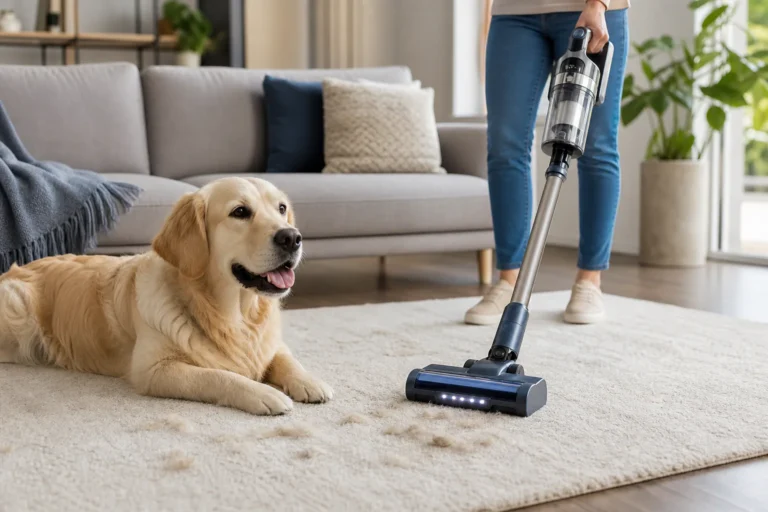
Pomskies shed throughout the year and often lose much of their seasonal undercoat in heavy coat blowouts. A strong vacuum for pet hair helps collect loose fur, but it does not replace brushing or other coat care.
What Does Mini Pomsky Mean?
“Mini” is a size label used by some breeding programs, not a separate universally standardized breed or a guarantee of adult size. Check the parents’ sizes and documented family lines instead of relying on the label.
Pomsky Temperament and Personality
Pomskies can be affectionate, playful, intelligent, loyal and alert. Many form a particularly strong bond with one household member while still enjoying family interaction. Their Pomeranian and Husky heritage may also bring vocal behavior, protective instincts, independence and a strong interest in movement outdoors.
- Affectionate: Often seeks attention and close family contact.
- Intelligent: Learns quickly when training is rewarding and consistent.
- Playful: Needs interactive games as well as physical activity.
- Vocal: May bark, howl or protest when excited or frustrated.
- Independent: Can make its own decisions and ignore a weak command.
- Stubborn: Repetition without rewards can lead to disengagement.
- Protective: Early exposure can reduce suspicious or reactive behavior.
A Pomsky is not automatically easy to care for because it is small. Its intelligence, energy, vocal nature and possible prey drive require thoughtful management, much like an active working-breed mix.
Is a Pomsky a Good Dog?
Pomskies can be affectionate, playful and intelligent companions. They need exercise, grooming, training and supervision, so they are not a low-maintenance choice.
Are Pomskies High Maintenance?
Yes. Pomskies need frequent brushing, regular exercise, mental enrichment and consistent training. Owners also need to tolerate shedding and vocalization.
Training, Exercise, and Socialization
Plan for about one hour of exercise each day, followed by additional play or enrichment. Walks, scent games, food puzzles, trick training and supervised games can reduce boredom, destructive behavior and attempts to escape.
- Begin reward-based training early. Use food, toys, praise and short sessions to build cooperation.
- Teach recall in controlled areas. Husky ancestry can bring roaming instincts, so off-leash freedom requires a secure environment and dependable recall.
- Socialize gradually. Introduce people, calm dogs, handling, household sounds, surfaces and car travel during puppyhood.
- Practice calm behavior. Reward quiet greetings, settling on a mat and waiting at doors.
- Rotate enrichment. Change puzzles and games so the dog continues solving problems instead of becoming bored.
Harsh corrections can increase fear, resistance or vocal behavior. A qualified trainer who uses reward-based methods can help first-time owners and households dealing with barking, leash pulling, guarding or separation problems.
Grooming and Everyday Care
- Brush regularly: Daily brushing suits many Pomskies, especially during seasonal undercoat blowouts.
- Schedule professional grooming: A session costs approximately $50–$90 and can help with coat cleanup, sanitary trimming and nail care.
- Protect the double coat: Avoid shaving the coat unless a veterinarian recommends it for a medical reason.
- Clean teeth: Small dogs are prone to crowded teeth and dental disease, so daily brushing and veterinary dental care matter.
- Check ears: Inspect them weekly and clean them only with a veterinarian-approved product when needed.
- Trim nails: Regular trims prevent discomfort and altered movement.
- Measure food: Feed a complete diet suited to the dog’s age, size and activity level to help prevent obesity.
Food costs approximately $40–$70 per month. Change foods gradually to reduce digestive upset.
Pomsky Health Problems and Lifespan
Pomskies live approximately 13–15 years. Their health depends on inherited traits, breeding quality, weight control, dental care and preventive medicine. Mixed ancestry does not eliminate genetic disease, so a health-conscious breeder should screen both parent dogs.
- Allergies and skin problems: Watch for itching, redness, recurrent ear problems or hair loss.
- Patellar luxation: A loose kneecap can cause skipping, lameness or discomfort.
- Hip dysplasia: Abnormal hip development can lead to pain and arthritis.
- Collapsing trachea: A persistent honking cough requires veterinary assessment.
- Epilepsy: Seizures require prompt veterinary evaluation and ongoing management.
- Heart disease: Regular examinations can identify murmurs or other warning signs.
- Eye conditions: Changes in vision, redness, cloudiness or squinting need professional attention.
- Dental disease: Crowding and plaque can progress quickly in smaller dogs.
Ask breeders for documented genetic testing, orthopedic evaluations, eye examinations and cardiac assessments appropriate to the parent breeds. Pet insurance can help with unexpected treatment costs, but premiums, exclusions, deductibles and waiting periods vary by policy.
Is a Pomsky a Good Family or Apartment Dog?
A Pomsky can live in an apartment if the household provides daily exercise, enrichment, training and enough tolerance for barking. A yard is useful but does not replace walks or supervision. Fencing must be secure because some Pomskies climb, dig or look for ways to roam.
Families with children should supervise every interaction and teach children to respect the dog’s food, sleep and personal space. Early socialization supports peaceful relationships with other dogs, cats and small pets, but prey drive and individual temperament still determine compatibility.
- Good fit: Active households that enjoy training, play, grooming and interactive companionship.
- Possible challenge: Homes that require long periods of solitude, very quiet behavior or minimal grooming.
- Experience level: First-time owners can succeed with professional guidance and consistent routines.
- Noise tolerance: Owners should be prepared for barking, whining and Husky-like vocalization.
- Work schedule: Puppies need frequent toilet breaks, supervision, socialization and gradual alone-time training.
Pomsky Price, Adoption, and Responsible Breeders
- Research the breeding program. Look for documented health testing, clean living conditions, stable adult dogs and a clear focus on temperament and welfare.
- Meet the mother and inspect records. The breeder should explain the parent dogs’ sizes, health history, behavior and breeding method.
- Do not treat “rare” marketing as health information. Unusual colors, tiny-size claims and urgency should never replace genetic and veterinary documentation.
- Review the contract. Confirm health guarantees, return or rehoming terms, spay-neuter requirements, registration details and covered veterinary costs.
- Confirm the puppy’s age. Puppies should remain with the breeder until at least 8 weeks of age.
- Arrange an independent examination. Have your veterinarian examine the puppy within 72 hours of receiving it.
- Check the guarantee period. Genetic health guarantees commonly cover 12–24 months, but read the exclusions and required procedures carefully.
- Consider rescue. Contact Pomsky-specific rescues, general dog rescues and shelters. Adult dogs may come with useful information about their temperament and habits.
Do not send a deposit solely because a seller advertises a popular color or claims that only one puppy remains. A transparent breeder answers questions in writing, permits appropriate visits or live video, provides veterinary records and remains available after placement.
Pomsky Readiness Checklist
- Can you provide about an hour of daily exercise plus play and mental enrichment?
- Can your household manage frequent brushing, year-round shedding and seasonal coat blowouts?
- Can you train consistently and tolerate barking, howling or whining?
- Do you have a secure plan for recall, outdoor supervision and roaming prevention?
- Can you provide gradual alone-time training and avoid leaving a puppy isolated for the workday?
- Are children and other pets able to interact under supervision?
- Can you afford the purchase or adoption cost, routine veterinary care, grooming, food and unexpected treatment?
- Will you judge a puppy by documented parent health and family lines rather than size or color marketing?
FAQs
What is the least wanted dog?
There is no objective universal ranking of the least-wanted dog. Popularity depends on household fit, lifestyle and local adoption demand. Pomskies are not broadly unwanted, but their care requirements do not suit every household.
Are Pomskies recognized as a purebred dog?
Pomskies are designer crossbreeds, not a long-established purebred with a universally accepted breed standard. Their appearance, size and temperament vary because they combine two distinct parent breeds.
Can a Pomsky be left alone during the workday?
Adult Pomskies can learn to spend limited periods alone, but long daily isolation may contribute to barking, anxiety, boredom and destructive behavior. Puppies need gradual alone-time training, toilet breaks, enrichment and regular human interaction.
Where can you find a Pomsky for sale?
Look for a Pomsky for sale through a transparent breeder who provides parent health records, puppy veterinary records, a written contract and an opportunity to meet the mother or view the dogs by live video. Rescue groups and shelters may also have Pomskies or Pomsky mixes available for adoption.
Final Verdict: Who Should Get a Pomsky?
A Pomsky suits an active household prepared to provide exercise, reward-based training, daily coat care, supervision and close health monitoring. It is a poor fit for anyone seeking a quiet, low-maintenance dog or a predictable adult size and temperament.
Choose based on documented parent health and the individual dog’s behavior, not miniature-size claims or fashionable coat colors.