Puggle Dog: Traits, Care, Health, and Adoption

Puggle Dog

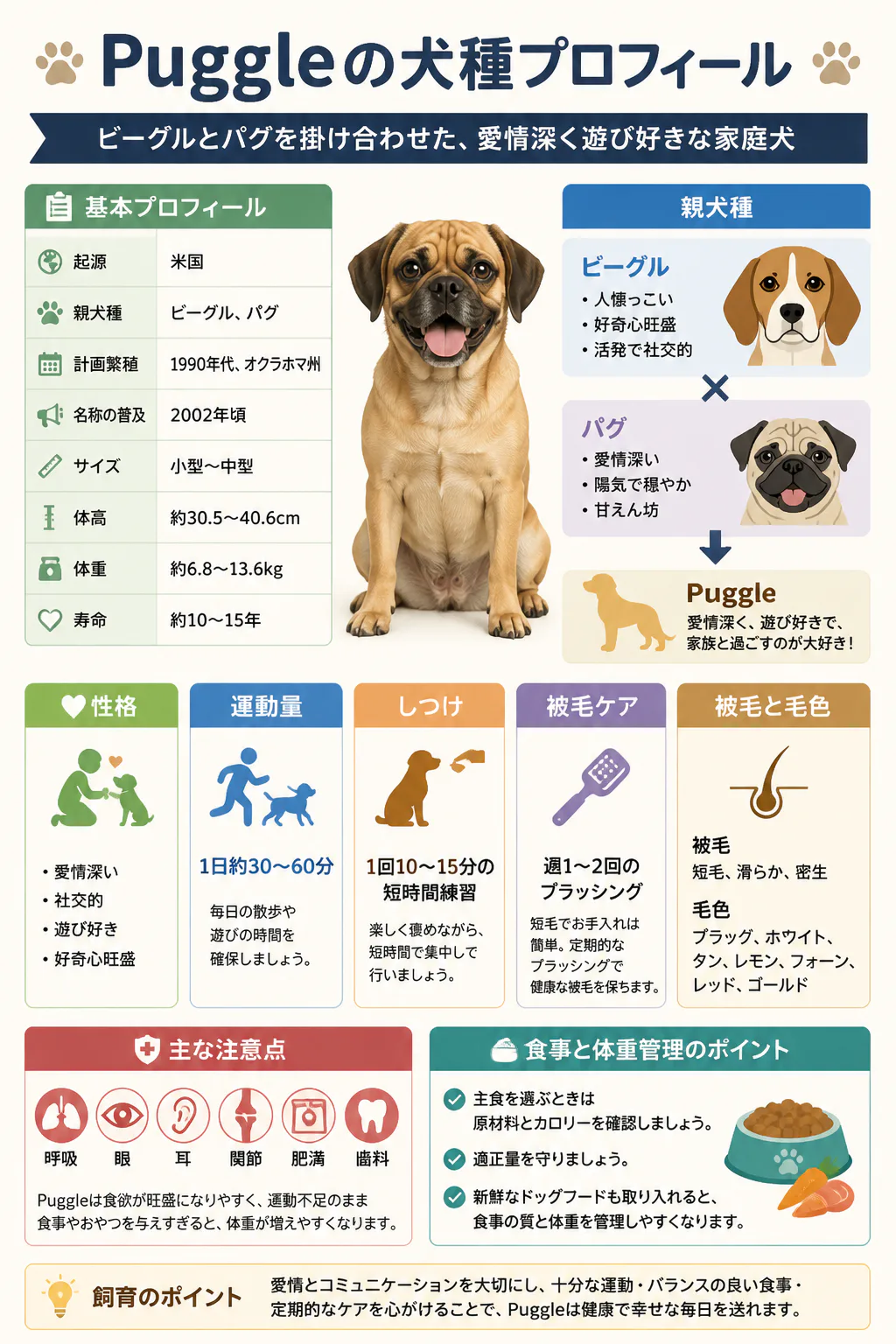
The Puggle Dog combines the Pug’s affectionate, food-driven nature with the Beagle’s curiosity, scent drive and vocal personality. Developed in the United States, this mix can be cheerful and family-friendly, but its traits vary because it has no established breed standard. The right home needs to provide daily exercise, secure leash handling, regular grooming and careful control of food, heat and breathing.

Puggle Dog Breed Snapshot

AttributeDetails
IdentityPug and Beagle crossbreed
OriginUnited States
DevelopmentPlanned cross in Oklahoma during the 1990s
Breed statusMixed breed without an established standard
RecognitionNot recognized as a distinct AKC breed
Height8–15 inches
Weight15–30 pounds
CoatShort, smooth, double-coated
ColorsBlack, white, tan, red, lemon, and combinations
AppearanceWrinkled forehead, floppy ears, tapered tail, possible dark mask
TemperamentPlayful, affectionate, cheerful, curious, social, sometimes willful
ExerciseAbout 30 minutes daily
GroomingWeekly brushing; regular fold and ear care
Health risksHip dysplasia, patellar luxation, epilepsy, eye disease, respiratory problems
Lifespan10–15 years
Acquisition cost$50–$600 adoption; $500–$2,000 purchase
Monthly upkeep$50–$100

What Is a Puggle Dog?

A Puggle is a cross between a Pug and a Beagle. The first planned Pug-Beagle cross took place in Oklahoma during the 1990s. Breeders commonly use a male Pug and female Beagle, although some Puggles come from multigenerational Puggle breeding.

Pug ancestry can bring wrinkles, affection, food motivation, snoring and sensitivity to heat. Beagle ancestry can add scent tracking, curiosity, vocalization and a tendency to follow an interesting trail. A puppy may inherit any combination of these traits, so the parents’ temperament and health history matter more than the Puggle name alone.

The Puggle is not an AKC-recognized breed and has no fixed standard for size, structure or temperament. The American Canine Hybrid Club and International Designer Canine Registry recognize and register Puggles, but registration does not guarantee good health, quality or predictable traits.

Puggles can vary even within the same litter, with differences in energy, body shape, vocal habits and sociability. That is common with small designer crosses, and looking at another mix such as the Chiweenie dog guide can help potential owners see why each hybrid dog should be judged on its own traits, not appearance alone.

What Does a Puggle Look Like?

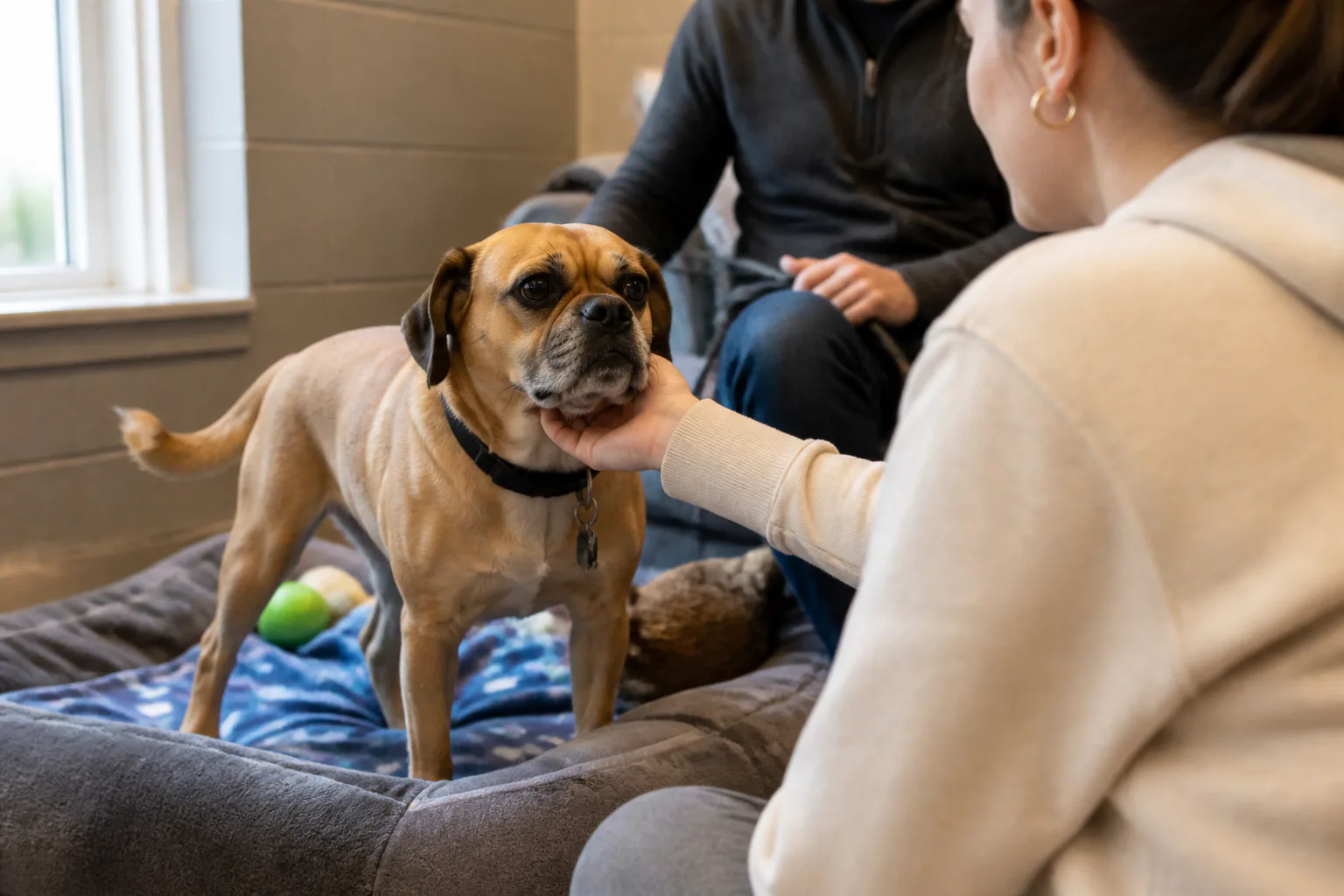
Most adult Puggles stand 8 to 15 inches at the shoulder and weigh 15 to 30 pounds. Many have a Beagle-like outline, with a barrel-shaped torso, longer legs, floppy ears and a long, tapered tail. The muzzle is often longer than a Pug’s but shorter than a Beagle’s.

The coat is short, smooth and double-coated. Common colors include black, white, tan, red and lemon, either alone or in combination. A wrinkled forehead and dark facial mask are also common, although the amount of wrinkling and the shape of the face vary between dogs.

A short coat does not mean light shedding. Puggles can shed moderately to heavily, leaving hair on furniture, clothing and floors. Weekly brushing removes dead hair. Regular checks of the facial folds and floppy ears help prevent moisture and debris from building up.

As a Puggle matures, its short coat, rounded face and sturdy build may reflect either parent more strongly. The same variation appears in other compact crosses, and the Dorgi dog guide provides a useful comparison of how two very different breeds can produce a range of body types.

What Does a Puggle Look Like?

Is a Puggle a Good Family Dog?

Puggles are generally affectionate, cheerful and social. They often enjoy interactive play and then settle close to their people. Many get along well with children and other dogs when introductions are controlled and children learn to handle the dog respectfully.

  • Children: Usually a good match when children use gentle handling and the dog has a quiet place to retreat.
  • Other dogs: Often sociable, especially after early, controlled introductions.
  • Cats: Compatibility varies because Beagle ancestry can bring chase and hunting instincts.
  • Alone time: Some Puggles develop separation-related behavior when left alone for long periods.
  • Vocalization: Barking, baying and alert sounds may reflect Beagle ancestry or boredom.
  • Personality: Temperament can differ even among puppies from the same litter.

A Puggle usually does best in a home where it can take part in daily family life. Apartment living can work, but persistent barking may disturb neighbors, and the dog still needs outdoor activity every day. A secure fenced yard is useful, although it does not replace supervision; a scent-driven dog may still look for a way out.

Is a Puggle a Good Family Dog?

Puggles can make affectionate family companions, but each dog’s confidence, sensitivity to noise and ability to settle around children matter. Families comparing small mixed-breed dogs may also find the Pomchi dog guide helpful, since size alone does not determine patience, play style or the supervision a dog will need.

Is a Puggle a Good Family Dog?

How Much Exercise Does a Puggle Need?

About 30 minutes of daily exercise is a reasonable starting point for many adult Puggles. Split that time between walks, energetic play and short scent games so the dog gets both physical activity and mental stimulation.

  • Use a secure leash and harness because an interesting scent can override recall.
  • Choose sniffing walks and controlled games instead of letting the dog wander freely.
  • Keep exercise moderate in hot or humid weather.
  • Stop and monitor the dog if it develops heavy panting, weakness, noisy breathing or reluctance to continue.
  • Use indoor training games when heat or respiratory limits make outdoor exercise unsafe.
  • Do not treat a Puggle as a regular running or jogging companion.

Puppies need shorter activity periods with plenty of rest, while older dogs may need a gentler pace. Increase exercise gradually. Unusual fatigue, weakness, noisy breathing or breathing difficulty requires prompt veterinary assessment, especially in a Puggle with a short muzzle.

Puggles benefit from a mix of brisk walks, play and scent-based games rather than the same repetitive exercise every day. A varied routine keeps both their bodies and minds engaged, much like Pomsky dog care, although the two mixes can differ considerably in size and energy levels.

How Much Exercise Does a Puggle Need?

How Do You Train a Puggle?

Puggles are intelligent and often respond well to food rewards, but they can also be stubborn, independent and easily distracted by scents. Patient, consistent positive reinforcement usually works better than harsh corrections. Punishment can damage trust without stopping a determined dog from following an odor.

  1. Use small treats and immediate praise for the behavior you want.
  2. Keep sessions short and repeat them throughout the day.
  3. Start leash manners and name recognition as soon as the dog comes home.
  4. Practice recall in enclosed areas before trying it outdoors.
  5. Use a consistent schedule for crate training and house-training.
  6. Socialize the dog gradually with people, dogs, surfaces, handling and household sounds.
  7. Teach a reliable “leave it” cue for food, wildlife and distracting scents.

Training also includes everyday management. Secure doors and gates, avoid relying on an unfenced yard, and use identification and a microchip. Whenever possible, take training treats from the dog’s measured daily food allowance. Puggles can gain weight quickly when extra treats are added without reducing meal portions.

How Do You Groom and Feed a Puggle?

Weekly brushing is usually enough to remove loose hair, although seasonal shedding may call for more frequent brushing. The coat is easy to maintain, but the face, ears, teeth and body condition need regular attention.

  • Brush the coat at least once a week.
  • Check facial folds regularly and clean and dry them when moisture or debris appears.
  • Inspect floppy ears regularly and use a dog-safe ear cleaner when visible debris or excess moisture is present.
  • Brush the teeth regularly and arrange professional dental care when advised.
  • Trim the nails before they become long enough to affect movement.
  • Feed measured meals instead of free-feeding.
  • Track body condition and adjust portions if the dog gains excess weight or loses condition.

Puggles often have strong appetites, which raises their obesity risk. Extra weight can increase joint strain and worsen breathing difficulty and heat intolerance. Include treats, table scraps and chew calories in the daily food plan. Fresh water should always be available, particularly after walks and play.

Puggles usually have easy-to-manage coats, but regular brushing, ear checks, facial cleaning and measured portions help prevent mats, irritation and weight gain. If you’re comparing daily care with another companion mix, the Cockapoo dog guide shows how much coat texture can affect grooming time, even for dogs kept mainly as family pets.

How Do You Groom and Feed a Puggle?

What Health Problems Affect Puggles?

Puggles can inherit health problems associated with either parent breed. Being a mixed breed does not remove the risk of inherited disease. Face shape, body structure and overall health also vary from one dog to another, so an individual assessment matters.

  • Orthopedic problems: Hip dysplasia and patellar luxation can affect mobility and comfort.
  • Neurologic disease: Epilepsy can cause recurring seizures and requires veterinary assessment.
  • Eye disease: Cherry eye, progressive retinal atrophy and other eye conditions are possible.
  • Prolapsed nictitating membrane gland: This condition is also called a prolapsed third-eyelid gland.
  • Respiratory problems: A shorter muzzle can contribute to noisy or labored breathing, particularly in heat or during exertion.

Before acquiring a puppy, ask for veterinary records, vaccination and parasite-control history, the parents’ health information and a written contract. You should be able to see where the puppies are raised, and the seller should answer basic questions without pressuring you to pay immediately. For an adult rescue, request medical records and foster observations about breathing, movement, appetite, behavior and reactions to children or other animals.

What Health Problems Affect Puggles?

How Long Do Puggles Live?

The expected Puggle lifespan is 10 to 15 years. Keeping the dog lean, providing moderate exercise, preventing overheating and addressing dental, eye, joint, seizure and breathing changes early can support healthier aging.

As a Puggle gets older, watch for changes in appetite, stamina, gait, vision, hearing, sleep or breathing. Discuss anything unusual with a veterinarian.

Where Can You Adopt or Buy a Puggle?

Adoption is often the less expensive option, while a breeder may have more information about a puppy’s parentage and early socialization. Availability varies by region, and Puggle listings may be less common than listings for purebred Pugs or Beagles.

Source typeCostBackgroundAvailability
Adoption websites$50–$300Vaccination and sterilization often includedLocal-intake dependent
Rescues$150–$600Veterinary screening and foster notesRegional availability
Private breeders$500–$2,000Parent and litter records varyPlanned-litter dependent

Petfinder lists adoptable Puggles from regional shelters and rescues. Adopt-a-Pet is a nationwide adoption and rehoming network with independent listings. Puggle Me Home focuses on displaced Puggles, while Pug Rescue of Florida & Georgia places Pugs, Beagles, mixes and Puggles in its region.

When contacting a breeder, ask to meet the mother, review veterinary records, see the living environment and receive a written contract before payment. Be cautious if a seller refuses a visit or video call, advertises many unrelated breeds, insists on wire transfers or gift cards, or offers to ship a puppy without screening. Transport, veterinary care, supplies, food and routine upkeep can push the first-year cost well above the purchase or adoption fee.

Is a Puggle Right for You?

  • Choose a Puggle if you want an affectionate companion that enjoys play and family contact.
  • Plan for moderate daily activity and safe opportunities to sniff and explore.
  • Expect regular shedding despite the short, easy-care coat.
  • Use measured meals and monitor weight because food-seeking behavior can lead to obesity.
  • Have a plan for barking, separation-related behavior and secure containment.
  • Manage heat carefully if the dog has a short muzzle or noisy breathing.
  • Consider another breed or mix if you need a dependable off-leash dog, a distance-running partner or a pet that can routinely stay alone all day.

Meet the individual dog whenever possible. A calm adult with a known history may be easier to evaluate than a puppy whose adult size, vocalization, prey drive and muzzle shape are still developing.

What to Assess in an Individual Puggle

  • Breathing: Watch the dog at rest and after gentle activity for noisy or labored breathing, heavy panting, weakness or reluctance to continue.
  • Body condition: Check that the dog is not carrying excess weight, which can place more strain on the joints and breathing.
  • Temperament: Look for an affectionate, playful response that fits your household’s activity level and ability to provide companionship.
  • Social compatibility: Ask how the dog behaves around children, cats and other dogs, and whether those observations came from a foster home or a controlled introduction.
  • Daily behavior: Ask about barking, scent tracking, separation-related behavior, leash control, appetite and house-training.
  • Health transparency: Review veterinary records, breathing concerns, medications and known conditions before adoption or purchase.

Puggle Memes and Humor

For lighthearted Puggle content, search for “Puggle dog meme,” “funny Puggle” or “Puggle reaction” on image-sharing and social platforms. Common themes include food obsession, expressive faces, loud baying, wrinkles and floppy ears. These jokes highlight recognizable behaviors, but they do not describe every Puggle’s personality. A meme can be entertaining, but it should not replace an assessment of an individual dog’s temperament or encourage unsafe feeding, overheating or stressful handling for a photo.

FAQs

Are Puggles difficult dogs?

Puggles are not inherently difficult, but scent drive, stubbornness, barking, appetite and separation-related behavior can challenge inexperienced owners. Consistent training, secure handling, measured feeding and daily companionship help reduce common problems.

Can a Puggle live with cats?

Some Puggles live successfully with cats, while others chase or fixate on them. Introductions should be gradual and supervised, with barriers and separate safe spaces available.

Are black Puggles common?

Black is one of the recognized Puggle coat colors and may appear alone or with white, tan, red or lemon. The exact pattern depends on the dog’s inherited coat genes.

Why do Puggles overheat easily?

Pug ancestry can contribute to a shorter muzzle and reduced heat tolerance. Avoid strenuous activity in hot or humid weather, and seek veterinary help for severe panting, weakness, collapse or abnormal breathing.

How much does a Puggle cost per month?

Routine upkeep averages about $50 to $100 per month for food, preventive care, grooming supplies and ordinary needs. Veterinary treatment, insurance, boarding, training and emergency care can add substantially to that amount.

Conclusion

A Puggle can suit a household looking for a sociable, playful companion that receives daily activity and close supervision. Before committing, assess the individual dog’s breathing, body condition, behavior around other pets and health records. Choose an adoption group or breeder that provides clear background information and answers questions openly.

Similar Posts