Anatolian Shepherd Dog: Traits, Care, Training, and Living Needs
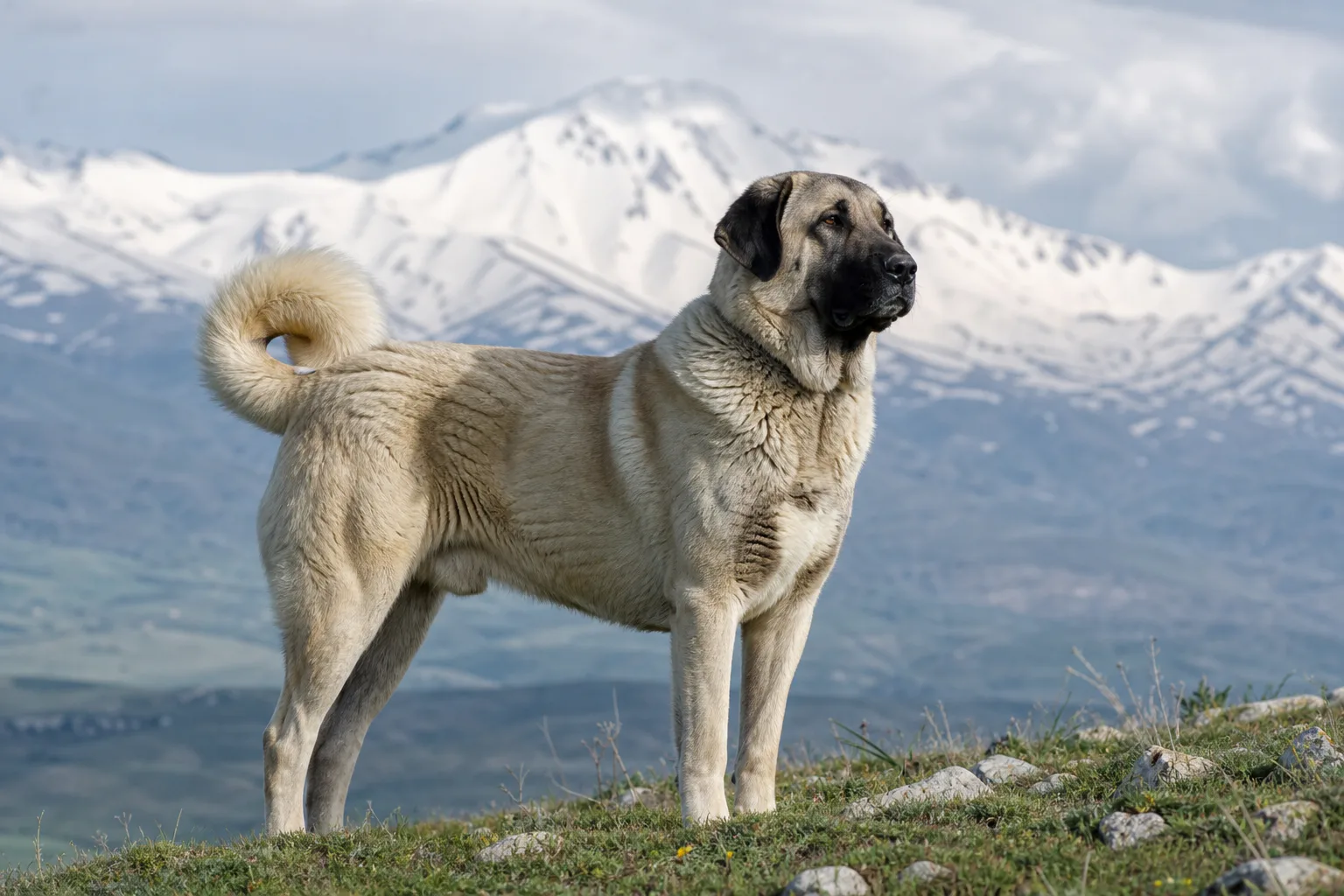
The Anatolian Shepherd Dog is a large, independent livestock guardian bred to protect flocks and property rather than wait for constant direction from a handler. It is loyal, patient, athletic, territorial, and capable of making decisions alone. The breed can be an excellent partner for experienced owners with space, secure boundaries, and a clear understanding of guardian-dog behavior.
This guide explains the breed’s temperament, size, exercise needs, grooming, training, health considerations, family suitability, and differences from similar working dogs.
Breed Overview
| Characteristic | Anatolian Shepherd Dog |
|---|---|
| Origin | Turkey and the Anatolian region |
| Primary purpose | Livestock and property guardian |
| Adult size | Large to giant |
| Temperament | Independent, loyal, watchful, territorial |
| Coat | Short to rough double coat |
| Exercise needs | Active daily exercise and room to move |
| Best suited to | Experienced owners, rural homes, farms, and large secure properties |
History and Purpose
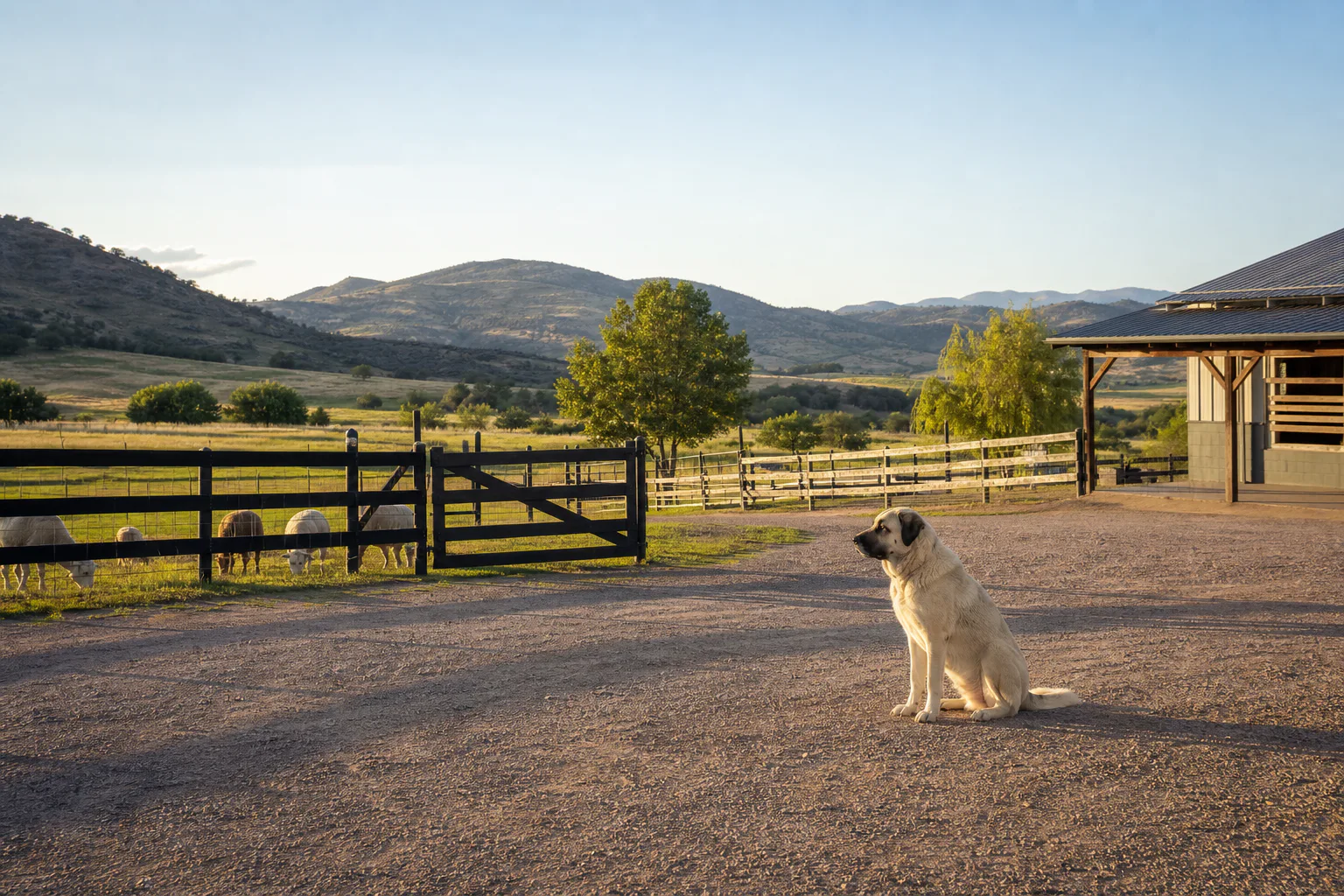
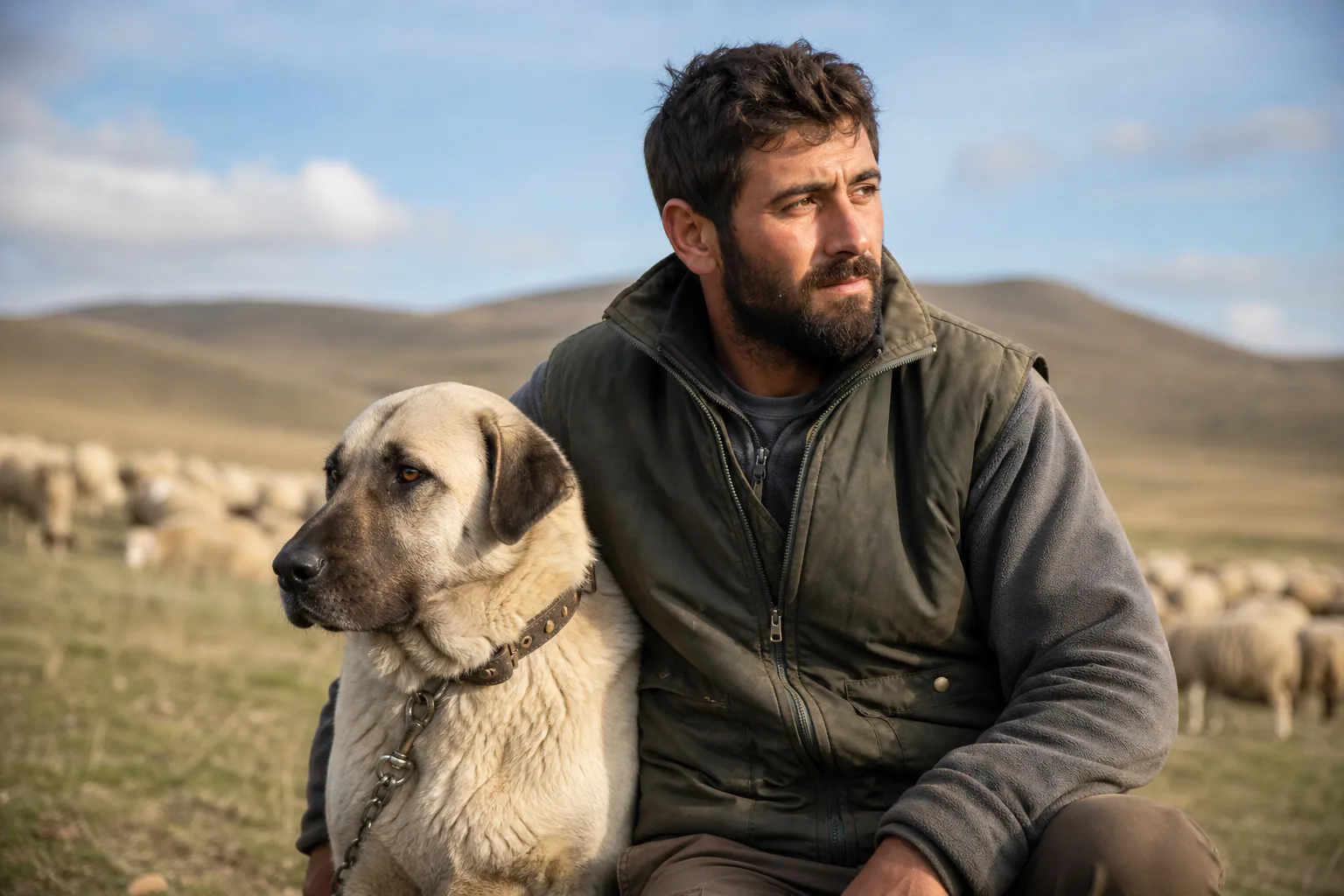
The Anatolian Shepherd Dog developed in Turkey as a working guardian for shepherds and livestock. Its role was not to herd animals closely but to live among them, notice threats, deter predators, and respond when necessary.
That background explains many traits that can surprise first-time owners. Like other serious working breeds, including the German Shepherd, the Anatolian combines physical capability with a strong awareness of its surroundings. However, it is generally more independent and less dependent on frequent human direction than a traditional obedience or herding breed.
These dogs were expected to work in demanding weather and over large areas. Their strength, stamina, thick double coat, and measured judgment remain central to the breed today.
Anatolian Shepherd Temperament
The typical Anatolian Shepherd is calm with familiar people and serious about unfamiliar activity. It often observes before reacting, but its response can be forceful if it believes its home, family, or animals are threatened.
- Loyal: It forms strong bonds with its household and the animals under its care.
- Independent: It can make decisions without waiting for repeated commands.
- Territorial: It naturally monitors boundaries, visitors, vehicles, and unusual sounds.
- Patient: It can remain composed for long periods while watching livestock or property.
- Protective: It may place itself between a perceived threat and the people or animals it guards.
This temperament is valuable in a working setting but demanding in a suburban one. Owners must manage introductions, visitors, fencing, and public outings carefully rather than assuming that affection alone will override the dog’s guarding instincts.
Size and Appearance
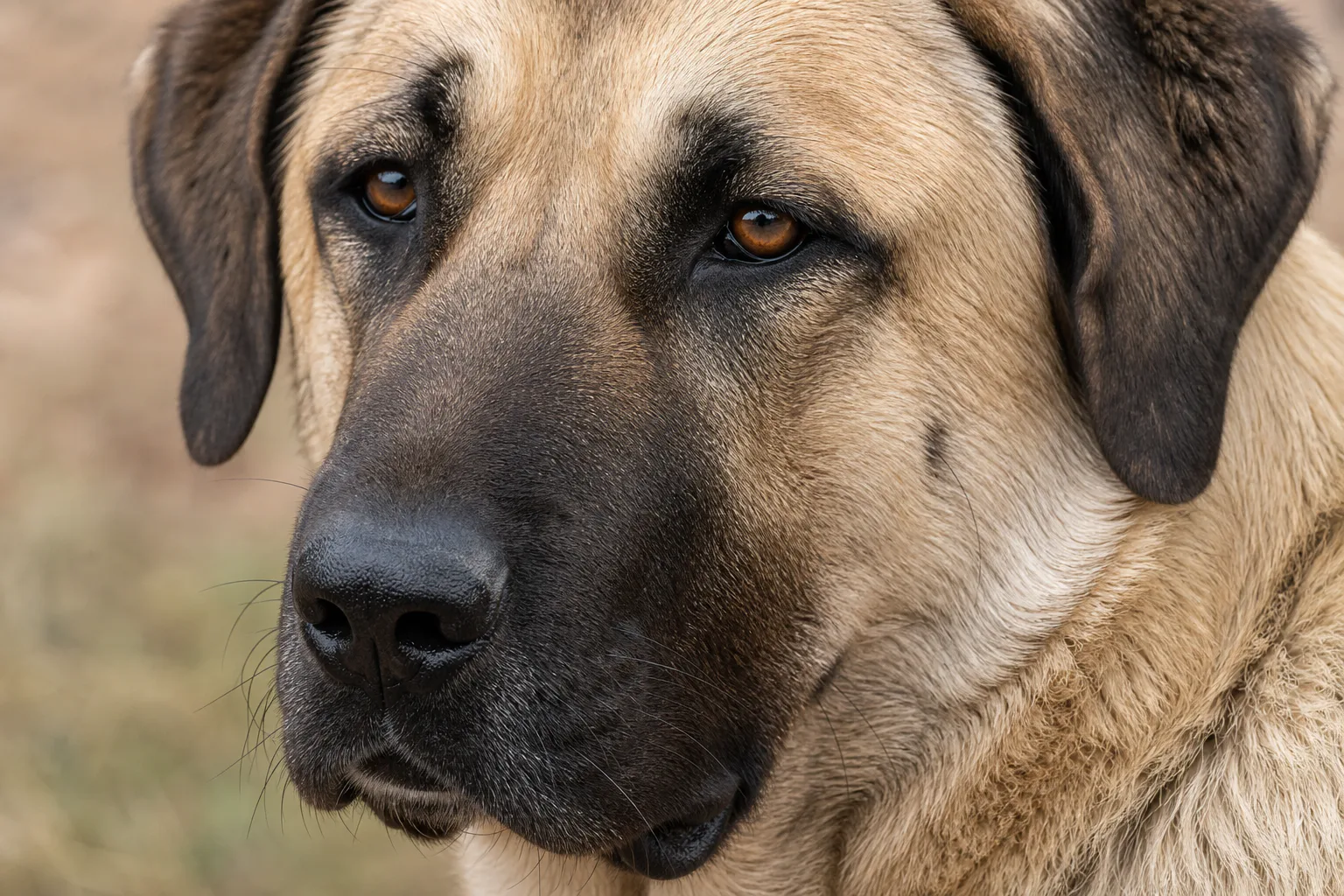
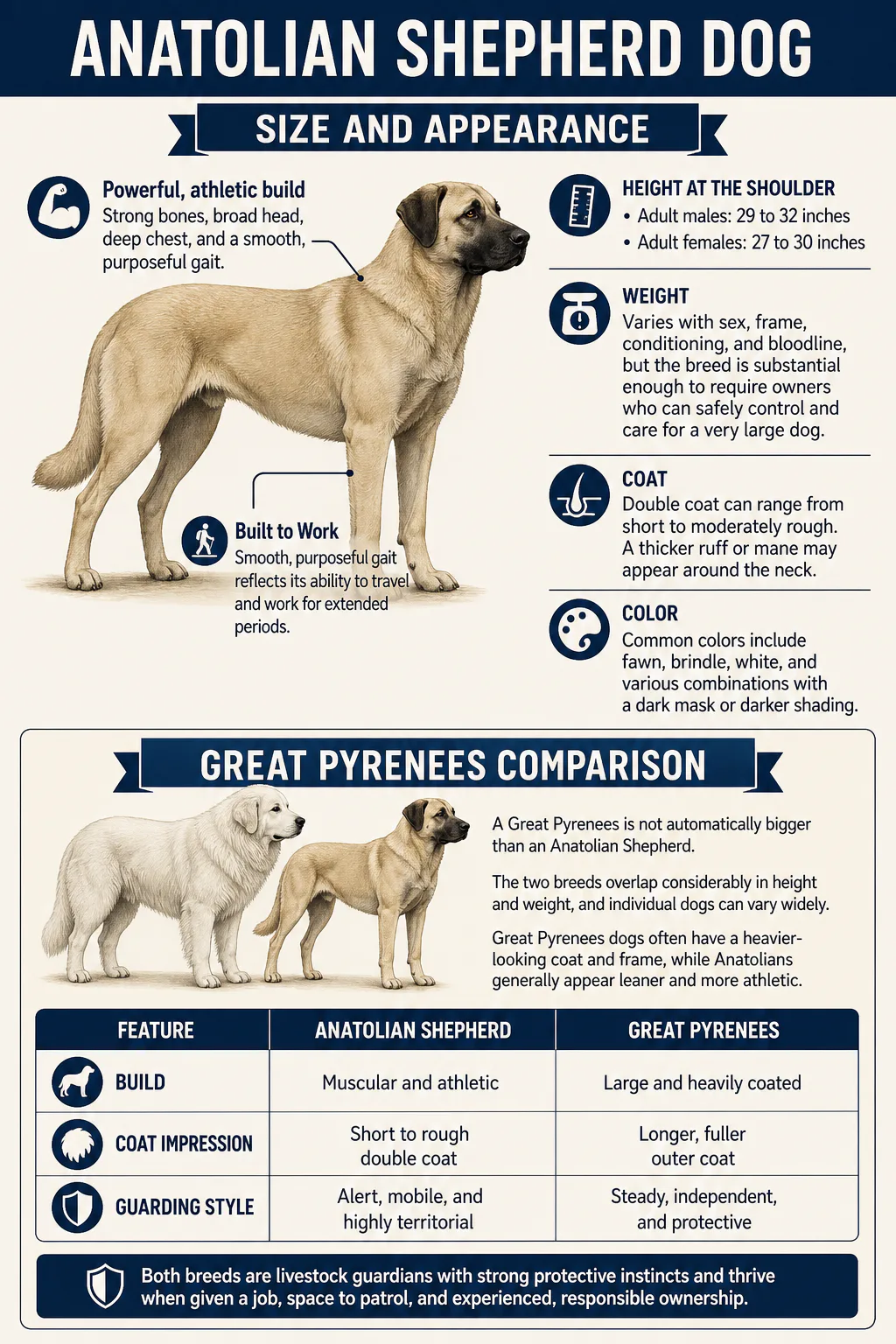
The Anatolian Shepherd Dog has a powerful, athletic build rather than a soft or delicate appearance. It has strong bones, a broad head, a deep chest, and a smooth, purposeful gait that reflects its ability to travel and work for extended periods.
Adult males commonly stand about 29 to 32 inches at the shoulder, while females commonly stand about 27 to 30 inches. Weight varies with sex, frame, conditioning, and bloodline, but the breed is substantial enough to require owners who can safely control and care for a very large dog.
The double coat can range from short to moderately rough. A thicker ruff or mane may appear around the neck. Common colors include fawn, brindle, white, and various combinations with a dark mask or darker shading.
Great Pyrenees Comparison
A Great Pyrenees is not automatically bigger than an Anatolian Shepherd. The two breeds overlap considerably in height and weight, and individual dogs can vary widely. Great Pyrenees dogs often have a heavier-looking coat and frame, while Anatolians generally appear leaner and more athletic.
| Feature | Anatolian Shepherd | Great Pyrenees |
|---|---|---|
| Build | Muscular and athletic | Large and heavily coated |
| Coat impression | Short to rough double coat | Longer, fuller outer coat |
| Guarding style | Alert, mobile, and highly territorial | Steady, independent, and protective |
Exercise and Living Space
An Anatolian Shepherd needs daily physical activity, but exercise should match its age, structure, and working role. Adult dogs commonly enjoy one to two hours of walking and activity each day, along with opportunities to patrol, explore, or perform purposeful tasks.
- Long walks on safe routes
- Supervised time in a securely fenced area
- Controlled hikes for physically mature dogs
- Structured training that builds calm behavior
- Livestock-guardian work under appropriate supervision
A large yard alone does not meet every need. The dog also needs mental engagement, reliable boundaries, and a household prepared for alert barking and independent behavior.
Can It Live Indoors?
An Anatolian Shepherd can live in a house, but it is not an easy indoor companion for every household. It needs enough room to move comfortably, consistent access to outdoor exercise, and careful management of guests and neighborhood activity.
Apartment living is generally a poor match because the breed’s size, guarding instincts, exercise needs, and tendency to respond to outside sounds can create practical problems. A rural or semi-rural home with secure fencing is usually more suitable.
Training and Socialization
Training should begin early and focus on cooperation, impulse control, and safe handling. The breed is intelligent, but its intelligence is expressed through independent judgment rather than automatic obedience.
Use calm, consistent instruction and reward behaviors that support daily life, such as coming when called, settling on a mat, accepting handling, and remaining composed around visitors. Harsh methods can damage trust and make a powerful guardian more difficult to manage.
Socialization Priorities
Early socialization should expose a puppy to different people, surfaces, sounds, environments, and controlled animal interactions. These experiences should be gradual and positive, not overwhelming.
- Visitors entering the home
- Veterinary handling and grooming
- Car travel and unfamiliar locations
- Calm, healthy dogs
- Livestock and other animals when relevant
- Household equipment and unusual noises
Socialization does not remove the breed’s protective nature. It helps the dog distinguish ordinary situations from genuine threats and gives the owner more control over its responses.
Family Suitability
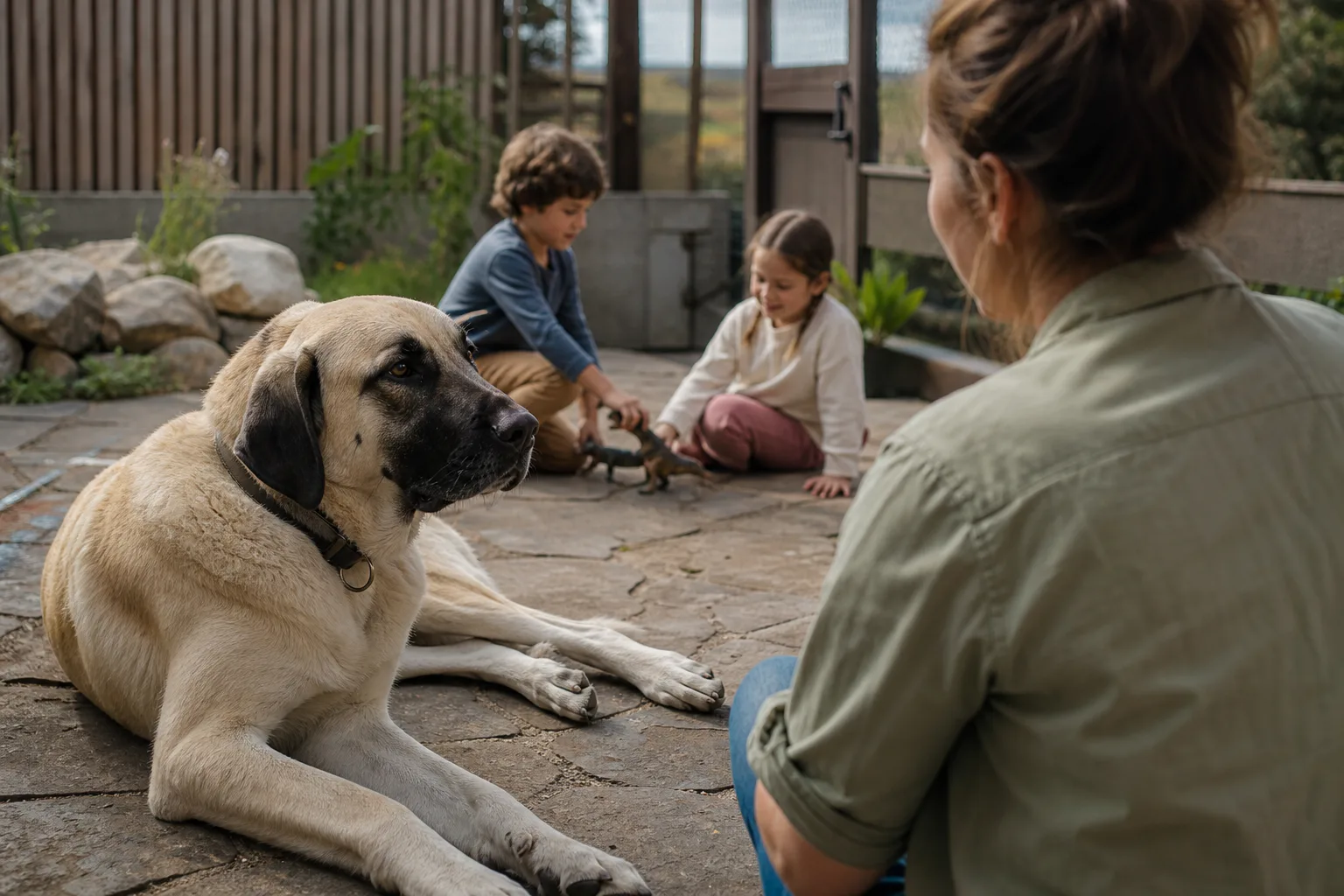
An Anatolian Shepherd can be a good family dog in the right home, especially when the family has experience with large guardian breeds. It is often devoted to children in its household, but its size and protective instincts require active supervision.
Young children should never be left alone with a dog of this size, regardless of breed. Families must also teach children not to climb on the dog, disturb it while eating or resting, or approach unfamiliar dogs without permission.
The breed is less suitable for families seeking a highly social dog that welcomes every guest. Its natural response to unfamiliar people is more reserved, and some individuals remain suspicious even after careful socialization.
Other Dogs and Animals
Anatolian Shepherds are not automatically aggressive with other dogs, but they are not reliably friendly with every dog either. Their behavior depends on genetics, early socialization, sex, management, previous experiences, and the situation.
Many individuals can live successfully with household dogs when introductions are controlled and resources are managed. Same-sex conflict, territorial disputes, and defensive responses to unfamiliar dogs can still occur, so owners should not rely on breed reputation or assume that a dog park is appropriate.
With livestock, the breed’s instincts can be an advantage when the dog is raised and trained for guardian work. With smaller pets, cats, poultry, or unfamiliar animals, supervision and careful introductions remain essential.
Grooming Requirements
The Anatolian Shepherd Dog has a practical coat that protects it from changing weather. Weekly brushing is generally sufficient for routine maintenance, with more frequent brushing during seasonal shedding.
- Brush the coat at least weekly.
- Check ears, feet, and skin during grooming.
- Trim nails before they become long or uncomfortable.
- Brush teeth regularly with a dog-safe dental routine.
- Use bathing when needed rather than on a rigid frequent schedule.
Heavy shedding periods can produce a significant amount of loose undercoat. Regular brushing helps remove it and gives owners a chance to notice skin irritation, lumps, parasites, or other changes early.
Health and Daily Care
Large dogs require thoughtful weight management because excess body weight increases stress on growing bones and adult joints. Puppies should grow steadily under veterinary guidance rather than being pushed toward rapid size.
Discuss age-appropriate exercise, feeding, vaccinations, parasite prevention, and screening with a veterinarian. A routine health plan is particularly important during puppyhood, adolescence, and the senior years.
Because this is a large, deep-chested breed, owners should learn the warning signs of serious abdominal emergencies and seek immediate veterinary care for sudden distress, repeated unproductive retching, abdominal swelling, collapse, or severe weakness.
Daily care should also include secure identification, sturdy equipment, and a fence that the dog cannot climb, push through, or dig beneath. A guardian breed should not be allowed to roam, even if it appears calm at home.
Anatolian Shepherd Versus Kangal
The terms Anatolian Shepherd and Kangal are sometimes used interchangeably, especially in casual discussions about Turkish livestock guardians. In other settings, Kangal refers to a more specifically defined Turkish type or breed, while Anatolian Shepherd describes the broader breed identity recognized in certain kennel systems.
Names and standards vary by country and registry, so buyers should examine the breeder’s goals, dogs, health practices, and working records rather than choosing based only on a label. The important practical traits are size, guarding intensity, social behavior, and suitability for the intended environment.
Choosing a Puppy or Adult
An Anatolian Shepherd puppy should be selected for stable temperament, sound structure, and appropriate working or companion goals. A responsible breeder should be willing to explain the parents’ behavior, living conditions, health history, and expected adult traits.
- Meet the mother and, when possible, the father.
- Observe whether the puppies are curious, recover from mild surprises, and interact normally.
- Ask how the litter has been exposed to people, handling, sounds, and environments.
- Request veterinary records and clear information about health screening.
- Confirm that the breeder provides guidance after placement.
An adult rescue can be a strong option for an experienced owner who wants a clearer view of the dog’s established temperament. Any adoption should include honest information about behavior around people, dogs, livestock, children, fencing, and handling.
Price and Ownership Costs
Anatolian Shepherd Dog price varies according to location, breeder reputation, pedigree, working ability, health screening, age, and whether the dog comes from a rescue organization. The purchase price is only one part of the financial commitment.
Owners should budget for large-dog food, durable fencing, veterinary care, training, grooming supplies, transportation, and emergency treatment. A low initial price does not make the breed inexpensive if the home is not equipped for a powerful guardian.
Intelligence and Trainability
There is no single official intelligence ranking that fully describes the Anatolian Shepherd Dog. Standard obedience rankings favor dogs that repeat commands quickly and consistently, while this breed was developed to assess situations and act independently.
That makes the Anatolian intelligent in a working sense but sometimes challenging in formal obedience. The best measure is not how quickly it performs a trick; it is whether it can learn household rules, remain under control, and make safe choices within its environment.
Owners comparing large working breeds should separate obedience style from overall capability. An Akita dog, for example, can also be reserved and independent, but its social behavior and historical purpose differ from those of a livestock guardian.
Common Questions
Is an Anatolian Shepherd a good family dog?
It can be, provided the family has experience, space, secure fencing, and the time to manage a protective independent dog. It is not the best choice for a household seeking an outgoing dog that accepts strangers easily or requires little training.
Are Anatolian Shepherds aggressive with other dogs?
They are not inherently aggressive with every dog, but they can be territorial, defensive, or intolerant of unfamiliar dogs. Early socialization, careful introductions, supervision, and responsible management are essential.
Can an Anatolian Shepherd be a house dog?
Yes, some live successfully indoors with their families. The home must provide adequate space, outdoor activity, consistent training, and a plan for handling visitors, delivery workers, and alert barking.
Is the Anatolian Shepherd easy to train?
It learns, but it is not usually an automatic-obedience breed. Training works best when it is consistent, calm, rewarding, and connected to practical behaviors that improve safety and daily cooperation.
Is the breed suitable for first-time owners?
Usually not. Its size, strength, territorial behavior, independence, and need for careful socialization make it a better fit for owners who already understand large guardian breeds.
Final Recommendation
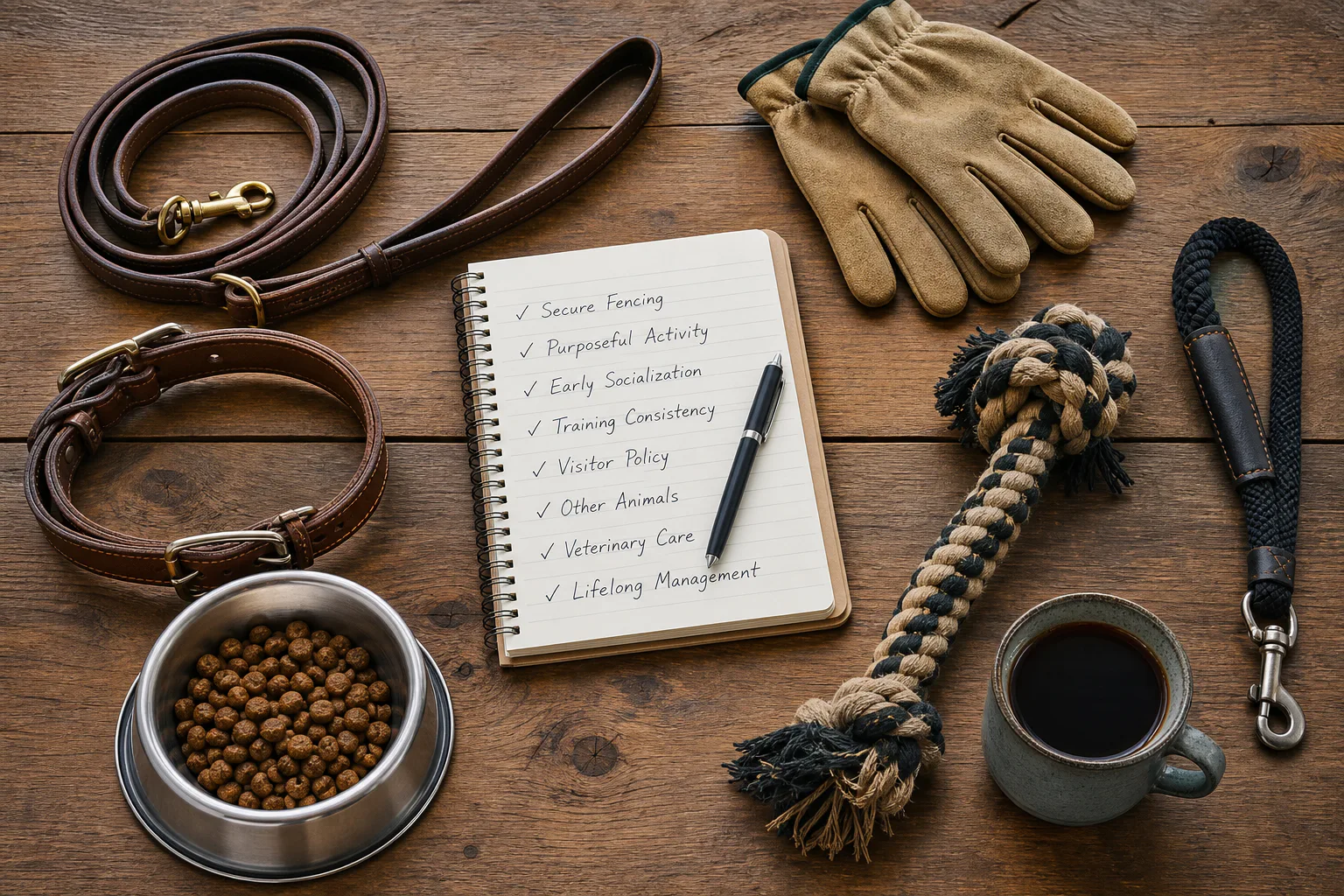
The Anatolian Shepherd Dog is best for an experienced owner who wants a serious guardian and can provide secure land, purposeful activity, early socialization, and lifelong management. It can be deeply loyal and composed, but those qualities come with responsibility.
Before choosing one, evaluate the dog’s adult size, visitor policy, fencing, neighboring properties, other animals, training experience, and access to veterinary care. If those needs align with your lifestyle, the breed can become a dependable and devoted working companion.