Whoodle Dog Guide: Size, Temperament, Care & Costs

The Whoodle combines a Soft-Coated Wheaten Terrier with a Poodle. It can be affectionate, energetic and highly trainable, but its adult size depends on the Poodle parent and its low-shedding coat needs regular care. Exercise, grooming, health screening, training and lifetime costs all matter when deciding whether a Whoodle fits your home.
Whoodle Breed Facts at a Glance
| Attribute | Details |
|---|---|
| Identity | Soft-Coated Wheaten Terrier × Poodle |
| Breed status | Mixed breed; not AKC-recognized |
| Other names | Wheatendoodle; Wheatenpoo; Sweatenpoo; Sweatendoodle |
| Origin | Modern designer crossbreed |
| Size varieties | Toy; Miniature; Standard |
| Height | 10–20 inches |
| Weight | 10–70 pounds |
| Coat | Soft; medium-length; wavy to curly; low-shedding |
| Coat colors | Cream; wheaten; tan; red; apricot; chocolate; black; silver; gray; parti-color |
| Temperament | Affectionate; energetic; intelligent; sociable |
| Exercise | 30–60 minutes daily |
| Grooming | Daily brushing; professional grooming every 4–8 weeks |
| Training | Short, consistent, positive-reinforcement sessions |
| Feeding schedule | Adults: two meals; puppies: three meals |
| Health concerns | Digestive, kidney, orthopedic, eye, blood-clotting, skin, and ear conditions |
| Lifespan | 12–15 years |
| Growth completion | 12–18 months |
| Breeder puppy cost | $1,200–$3,000 |
| Rescue or rehome cost | $100–$800 |

What Is a Whoodle?
A Whoodle is a cross between a Soft-Coated Wheaten Terrier and a Poodle. The cross is also called a Wheatendoodle, Wheatenpoo, Sweatenpoo or Sweatendoodle. It is a mixed breed rather than a breed with one official standard, so adult size, appearance and behavior can vary considerably.
The Soft-Coated Wheaten Terrier brings a friendly nature, soft wavy coat, terrier independence and a history as an Irish farm dog. The Poodle contributes intelligence, trainability and low-shedding coat traits. The Poodle parent may be Toy, Miniature or Standard, which accounts for much of the Whoodle’s size range.
The American Kennel Club does not recognize the Whoodle as an official breed. That does not determine whether an individual dog is healthy or well behaved. It does mean that buyers should examine health testing, puppy care, temperament and breeder transparency instead of relying on a standardized breed label.
Whoodles can vary considerably in size, coat and personality, even within the same litter, because they inherit traits from both the Soft-Coated Wheaten Terrier and Poodle. Those parent-breed influences also shape the Sheepadoodle mix, while its Old English Sheepdog heritage typically produces a larger, more substantial companion with different exercise and grooming needs.
How Big Does a Whoodle Get?
Whoodle size is closely tied to the size of the Poodle parent. Toy Whoodles stand about 10 to 14 inches and weigh 10 to 20 pounds. Miniature Whoodles stand about 14 to 17 inches and weigh 20 to 40 pounds. Standard Whoodles stand about 18 to 20 inches and weigh 40 to 70 pounds.
- Toy Poodle: associated with the smallest Whoodle variety.
- Miniature Poodle: associated with Miniature Whoodles.
- Standard Poodle: associated with the largest Whoodle variety.
Most Whoodles finish growing between 12 and 18 months, although larger dogs may continue filling out after smaller dogs have reached their adult height. Ask for the parents’ sizes, the puppy’s growth information and a realistic adult range. A responsible breeder should not promise an exact final height or weight.
What Does a Whoodle Look Like?
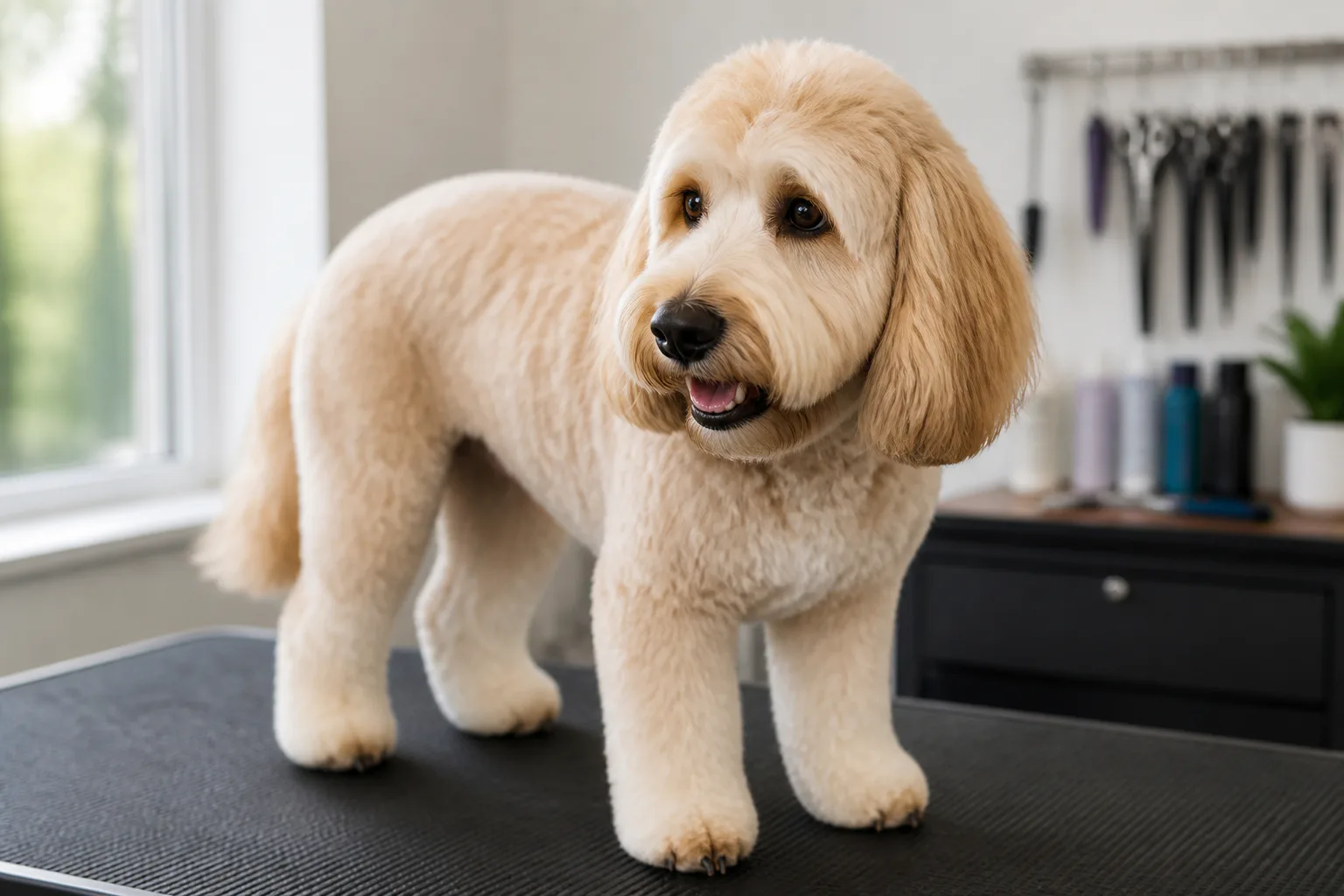
Many Whoodles have a teddy-bear appearance, with a rounded face, hanging ears, expressive eyes and a compact but athletic body. Their soft, medium-length coat may be loosely wavy or tightly curly. Coat texture is not completely predictable, so related dogs can need different brushing and trimming routines.
- Coat colors include cream, wheaten, tan, red, apricot, chocolate, black, silver, gray and parti-color.
- Low shedding does not make the coat maintenance-free or allergy-proof.
- Wavy coats can mat quickly behind the ears, under the legs, around the collar and near the tail.
- Body size and proportions vary with the Poodle parent and the individual cross.
Black Whoodles are possible, along with lighter and multicolored coats. Color is less important than coat condition, skin health, temperament and responsible breeding. A striking coat does not compensate for poor health records or inadequate puppy care.
Is a Whoodle a Good Family Dog?
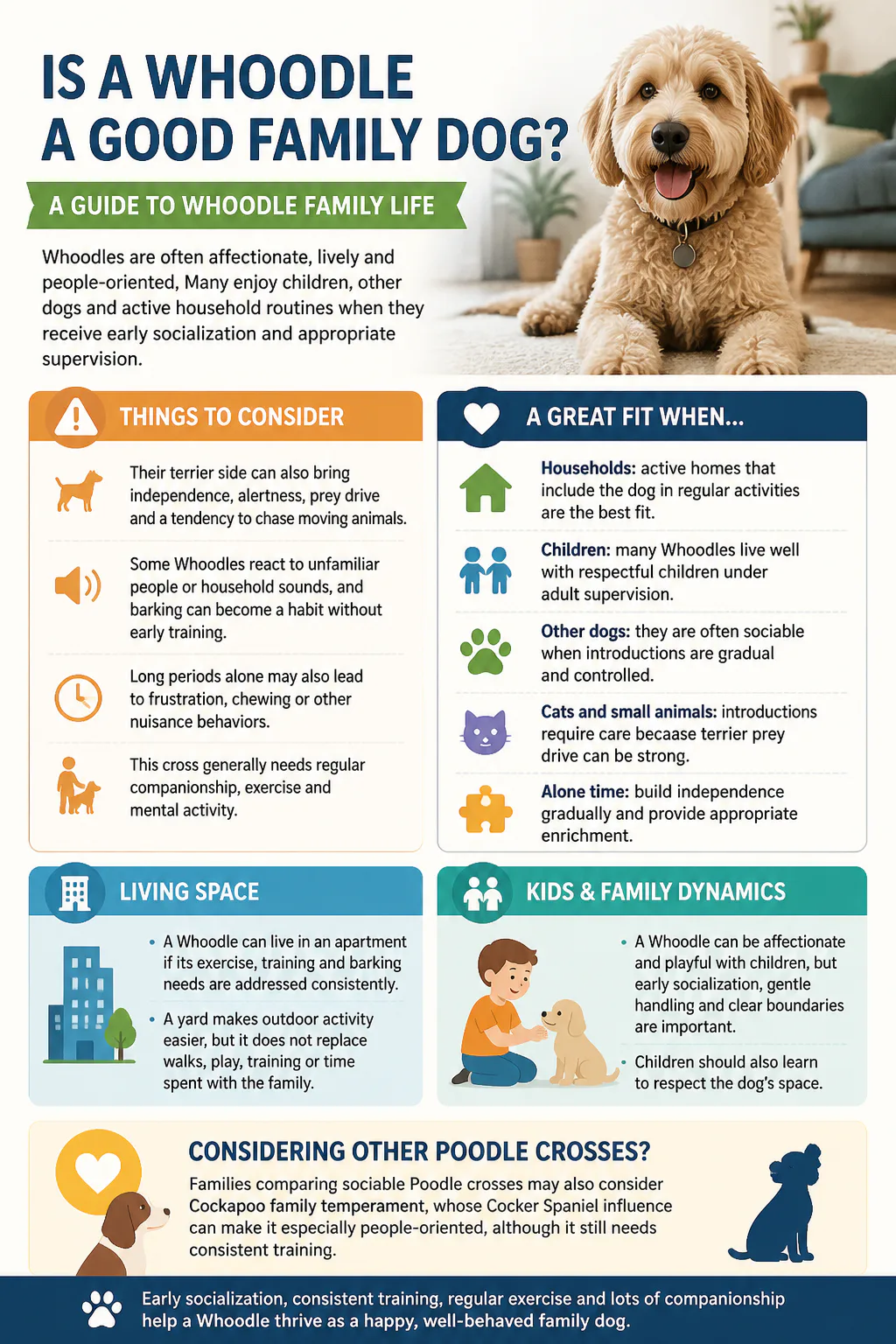
Whoodles are often affectionate, lively and people-oriented. Many enjoy children, other dogs and active household routines when they receive early socialization and appropriate supervision. Their terrier side can also bring independence, alertness, prey drive and a tendency to chase moving animals.
Some Whoodles react to unfamiliar people or household sounds, and barking can become a habit without early training. Long periods alone may also lead to frustration, chewing or other nuisance behaviors. This cross generally needs regular companionship, exercise and mental activity.

- Households: active homes that include the dog in regular activities are the best fit.
- Children: many Whoodles live well with respectful children under adult supervision.
- Other dogs: they are often sociable when introductions are gradual and controlled.
- Cats and small animals: introductions require care because terrier prey drive can be strong.
- Alone time: build independence gradually and provide appropriate enrichment.
A Whoodle can live in an apartment if its exercise, training and barking needs are addressed consistently. A yard makes outdoor activity easier, but it does not replace walks, play, training or time spent with the family.
A Whoodle can be affectionate and playful with children, but early socialization, gentle handling and clear boundaries are important. Children should also learn to respect the dog’s space. Families comparing sociable Poodle crosses may also consider Cockapoo family temperament, whose Cocker Spaniel influence can make it especially people-oriented, although it still needs consistent training.
How Much Exercise Does a Whoodle Need?
Plan for about 30 to 60 minutes of daily activity, adjusting the amount for age, size, health and individual energy. Walks, retrieve games, supervised running, scent work and short training sessions can all contribute. Puppies need controlled play and plenty of rest rather than forced distance or repetitive jumping.
- Use two or more activity periods instead of one exhausting session.
- Add puzzle feeders, scent games, trick training and food-search activities.
- Teach the dog to settle calmly after exercise instead of relying on constant stimulation.
- Reduce intensity in hot weather and watch breathing, gait and recovery.
Toy and Miniature Whoodles may cover less ground than Standard Whoodles, but they still need mental engagement. A dog that gets only a quick bathroom break may redirect its energy into barking, chewing, digging or chasing. Daily activity should include both physical movement and tasks that require the dog to think.
A Whoodle needs more than a short walk. Games, training and opportunities to explore help prevent boredom and destructive behavior. If you’re comparing active Poodle mixes, Aussiedoodle energy levels may also deserve a look; they often inherit the Australian Shepherd’s strong herding drive and need for structured activity.
How Do You Train a Whoodle?
Whoodles often learn quickly, but terrier independence can make them distractible or determined to follow their own choices. Short, predictable sessions work better than long drills. Use rewards consistently and repeat important skills throughout the day.
- Begin house-training, name recognition, handling and crate routines on the first day.
- Reward desired behavior with small food treats, praise, toys and immediate feedback.
- Practice recall on a long line before allowing freedom in unsecured areas.
- Introduce people, dogs, surfaces, sounds, grooming tools and travel gradually.
- Reward quiet behavior before barking becomes established.
- Increase alone time in small steps instead of leaving the dog alone for a full day immediately.
Recall needs particular attention because prey drive and curiosity can override an untested cue. Avoid harsh corrections during training, grooming and handling practice. Positive, consistent work is more likely to produce cooperation from a sensitive and independent dog.
How Do You Groom a Whoodle?
Brush a Whoodle daily to prevent mats. Work in sections from the skin outward with a suitable slicker brush and comb, checking friction points carefully. A coat can look smooth on top while hiding tight tangles underneath.
- Schedule professional grooming every 4 to 8 weeks.
- Expect professional grooming to cost about $65 to $90 per visit.
- Check and clean the ears regularly, especially when hair or moisture collects inside.
- Trim the nails before they become long enough to affect posture or traction.
- Brush the teeth regularly and introduce dental care gradually.
- Bathe when needed with dog-safe products, then dry the coat thoroughly.
The required brushing routine depends on coat length and texture. Start teaching a puppy to accept brushing, ear handling, having its feet touched and hearing clipper noise before the first full grooming appointment. Regular handling also makes veterinary examinations easier.
Whoodle grooming mainly involves preventing mats, especially where the soft, curly hair rubs against the collar, legs and ears. Coat texture varies widely among Poodle crosses, so Schnoodle grooming needs may involve regular brushing at home or frequent professional trims, depending on whether the coat is wiry, wavy or tightly curled.
What Health Problems Affect Whoodles?
A Whoodle can inherit health risks from either parent breed. Crossing two breeds does not eliminate inherited disease, so health testing, routine veterinary care and careful breeding remain important. Recommended parental checks include hips, eyes, cardiac health and relevant genetic conditions.
- Protein-losing enteropathy
- Protein-losing nephropathy
- Renal dysplasia
- Hip dysplasia
- Idiopathic epilepsy
- Sebaceous adenitis
- Progressive retinal atrophy
- Von Willebrand disease
- Ear infections and allergies
- Bloat
Ask to see documented results from the parents’ health evaluations and information about relatives’ medical histories. A puppy should come with an examination, vaccination plan, parasite prevention and written veterinary records. Ongoing care includes weight control, dental care, ear monitoring and prompt attention to digestive, neurological, skin, eye or mobility changes.
How Much Does a Whoodle Cost?
| Expense | Amount | Timing |
|---|---|---|
| Breeder puppy | $1,200–$3,000 | At purchase |
| Rescue or rehome | $100–$800 | At adoption |
| Initial setup and veterinary care | $500–$700 | First months |
| Professional grooming | $65–$90 | Every 4–8 weeks |
| Annual upkeep | $1,200–$2,000 | Per year |
The purchase or adoption fee is only the first expense. Initial costs can include supplies, a crate or gates, food, identification, vaccinations, parasite control and a first veterinary examination. Annual upkeep includes food, routine care, grooming, preventives and ordinary supplies. Emergencies, insurance, training classes and boarding can raise the total.
Adoption fees are usually lower than breeder prices, but they do not necessarily mean a lower lifetime cost. Ask whether the fee includes sterilization, vaccinations, a microchip, testing, medications or follow-up support.
The purchase price is only part of the cost of owning a Whoodle. Grooming, quality food, preventive veterinary care, training and possible allergy treatment can add substantially to the lifetime budget. The same expenses apply to Cavapoo ownership costs, although costs vary with the breeder’s reputation, location, coat-care needs and the dog’s health.
How Do You Find a Whoodle Responsibly?
Whoodles are uncommon in dedicated breed-specific rescues, but Poodle, Wheaten Terrier and general mixed-breed organizations sometimes receive them. Whether you choose a breeder or an adoption group, check the dog’s health, temperament, living conditions and records before making a payment or commitment.
- Look for breeders who raise limited litters and clearly explain their health-testing program.
- Request the sire and dam’s names, sizes, health results and veterinary history.
- Visit in person or use a live video call to see the puppies, mother, living conditions and daily handling.
- Review the contract, return policy, vaccination records and identification details before paying.
- Search Petfinder for Whoodles and related Poodle or Wheaten Terrier mixes.
- Check IDOG Rescue for Doodle-type dogs that may include Whoodles.
- Check Doodle Rock Rescue for Doodle-type dogs placed through rescue.
- Arrange transport only after verifying the organization, dog, records and payment terms.
Be cautious if someone pressures you to pay quickly, refuses to show the mother or living conditions, lacks health records, has multiple unrelated litters or gives inconsistent answers. No Whoodle can be guaranteed to be hypoallergenic or perfectly predictable. Rescue applicants may need to complete an application, provide references, take part in an interview and allow a home review.
FAQs
Is a Whoodle hypoallergenic?
No dog is completely hypoallergenic. A Whoodle may shed less than many dogs because of its Poodle inheritance, but allergens remain in dander, saliva and skin oils, and coat texture varies.

When is a Whoodle full grown?
Most Whoodles finish growing between 12 and 18 months. Toy and Miniature dogs often mature sooner than Standard Whoodles.
Can Whoodles live with cats?
Some Whoodles can live with cats, especially when introduced gradually from a young age. Terrier prey drive means introductions should be controlled, and small animals should not be left unsupervised with the dog.
Are Whoodles easy for first-time owners?
They can suit first-time owners who can provide daily exercise, consistent training and frequent grooming. Their intelligence and independence make relaxed, inconsistent handling difficult.

Conclusion
A Whoodle can suit a home that wants an affectionate, active companion and is ready for daily coat care, ongoing training and preventive health management. Before choosing one, match the expected adult size to your household and prioritize transparent health records over coat color or marketing claims.