Pomchi Dog Guide: Traits, Care, Health, and Family Life
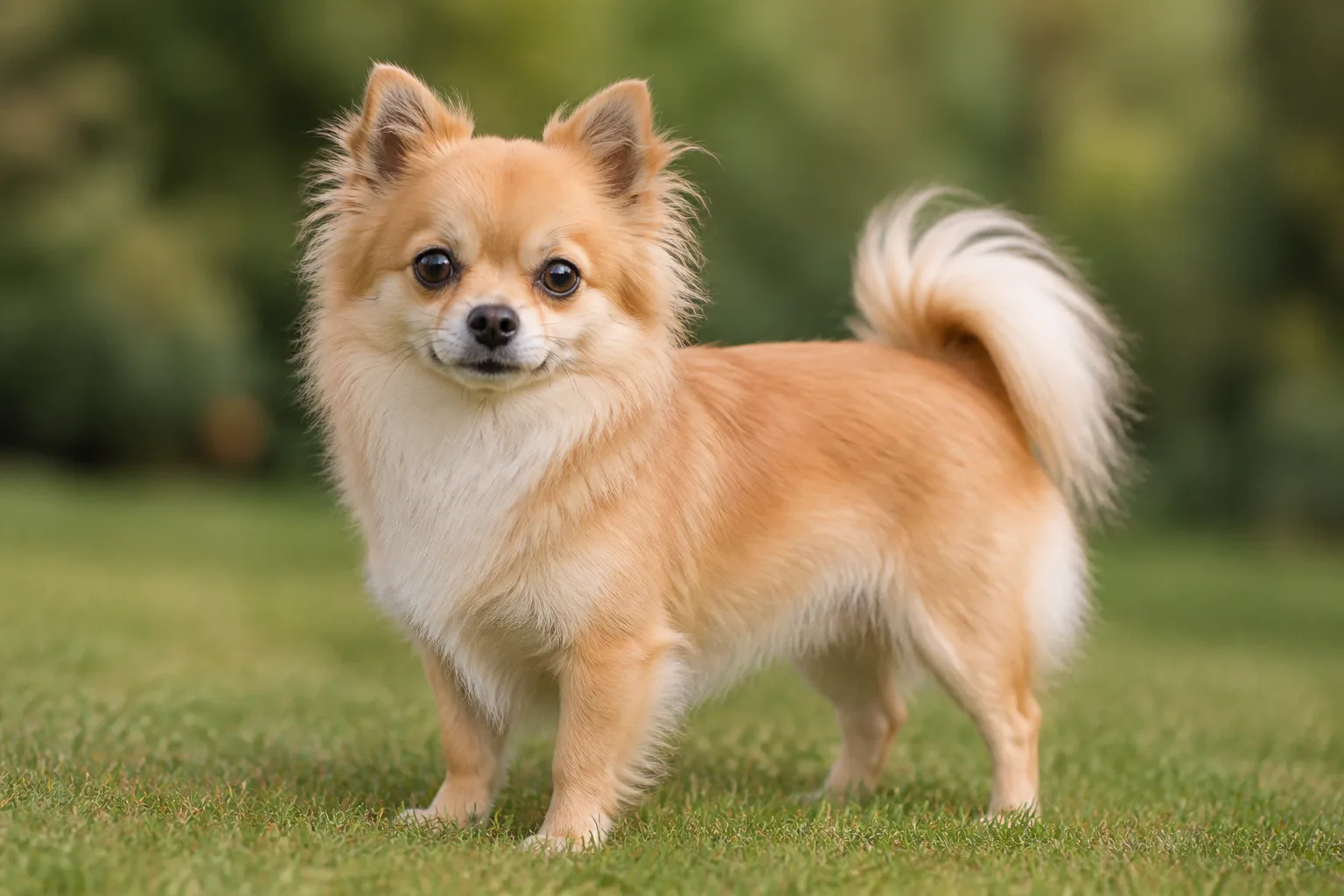
A Pomchi dog suits households looking for a very small companion with a lively, devoted personality. It may inherit the Chihuahua’s confidence and the Pomeranian’s alertness, so its size does not guarantee a quiet or effortless pet. Coat type, early socialization, handling at home and the dog’s health history all affect daily life with this mix.
Pomchi Breed Snapshot
| Attribute | Details |
|---|---|
| Breed type | Pomeranian-Chihuahua hybrid |
| Parent breeds | Pomeranian; Chihuahua |
| AKC status | Not officially recognized |
| Height | 6–9 inches |
| Weight | 3–10 pounds |
| Coat | Short and thin; medium-to-long and fluffy |
| Coat layers | Single or double |
| Colors | Black; blue; brown; chocolate; liver; cream; fawn; gold; yellow; gray; white |
| Patterns | Bicolor; black and tan; blue and tan; liver and tan; tricolor |
| Shedding | Normal |
| Temperament | Playful; affectionate; intelligent; alert; loyal; sometimes stubborn |
| Vocal tendency | Frequent alert barking |
| Exercise | 20–30 minutes of daily walks plus indoor play |
| Social needs | Early socialization; consistent training |
| Grooming | Brushing several times weekly |
| Dental care | Regular toothbrushing; professional dental care |
| Feeding schedule | Puppies: three or four meals; adults: two or three meals |
| Lifespan | 12–16 years |
| Health concerns | Periodontal disease; patellar luxation; tracheal collapse; eye problems; epilepsy |
| Family fit | Gentle older children; carefully introduced pets |
What Is a Pomchi Dog?
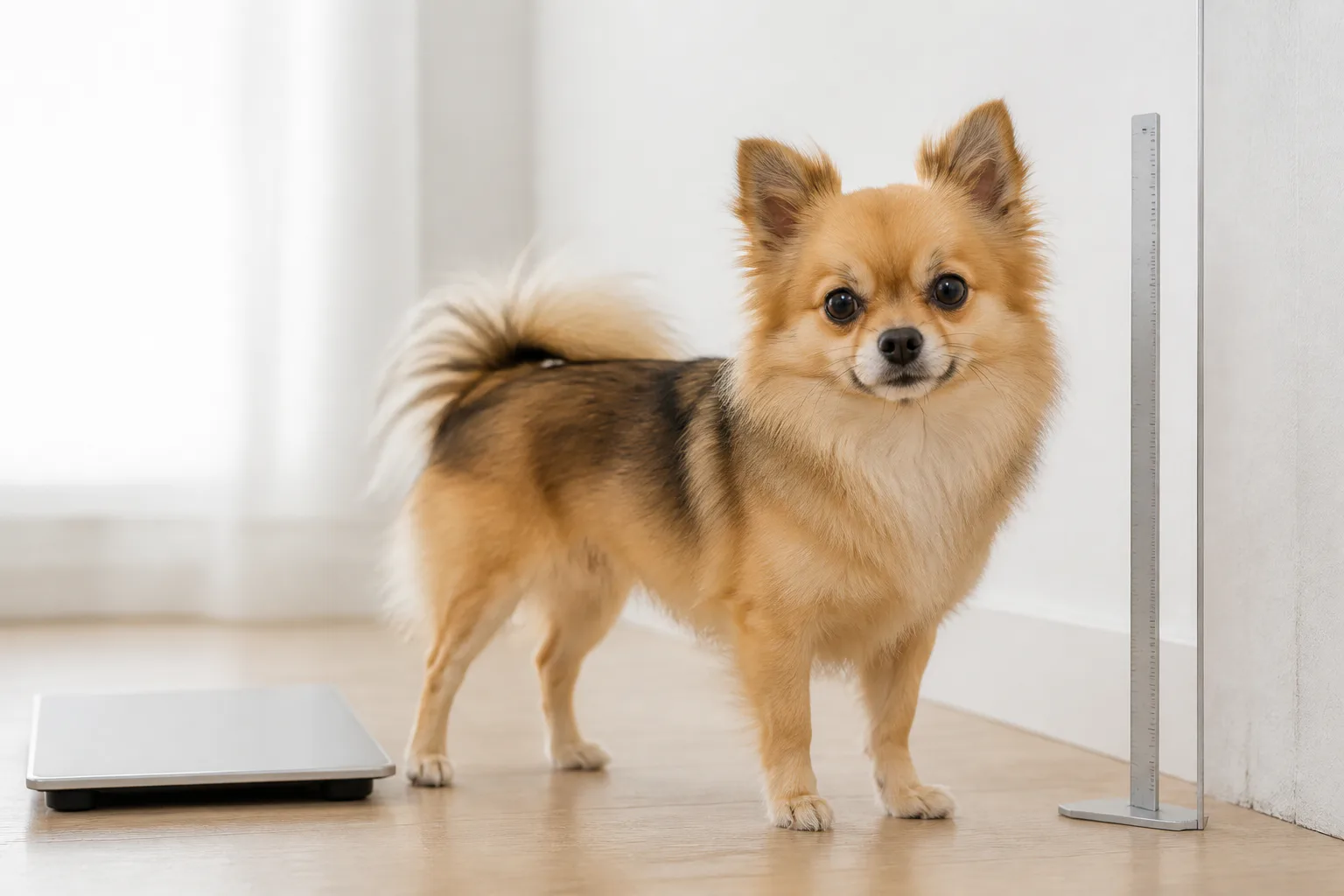
A Pomchi is a cross between a Pomeranian and a Chihuahua. It is a hybrid rather than an official AKC breed, so puppies do not follow one fixed standard for height, coat, color or temperament. Two Pomchi puppies from different parents can look noticeably different, even when they come from the same breeder.
The Pomeranian may contribute a fluffy coat, plume-like tail and active companion-dog personality. The Chihuahua may contribute a fine coat, compact body, strong attachment to one person and confident behavior. Pomchis are usually small, but their personalities can be far more intense than their size suggests.
Pomchi Colors and Appearance
A Pomchi may have a short, fine coat or a medium-to-long, fluffy coat. Colors include black, brown, cream, fawn, gold, gray, white, blue, chocolate and liver. Black-and-tan and tricolor patterns are also possible.
Pomchis can vary in size, coat and confidence because they combine Pomeranian and Chihuahua traits. Comparing them with other Pomeranian crosses, such as Pomsky traits, shows how the second parent can affect energy levels, trainability and household needs.
Pomchi Personality and Family Fit
Pomchis are affectionate, playful, intelligent and highly attentive to household activity. They often form close bonds with one or two people and may follow family members from room to room. Their alert nature also makes frequent barking common, especially when someone approaches the home or an unfamiliar sound occurs.
- Children: Pomchis are best with gentle, supervised older children who know how to handle a toy-sized dog.
- Other pets: Introduce cats and dogs gradually, with escape spaces and close supervision.
- Strangers: Early socialization can reduce fear and excessive suspicion around visitors.
- Alone time: A strong attachment can lead to separation-related distress if the dog does not learn independence gradually.
- Safety: Falls, rough play, larger animals, very young children and predators such as owls and hawks can seriously injure a Pomchi.
Small size does not mean a Pomchi will be easy to manage. The breed mix can be stubborn, quick to react and persistent when barking or refusing earns attention. Calm handling, predictable boundaries and reward-based training create a safer relationship than punishment.
Pomchis can be affectionate lap dogs, but they also tend to be alert, confident and vocal. You may notice a similar mix in Chorkie behavior, although every dog still benefits from early socialization and consistent boundaries.
Pomchi Exercise and Training Needs
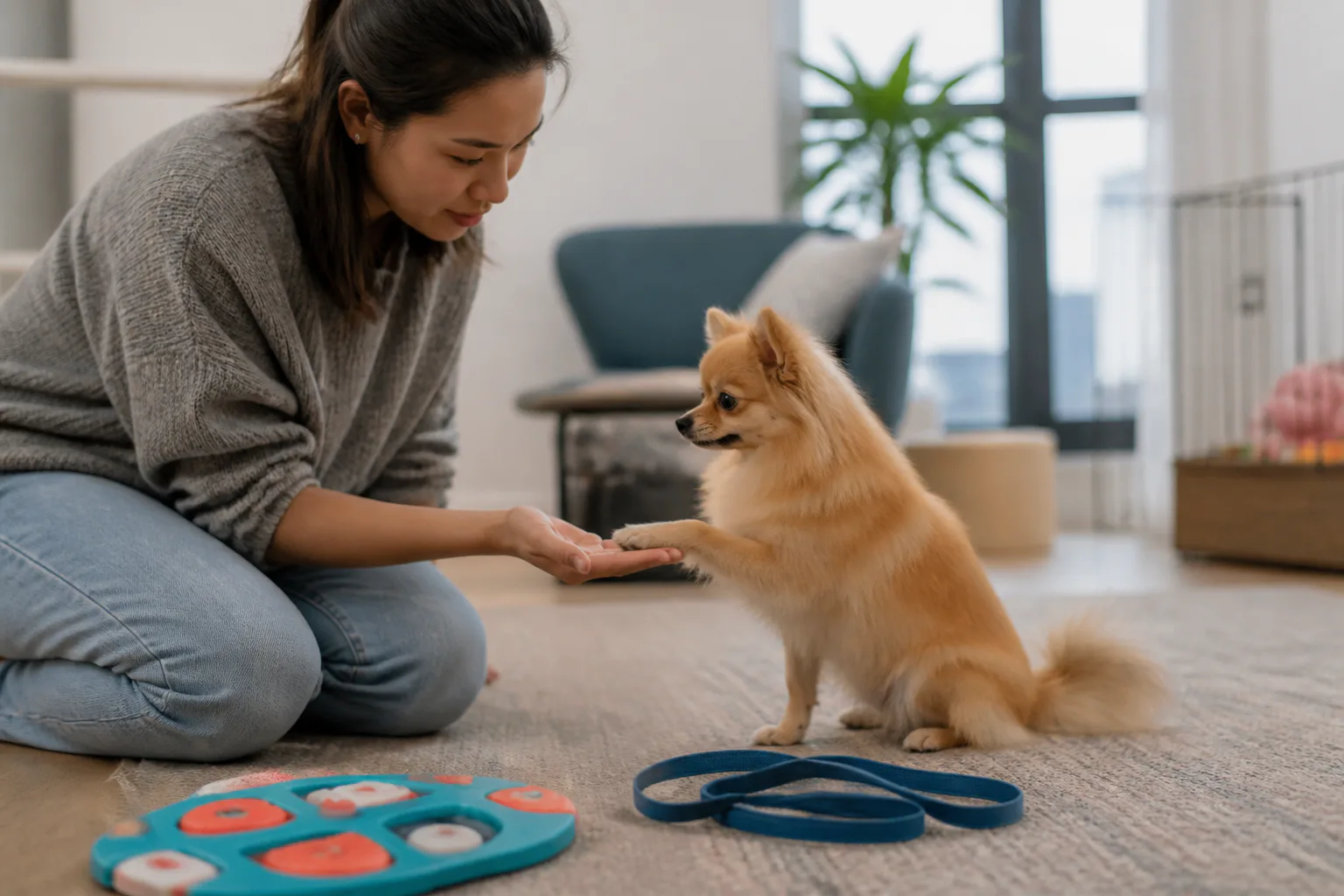
A Pomchi needs about 20–30 minutes of daily walking, along with indoor play and mental stimulation. Short activity periods are often a better fit than one long outing because tiny dogs can tire quickly, while many remain mentally active after a brief walk. Avoid strenuous exercise in extreme heat or cold, and keep the dog away from outdoor areas where it could be attacked.
- Take two or more short walks instead of one exhausting outing.
- Use supervised indoor games and rotate puzzle toys to provide mental enrichment.
- Teach name recognition, recall, leash manners and a reliable “quiet” cue.
- Reward calm behavior around doors, windows, visitors and household noises.
- Gradually introduce puppies to people, surfaces, sounds, grooming, carriers and car travel.
Positive reinforcement works well because Pomchis are bright but may be willful. Keep sessions brief, repeat skills consistently and avoid responding to demand barking with immediate attention. House-training may take patience because small dogs have small bladders and may struggle with long periods between bathroom breaks.
Pomchi Grooming and Dental Care
The inherited coat determines how much grooming a Pomchi needs. A short, thin coat needs less brushing, while a medium-to-long fluffy coat can tangle around the ears, legs, tail and collar. Use a soft-bristle brush two or three times a week, with extra care for longer coats or periods of heavier shedding.
- Brush gently and check for mats close to the skin.
- Trim the nails regularly so they do not affect posture or movement.
- Check the ears for odor, redness, wax buildup or irritation.
- Bathe the dog when needed with a dog-formulated shampoo, then dry the coat thoroughly.
- Use a professional groomer for severe tangles, sanitary trimming or coat care that is difficult to handle at home.
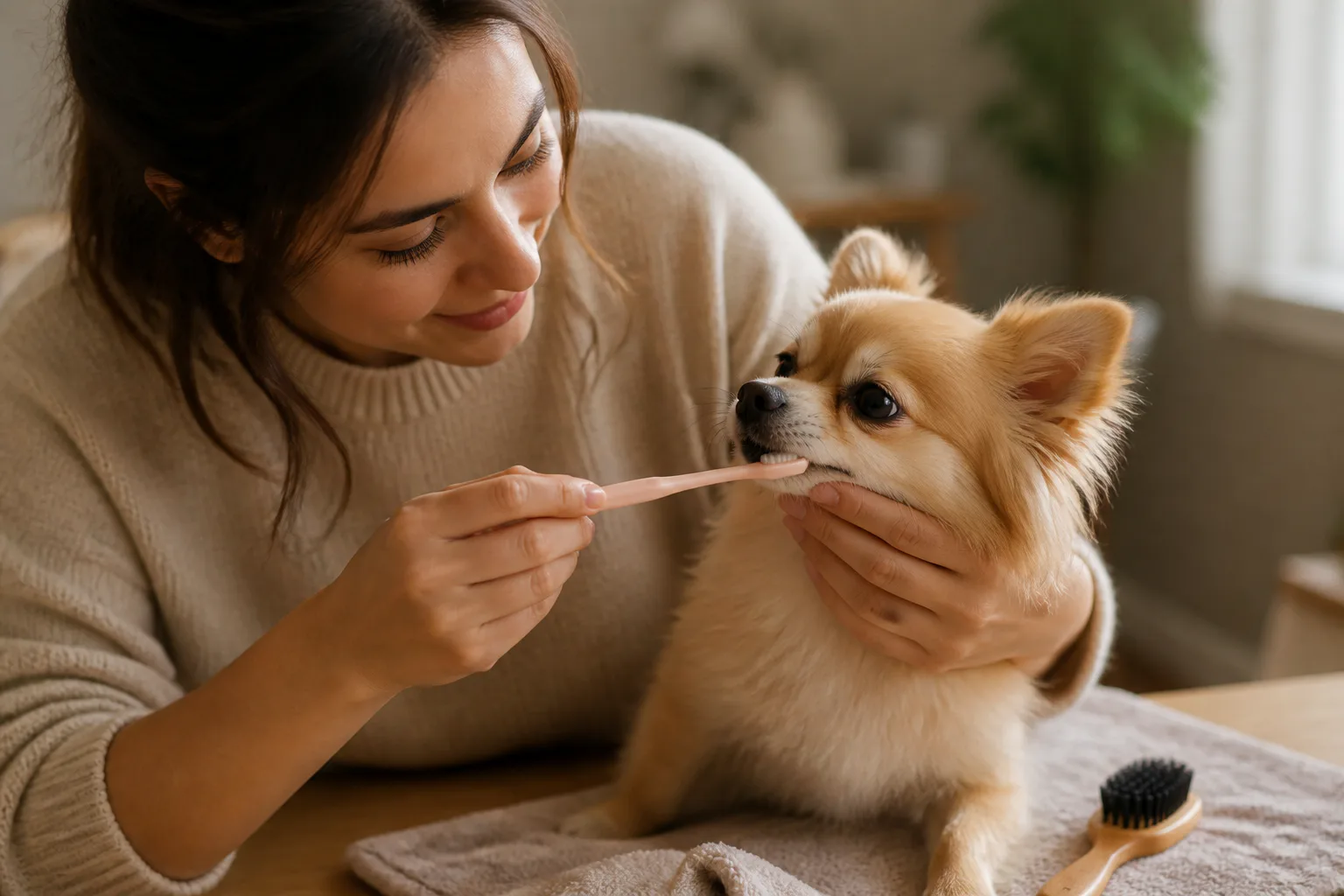
Dental care matters because toy breeds are prone to periodontal disease. Brush the teeth regularly with pet-safe toothpaste, introduce the routine gradually and have the mouth checked during veterinary visits. Professional cleaning may be necessary if plaque, tartar, gum inflammation or painful loose teeth develop.
A Pomchi’s fluffy coat can hide tangles, while its small mouth can make plaque easy to miss. Like other compact companion mixes, Morkie grooming needs regular coat brushing, face care, nail trims and routine tooth cleaning.
Pomchi Health Problems to Know
Being a hybrid does not eliminate inherited disease. A Pomchi can develop conditions associated with either parent breed, along with problems common in very small dogs. Start with a veterinary examination and review the parents’ health information when it is available. Contact a veterinarian if you notice changes in movement, breathing, vision, appetite or behavior.
- Periodontal disease: Watch for bad breath, red gums, difficulty chewing or loose teeth.
- Patellar luxation: A slipping kneecap can cause intermittent skipping or lameness.
- Tracheal collapse: A persistent honking cough or breathing difficulty needs veterinary assessment.
- Patent ductus arteriosus: This congenital heart problem can cause weakness, poor growth or exercise intolerance.
- Eye problems: Squinting, cloudiness, discharge or vision changes need prompt evaluation.
- Epilepsy: Seizures require a veterinary diagnosis and an ongoing management plan.
- Legg-Calve-Perthes disease and hip dysplasia: Stiffness, pain, reluctance to climb or reduced activity can signal orthopedic disease.
Keep a Pomchi at a healthy weight, use a harness instead of putting pressure on the neck, and prevent jumps from beds, sofas and high steps. Puppies also need protection from hypoglycemia, a dangerous drop in blood sugar. Frequent meals and veterinary guidance are particularly important when a puppy is unusually tiny, ill, stressed or unwilling to eat.
Being a mixed breed does not rule out inherited conditions, but health screening can reduce the risk of passing preventable problems to puppies. Families researching small Chihuahua mixes may also want to review Chiweenie health, especially the need to monitor weight, dental health and mobility throughout adulthood.
Pomchi Feeding and Daily Care
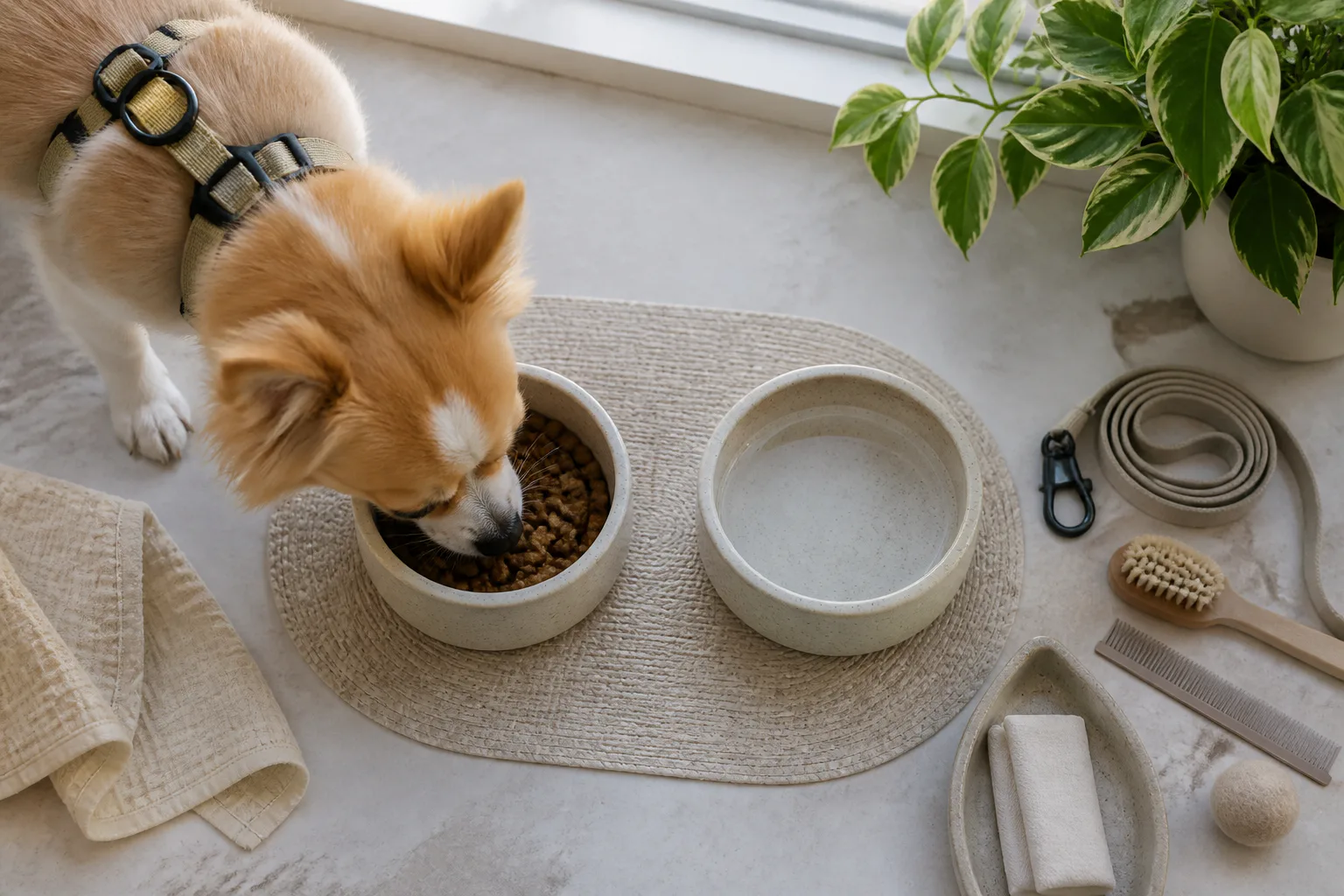
Pomchi puppies generally need three or four meals each day to help reduce the risk of hypoglycemia. Adults usually eat two or three meals daily, with portions adjusted for age, activity, body condition and veterinary advice. A complete diet made for the dog’s life stage matters more than marketing claims on the package.
- Measure meals instead of leaving food out all day.
- Monitor body condition because excess weight strains small joints and the airway.
- Keep fresh water available throughout the day.
- Limit treats to no more than 10% of daily food intake.
- Contact a veterinarian promptly if a puppy becomes weak, unusually sleepy, shaky or refuses food.
Daily care also includes safe confinement, identification, parasite prevention, vaccination and routine examinations. Use a secure harness and supervise outdoor time because a Pomchi can slip through small openings or become prey for larger animals.
Pomchi Price and Ownership Costs
Initial pricing depends on age, location, lineage, health care, demand and whether the dog comes from a rescue or breeder. A low purchase price does not mean low lifetime costs. A toy dog may still need dental treatment, orthopedic care or emergency veterinary attention.
| Ownership expense | Estimated amount |
|---|---|
| Rescue adoption fee | $150–$600 |
| Breeder price | $500–$2,000 or more |
| Annual ownership cost | $1,000–$1,500 |
| Routine veterinary care | $250–$500 annually |
| Food and treats | $150–$300 annually |
| Grooming and maintenance | $300–$600 annually |
Set aside money for supplies, training, licensing, insurance, emergency treatment and dental procedures. Before bringing home a Pomchi, make sure the household can cover recurring expenses as well as a sudden bill for breathing trouble, injury, dental disease or surgery.
How to Find a Pomchi Safely
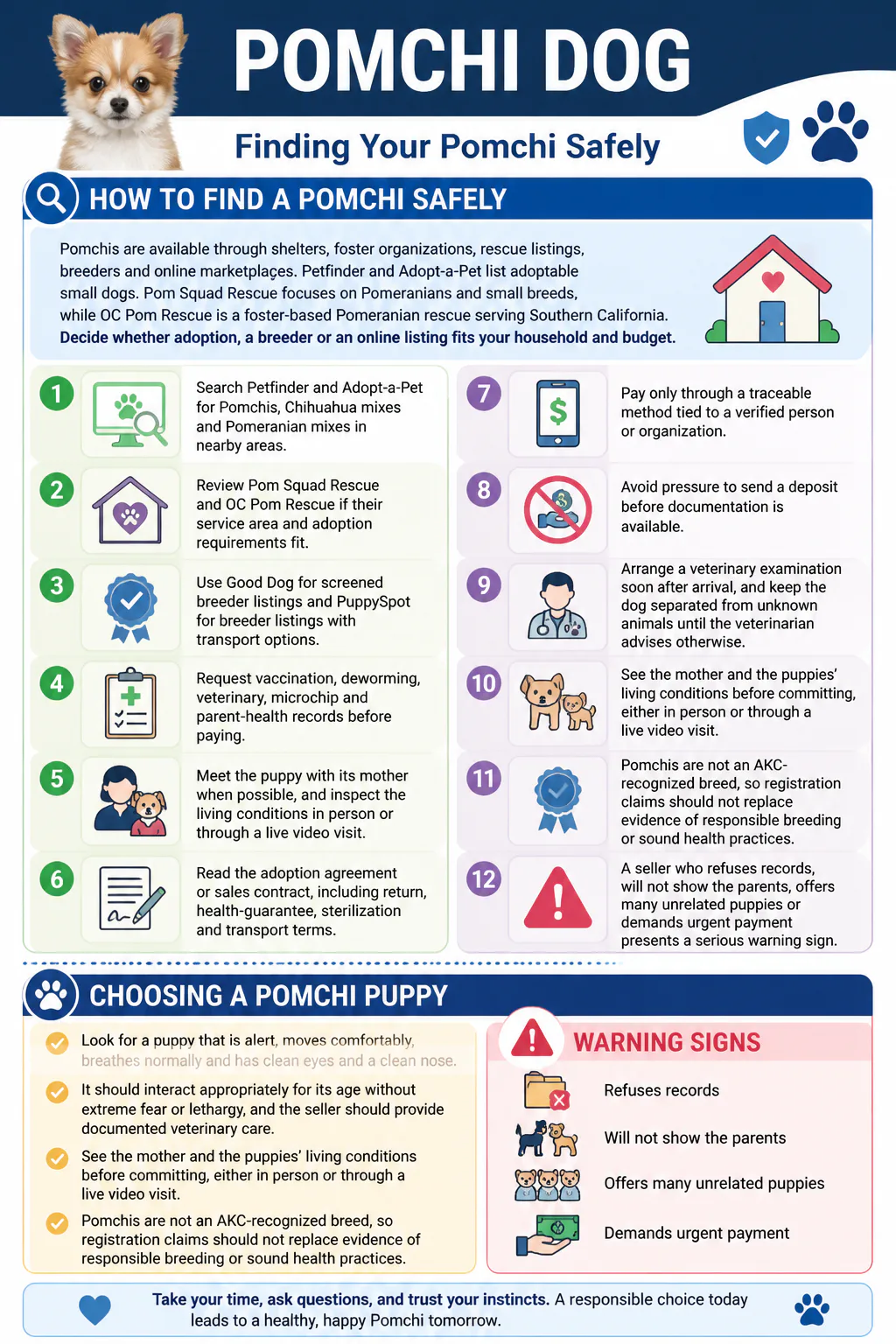
Pomchis are available through shelters, foster organizations, rescue listings, breeders and online marketplaces. Petfinder and Adopt-a-Pet list adoptable small dogs. Pom Squad Rescue focuses on Pomeranians and small breeds, while OC Pom Rescue is a foster-based Pomeranian rescue serving Southern California.
- Decide whether adoption, a breeder or an online listing fits your household and budget.
- Search Petfinder and Adopt-a-Pet for Pomchis, Chihuahua mixes and Pomeranian mixes in nearby areas.
- Review Pom Squad Rescue and OC Pom Rescue if their service area and adoption requirements fit.
- Use Good Dog for screened breeder listings and PuppySpot for breeder listings with transport options.
- Request vaccination, deworming, veterinary, microchip and parent-health records before paying.
- Meet the puppy with its mother when possible, and inspect the living conditions in person or through a live video visit.
- Read the adoption agreement or sales contract, including return, health-guarantee, sterilization and transport terms.
- Pay only through a traceable method tied to a verified person or organization. Avoid pressure to send a deposit before documentation is available.
- Arrange a veterinary examination soon after arrival, and keep the dog separated from unknown animals until the veterinarian advises otherwise.
Choosing a Pomchi Puppy
Look for a puppy that is alert, moves comfortably, breathes normally and has clean eyes and a clean nose. It should interact appropriately for its age without extreme fear or lethargy, and the seller should provide documented veterinary care. See the mother and the puppies’ living conditions before committing, either in person or through a live video visit.
Pomchis are not an AKC-recognized breed, so registration claims should not replace evidence of responsible breeding or sound health practices. A seller who refuses records, will not show the parents, offers many unrelated puppies or demands urgent payment presents a serious warning sign.
Pomchi Household Safety Checklist
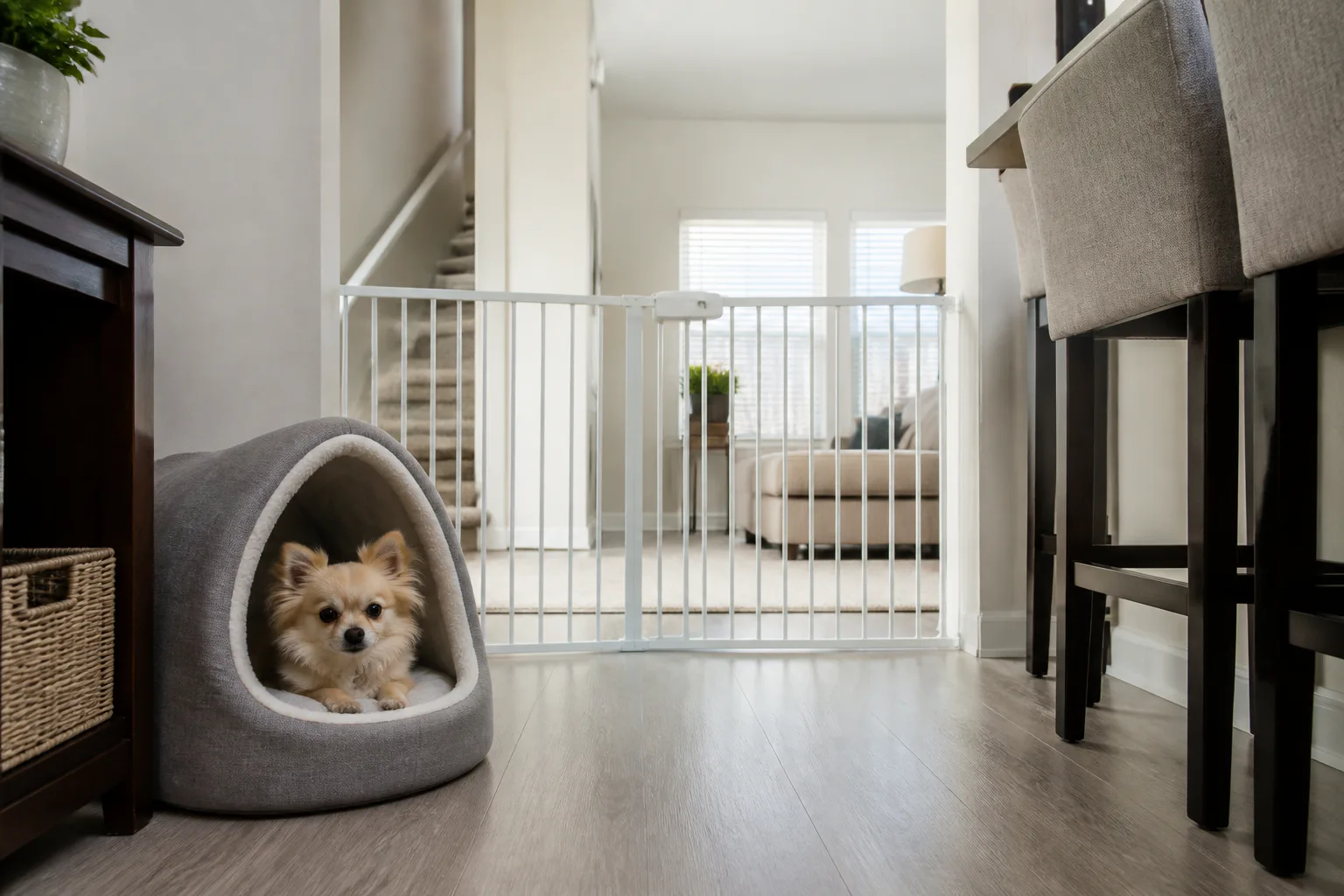
- Supervise interactions with young children and larger dogs, and give the Pomchi a protected place to retreat.
- Use calm, reward-based training to manage barking at hallway noises, doors, windows and activity outside an apartment.
- Block access to beds, sofas, stairs and other high surfaces to reduce fall injuries.
- Use a secure harness and supervise outdoor time so the dog cannot escape or face larger animals and predators.
- Make sure everyone in the household can consistently handle a tiny dog with a loud alert bark and strong attachment to its people.
Because of their small size, Pomchis can be seriously hurt by falls from furniture, unsecured gates, exposed wires and rough play. The same precautions apply to Peekapoo safety needs, especially in homes with young children, larger dogs or high furniture.
Pomchi Pictures
- Short-coated Pomchi: A compact dog with a smooth, fine coat that clearly shows the Chihuahua influence.
- Fluffy Pomchi: A Pomchi with a fuller coat, feathering and a plumed tail inherited from the Pomeranian side.
- Black-and-tan Pomchi: A dark coat with tan markings on areas such as the muzzle, chest, eyebrows or legs.
- Tricolor Pomchi: A three-color coat pattern that can combine white with black, brown, tan or other inherited shades.
FAQs
Can Pomchis live in apartments?
Yes. Their small size and moderate exercise needs can suit apartment living if they receive daily walks, indoor enrichment and training for alert barking. Building rules, noise tolerance and safe outdoor access still matter.
Are Pomchis suitable for first-time dog owners?
They can be, provided the owner is ready for regular training, dental care, grooming and close supervision. Consistent routines and reward-based instruction help manage their intelligence and strong attachment.
Conclusion
A Pomchi is a compact, affectionate companion for a household that can provide patient training, careful handling, regular dental care and steady socialization. Before choosing one, compare rescue and breeder options, review health records and budget for routine care along with unexpected veterinary costs.