Dorgi Dog Guide: Traits, Care, Health & Lifespan
The Dorgi combines a Dachshund’s determination with a Pembroke Welsh Corgi’s alert, people-focused nature. This small companion has a lively personality, moderate daily exercise needs and a strong attachment to its household. Before choosing one, consider back protection, barking, prey drive, training consistency and how much company the dog receives each day.
Dorgi Breed Profile at a Glance
| Attribute | Details |
|---|---|
| Parent breeds | Dachshund × Pembroke Welsh Corgi |
| Breed status | Designer mixed breed |
| Origin | United Kingdom |
| Royal association | Queen Elizabeth II |
| Adult height | 9–12 inches |
| Adult weight | 15–28 pounds |
| Body type | Long body with short legs |
| Coat | Short to medium length |
| Coat colors | Red, tan, black, gold, chocolate, brown, white, tricolor |
| Temperament | Affectionate, loyal, playful, alert, vocal |
| Activity level | Moderate |
| Trainability | High with possible stubbornness |
| Family compatibility | Older children and socialized pets |
| Exercise needs | Daily walks and play |
| Grooming needs | Weekly or twice-weekly brushing |
| Health concerns | Back, joint, dental, eye, bleeding, and neurologic disorders |
| Lifespan | 12–15 years |
What Is a Dorgi?
A Dorgi is a cross between a Dachshund and a Pembroke Welsh Corgi. It is an intentional designer mix rather than a purebred dog with one official appearance or temperament standard. Puppies can inherit different proportions, coat textures, ear shapes and behavioral traits from either parent.
The American Kennel Club does not recognize the Dorgi as an official breed, so no AKC breed standard defines its ideal height, structure, color or movement. The American Canine Hybrid Club and Designer Breed Registry recognize the Dorgi, but registry recognition does not guarantee health, breeding quality or predictable adult traits.
Because Dorgis inherit traits from two different breeds, puppies in the same litter can vary in size, coat, energy level and confidence. That is common in small designer crosses, including Chorkie traits, where puppies may inherit traits from both Yorkshire Terrier and Chihuahua parents.
How the Dorgi Became Royal
Queen Elizabeth II is closely associated with the Dorgi’s popularity and is commonly credited with helping create Dorgis in the royal household. The familiar account says that one of her Pembroke Welsh Corgis bred with a Dachshund belonging to Princess Margaret, producing the cross that became known as a Dorgi.
The royal connection is an established part of the Dorgi’s public history, while the exact origins of non-royal Dorgi breeding remain unclear. The story explains how the mix became recognizable, but it does not create a formal breed standard or guarantee that every Dorgi will resemble a royal dog.
What Dorgis Look Like
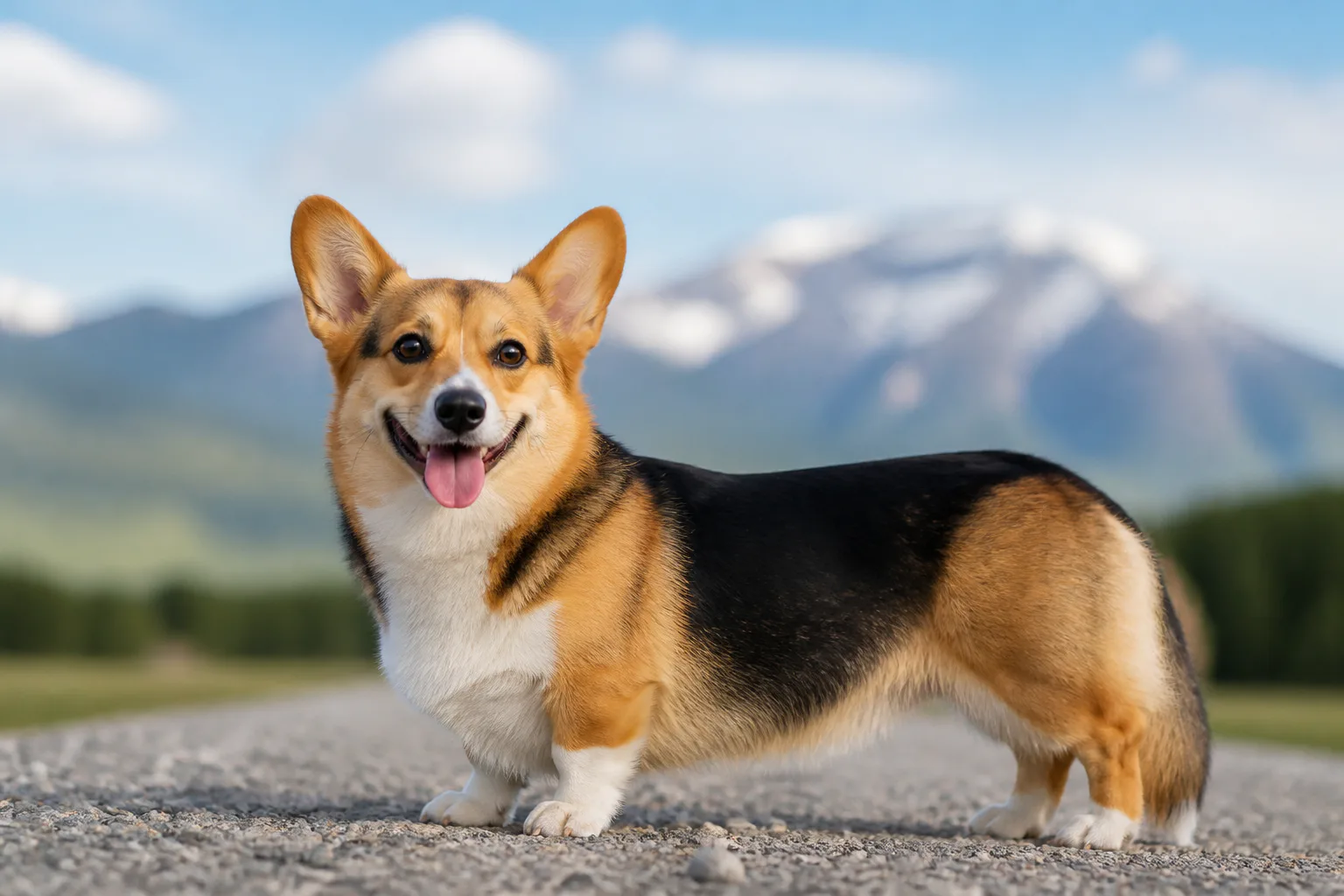
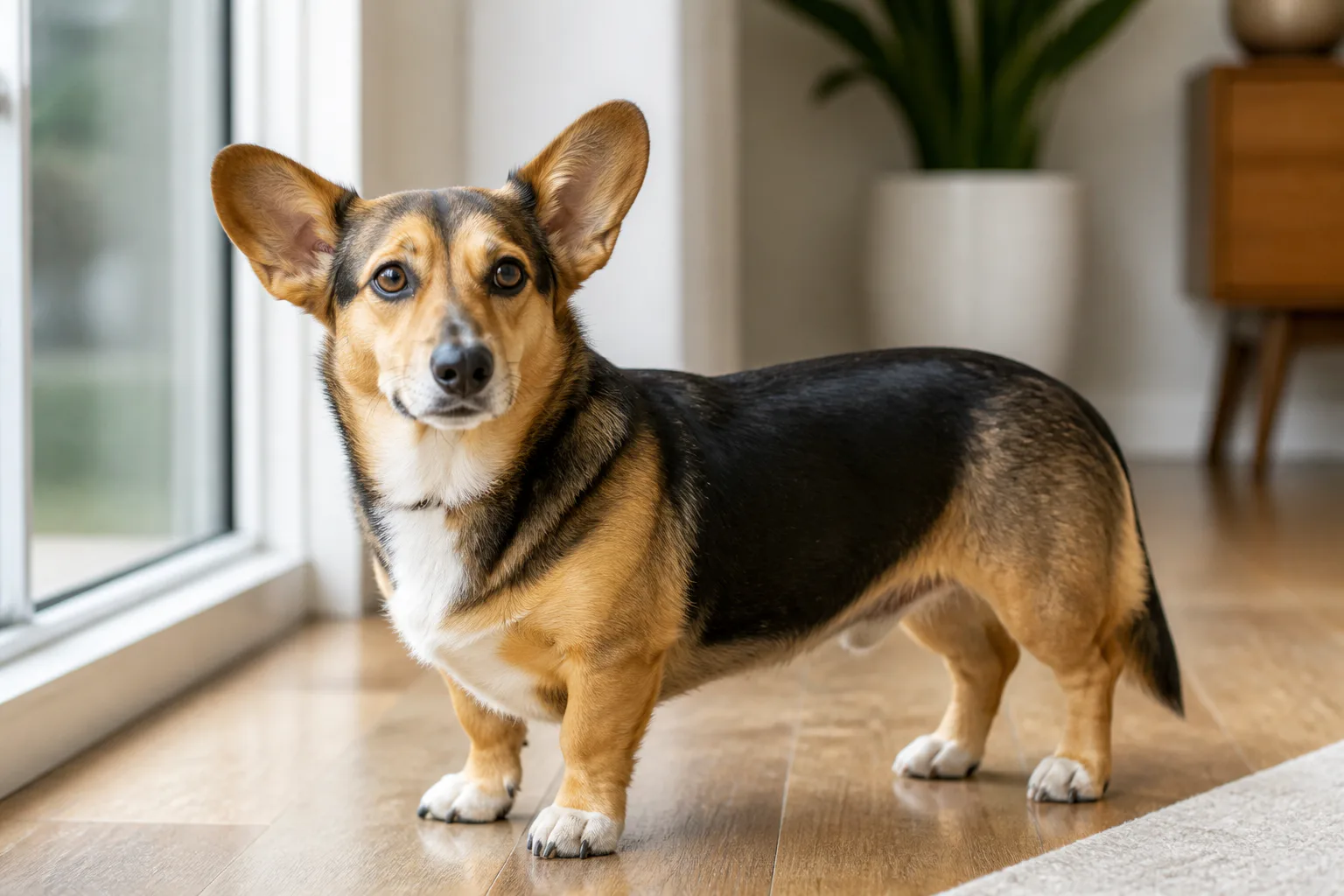
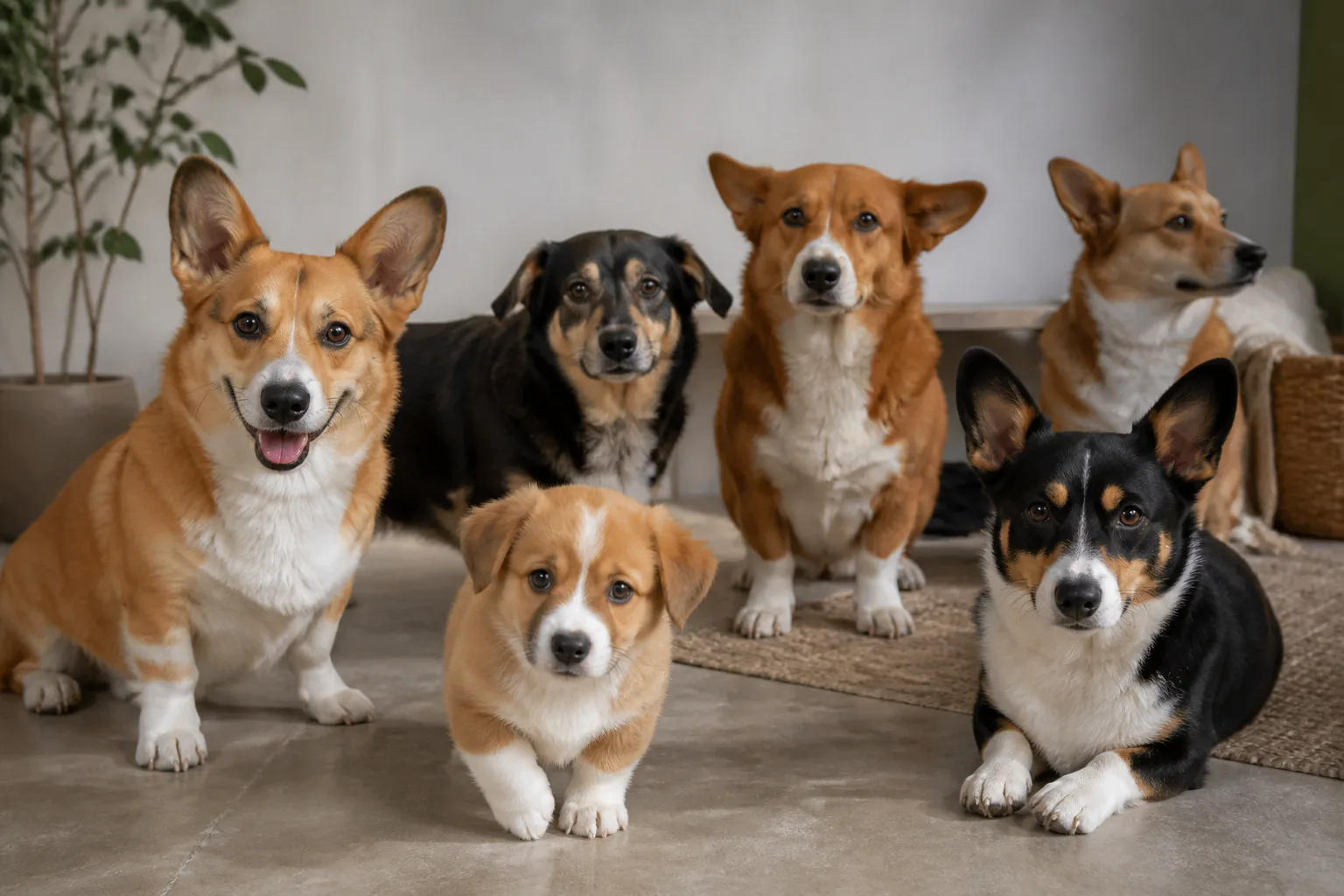
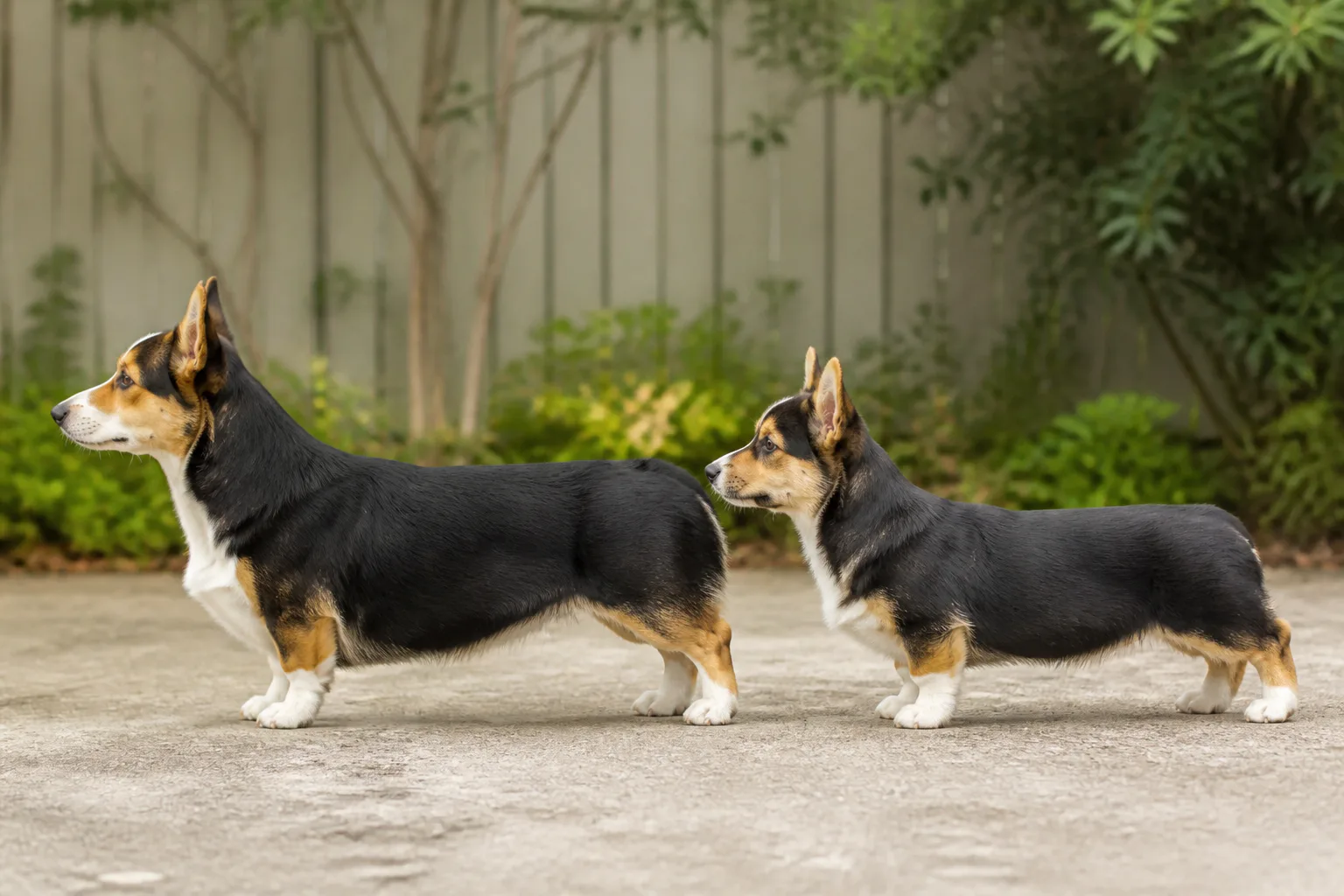
Dorgi appearance varies because the mix has no standardized conformation. The long-backed, short-legged outline is common, but one puppy may look more Dachshund-like while another has a broader head, heavier bone or more Corgi-like body.
- Body: Long and low-set, with short legs and a compact frame.
- Ears: Upright or hanging, depending on inherited traits.
- Coat: Short, smooth, wiry, medium-length or denser.
- Colors: Red, tan, black, gold, reddish-brown, chocolate, brown, white or tricolor.
- Expression: Bright and attentive, with facial features that vary between the parent breeds.
Adult Dorgis stand about 9 to 12 inches tall and weigh 15 to 28 pounds. Body length and weight matter more than height when choosing equipment, lifting the dog or arranging furniture. A low, elongated back requires careful handling.
Dorgi pictures
These image searches show the Dorgi’s main visual stages and variations, including puppy proportions, mature body shape, coat colors and ear carriage.
- Dorgi puppies — compare short legs, developing body length and changing ear carriage.
- Adult Dorgis — compare full-grown size, back length, head shape and coat density.
- Dorgi coat and body variations — view red, tan, black, chocolate and tricolor coats alongside upright and hanging ears.
Understanding Dorgi Temperament
Dorgis are affectionate, loyal, social, playful, energetic, intelligent and alert. They often form close bonds with their households and enjoy joining everyday activities. Their Corgi heritage can contribute attentiveness and herding behavior, while Dachshund ancestry can add persistence, independence and a strong interest in investigating scents.
- Training style: Intelligent and responsive, but sometimes stubborn or independently minded.
- Social behavior: People-oriented and happiest with regular interaction.
- Vocal behavior: Alert and likely to bark at strangers, animals or unusual activity.
- Small-animal response: Dachshund prey drive can create risks around rabbits, rodents, birds and other small pets.
- Alone time: Prolonged isolation can contribute to separation anxiety and unwanted behavior.
Early socialization should introduce a Dorgi calmly to visitors, handling, household sounds, dogs and different environments. Reward-based training is usually more effective than harsh correction, particularly for a dog that may resist repetitive or confrontational lessons.
Dorgis are affectionate, but they can also be stubborn, vocal and highly motivated by food. This mix is common among companion crosses, and Puggle temperament illustrates how even a sociable family dog can inherit independent habits that call for patient, consistent training.
Is a Dorgi Right for Your Home?
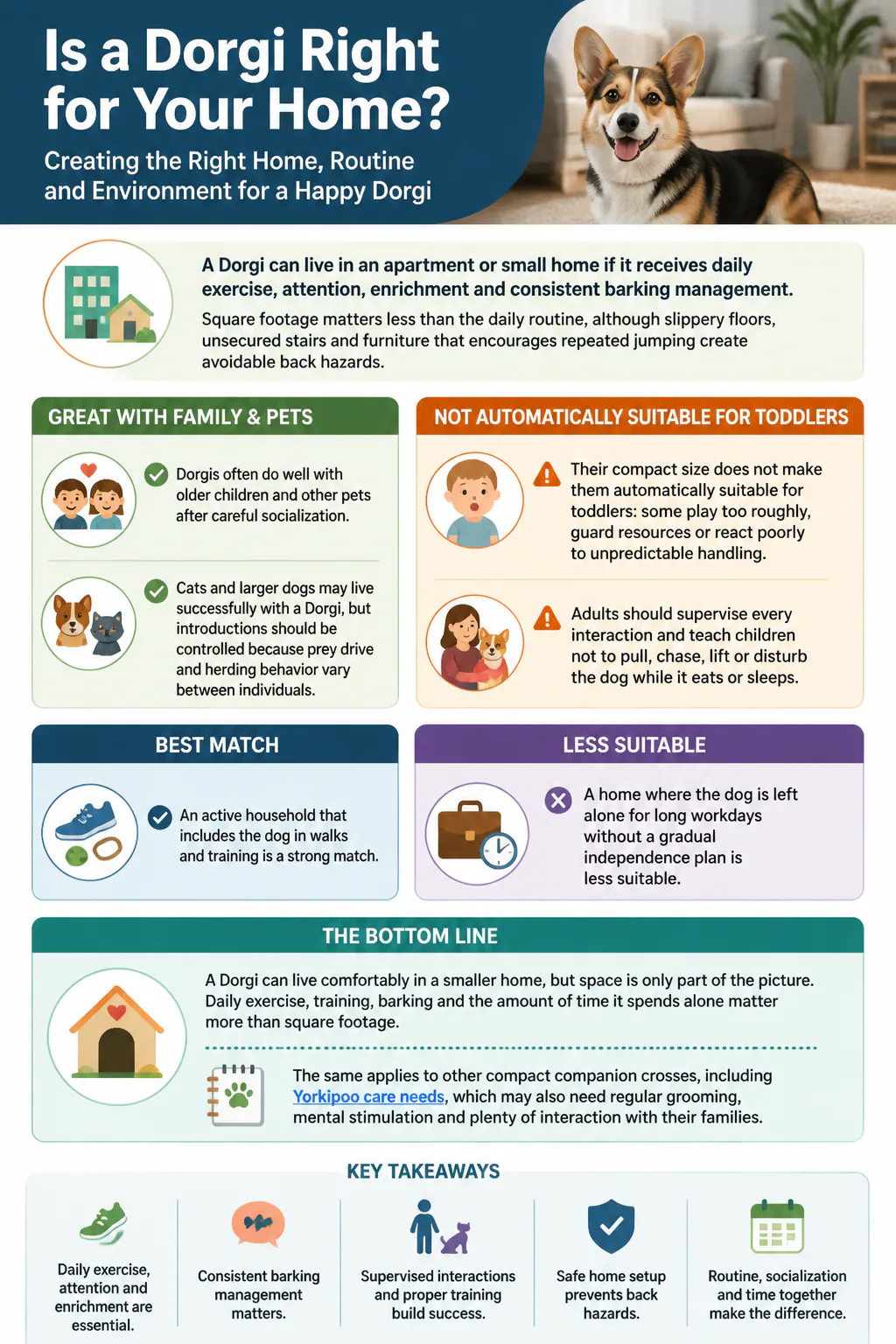
A Dorgi can live in an apartment or small home if it receives daily exercise, attention, enrichment and consistent barking management. Square footage matters less than the daily routine, although slippery floors, unsecured stairs and furniture that encourages repeated jumping create avoidable back hazards.
Dorgis often do well with older children and other pets after careful socialization. Their compact size does not make them automatically suitable for toddlers: some play too roughly, guard resources or react poorly to unpredictable handling. Adults should supervise every interaction and teach children not to pull, chase, lift or disturb the dog while it eats or sleeps.
An active household that includes the dog in walks and training is a strong match. A home where the dog is left alone for long workdays without a gradual independence plan is less suitable. Cats and larger dogs may live successfully with a Dorgi, but introductions should be controlled because prey drive and herding behavior vary between individuals.
A Dorgi can live comfortably in a smaller home, but space is only part of the picture. Daily exercise, training, barking and the amount of time it spends alone matter more than square footage. The same applies to other compact companion crosses, including Yorkipoo care needs, which may also need regular grooming, mental stimulation and plenty of interaction with their families.
Dorgi Exercise and Training Needs
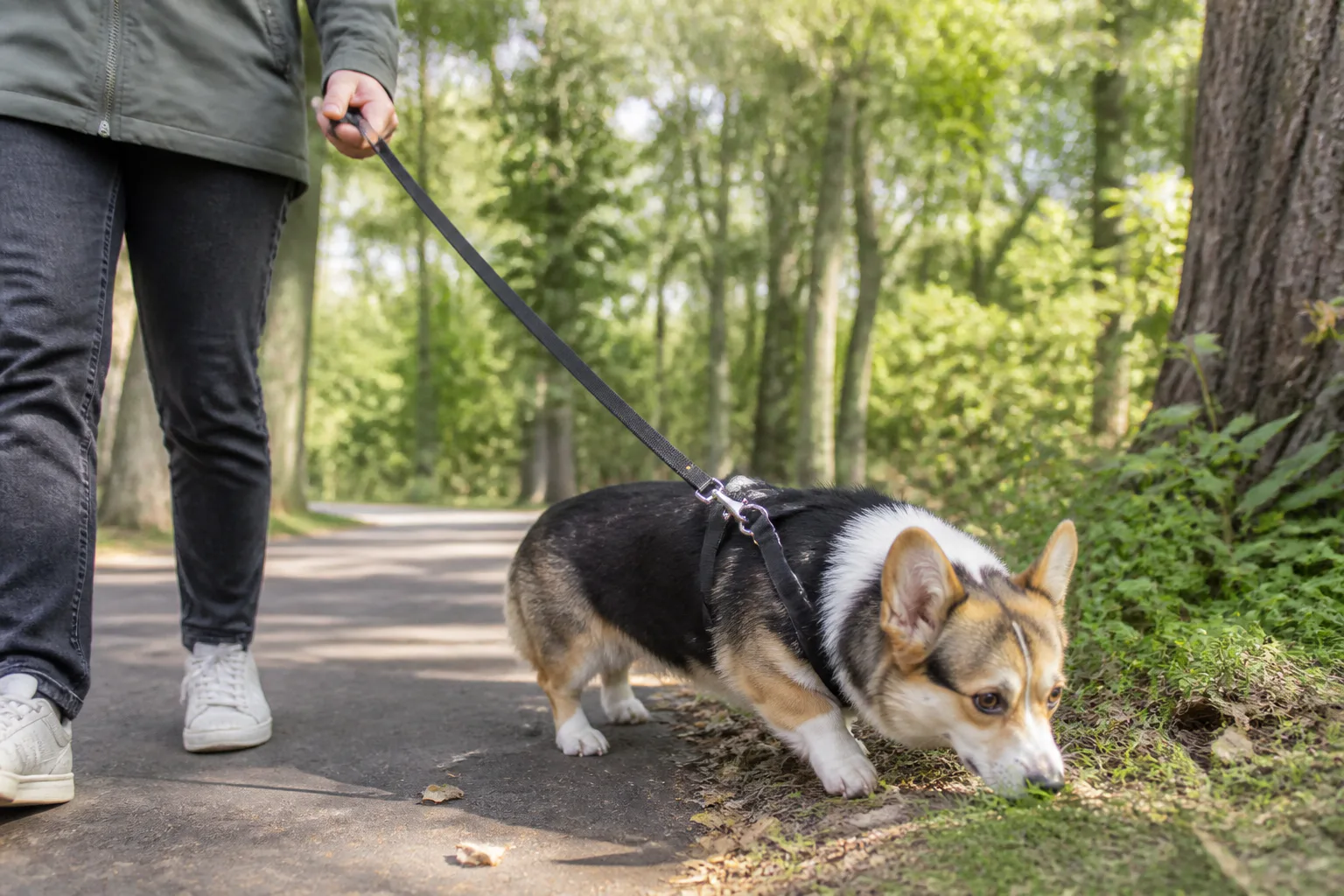
Moderate activity needs do not mean a Dorgi can thrive without structure. Pair daily walks with play, scent work, food puzzles or safe off-leash activity in a secure area. Keep exercise low-impact and avoid activities involving repeated twisting, hard landings or uncontrolled chasing.
- Schedule at least one purposeful walk each day.
- Add short play sessions that avoid high jumps.
- Use sniffing games and puzzle feeders for mental stimulation.
- Teach recall in a fenced area before attempting off-leash activity.
- Practice leash manners, waiting, handling and settle training.
- Socialize gradually with calm dogs, people, surfaces and sounds.
- Reward quiet behavior before barking becomes repetitive.
Several brief training sessions are more productive than one long lesson. Protect the spine by discouraging launches from sofas, races down stairs and jumps out of vehicles. Use a ramp or lift the dog with full support when appropriate.
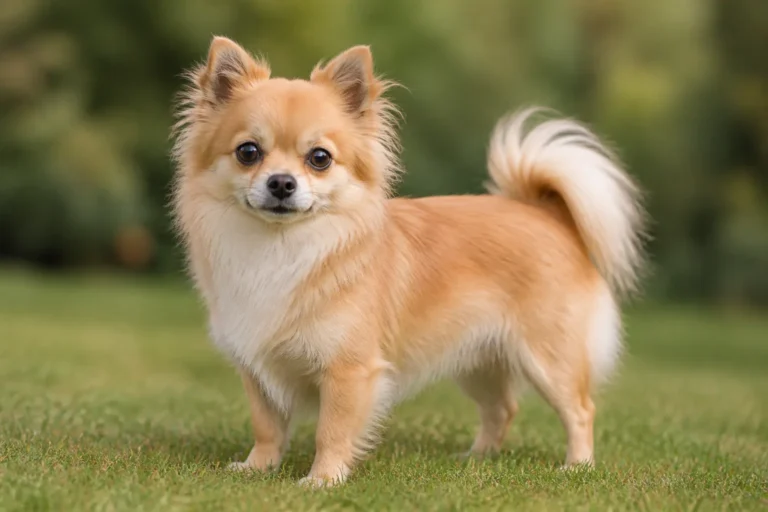
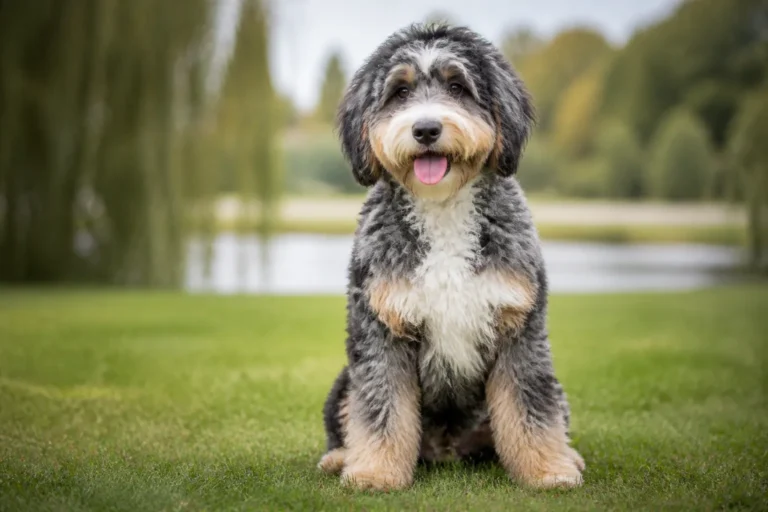
Dorgis often get more from walks when you add short training games, scent work, puzzle toys or controlled play. Active, intelligent crosses such as Aussiedoodles need a similar mental outlet and may become restless without one. Aussiedoodle enrichment
Dorgi Grooming and Daily Care
Grooming is manageable, but coat type determines how much hair ends up around the home. Brush once or twice each week to remove loose hair, distribute skin oils and spot mats, skin irritation or unusual lumps early. A denser or wirier coat may need more frequent brushing.
- Brushing: Weekly or twice weekly.
- Bathing: Occasional bathing when the coat is dirty or has an odor.
- Teeth: Daily tooth brushing to reduce periodontal disease risk.
- Ears: Weekly checks and cleaning when needed.
- Nails: Trimming about monthly or twice monthly.
- Daily checks: Examine paws, skin, eyes, ears and the back after active play.
Dental care deserves special attention because small dogs are prone to crowded teeth and periodontal disease. Use dog-safe toothpaste, introduce brushing gradually and ask a veterinarian how professional dental cleaning fits the dog’s needs.
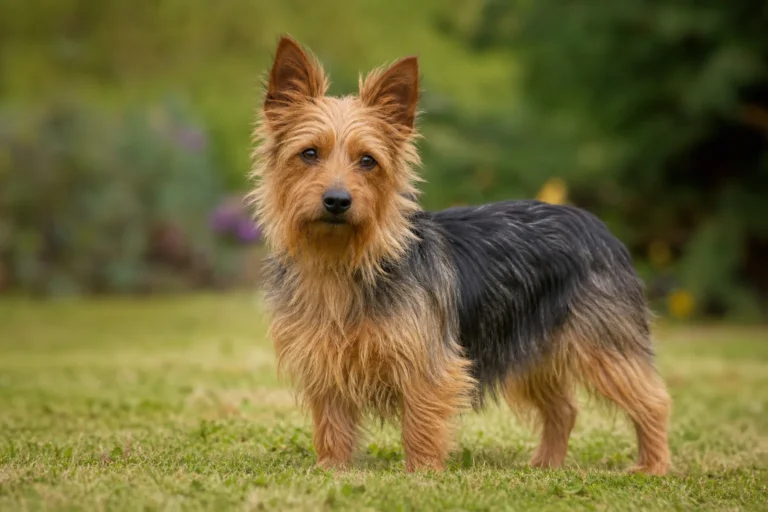
Regular brushing removes loose hair and helps prevent mats and skin irritation. Coat type varies, so compare your Dorgi’s grooming needs with Morkie coat care; some Dorgis inherit softer, longer coats that tangle more easily than expected.
Dorgi Health Risks and Prevention
Intervertebral disc disease is the main structural concern associated with the Dorgi’s long back and short legs. A disc problem can cause pain, weakness, nerve damage or paralysis. Sudden reluctance to move, a hunched back, crying when handled, wobbling, dragging feet or loss of bladder control requires prompt veterinary attention.
- Back disorders: Intervertebral disc disease.
- Joint disorders: Patellar luxation, hip dysplasia, elbow dysplasia, arthritis and Legg-Calve-Perthes disease.
- Dental disorders: Periodontal disease.
- Eye disorders: Cataracts.
- Neurologic disorders: Degenerative myelopathy.
- Inherited and congenital disorders: Von Willebrand disease, patent ductus arteriosus and acanthosis nigricans.
Keep a Dorgi lean, limit high jumps, reduce unnecessary stair use and install ramps where repeated furniture or vehicle access is unavoidable. Regular veterinary examinations, vaccinations, dental care and preventive screening can identify problems before they become severe. Genetic and orthopedic risks can still occur in mixed-breed dogs, so mixed ancestry is not a substitute for health testing.
Feeding a Dorgi the Right Amount
Feed a complete diet that meets AAFCO nutritional standards and matches the dog’s life stage, size, activity and health needs. Most adult Dorgis eat two measured meals each day, while puppies may need up to four meals because of their smaller stomachs and growth demands.
Use the food label as a starting point, then adjust portions with veterinary guidance and regular body-condition checks. Treats should remain at or below 10% of daily calories. Weight control is especially important for a long-backed dog because excess weight increases stress on the spine and joints.
Measure meals instead of free-feeding, account for training rewards and monitor changes in appetite, stool, coat, thirst and body shape. A veterinarian should guide diets for allergies, dental disease, obesity, pregnancy, chronic illness or unusual growth.
Finding a Healthy Dorgi
Dorgis may be available from intentional breeders, breed-focused rescue groups, general shelters and online pet marketplaces. Because the mix has no AKC standard and is relatively uncommon, listings may involve backyard breeders, puppy mills, scams or shelter dogs whose parentage has been inaccurately labeled.
- Search breeders, rescues, shelters and listings across a broad geographic area.
- Ask for the parents’ health histories, veterinary records and available genetic testing.
- Request orthopedic or eye clearances where they apply to the parent breeds.
- Visit the breeding home or use a live video call showing the mother and puppies.
- Check that puppies are raised in clean conditions and receive appropriate socialization.
- Review vaccination, deworming, identification, return and health-guarantee terms.
- Use a written contract identifying the seller, dog, payment terms and return obligations.
- Arrange an independent veterinary examination soon after adoption or purchase.
Rescue and shelter adoption can be a useful route because adult behavior, size and activity level are easier to assess. Avoid sellers who refuse a visit, rush payment, offer implausibly young puppies, provide copied photographs or will not disclose veterinary documentation. Never send money solely to reserve a puppy without confirming the dog, seller and contract.
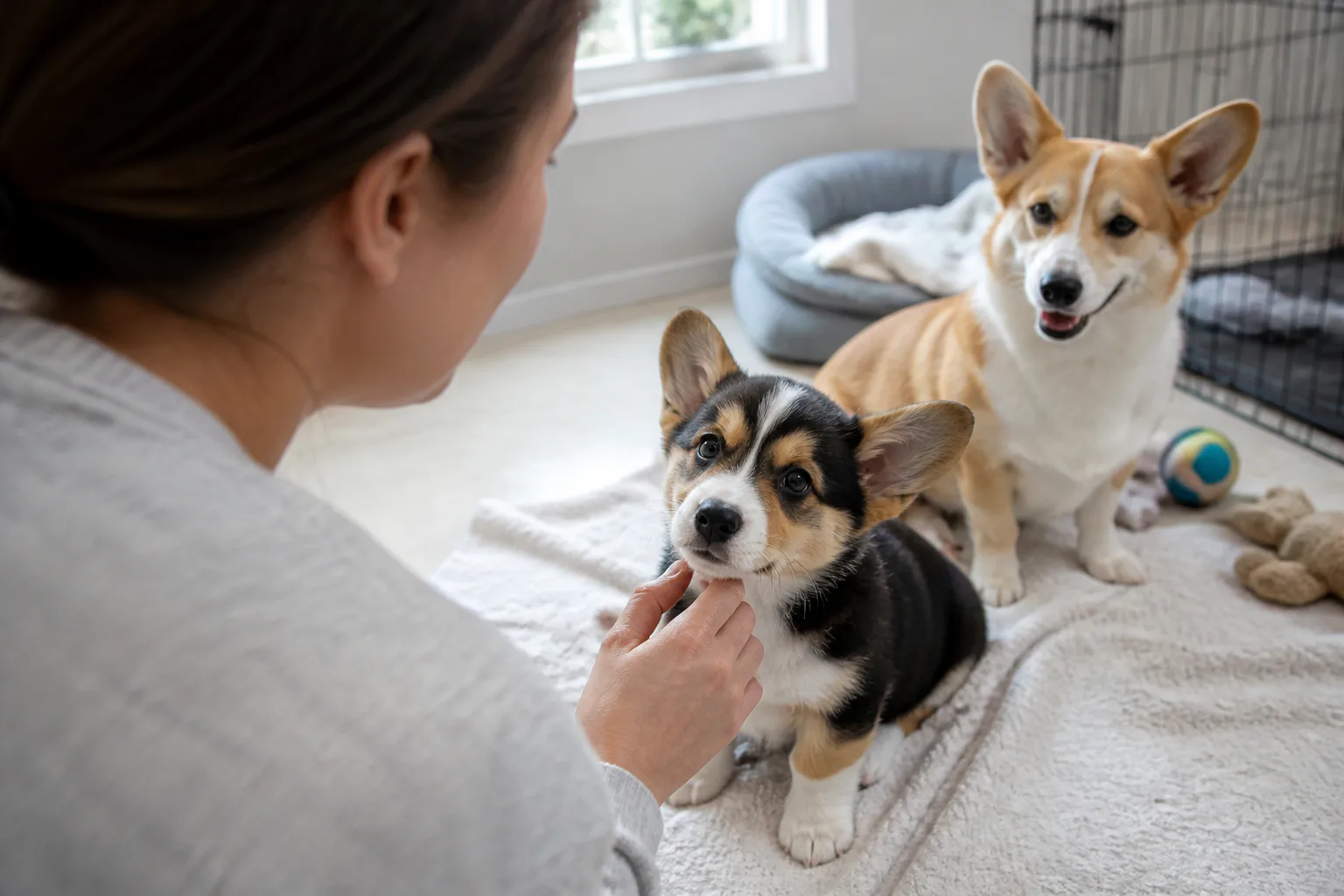
Dorgi Versus Pembroke Welsh Corgi
| Comparison | Dorgi | Pembroke Welsh Corgi |
|---|---|---|
| Structure | Usually smaller and longer-bodied, with short legs; proportions vary between puppies. | More consistent purebred structure, with a compact body, short legs and upright ears. |
| Predictability | Appearance, coat, adult size and behavior can differ because it is a mixed breed. | Traits are more predictable because the breed has an established standard and documented lineage. |
| Activity | Moderately active, needing daily walks, play and mental enrichment. | Active and athletic, often requiring more sustained exercise and purposeful training. |
| Temperament | Can combine Corgi herding behavior with Dachshund persistence, prey drive and independence. | Typically alert, intelligent, social and herding-oriented, with less variation between individuals. |
| Vocality | Often vocal and quick to alert the household. | Also commonly vocal because of its alert, herding background. |
| Health considerations | May inherit back, joint, dental, eye, bleeding and neurologic risks from either parent. | Requires attention to breed-associated joint, eye, spinal and other inherited health risks. |
FAQs
How much does a Dorgi cost?
Dorgi pricing has no standard amount because the mix is not an AKC-recognized breed and availability is limited. The total cost includes the acquisition fee, transportation, veterinary examination, vaccinations, preventive care, supplies and possible treatment for inherited conditions.
| Cost category | Typical U.S. range |
|---|---|
| Breeder acquisition | $500–$2,000 |
| Rescue or shelter adoption | $150–$600 |
| Transportation | $100–$1,000 |
| First-year veterinary care | $500–$1,500, including examinations, vaccines, parasite prevention and spay or neuter surgery |
Are Dorgis full-grown at one year?
Many Dorgis reach close to their adult height by one year, but body condition and muscle can continue developing afterward. Final size depends on the Dachshund and Pembroke Welsh Corgi parents, sex, nutrition and individual growth.
Conclusion
A Dorgi is a lively, affectionate companion for a household prepared to provide daily interaction, reward-based training and careful back protection. Before bringing one home, consider your schedule, barking tolerance, ability to manage stairs and jumping, and access to thorough veterinary and parent-health records.