Peekapoo Dog Guide: Temperament, Care, Health & Lifespan

The Peekapoo, also spelled Pekapoo or Peke-a-poo, is a small, affectionate companion with a low-shedding coat and a lively personality. Adult size, facial structure, energy and behavior vary depending on whether the Poodle parent is Toy or Miniature and which Pekingese traits the puppy inherits. Daily care includes grooming, interaction, dental hygiene and protection from heat.
Peekapoo Breed Snapshot
| Attribute | Details |
|---|---|
| Breed type | Designer hybrid dog |
| Other names | Pekapoo; Peke-a-poo |
| Origin | United States; developed in the 1950s |
| Parent breeds | Pekingese and Toy or Miniature Poodle |
| Purebred status | Not a purebred dog |
| Official breed standard | None |
| Height | Up to 11 inches |
| Weight | 4 to 20 pounds |
| Coat | Soft, wavy, medium to long, or curly |
| Coat colors | Silver, gray, white, sable, red, cream, apricot, chocolate, buff, black, black and tan |
| Shedding | Low-shedding to non-shedding |
| Temperament | Affectionate, loyal, intelligent, alert, protective, sometimes stubborn |
| Activity level | High for a small dog |
| Daily exercise | At least one thorough 30-minute walk plus play |
| Daily food | 1/2 to 3/4 cup in two meals |
| Lifespan | 10 to 15 years |
| Ownership fit | Apartments, attentive owners, older gentle children |
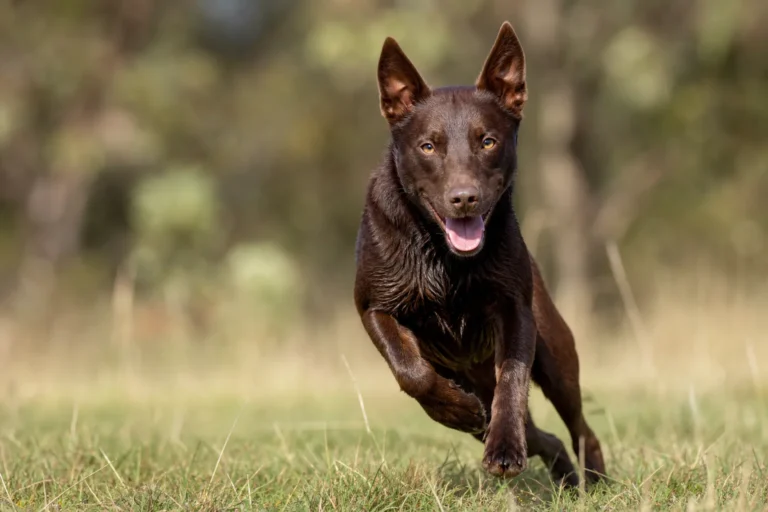
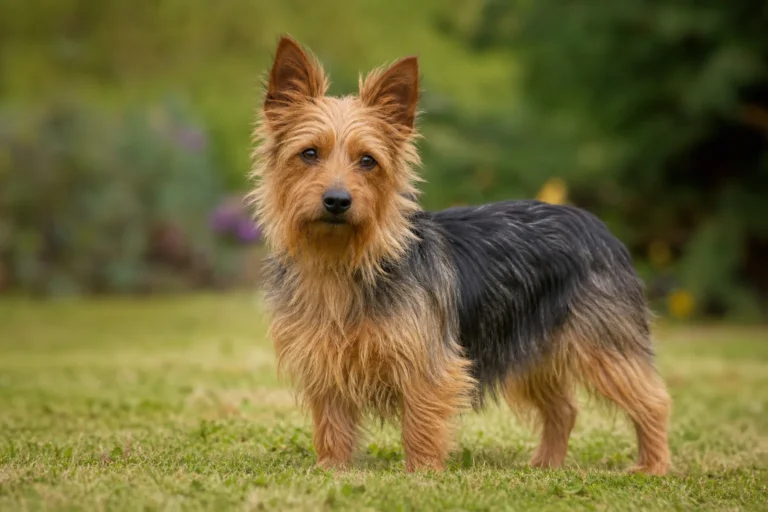
Because Peekapoos inherit traits from both Pekingese and Toy Poodles, their coat texture, confidence and attachment to their owners can vary. Comparing them with a closely related small companion cross, such as Shih-Poo traits, helps set realistic expectations about the mix’s affection, alertness and grooming needs.
What Does a Peekapoo Look Like?
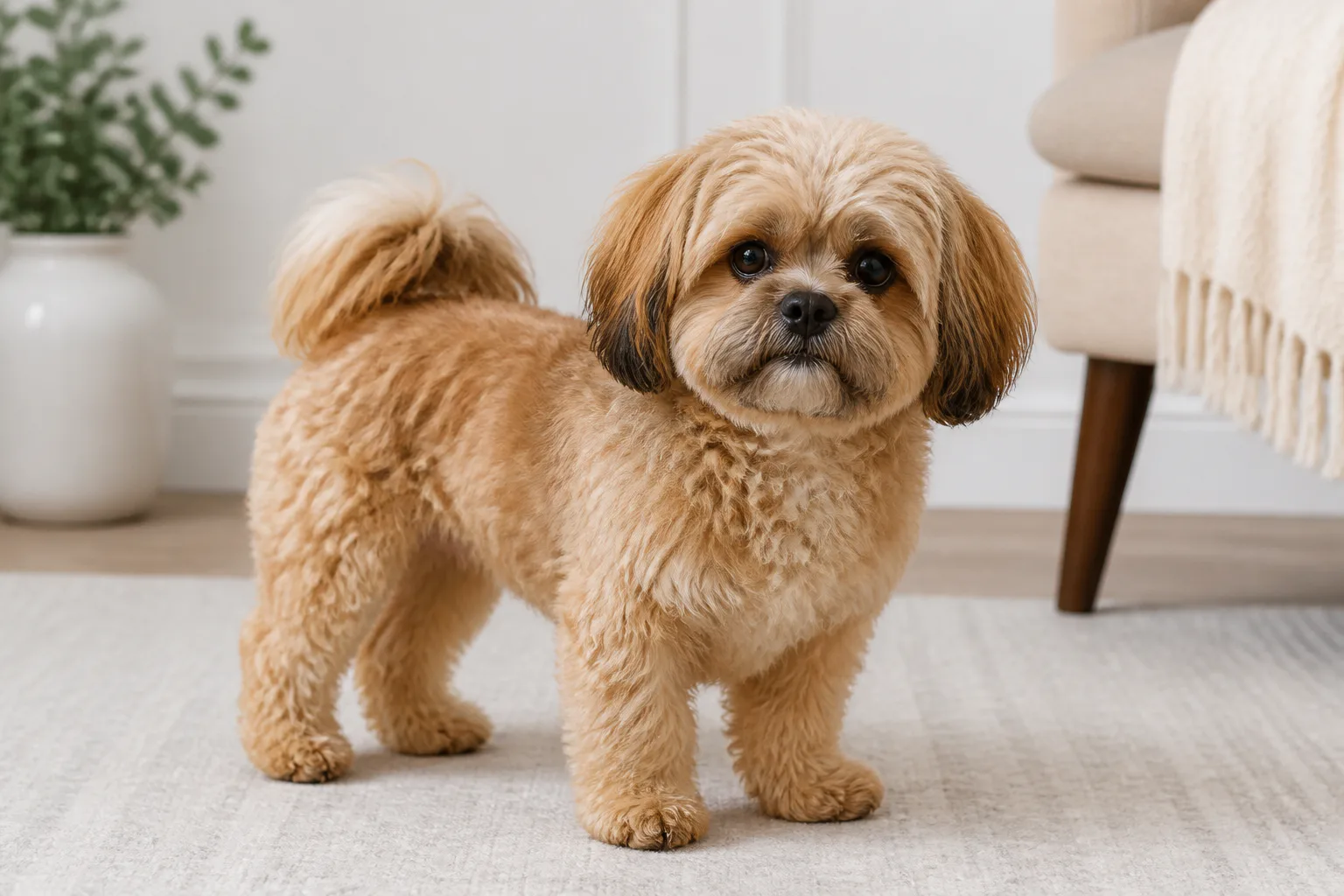
A Peekapoo can reach 11 inches in height and weigh between 4 and 20 pounds. The broad weight range reflects the use of either a Toy Poodle or Miniature Poodle parent, as well as variation in the Pekingese parent. The parents give the clearest indication of a puppy’s likely frame, although a mixed-breed puppy’s adult size cannot be predicted exactly.
The coat is soft and may be wavy, medium to long, or curly. Possible colors include silver, gray, white, sable, red, cream, apricot, chocolate, buff, black and black with tan markings. Black-and-white Peekapoos are also possible. Coat color does not indicate health, temperament or quality.
Facial structure varies from dog to dog. Some Peekapoos have the flatter Pekingese-like face, while others inherit the Poodle’s longer muzzle. Their eyes are usually prominent and expressive, and an underbite can occur. A shorter muzzle increases the need for heat protection and careful exercise in warm weather.
Peekapoo Pictures
These representative images show the range of Peekapoo appearance, including coat color, adult size, coat texture and facial structure.
- Black-and-white Peekapoo with a wavy coat
- Small Peekapoo with a curly coat
- Peekapoo with a shorter Pekingese-like muzzle
When comparing Peekapoo pictures, look beyond color or a teddy-bear-like haircut. Grooming can make a wavy coat look curlier or change the apparent shape of the head, and puppies may look different after developing their adult coat. Pictures show possible traits but cannot predict an individual dog’s mature size, breathing ability, grooming needs or temperament.
Peekapoo Temperament and Training
Peekapoos are generally affectionate, loyal, alert and closely attached to their people. Despite their small size, they can be effective watchdogs and may bark at visitors, outdoor sounds or unfamiliar activity. Poodle intelligence can make training easier, while Pekingese stubbornness means repetitive or harsh methods often work poorly.
- Begin socialization early with people, animals, places, sounds, handling and household routines.
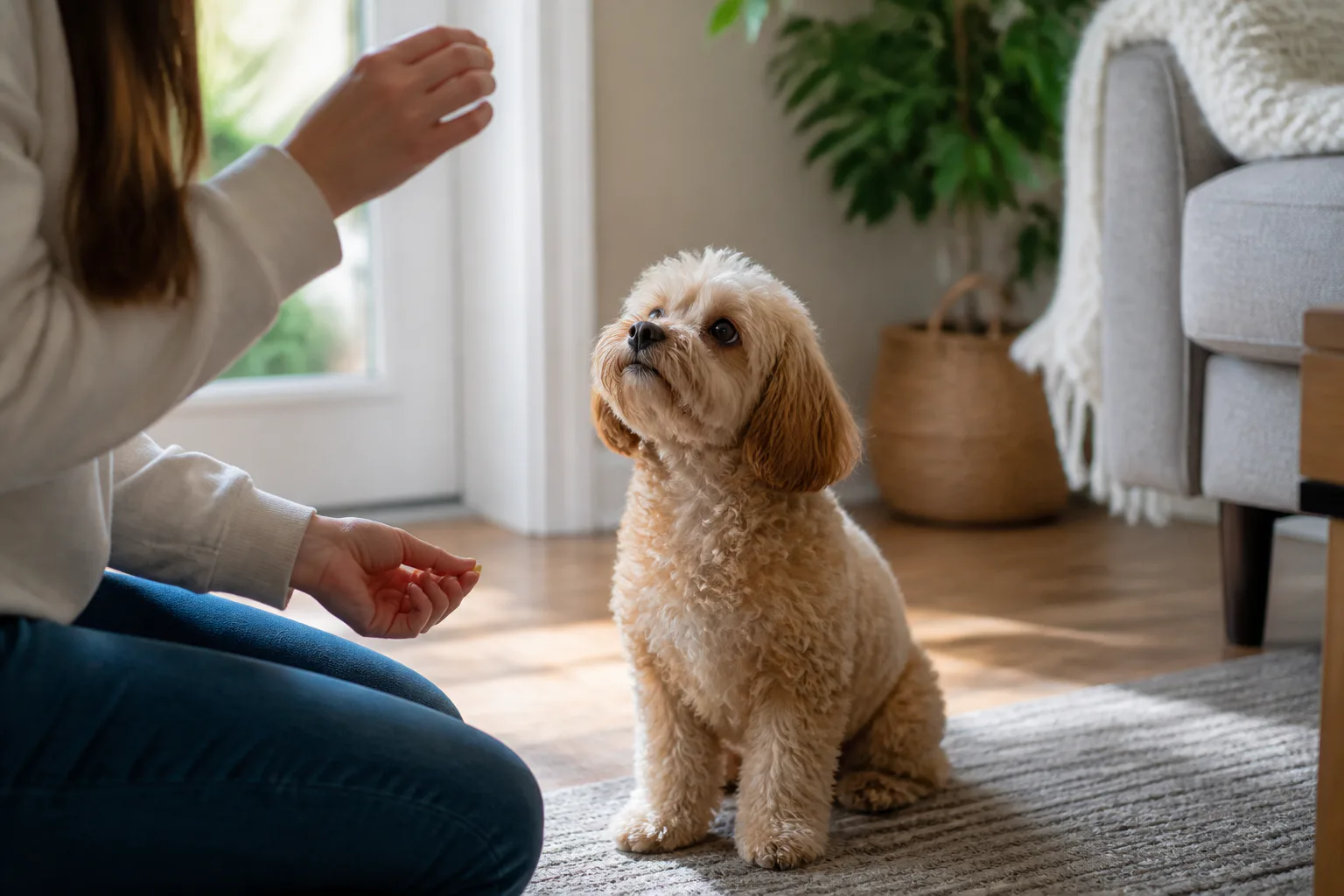
- Use reward-based training in short, frequent sessions.
- Teach quiet, recall, leash, handling and alone-time skills from puppyhood.
- Provide puzzle toys and supervised play to prevent boredom.
- Keep household rules consistent so barking and demanding behavior are not accidentally reinforced.
Long periods alone can contribute to separation anxiety and destructive behavior. A Peekapoo is not a good match for a home that regularly leaves a dog alone for extended periods. With companionship, mental stimulation and a predictable routine, it can thrive with attentive owners.
Daily Peekapoo Care Requirements
Its compact body does not mean the Peekapoo has low exercise needs. Give it at least one thorough 30-minute walk each day, along with indoor play, training or interactive games. A fenced yard is useful for supervised play but not essential. Apartment living can suit a Peekapoo when daily exercise and barking are managed consistently.
- Feed 1/2 to 3/4 cup of food daily, divided into two meals. Adjust portions for age, body condition and activity level, and follow veterinary guidance.
- Brush at least weekly, or daily if the coat is long.
- Brush a clipped coat a couple of times each week to control mats and tangles.
- Arrange professional grooming every 4 to 6 weeks, or about every 1 to 2 months.
- Brush the teeth regularly and arrange veterinary dental care when needed.
- Trim the nails before they become long enough to affect posture or walking.
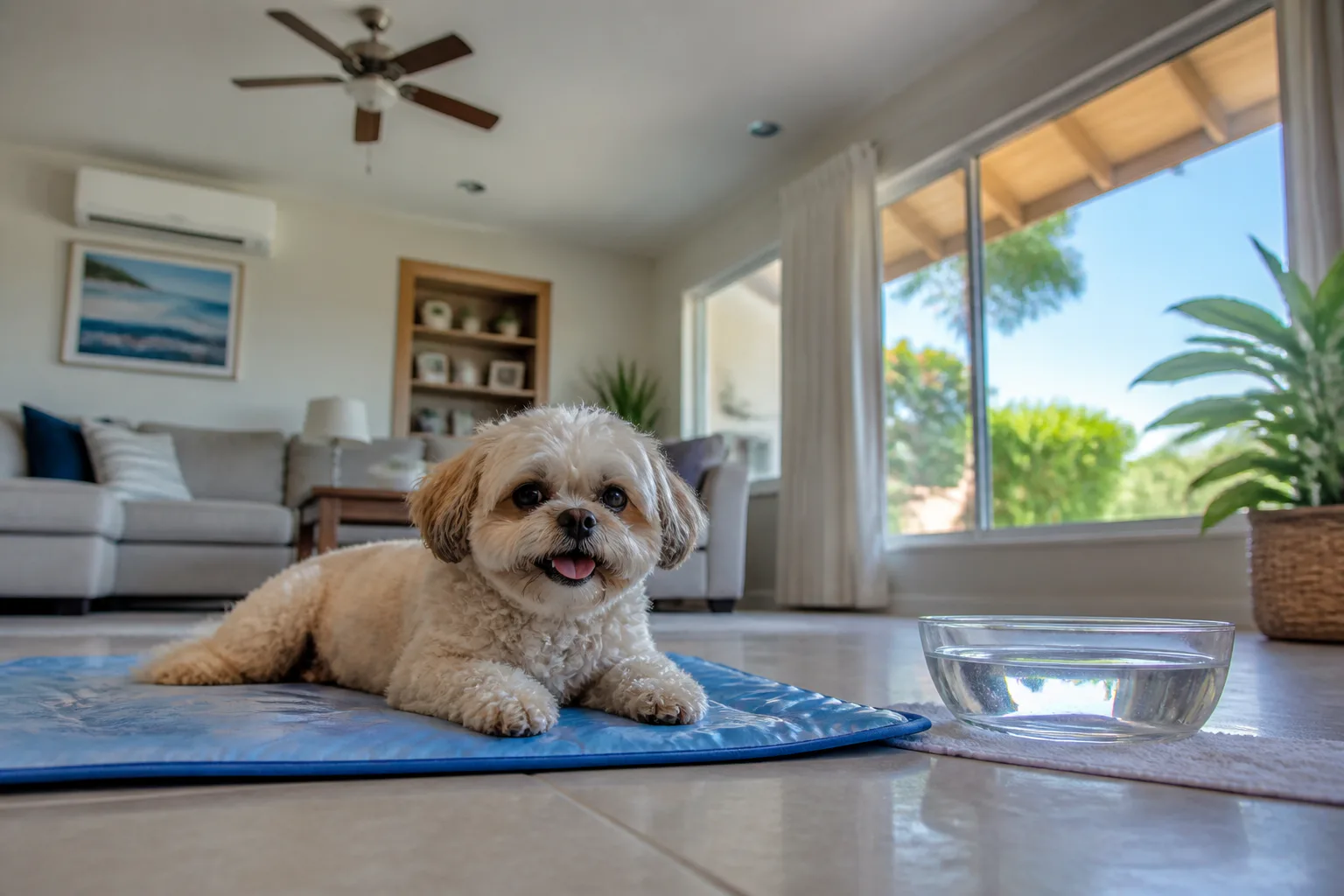
- Keep the dog indoors with air conditioning during hot weather, especially if it has a flat face.
Low shedding does not eliminate grooming. Long or curly hair can mat close to the skin, hide irritation and make brushing uncomfortable when neglected.
Brush your Peekapoo regularly to prevent mats in its soft, wavy or curly coat, paying special attention to the ears, legs and collar. Other small Poodle mixes need similar care, although coat density and shedding vary from one dog to another. Maltipoo grooming shows how a few minutes of daily grooming can reduce the need for more stressful, costly clipping sessions later.
Peekapoo Health Problems
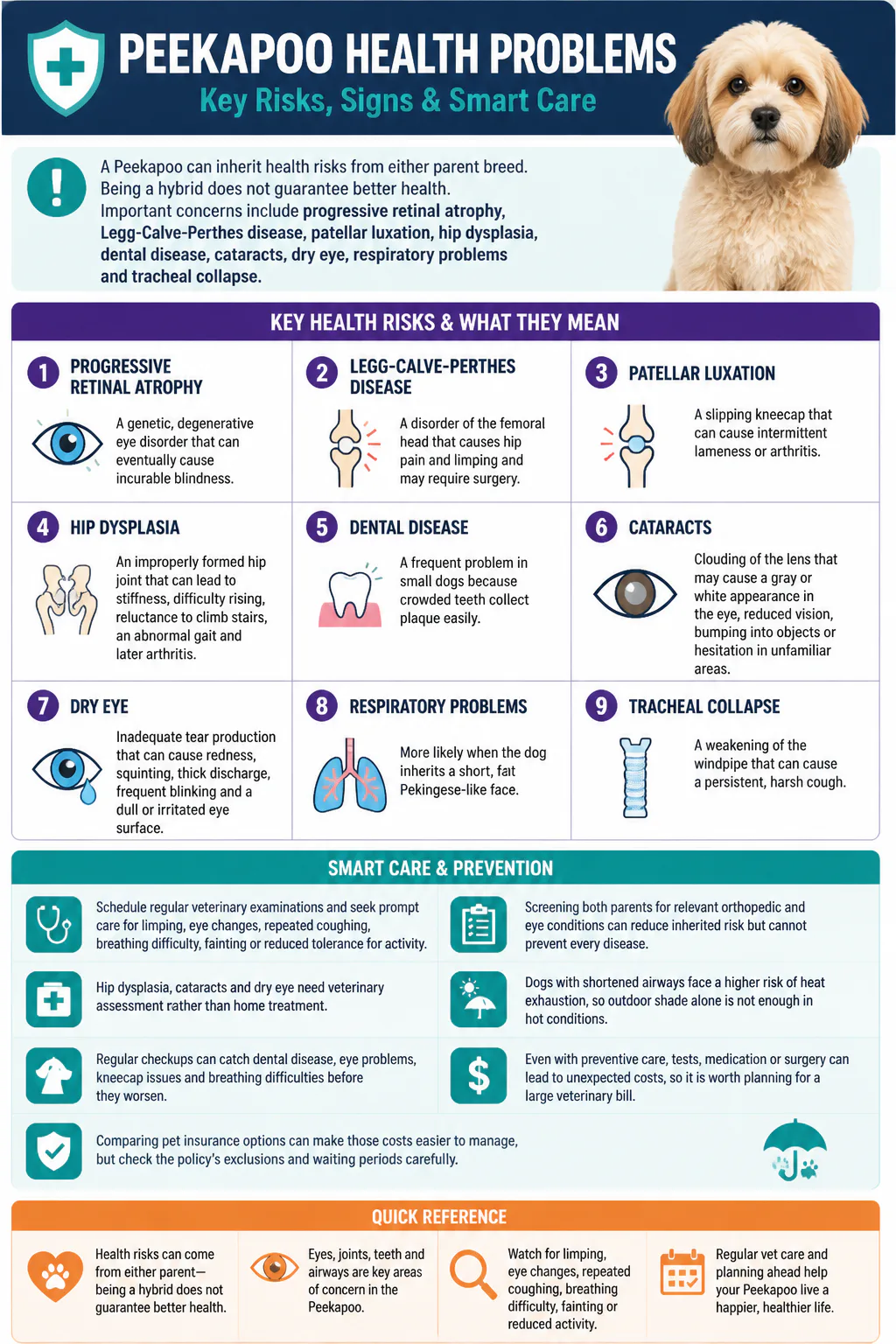
A Peekapoo can inherit health risks from either parent breed. Being a hybrid does not guarantee better health. Important concerns include progressive retinal atrophy, Legg-Calve-Perthes disease, patellar luxation, hip dysplasia, dental disease, cataracts, dry eye, respiratory problems and tracheal collapse.
- Progressive retinal atrophy: A genetic, degenerative eye disorder that can eventually cause incurable blindness.
- Legg-Calve-Perthes disease: A disorder of the femoral head that causes hip pain and limping and may require surgery.
- Patellar luxation: A slipping kneecap that can cause intermittent lameness or arthritis.
- Hip dysplasia: An improperly formed hip joint that can lead to stiffness, difficulty rising, reluctance to climb stairs, an abnormal gait and later arthritis.
- Dental disease: A frequent problem in small dogs because crowded teeth collect plaque easily.
- Cataracts: Clouding of the lens that may cause a gray or white appearance in the eye, reduced vision, bumping into objects or hesitation in unfamiliar areas.
- Dry eye: Inadequate tear production that can cause redness, squinting, thick discharge, frequent blinking and a dull or irritated eye surface.
- Respiratory problems: More likely when the dog inherits a short, flat Pekingese-like face.
- Tracheal collapse: A weakening of the windpipe that can cause a persistent, harsh cough.
Schedule regular veterinary examinations and seek prompt care for limping, eye changes, repeated coughing, breathing difficulty, fainting or reduced tolerance for activity. Hip dysplasia, cataracts and dry eye need veterinary assessment rather than home treatment. Screening both parents for relevant orthopedic and eye conditions can reduce inherited risk but cannot prevent every disease. Dogs with shortened airways face a higher risk of heat exhaustion, so outdoor shade alone is not enough in hot conditions.
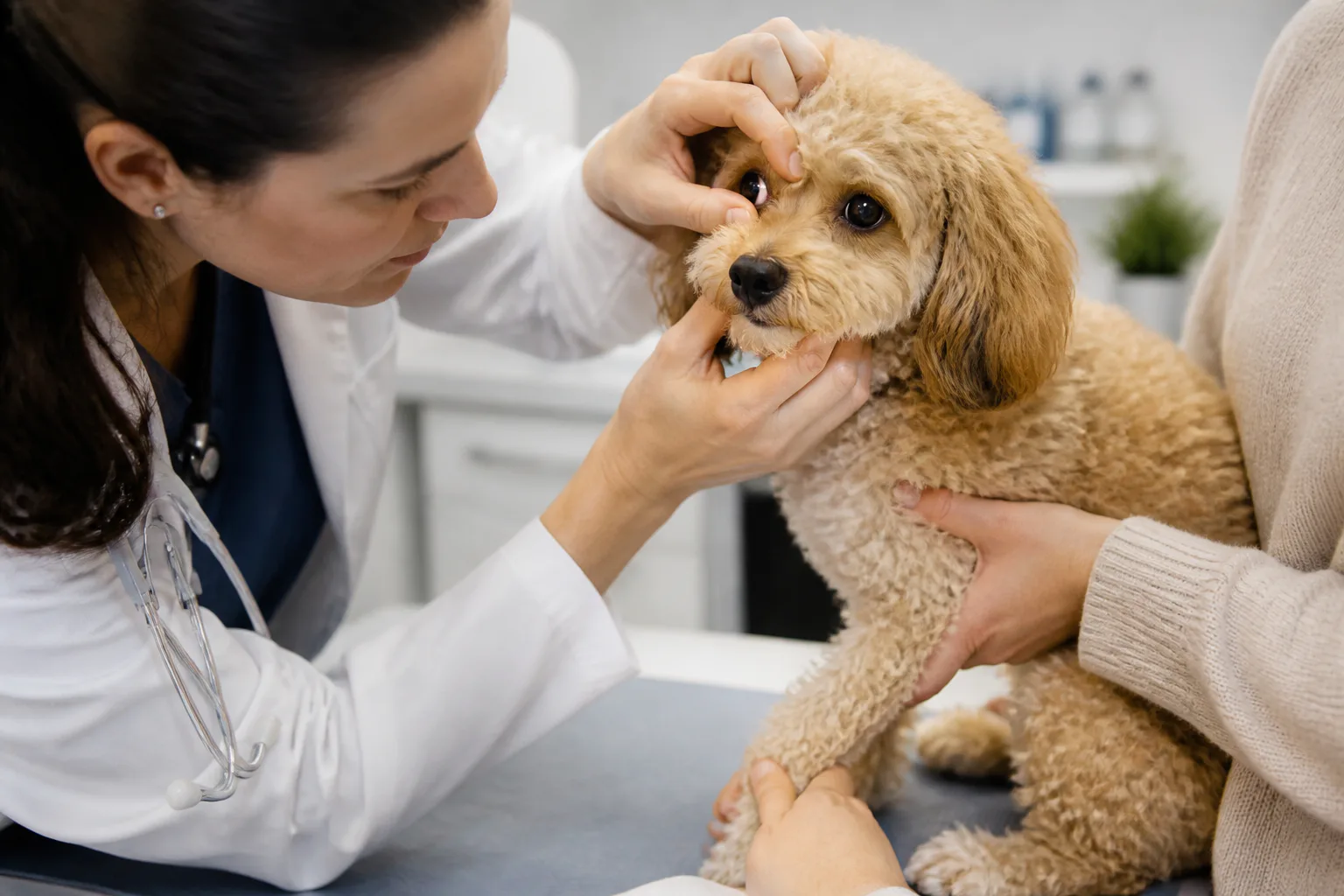
Regular checkups can catch dental disease, eye problems, kneecap issues and breathing difficulties before they worsen. Even with preventive care, tests, medication or surgery can lead to unexpected costs, so it is worth planning for a large veterinary bill. Comparing pet insurance options can make those costs easier to manage, but check the policy’s exclusions and waiting periods carefully.
Is a Peekapoo Good With Families?
A Peekapoo can be a good family companion when the household can meet its needs for attention, grooming and structured training. Its small frame is vulnerable to accidental injury, so older, gentle children are a better match than toddlers who may grab, chase or handle a dog roughly.
- Children: Best with calm children who respect the dog’s boundaries, rest, food and personal space.
- Other pets: Use controlled introductions and supervision because sociability varies between individual dogs.
- Apartment homes: Suitable because of its compact size, provided barking and daily exercise are managed.
- Busy households: Challenging when the dog is routinely left alone for extended periods.
- Retirees or home-based owners: Often a good fit when they can provide companionship, walks, grooming and training.
The Pekingese contributes regal behavior, courage, affection, protectiveness and occasional stubbornness. The Toy Poodle contributes tiny size, intelligence, trainability and a low-shedding coat. A Miniature Poodle may add greater stamina and a sturdier structure while retaining similar coat characteristics. These differences help explain why two Peekapoos can have noticeably different appearances and behavior.
A Peekapoo can fit well into family life when children learn to handle small dogs gently and adults supervise their interactions. Even affectionate companion mixes may become anxious, defensive or overwhelmed by loud noise, rough play or being left alone for long periods. Cavapoo family traits offer further insight into how sociability, sensitivity and exercise needs affect a dog’s fit in a household.
How to Find a Peekapoo Responsibly
Peekapoos have no official breed standard and are not purebred dogs, so responsible sourcing depends on the health, transparency and care provided by the breeder or rescue. Dedicated nationwide Peekapoo rescues are uncommon. Dogs may instead appear through small-dog, Poodle, Pekingese or general mixed-breed rescue programs.
- Search Petfinder for Peekapoos, Pekingese-Poodle mixes and nearby small-dog listings.
- Search Adopt-a-Pet for available Peekapoos and similar mixed-breed dogs.
- Ask rescue groups for medical records, behavior notes, age, vaccination status and known home history.
- When considering a breeder, review both parents’ health histories and request documentation for relevant eye, orthopedic and patellar screening.
- Visit the dogs’ living environment and meet the mother when possible.
- Read the contract before paying a deposit, including its return, health-guarantee and ownership terms.
- Walk away from sellers who refuse visits, offer many breeds at once, pressure buyers or cannot explain the dogs’ veterinary care.
A responsible breeder should discuss possible breathing difficulty, dental disease, eye disease, joint problems and coat-care needs. No breeder should promise a perfect or completely hypoallergenic dog. Avoid choosing a puppy solely because of a rare color, tiny size or unusually low price.
A responsible breeder or rescue should be open about the parent dogs’ health, temperament, grooming needs and living conditions—not just the designer label. Mixed-breed puppies can inherit traits unevenly, so compare several small companion crosses before choosing one that suits your lifestyle. Looking at Yorkipoo characteristics can also show how another Poodle mix may combine alertness, sociability, coat variation and a strong need for human attention.
Peekapoo Ownership Costs
| Expense | Typical amount |
|---|---|
| Breeder price | $500 to more than $2,000 |
| Reputable breeder range | $1,500 to $3,800 |
| Adoption fee | $150 to $450 |
| First-year expenses | $1,000 to $2,500 |
| Annual ownership costs | $1,000 to $1,800 |
Purchase price depends on the breeder, lineage, adult size, coat color and care provided before placement. A lower price does not indicate quality, while a higher price does not prove responsible breeding. Adoption fees generally cover some combination of veterinary evaluation, vaccinations, sterilization and rescue care.
Annual costs include food, routine veterinary visits, parasite prevention, grooming, dental care, supplies and unexpected treatment. Set aside money for emergencies because respiratory problems, Legg-Calve-Perthes surgery, dental procedures and eye conditions can cost more than ordinary yearly care.

FAQs
Are Peekapoos hypoallergenic?
Peekapoos are low-shedding to non-shedding, but no dog is completely hypoallergenic. Dander, saliva and skin proteins can trigger allergic reactions, and individual responses vary even around low-shedding dogs.
Can a Peekapoo live in a hot climate?
Yes, with careful management. Indoor air conditioning, fresh water, shaded rest and activity during cooler hours are especially important for dogs with a flat Pekingese-like face or a history of breathing difficulty.
Conclusion
A Peekapoo suits an attentive household prepared for grooming, daily activity, training, dental care and heat precautions. Before bringing one home, prioritize temperament, breathing ability, health records and the quality of the breeder or rescue placement over coat color or a bargain price.