American Foxhound Dog: Traits, Care, Training, and More
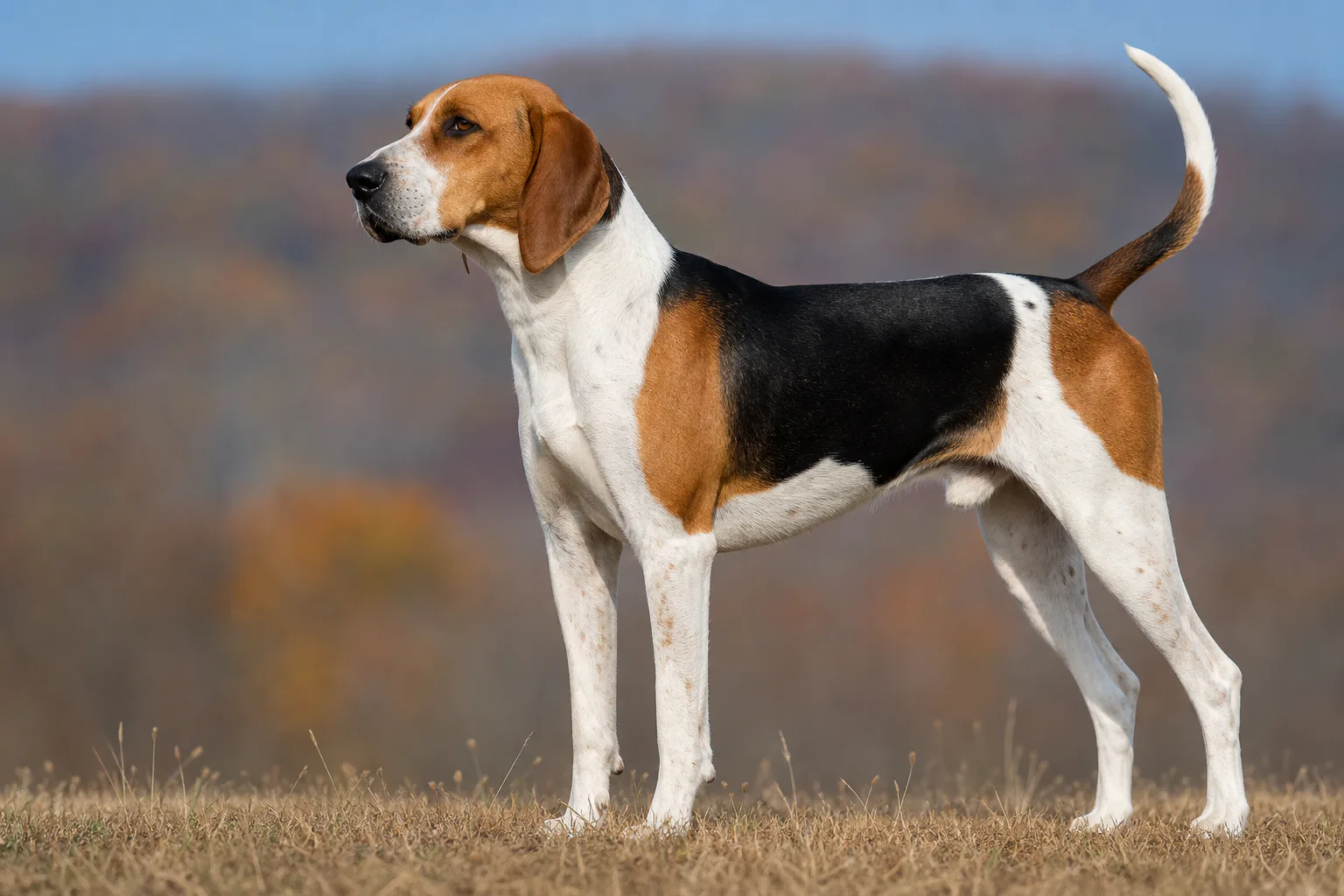
The American Foxhound Dog is a friendly, athletic scent hound bred in the United States for endurance, tracking, and trailing foxes. It can be a gentle family companion that gets along well with children, dogs, and even cats, but its strong outdoor drive, stamina, and distinctive voice make it best suited to an active home with secure space.
American Foxhound at a glance
| Characteristic | Details |
|---|---|
| Origin | United States |
| Type | Scent hound |
| Adult height | 21–25 inches |
| Male weight | 55–71 pounds |
| Coat | Short and hard |
| Common colors | Red, tricolor, black and tan, and blue |
| Expected lifespan | About 11–13 years |
| Virginia status | State dog of Virginia |
History and purpose
American Foxhounds developed from foxhounds brought to North America and refined for the country’s larger distances and varied terrain. Breeders selected dogs for speed, stamina, scenting ability, and the ability to work for long periods without tiring.
The breed is closely connected with Virginia, historic estates, and the early United States. George Washington was associated with foxhound breeding, and the American Foxhound remains the state dog of Virginia. Although many live as companions today, their working heritage still shapes their behavior.
Appearance and size
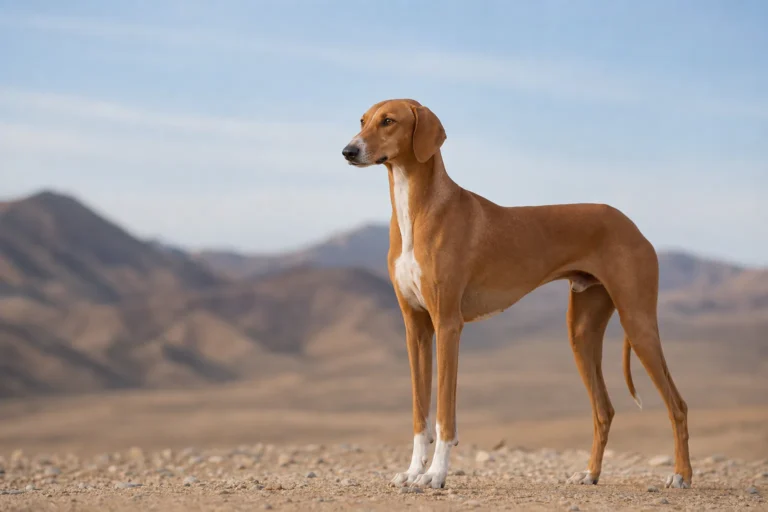
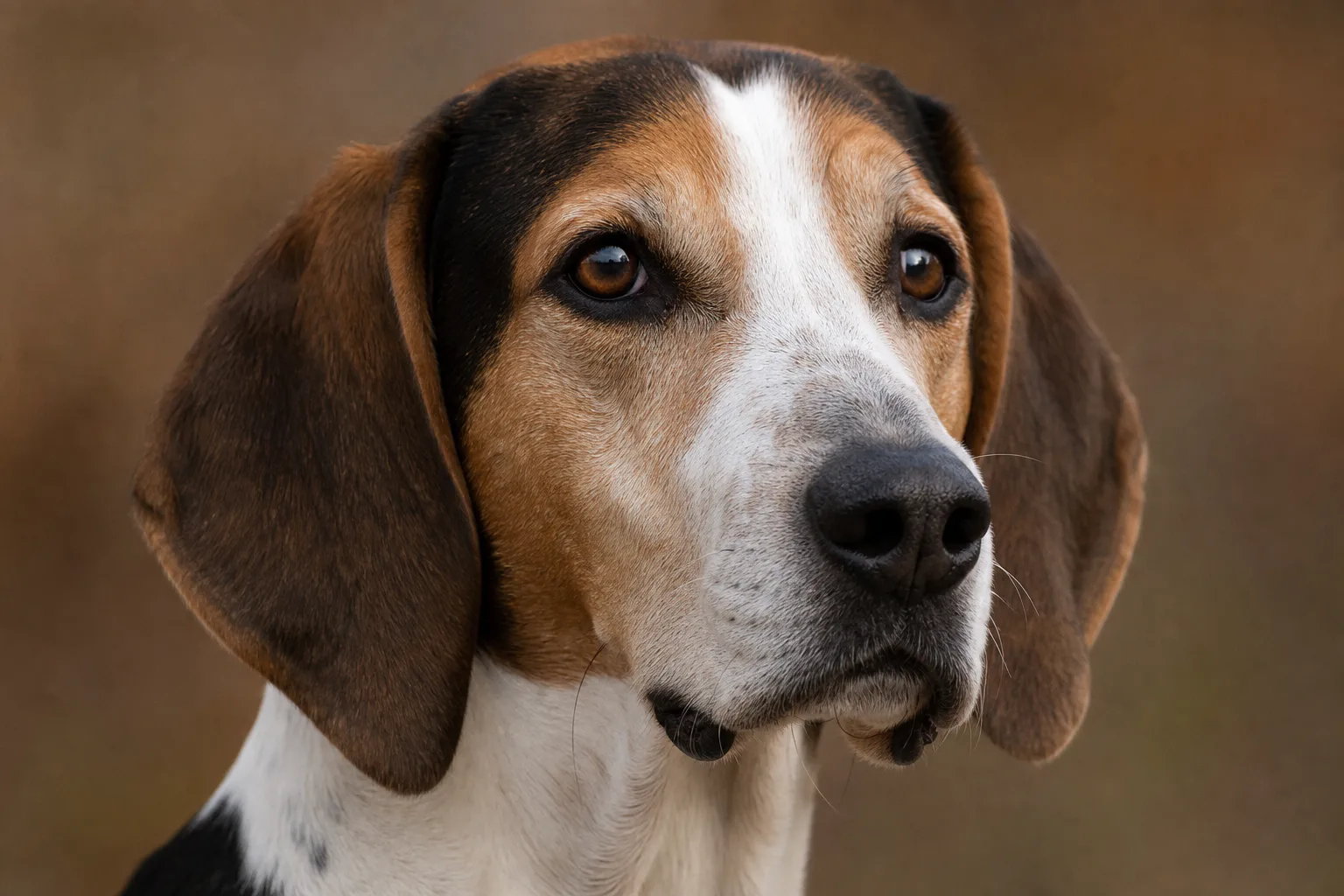
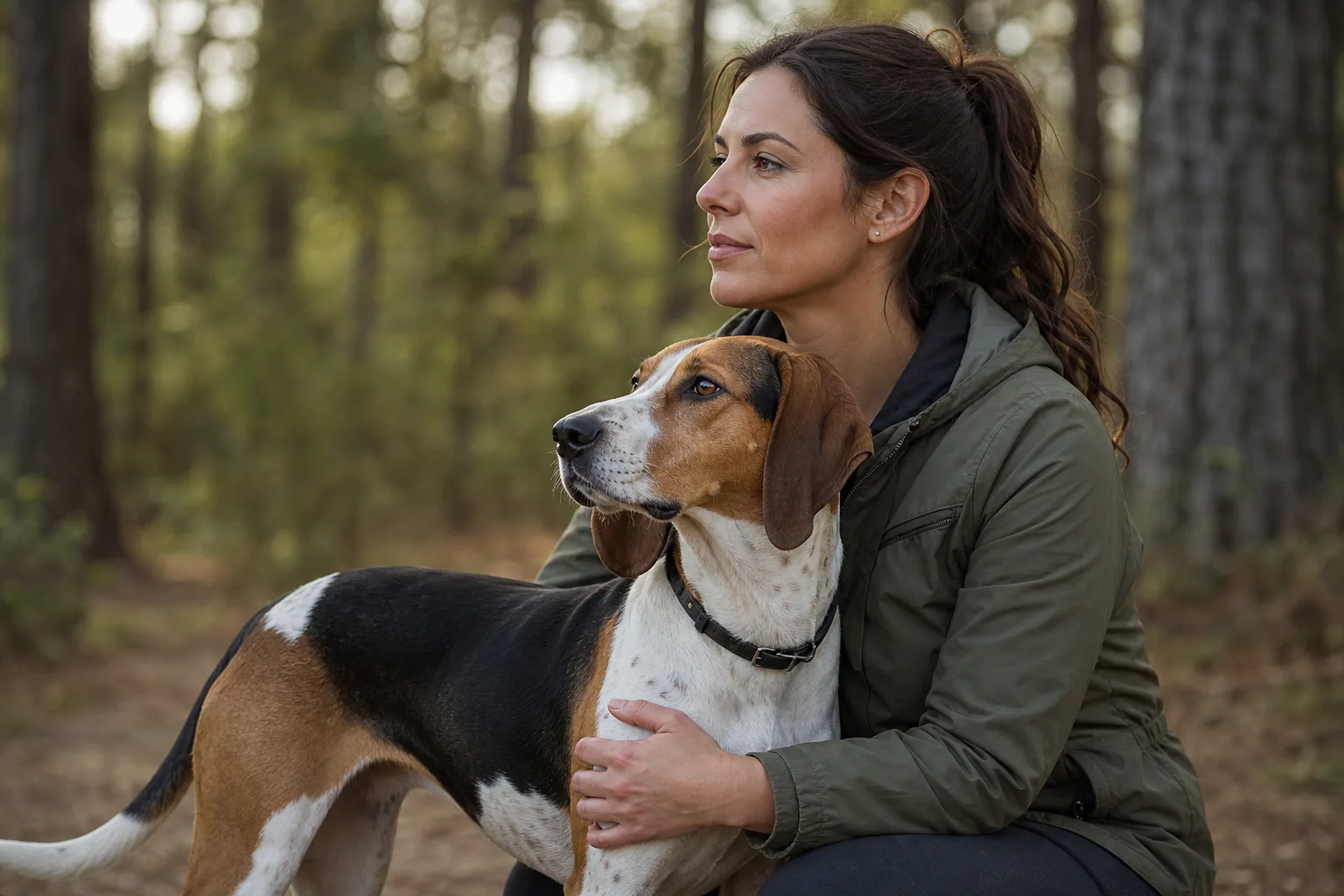
An American Foxhound has a lean, long-legged build designed for efficient movement. Its expression is soft and alert, with the classic hound appearance of long ears, a refined head, and a muscular body without excessive bulk.
The short coat is practical rather than decorative. Recognized colors include red, tricolor, black and tan, and blue. Adult males stand about 21–25 inches and weigh 55–71 pounds; individual dogs vary according to sex, build, conditioning, and lineage.
Temperament
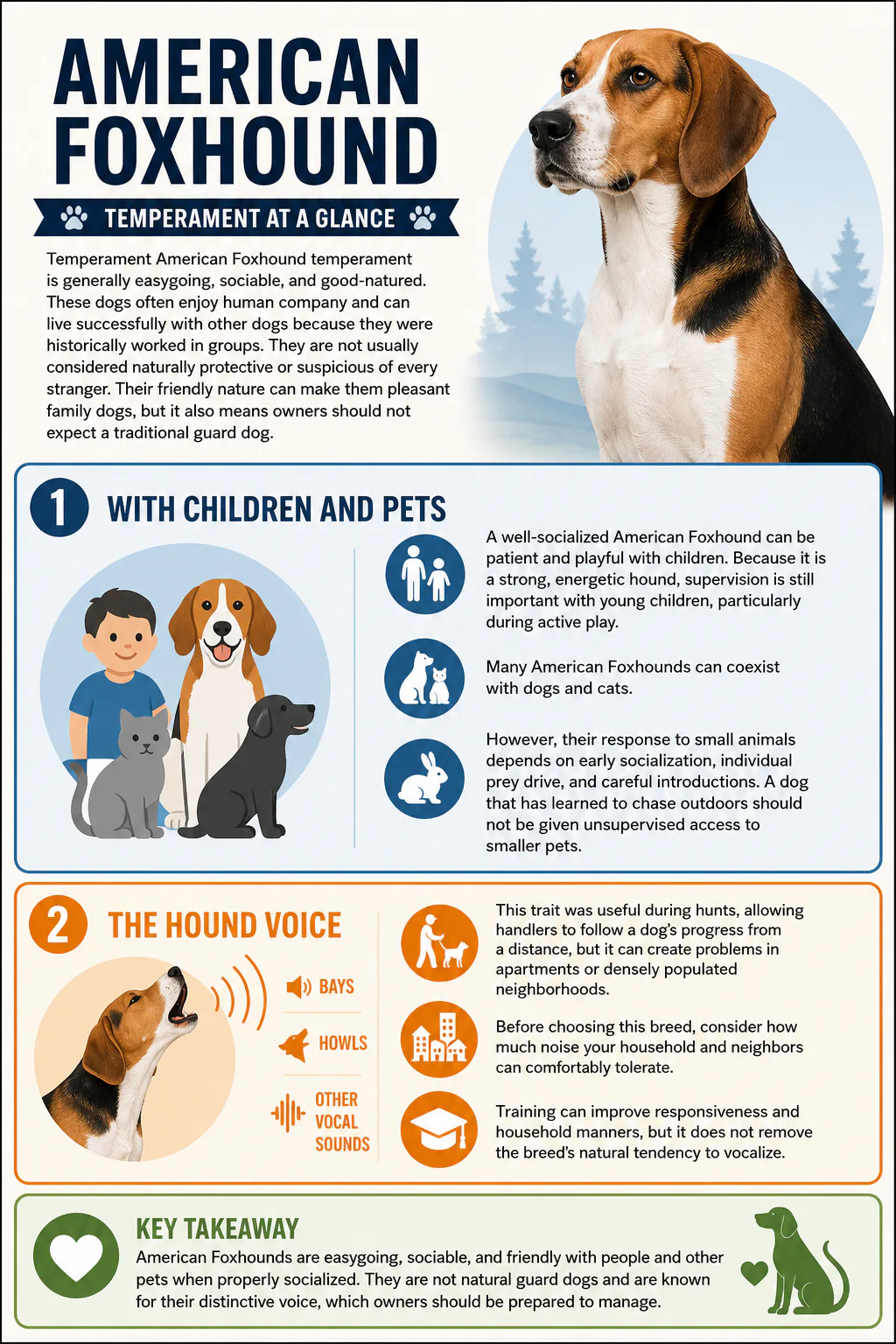
American Foxhound temperament is generally easygoing, sociable, and good-natured. These dogs often enjoy human company and can live successfully with other dogs because they were historically worked in groups.
They are not usually considered naturally protective or suspicious of every stranger. Their friendly nature can make them pleasant family dogs, but it also means owners should not expect a traditional guard dog.
With children and pets
A well-socialized American Foxhound can be patient and playful with children. Because it is a strong, energetic hound, supervision is still important with young children, particularly during active play.
Many American Foxhounds can coexist with dogs and cats. However, their response to small animals depends on early socialization, individual prey drive, and careful introductions. A dog that has learned to chase outdoors should not be given unsupervised access to smaller pets.
The hound voice
American Foxhounds communicate with distinctive bays, howls, and other vocal sounds. This trait was useful during hunts, allowing handlers to follow a dog’s progress from a distance, but it can create problems in apartments or densely populated neighborhoods.
Before choosing this breed, consider how much noise your household and neighbors can comfortably tolerate. Training can improve responsiveness and household manners, but it does not remove the breed’s natural tendency to vocalize.
Exercise requirements
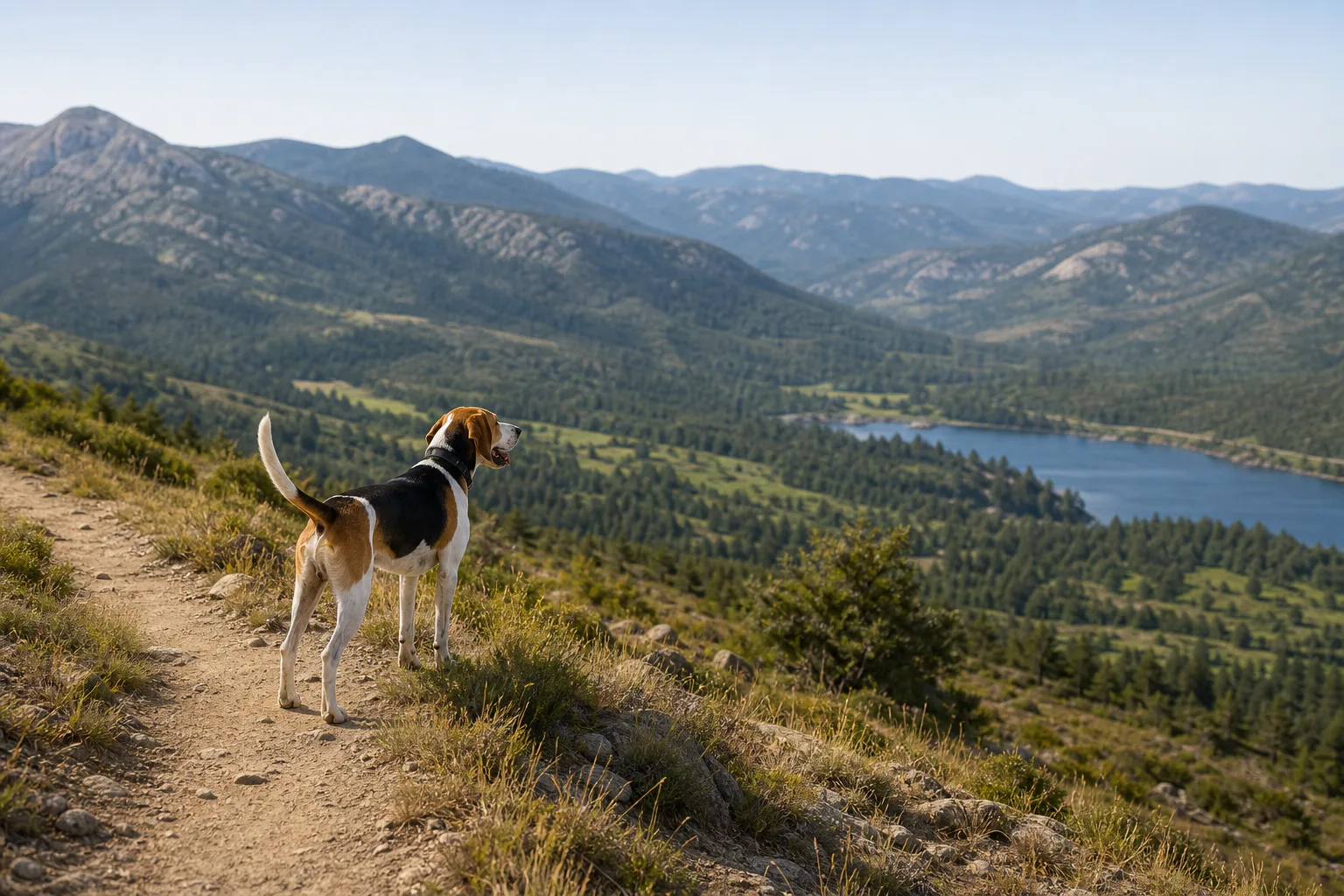
This is an endurance-built breed, not a low-energy house dog. Daily walks alone are often insufficient if they do not include enough distance, exploration, or structured activity. American Foxhounds need regular opportunities to move, sniff, and use their minds.
- Long walks or hikes in secure areas
- Supervised running or jogging after physical maturity
- Scent games and tracking exercises
- Reward-based obedience sessions
- Play with compatible dogs
A fenced yard can help, but a yard does not replace interaction or purposeful exercise. The breed’s scent drive can lead it away from home if it finds an interesting trail, so off-leash activity should take place only in securely enclosed areas or under reliable control.
Families comparing active hounds with other athletic breeds can also consider the more people-focused Labrador Retriever, which often has a different balance of trainability, retrieving instinct, and social behavior.
Training approach
American Foxhounds are intelligent, but their attention can shift quickly when they detect an appealing scent. Training works best when sessions are short, consistent, and rewarding rather than repetitive or harsh.
- Begin socialization and basic training early.
- Teach name recognition, recall, leash manners, and household boundaries.
- Use high-value rewards and clear, repeatable cues.
- Practice around gradually increasing distractions.
- Keep the dog leashed or securely contained until recall is dependable.
Recall deserves special attention. Even a well-trained Foxhound can struggle to ignore a fresh scent, so responsible management remains necessary throughout the dog’s life.
Grooming and daily care
The American Foxhound’s short coat is low-maintenance. Weekly brushing removes loose hair and distributes natural oils, while occasional bathing is usually enough unless the dog becomes dirty during outdoor activities.
- Brush the coat regularly.
- Check and clean the ears as directed by a veterinarian.
- Trim nails before they become overgrown.
- Brush the teeth routinely.
- Inspect paws after hikes or rough terrain.
Long, hanging ears receive limited airflow, so routine ear checks are especially important. Contact a veterinarian if you notice persistent odor, discharge, redness, pain, or repeated scratching.
Health and nutrition
American Foxhounds are generally sturdy dogs, but no breed is free from health concerns. A preventive veterinary plan should include regular examinations, vaccinations, parasite control, dental care, weight monitoring, and individualized screening recommendations.
Maintaining a healthy body condition matters because excess weight can reduce stamina and place additional stress on the joints. Feed a complete diet appropriate for the dog’s age, activity level, and body condition, and measure portions rather than relying on appetite alone.
After vigorous exercise, monitor the dog for unusual weakness, breathing difficulty, persistent lameness, or digestive distress. Seek veterinary care promptly when symptoms are severe, sudden, or persistent.
Is this breed right for you?
An American Foxhound can be a strong match for people who enjoy outdoor activity and want a sociable dog with a short, easy-care coat. It is less suitable for households seeking a quiet, highly obedient dog that can roam freely without supervision.
| Good fit | Potential challenge |
|---|---|
| Active owners who enjoy walks, hikes, and scent games | Low-activity households |
| Homes with secure fencing | Unfenced properties near roads or open land |
| Families comfortable with hound vocalization | Apartments with strict noise limits |
| People who appreciate friendly, social dogs | Owners seeking a dedicated guard dog |
| Handlers willing to practice recall and leash skills | Anyone expecting effortless off-leash reliability |
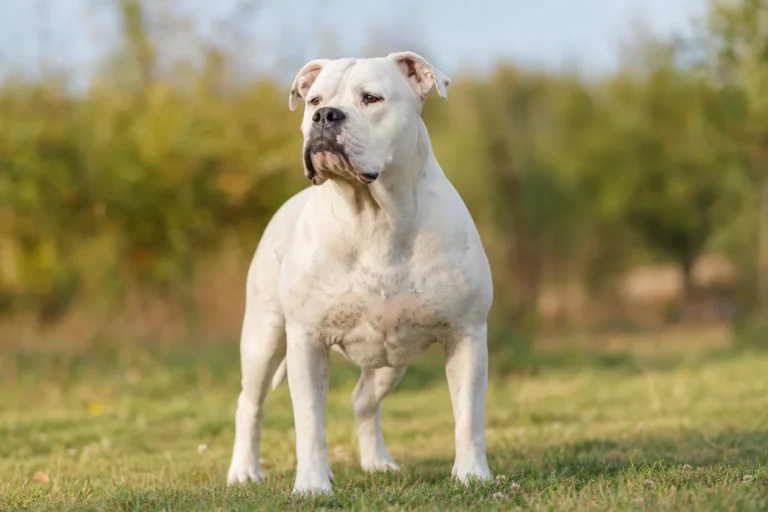
Its needs differ from those of a compact companion breed. For another American breed with a substantially different build and household profile, compare the Foxhound with an American Bulldog before deciding which type of energy and training commitment suits your home.
Finding an American Foxhound
Rescue and adoption
American Foxhound dog rescue organizations, local shelters, and hound-focused adoption groups can be excellent places to find an adult or young dog. An adult’s personality, energy level, and behavior around children or other pets are often easier to assess than a puppy’s.
Ask about the dog’s history, leash behavior, recall, vocalization, medical records, and experience with other animals. A careful foster-based organization may also provide useful information about how the dog behaves in a home setting.
Breeders and puppies
When considering American Foxhound puppies for sale, choose a breeder who prioritizes health, stable temperament, appropriate socialization, and transparent records. Meet the mother when possible, ask how puppies are raised, and confirm that the breeder is willing to discuss the breed’s exercise and vocalization needs honestly.
Be cautious of advertisements that focus only on availability or unusually low prices. A responsible placement should include questions about your home, schedule, fencing, experience, and plans for training.
American Foxhound mixes
A Foxhound American mix can inherit traits from either parent, so appearance, size, energy, vocalization, and prey drive are not predictable from the label alone. Evaluate the individual dog rather than assuming that a mix will automatically be calmer or easier to train.
Ask for information about both parent breeds when available. The most useful questions concern exercise needs, behavior around children and animals, health history, and the dog’s actual behavior in foster care or the breeder’s home.
Frequently asked questions
Are American Foxhounds good family dogs?
They can be good family dogs for active households. Their friendly nature often works well with children and other dogs, but families must provide exercise, secure containment, training, and tolerance for vocal behavior.
How much does an American Foxhound weigh?
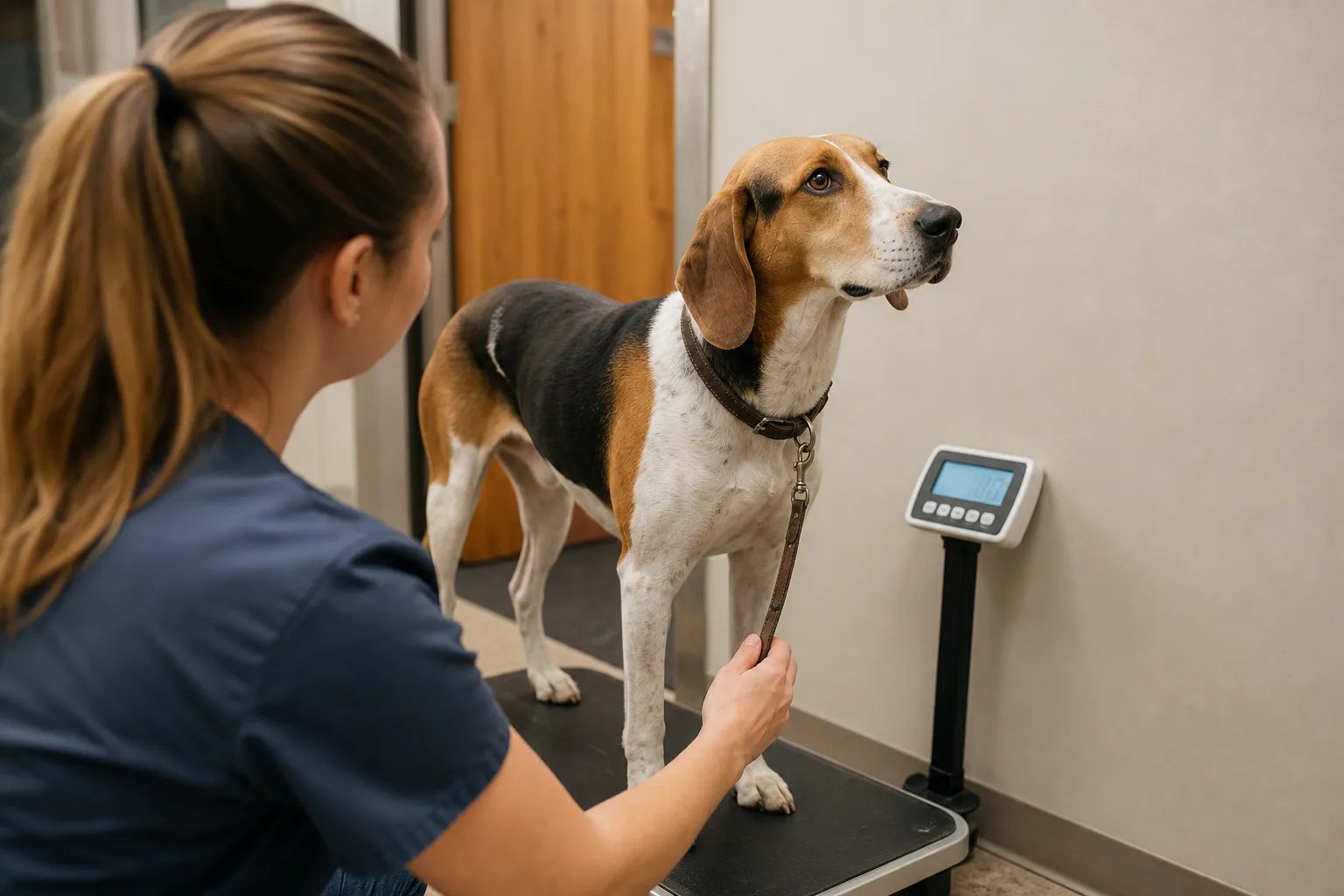
Adult males are listed at 55–71 pounds. Weight should be judged alongside body condition and muscle rather than by a number alone.
Are American Foxhounds easy to train?
They learn through patient, reward-based training, but scent distractions can make reliability difficult. Recall and off-leash control require consistent practice and secure management.
Can an American Foxhound live in an apartment?
Apartment living can be difficult because of the breed’s exercise needs and tendency to bay or howl. It is possible only when the owner can provide substantial daily activity and the building environment permits the dog’s vocal nature.
What happens at an American Foxhound dog show?
At an American Foxhound dog show, judges assess the dog against the breed standard, including structure, movement, coat, proportions, and overall condition. These events showcase conformation, while other activities can highlight scent work, obedience, or athletic ability.
Final recommendation
Choose an American Foxhound if you want a friendly, graceful, high-endurance companion and are prepared to manage its scent drive, exercise needs, and voice. For the best outcome, prioritize secure fencing, early training, regular activity, and a careful match through a responsible breeder or rescue organization.