American Eskimo Dog Guide: Temperament, Care, and Health
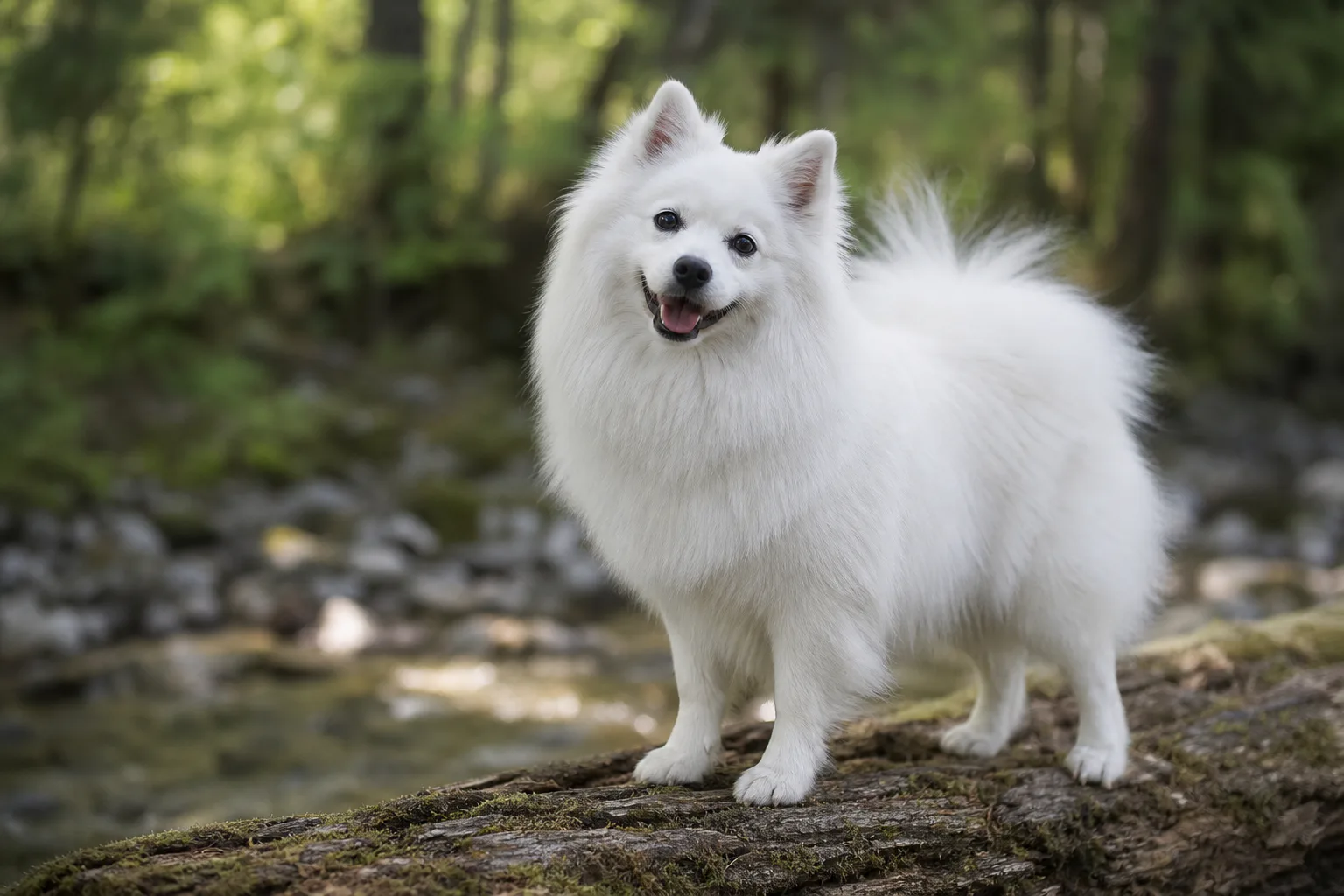
Bright-eyed, highly trainable, and wrapped in a fluffy white coat, the American Eskimo Dog is more than a beautiful companion. This alert Spitz breed can be playful and affectionate at home, but it also needs regular exercise, mental challenges, grooming, and patient training. The guide below explains its temperament, size, care needs, health considerations, and whether an Eskie fits your household.
American Eskimo Dog Overview
The American Eskimo Dog is a companion breed from the Spitz family. Despite its name, it is not from Alaska and is not related to the Indigenous peoples traditionally associated with the term “Eskimo.” Its ancestors were German Spitz dogs, and the breed developed in the United States.
During the First World War, anti-German sentiment led American breeders and owners to move away from the breed’s former German name. The American Eskimo Dog became known for its intelligence, alert expression, white coat, and engaging personality.
| Characteristic | What to know |
|---|---|
| Breed group | Spitz-type companion dog |
| Origin | Developed in the United States from German Spitz ancestry |
| Recognized sizes | Toy, miniature, and standard |
| Coat | Double coat, usually white or biscuit cream |
| Temperament | Alert, intelligent, friendly, energetic, and sometimes reserved with strangers |
| Common lifespan | About 13 to 15 years |
Size and Appearance
The breed comes in three American Kennel Club size varieties. The varieties share the same general structure and temperament, but their height can affect exercise needs, handling, and suitability for different homes.
| Variety | Height |
|---|---|
| Toy | 9 to 12 inches |
| Miniature | 12 to 15 inches |
| Standard | 15 to 19 inches |
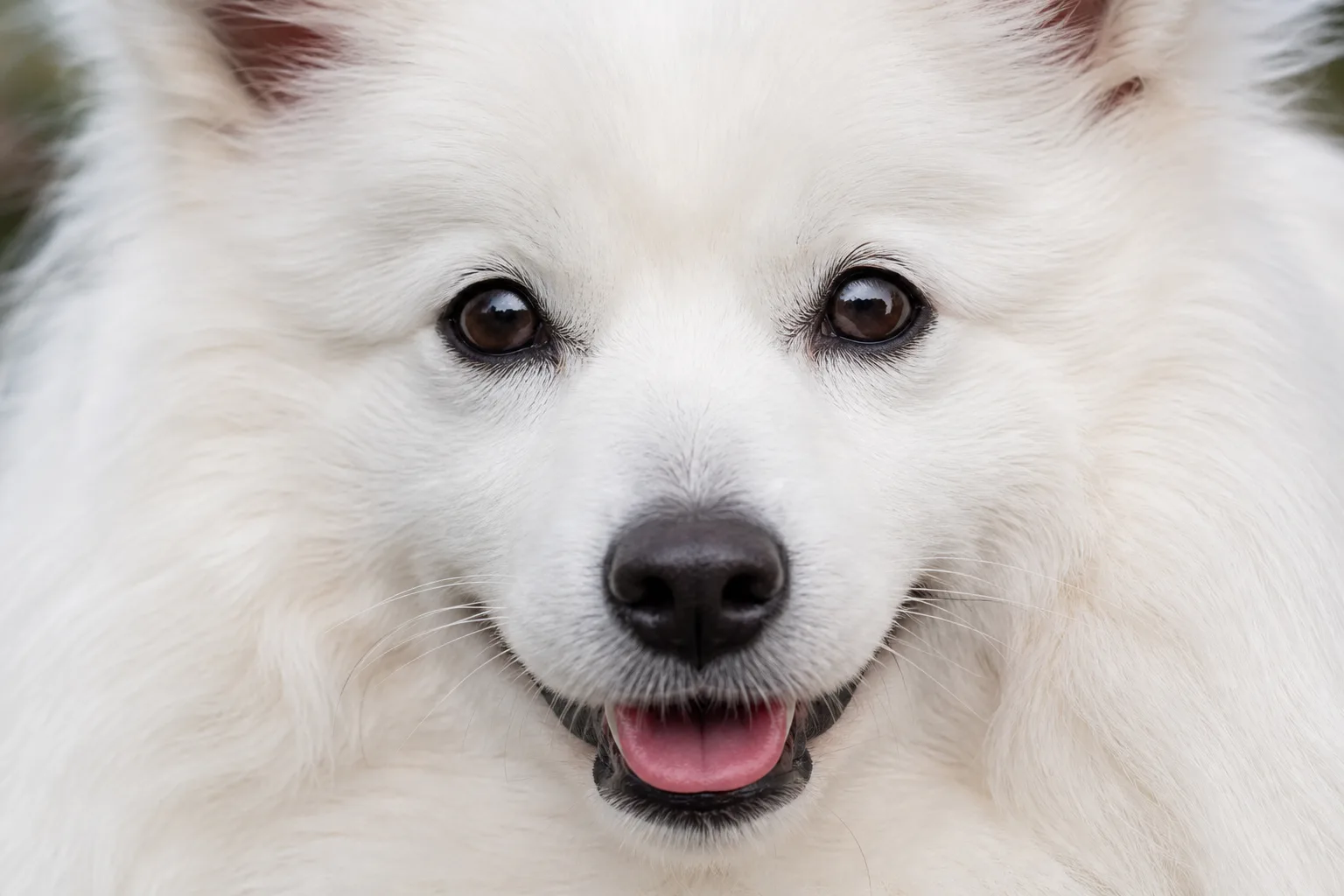
An Eskie has a wedge-shaped head, triangular erect ears, dark eyes, a plumed tail, and a compact, balanced body. Its coat is normally pure white or white with biscuit-cream shading. The breed is not a black-coated dog, although dark pigmentation can appear around the eyes, nose, and lips.
The thick double coat provides insulation but also produces substantial seasonal shedding. The outer coat stands away from the body, while the undercoat is dense and soft. Shaving is not an appropriate substitute for brushing because the coat helps protect the skin and regulate temperature.
Temperament and Behavior
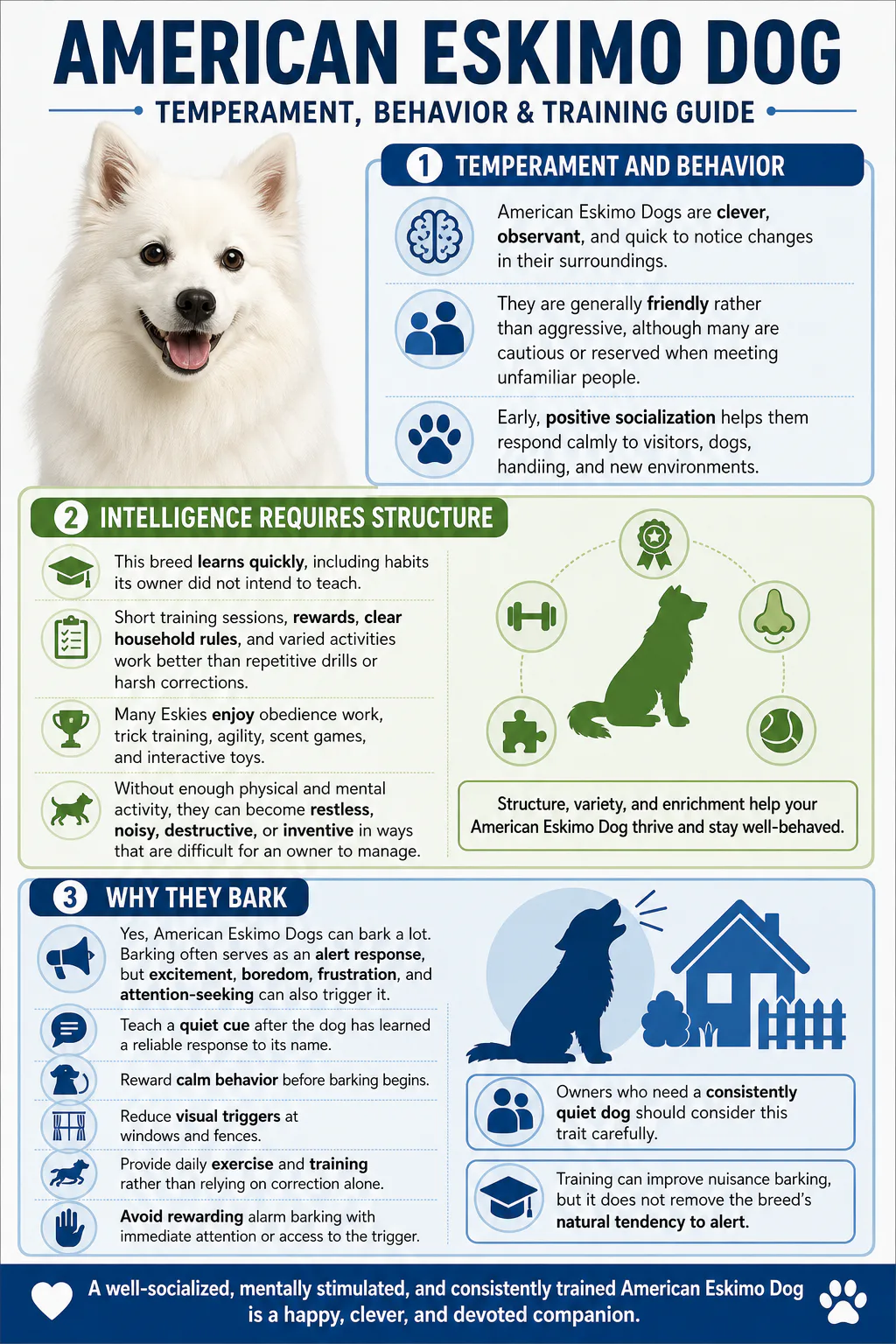
American Eskimo Dogs are clever, observant, and quick to notice changes in their surroundings. They are generally friendly rather than aggressive, although many are cautious or reserved when meeting unfamiliar people. Early, positive socialization helps them respond calmly to visitors, dogs, handling, and new environments.
Intelligence Requires Structure
This breed learns quickly, including habits its owner did not intend to teach. Short training sessions, rewards, clear household rules, and varied activities work better than repetitive drills or harsh corrections.
Many Eskies enjoy obedience work, trick training, agility, scent games, and interactive toys. Without enough physical and mental activity, they can become restless, noisy, destructive, or inventive in ways that are difficult for an owner to manage.
Why They Bark
Yes, American Eskimo Dogs can bark a lot. Barking often serves as an alert response, but excitement, boredom, frustration, and attention-seeking can also trigger it.
- Teach a quiet cue after the dog has learned a reliable response to its name.
- Reward calm behavior before barking begins.
- Reduce visual triggers at windows and fences.
- Provide daily exercise and training rather than relying on correction alone.
- Avoid rewarding alarm barking with immediate attention or access to the trigger.
Owners who need a consistently quiet dog should consider this trait carefully. Training can improve nuisance barking, but it does not remove the breed’s natural tendency to alert.
Exercise and Training
An American Eskimo Dog needs daily activity, but exercise should match its size, age, health, and individual energy level. Walks alone may not satisfy a dog that enjoys solving problems and interacting with its owner.
- Brisk walks and active play
- Short obedience or trick-training sessions
- Food puzzles and scent games
- Agility or other suitable dog sports
- Supervised play with compatible dogs
Use secure fencing and reliable identification because an alert, curious Eskie can chase movement or investigate beyond the property. Recall training is important, but no training makes unsupervised access near traffic safe.
Its working style differs from that of larger northern breeds. For example, an Alaskan Malamute was developed for heavy hauling, while the American Eskimo Dog is smaller and better suited to companion activities, alerting, and performance training.

Grooming Requirements
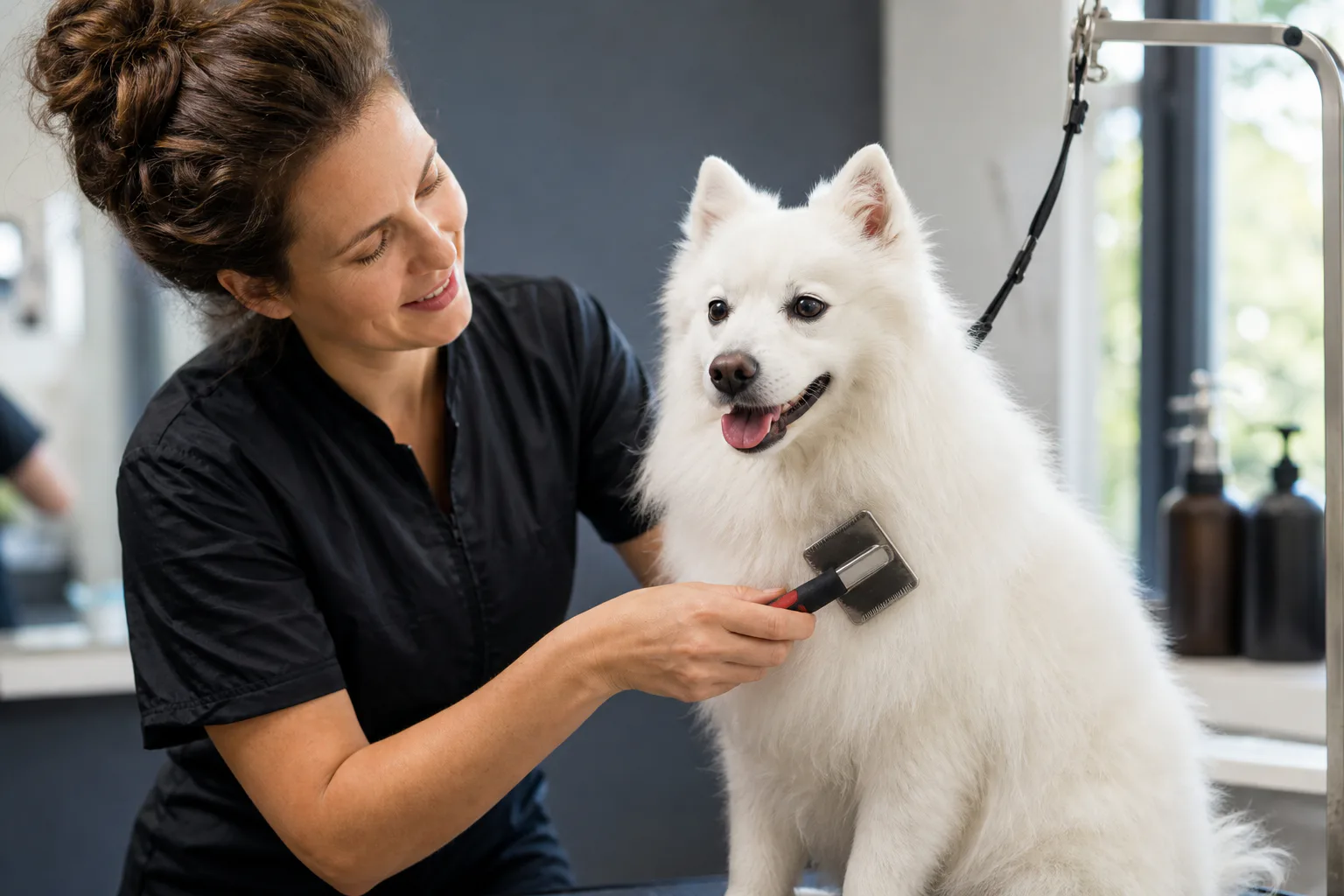
Regular brushing is central to American Eskimo Dog care. Brush through the coat several times a week, increasing attention during heavy shedding periods. This removes loose undercoat, reduces mats, and lets the owner check the skin for irritation, parasites, or unusual lumps.
- Brush the ruff, hindquarters, tail, and areas behind the ears carefully.
- Bathe when the coat is dirty or develops an odor, using a dog-safe shampoo.
- Trim nails regularly so they do not interfere with movement.
- Check ears and clean them only as directed by a veterinary professional.
- Brush teeth routinely with products made for dogs.
The coat is often described as self-cleaning because dirt can fall away as it dries, but that does not eliminate brushing or bathing. A professional groomer can help with routine maintenance, although the coat should not be shaved down.
Health and Veterinary Care
American Eskimo Dogs can live long lives when their weight, dental health, exercise, and preventive care are managed consistently. Like other purebred dogs, they can still inherit or develop health problems, so regular veterinary examinations and appropriate screening are important.
Potential concerns include dental disease, patellar luxation, hip problems, eye disease, and allergies. A veterinarian can recommend examinations, vaccinations, parasite prevention, dental care, and testing based on the dog’s age and history.
Ask a breeder for health records, screening information for the parents, and details about the puppy’s early socialization. A responsible breeder should also be willing to discuss the breed’s limitations rather than presenting every puppy as suitable for every home.
Weight deserves particular attention in the smaller varieties. Extra body weight increases strain on joints and can make heat, exercise, and mobility more difficult. Feed measured portions and adjust them with veterinary guidance as the dog grows or its activity changes.
Family Life and Compatibility
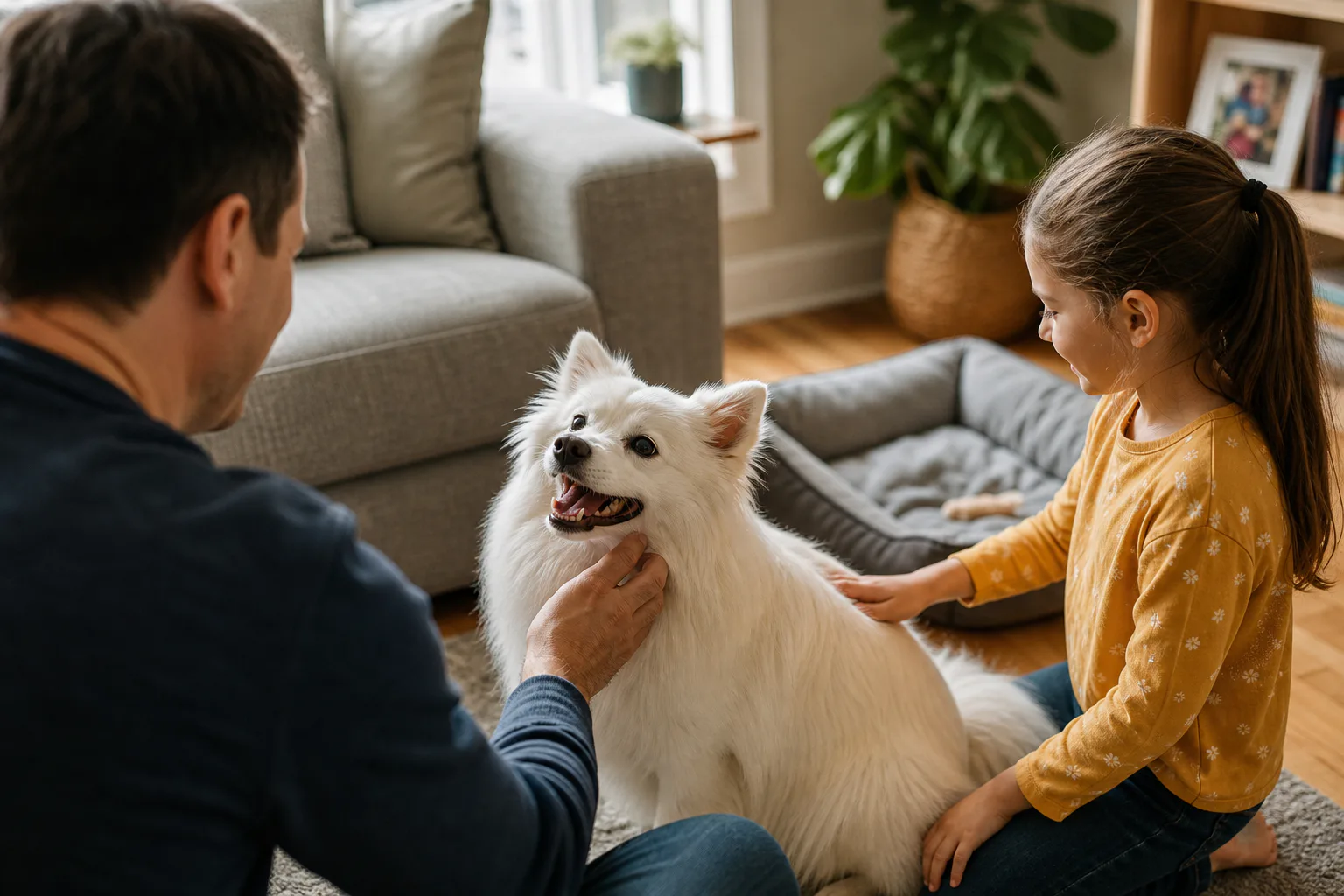
An American Eskimo can be an excellent family dog for an active household that wants an involved, trainable companion. Its playful nature often suits older children who understand how to interact respectfully with a dog.
Supervision is still essential with young children. The dog should have a quiet retreat, and children should not pull its coat, disturb it while eating, or treat it as a toy. The toy variety also requires especially careful handling because of its smaller body.
The breed can live with other pets when introductions are gradual and individual temperaments are compatible. Early socialization matters because an under-socialized Eskie can become wary, reactive, or overly vocal in unfamiliar situations.
People comparing companion breeds with more traditional working dogs should remember that a German Shepherd has different size, protection, exercise, and training demands. Breed labels alone do not predict the best match; the household’s schedule and experience matter more.
American Eskimo Dog Versus Husky
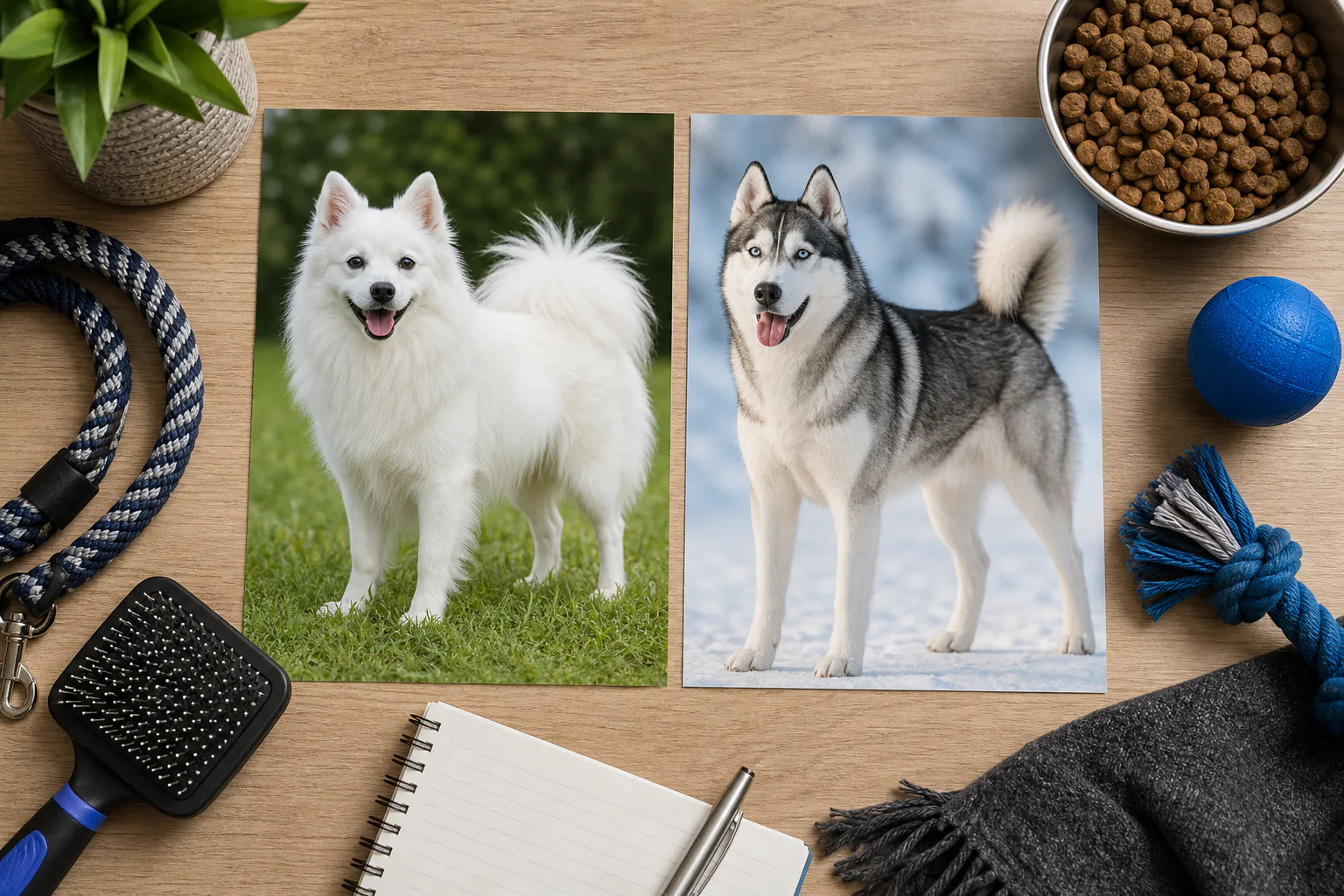
An American Eskimo Dog is not a husky. The breeds can look similar because both have upright ears, thick coats, curled or plumed tails, and northern-type features, but they have different histories, body types, and breed standards.
| Feature | American Eskimo Dog | Siberian Husky |
|---|---|---|
| Primary type | Spitz-type companion | Sled and working breed |
| Size range | Toy, miniature, and standard varieties | Medium-sized working dog |
| Typical coat colors | White or biscuit cream | Several colors and patterns |
| Common behavior | Alert, trainable, and vocal | Highly active, independent, and often vocal |
A husky generally demands more endurance-oriented activity, while an Eskie often channels its energy into training, play, and close interaction with people. Neither breed is a low-maintenance choice for an owner seeking a dog that needs little exercise or engagement.
Cost and Ownership Planning
The price of an American Eskimo Dog depends on factors such as the breeder’s practices, location, pedigree, size variety, age, and whether the dog comes from a rescue organization. The purchase price is only one part of ownership.
- Veterinary examinations and preventive care
- Food appropriate for the dog’s size and life stage
- Grooming tools or professional grooming
- Training classes and enrichment toys
- Crate, bedding, identification, and safety equipment
- Emergency savings or pet insurance premiums
Before responding to an American Eskimo Dog for-sale listing, verify vaccination and veterinary records, observe the dog’s living conditions, and ask how the breeder handles inherited health concerns. Avoid sellers who will not answer basic questions or who pressure you to make an immediate decision.
Frequently Asked Questions
Is an American Eskimo a good family dog?
Yes, it can be a good family dog for an active, attentive household. It is intelligent, playful, and affectionate, but its barking, shedding, training needs, and sensitivity require commitment. Homes with very young children need close supervision.
Do American Eskimo Dogs bark a lot?
They often do. American Eskimo Dogs are alert watchdogs, and barking is a natural part of their behavior. Consistent training, socialization, exercise, and management of triggers can reduce excessive barking.
What colors do American Eskimo Dogs have?
The accepted coat is white or white with biscuit-cream shading. The breed is not known for a solid black coat. Dark coloring is generally limited to features such as the nose, eye rims, and lips.
How long does an American Eskimo Dog live?
The breed commonly lives about 13 to 15 years. Longevity depends on genetics, preventive veterinary care, nutrition, dental care, healthy body weight, and safe daily activity.
How much does an American Eskimo Dog cost?
There is no single price for every American Eskimo Dog. Breeder quality, location, age, size variety, pedigree, and rescue status all affect the initial cost, while grooming, veterinary care, food, training, and supplies shape the long-term budget.
Is This Breed Right for You?
Choose an American Eskimo Dog if you want a bright, interactive companion and can provide daily activity, regular coat care, structured training, and tolerance for alert barking. It is a poor fit for a household seeking a quiet, low-shedding, independent dog.
Meet adult dogs when possible, speak openly with a reputable breeder or rescue organization, and assess the specific dog rather than choosing by appearance alone. For families prepared to engage with its mind and maintain its coat, the American Eskimo Dog can be a lively and devoted companion.
Its alertness also makes calm socialization especially important, much as it does with an Akita dog, although the two breeds differ substantially in size, independence, and overall handling requirements.