Shih-Poo Dog Guide: Temperament, Care, Health, and More
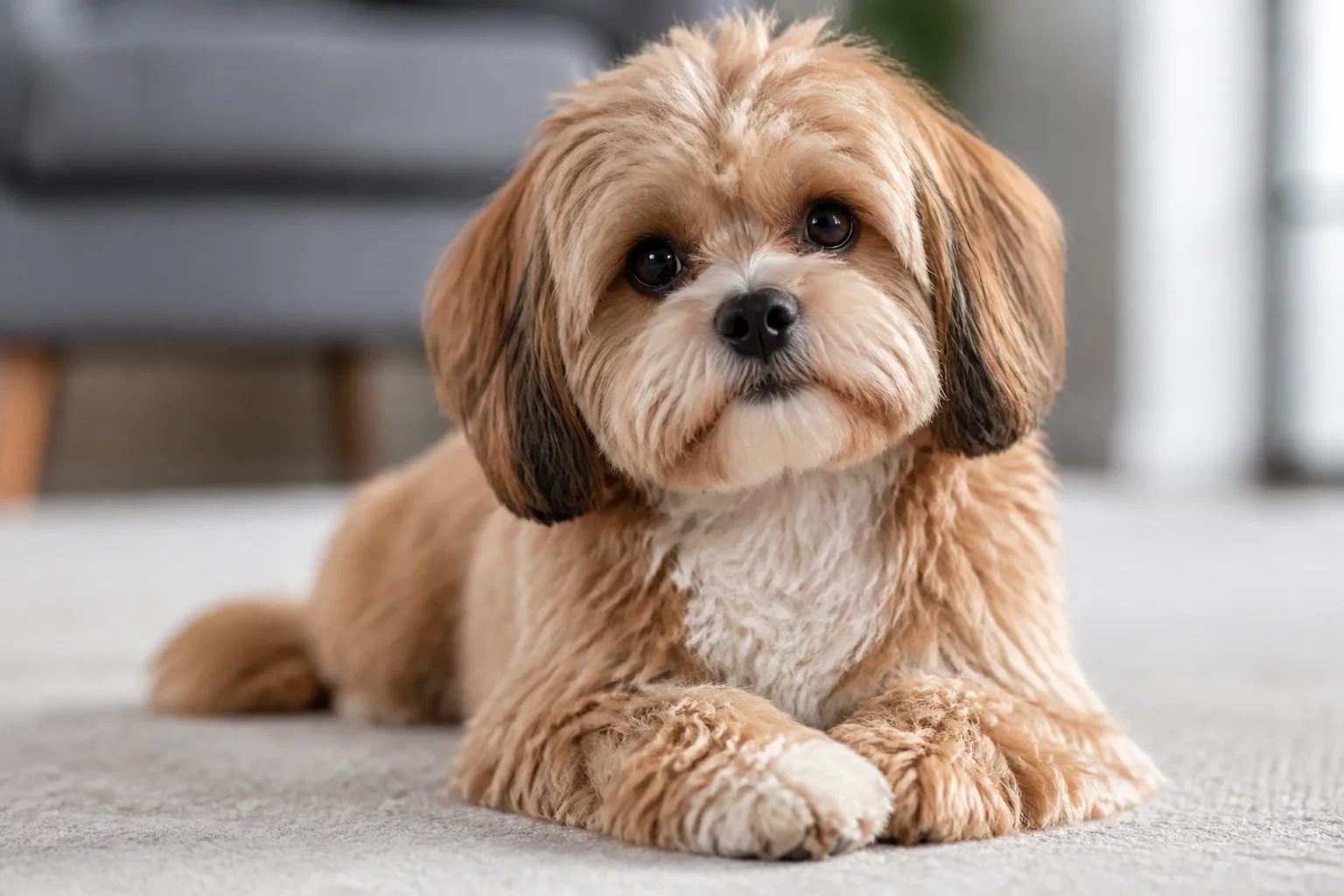
The Shih-Poo dog combines the companionable Shih Tzu with the bright Toy Poodle. This small crossbreed can vary considerably in appearance and personality, even among puppies from the same litter. Its teddy-bear look is only part of the decision. Daily companionship, regular coat care, patient training and preventive veterinary care are all part of owning one.
Shih-Poo Breed Facts at a Glance
| Attribute | Details |
|---|---|
| Identity | Shih Tzu × Toy Poodle crossbreed |
| Other name | Shoodle |
| Breed status | Designer hybrid; not an AKC purebred |
| Adult height | 8–18 inches |
| Adult weight | 8–18 pounds |
| Coat texture | Straight, silky, curly, wavy, or mixed |
| Coat colors | White, black, brown, cream, gold, gray, red, apricot, brindle |
| Shedding | Infrequent or low-shedding |
| Temperament | Affectionate, playful, social, intelligent, confident |
| Exercise need | About 30 minutes daily |
| Grooming need | Daily brushing; clipping every 4–8 weeks |
| Common health risks | Patellar luxation, dental disease, eye disorders |
| Lifespan | 10–15 years; some reach 15 years or more |
| Feeding pattern | Puppies: 3–4 meals; adults: 2–3 meals |
| Household fit | Apartments, older children, supervised multi-pet homes |
What Is a Shih-Poo?
A Shih-Poo is a designer crossbreed from a Shih Tzu and a Toy Poodle. Some breeders use a Miniature Poodle instead, which can produce a larger adult. The size of the parent dogs therefore matters more than the mix’s label. The Shih-Poo is also called a Shoodle.
Shih-Poos do not have a universally enforced breed standard and are not recognized as a standardized purebred breed. Registry paperwork does not guarantee good health, a particular temperament or ethical breeding practices.
Genetics can affect the dog’s face shape, coat, adult size, energy level and trainability. One puppy may inherit the Shih Tzu’s compact build and independent streak, while another may have the Poodle’s curls and quick learning. Many inherit a less predictable combination of both.
What Does a Shih-Poo Look Like?
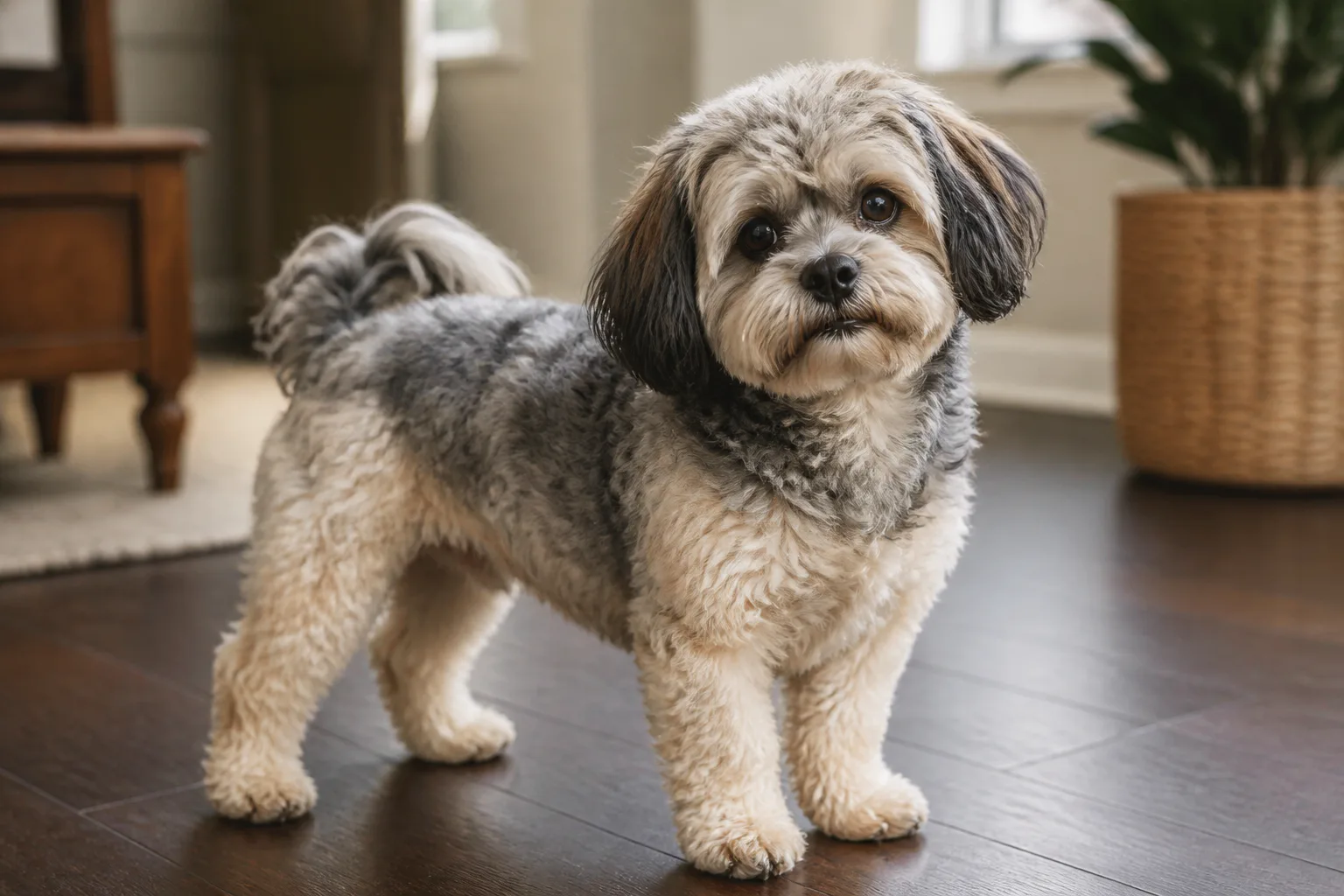
Most Shih-Poos are small dogs with rounded faces, expressive eyes, floppy ears and compact bodies. Adult height ranges from 8 to 18 inches, and adult weight ranges from 8 to 18 pounds. A Miniature Poodle parent can produce a dog outside the smaller end of that range.
The coat may be straight and silky, loosely wavy, tightly curly or mixed across the body. Possible colors include white, black, brown, cream, gold, gray, red, apricot and brindle. Low shedding does not make a Shih-Poo allergy-proof; dander and saliva can still trigger allergic reactions.
Coat texture determines much of the grooming work. Fine, straight hair can tangle around the ears and legs, while a dense curly coat can mat close to the skin. Ask to see both parents and inspect the puppy’s coat, eyes, bite, movement and skin rather than choosing based on color alone.
Shih-Poo Temperament and Behavior
Shih-Poos are generally affectionate, friendly, playful, social, intelligent and confident. Many enjoy staying close to their owners and taking part in household activities. Poodle ancestry can bring quick learning and alertness, while the Shih Tzu side may contribute independence, comic stubbornness and a preference for doing things on its own schedule.
- Companionship: Strong attachment is common. Long periods alone can contribute to separation anxiety or nuisance behavior.
- Activity: Playful bursts and short walks usually suit them better than sustained athletic work.
- Vocal behavior: Alert barking can develop when the dog is bored or anxious, or when barking is rewarded.
- Children: Older, respectful children are often a good match. Young children need close supervision because of the dog’s small size.
- Other pets: Cats and dogs can become suitable housemates after gradual introductions and positive socialization.
A Shih-Poo is not a good choice for a home where the dog would be alone most of the day. Teach calm independence early, keep routines predictable and avoid dramatic departures to reduce clingy behavior.
Shih-Poos often form close bonds with their families and may become unsettled if left alone for long periods. Their affectionate, adaptable temperament is similar to Cavapoo temperament, another popular small Poodle mix known for companionship and a gentle nature.
Training and Socializing a Shih-Poo
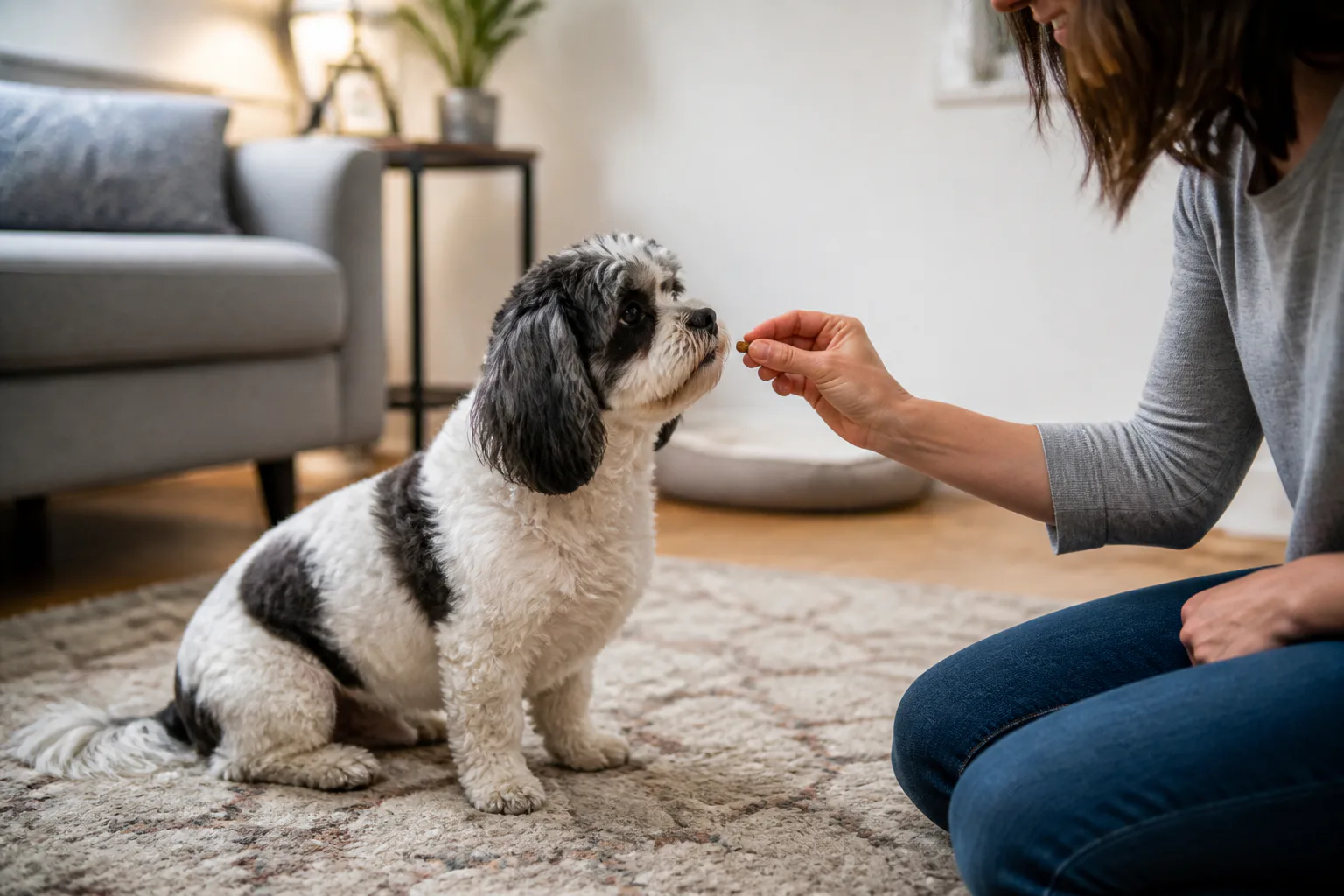
Start rewards-based training on the first day at home. Shih-Poos often learn quickly, but inconsistent rules, too much repetition or harsh corrections can increase resistance and make the dog avoid training.
- Teach its name, recall, hand targeting and calm handling in short sessions.
- Reward outdoor toileting immediately and keep a consistent schedule.
- Introduce visitors, household sounds, grooming tools, different surfaces and friendly animals gradually.
- Practice short periods alone while the dog is relaxed, increasing the time slowly.
- Interrupt barking with a calm cue and reward quiet behavior instead of shouting.
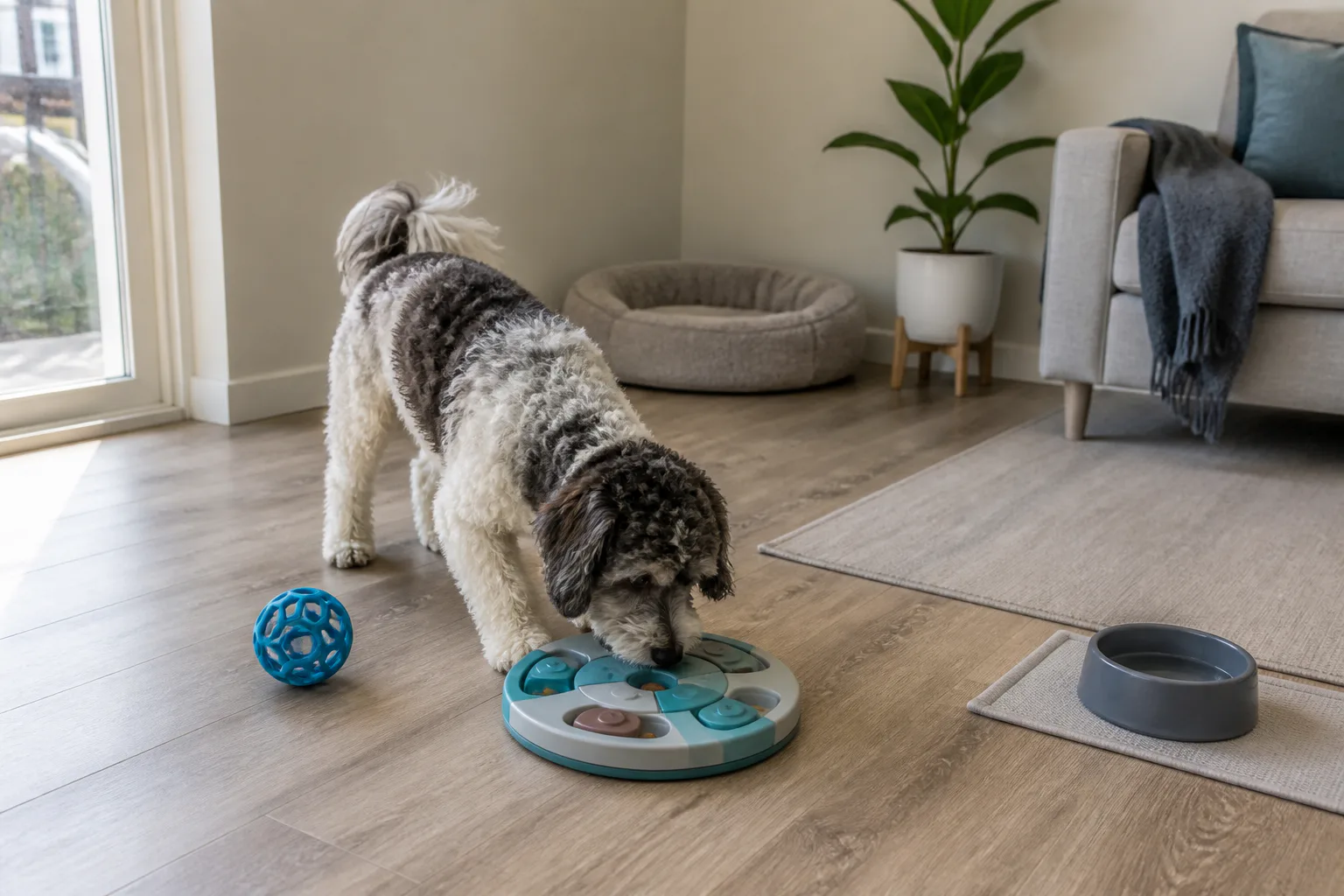
- Use food puzzles and simple trick training to give the dog’s intelligence a useful outlet.
Keep sessions positive and brief, usually five to ten minutes at a time. Early handling practice matters because brushing, ear care, tooth brushing, nail trims and professional grooming all require the dog’s cooperation.
Shih-Poos usually learn best in short, upbeat sessions with treats, praise and clear boundaries. Motivation can vary from dog to dog, so Cockapoo training traits provide a useful comparison: intelligence may make new skills easier to learn, while sensitivity or distractibility still call for patience and consistency.
Exercise and Enrichment Requirements
About 30 minutes of daily exercise is a reasonable starting point for a healthy adult Shih-Poo. Split that time between two or three short walks, or combine a walk with indoor play. Puppies and older dogs need routines adjusted for age, physical condition, weather and veterinary advice.
- Play gentle fetch in a clear, non-slip room.
- Hide small portions of food for supervised scent games.
- Rotate food puzzles and treat-dispensing toys.
- Practice obedience chains such as sit, touch, stay and recall.
- Take short social walks that allow calm sniffing.
Small dogs can still overheat, especially those with shorter muzzles or respiratory problems. Avoid strenuous activity in hot weather, watch for heavy panting or weakness, and provide water and a shaded place to rest.
Shih-Poos can thrive in apartments, but daily walks may not be enough to meet their need for mental stimulation and social interaction. Food puzzles, trick training and short play sessions provide extra enrichment, similar to the routine suggested by Schnoodle activity needs.
Shih-Poo Grooming and Dental Care
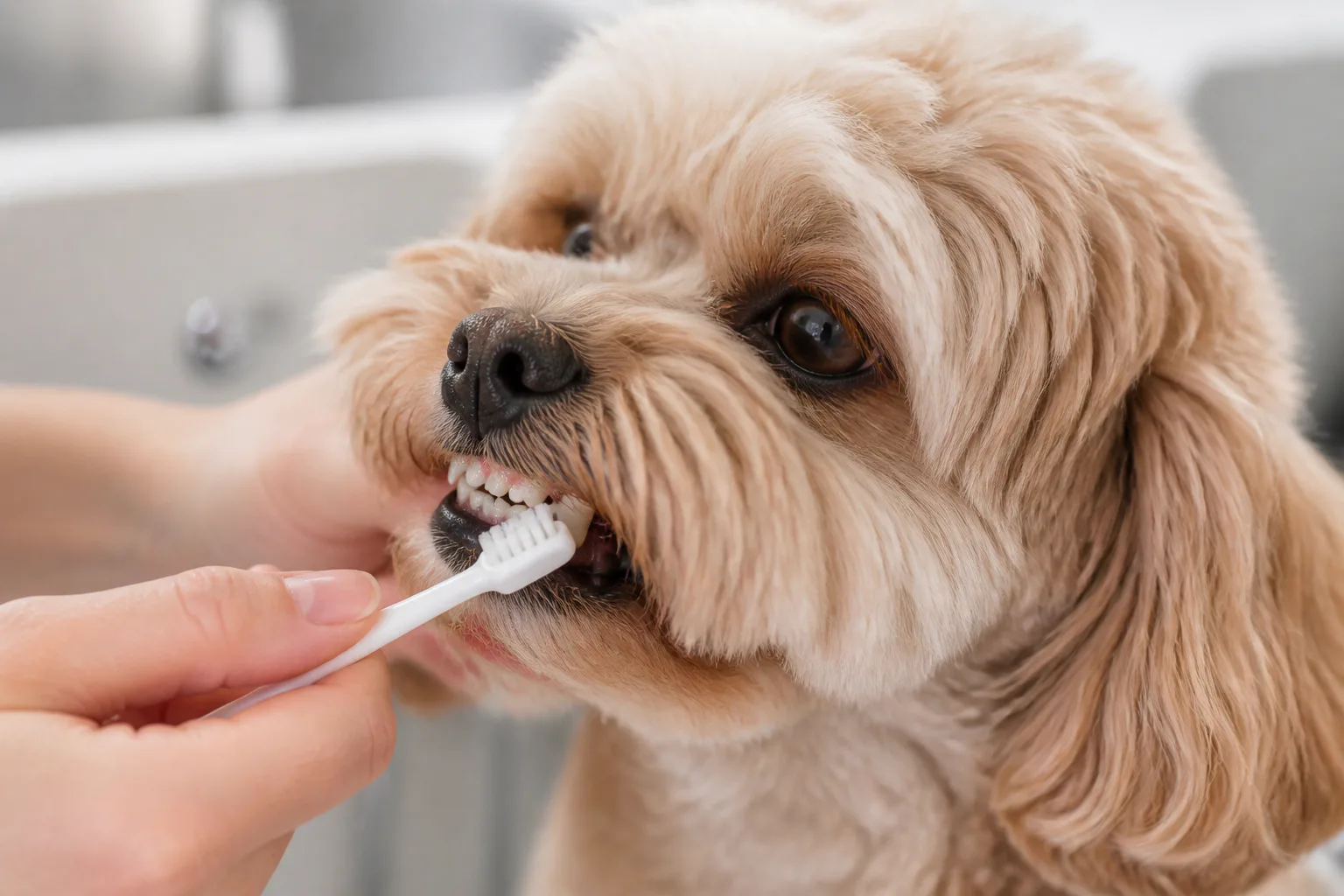
Daily brushing helps prevent mats and tangles, especially behind the ears, beneath the legs, around the collar and near the tail. A professional groomer usually clips the coat every four to eight weeks. Severe mats can make grooming painful and may require the coat to be shaved very short.
| Care task | Practical schedule |
|---|---|
| Brushing | Daily |
| Professional clipping | Every 4–8 weeks |
| Bathing | Up to a few times monthly |
| Tooth brushing | Several times weekly; daily preferred |
| Ear inspection | Weekly |
| Eye-area cleaning | As needed |
| Nail trimming | Every 2–4 weeks |
Bathing too often can dry the skin, so use a dog-safe shampoo and rinse thoroughly. Check the ears for odor, redness, discharge or excess wax. Gentle cleaning can help with tear staining, but persistent discharge, squinting, redness or rubbing needs veterinary attention.
A Shih-Poo sheds very little, but its coat still needs regular brushing. Loose hair can tangle into mats close to the skin. Families comparing similar companion crosses may find that Maltipoo grooming needs also need regular coat care, ear checks and scheduled trims.
Shih-Poo Health Problems to Know
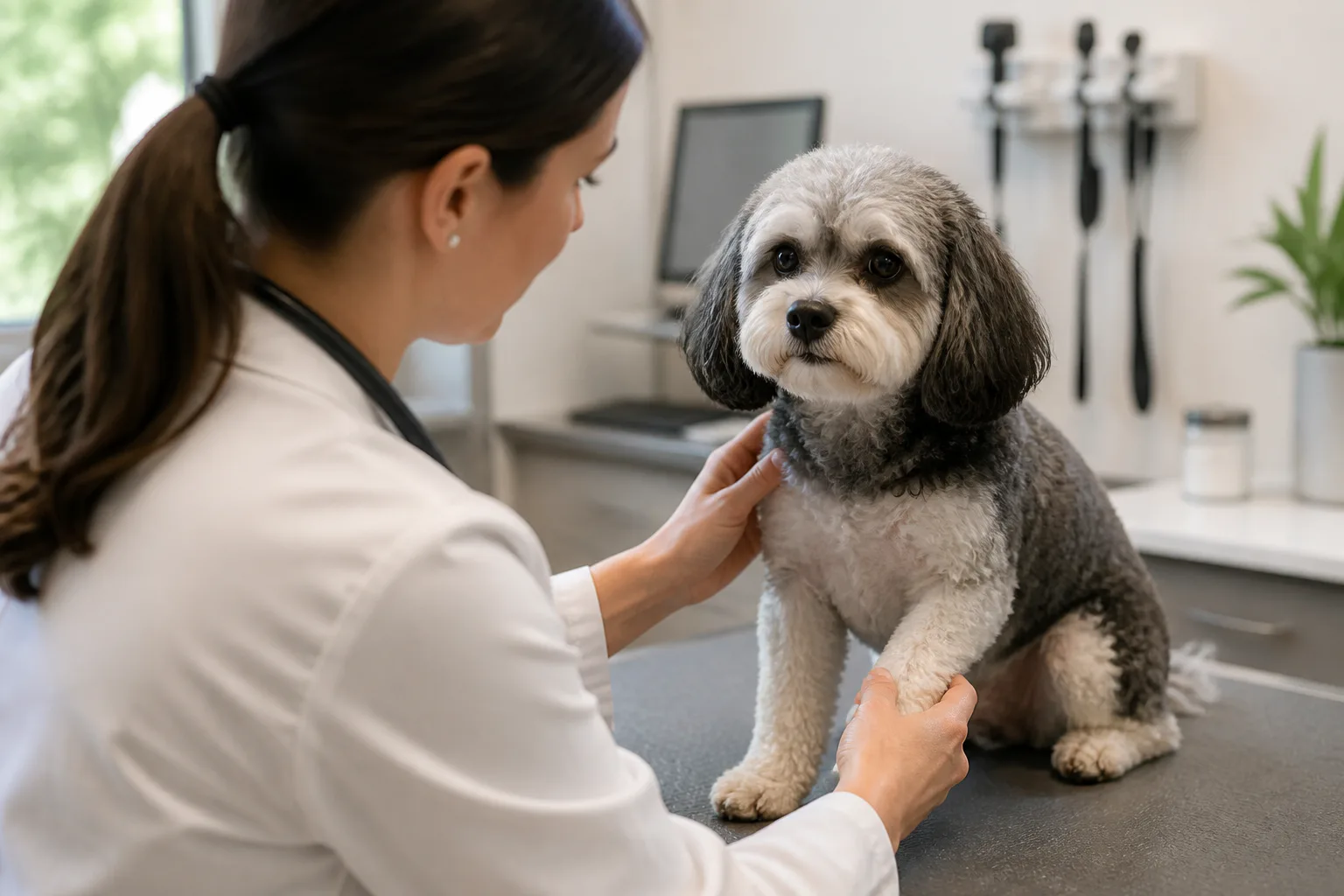
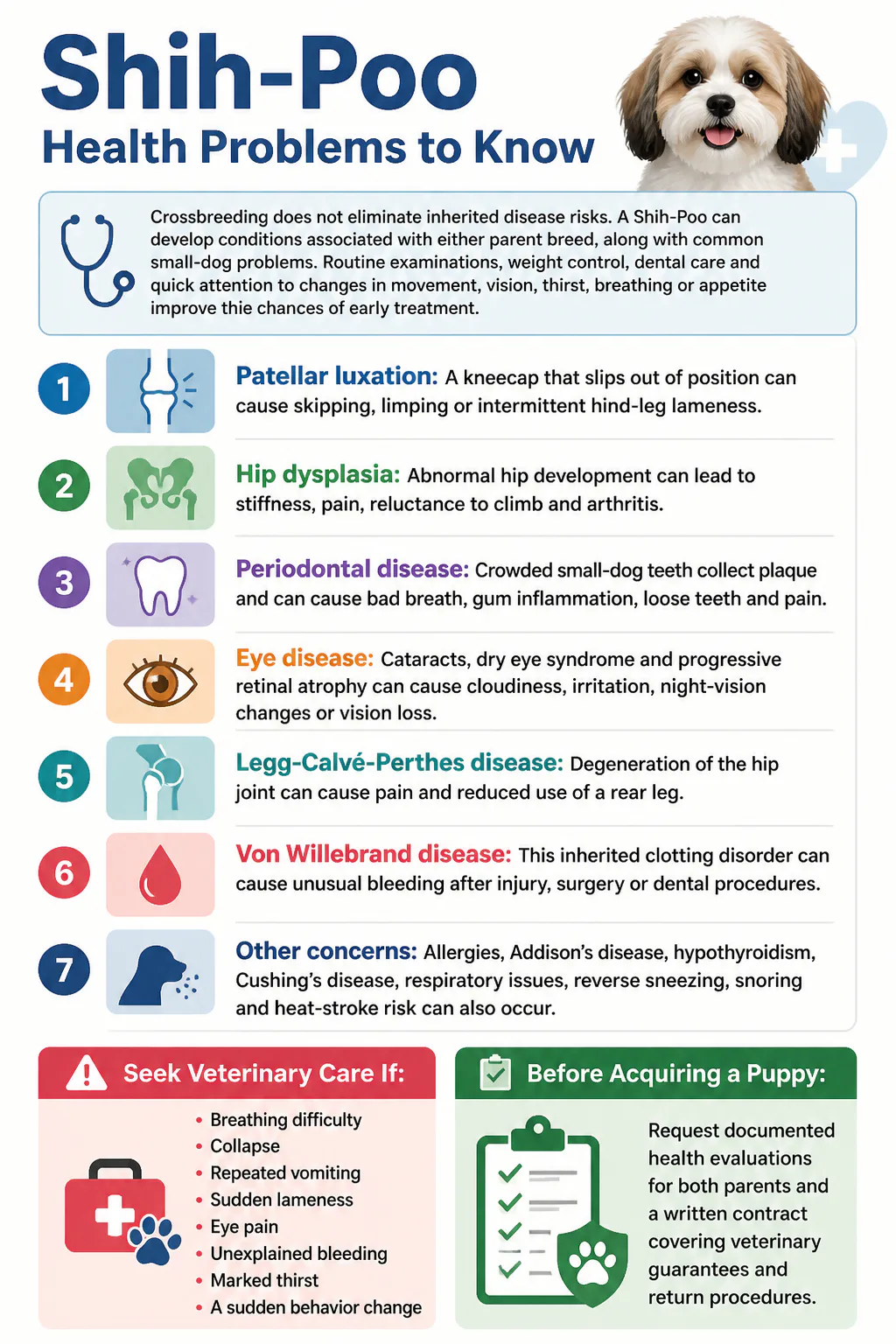
Crossbreeding does not eliminate inherited disease risks. A Shih-Poo can develop conditions associated with either parent breed, along with common small-dog problems. Routine examinations, weight control, dental care and quick attention to changes in movement, vision, thirst, breathing or appetite improve the chances of early treatment.
- Patellar luxation: A kneecap that slips out of position can cause skipping, limping or intermittent hind-leg lameness.
- Hip dysplasia: Abnormal hip development can lead to stiffness, pain, reluctance to climb and arthritis.
- Periodontal disease: Crowded small-dog teeth collect plaque and can cause bad breath, gum inflammation, loose teeth and pain.
- Eye disease: Cataracts, dry eye syndrome and progressive retinal atrophy can cause cloudiness, irritation, night-vision changes or vision loss.
- Legg-Calvé-Perthes disease: Degeneration of the hip joint can cause pain and reduced use of a rear leg.
- Von Willebrand disease: This inherited clotting disorder can cause unusual bleeding after injury, surgery or dental procedures.
- Other concerns: Allergies, Addison’s disease, hypothyroidism, Cushing’s disease, respiratory issues, reverse sneezing, snoring and heat-stroke risk can also occur.
Arrange veterinary care for breathing difficulty, collapse, repeated vomiting, sudden lameness, eye pain, unexplained bleeding, marked thirst or a sudden behavior change. Before acquiring a puppy, request documented health evaluations for both parents and a written contract covering veterinary guarantees and return procedures.
Feeding a Shih-Poo Properly
Feed a complete small-breed diet suited to the dog’s life stage, with kibble small enough to chew comfortably. Puppies generally need three or four meals per day, while adults usually eat two or three. Very small or young puppies can develop low blood sugar when meals are skipped, so regular feeding and prompt veterinary advice are important.
- Measure the daily ration instead of free-feeding.
- Adjust portions for body condition, age, activity and sterilization status.
- Keep treats within 10% of daily calories.
- Use part of the meal for training and puzzle toys.
- Monitor weight because extra pounds place stress on small joints and worsen heat intolerance.
A healthy body condition allows you to feel the ribs under a light covering, with a visible waist when viewed from above. A veterinarian can determine portions for a Shih-Poo with dental disease, food allergies, endocrine disease or a growth concern.
Is a Shih-Poo Right for You?
A Shih-Poo can live in an apartment when it receives enough exercise and companionship. Its small size makes indoor management easier, but it does not make the dog low-maintenance. Daily interaction, coat care, dental work, training, grooming appointments and veterinary expenses remain part of responsible ownership.
- Choose this mix if: you want a close companion, can provide daily attention, accept variable adult traits and can budget for regular grooming.
- Think carefully if: you work long shifts away from home, dislike barking or want a dog that needs little coat maintenance.
- With children: Pair the dog with older children who understand gentle handling. Never leave a small dog unsupervised with a young child.
- With pets: Use separate spaces, controlled introductions and supervised interactions until behavior is reliable.
- For first-time owners: The mix can suit patient owners, but its grooming and attachment needs should be planned before adoption.
A Shih-Poo can live comfortably in a small home, but its people-oriented nature means it still needs companionship, regular grooming and daily interaction. Keep those needs in mind when considering Morkie household fit and deciding whether this small companion cross fits your schedule and willingness to provide hands-on care.
Finding a Shih-Poo in the United States
| Source | Typical cost | What affects the price |
|---|---|---|
| Breeder puppy | $750–$4,500 | Lineage, coat color, health testing, location and breeder practices |
| Shelter adoption | $50–$300 | Organization, age and included veterinary care |
| Rescue adoption | $50–$300 | Organization, age and included veterinary care |
- Decide whether a puppy or adult dog fits your schedule, budget and tolerance for an unknown history.
- Search Adopt-a-Pet and Petfinder for Shih-Poos and Shih Tzu or Poodle mixes needing homes.
- Ask a breeder or rescue for veterinary records, vaccination details, behavior history and ownership paperwork.
- Meet the dog in person or use a verifiable live video call before sending money.
- Confirm the parent dogs’ health testing and observe their living conditions when buying from a breeder.
- Use a written contract that identifies the dog, payment terms, health provisions and return policy.
- Schedule a veterinary examination soon after bringing the dog home.
Registry paperwork does not prove breeding quality. Responsible breeders provide transparent health records, humane care and appropriate socialization, and they are willing to take the dog back if ownership fails.
FAQs
How big is a full-grown Shih-Poo?
Adult Shih-Poos generally stand 8 to 18 inches tall and weigh 8 to 18 pounds. A Miniature Poodle parent can produce a larger dog, so parent size is a better predictor than the mix’s name alone.
Does a Shih-Poo shed?
Shih-Poos are usually infrequent or low-shedding. Loose hair often remains trapped in the coat, which makes daily brushing necessary and does not make the dog hypoallergenic.
How long does a Shih-Poo live?
A Shih-Poo commonly lives 10 to 15 years, and some reach 15 years or more. Dental care, healthy body weight, preventive veterinary visits and responsible breeding support long-term health.
Are Shih-Poos good apartment dogs?
Yes. A Shih-Poo can live comfortably in an apartment with about 30 minutes of daily activity and regular mental stimulation. It is less suitable for a home where it would be isolated for long periods.
Are Shih-Poos easy to train?
They are intelligent and respond well to rewards, but some inherit a stubborn or willful streak. Short, consistent sessions and positive reinforcement work better than forceful corrections.
What does a Shih-Poo puppy cost?
Typical acquisition costs are:
- Breeder puppy: $750–$4,500.
- Shelter adoption: $50–$300.
- Rescue adoption: $50–$300.
Grooming, dental care, insurance, food and veterinary treatment continue throughout the dog’s life regardless of the acquisition cost.
Conclusion
A Shih-Poo suits someone who wants an affectionate small companion and can handle daily grooming, training, exercise and close social needs. Before committing, meet the dog or breeder, review health documentation and budget for routine care as well as unexpected veterinary treatment.