Sheepadoodle Dog Guide: Size, Care, Temperament & Health
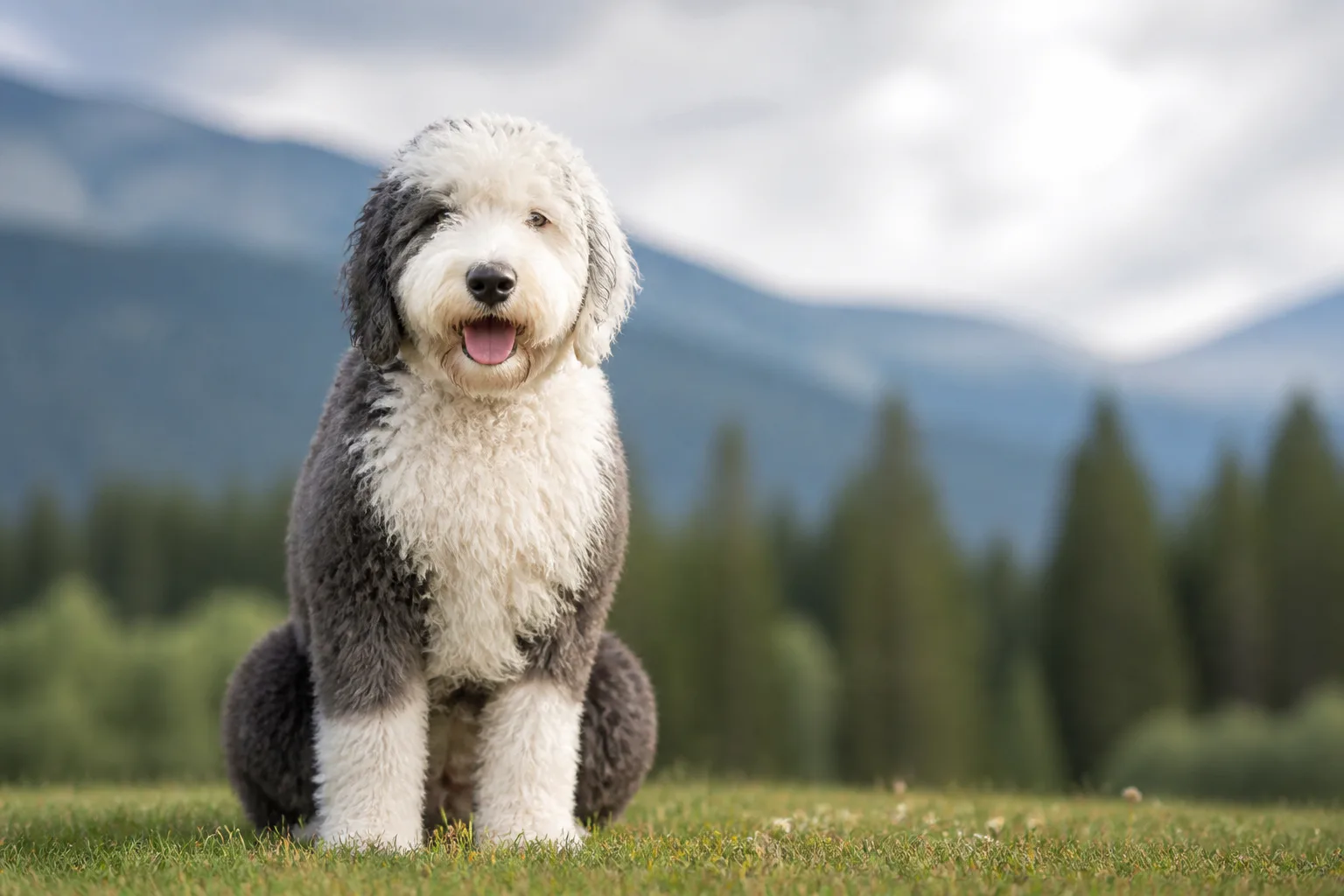
A Sheepadoodle Dog combines the loyal, playful nature of the Old English Sheepdog with the intelligence and trainability of the Poodle. The result can be a sociable, engaging companion, but Sheepadoodles also need regular grooming, daily exercise, and consistent training. The right fit depends on the dog’s adult size, coat type, health testing, and your household routine.
Sheepadoodle Breed Profile at a Glance
| Attribute | Details |
|---|---|
| Breed type | Old English Sheepdog–Poodle cross |
| Origin | United States; 1980s–1990s |
| Parent breeds | Old English Sheepdog; Standard Poodle |
| Smaller parent option | Miniature Poodle |
| Standard size | 16–22 inches; 65–85 pounds |
| Small standard or moyen size | 35–60 pounds |
| Miniature size | 15–20 inches; 25–45 pounds |
| Micro size | 20–40 pounds |
| Coat | Long, thick, wavy fur |
| Coat colors | Black and white; gray; blue; cream |
| Temperament | Intelligent, affectionate, playful, sensitive |
| Exercise | 1–2 hours daily |
| Grooming | Daily or every-other-day brushing; clipping every 6–8 weeks |
| Shedding | Generally low-shedding; individual variation |
| Health concerns | Bloat; GDV; hip dysplasia; PRA; von Willebrand’s disease |
| Lifespan | 12–15 years |
| Ownership costs | $500–$1,000 initial supplies and veterinary care |
What Is a Sheepadoodle Dog?
A Sheepadoodle is a mixed-breed dog created by crossing an Old English Sheepdog with a Poodle. The Standard Poodle is the most common Poodle parent. It contributes intelligence, athleticism, and a working-dog background. Breeders may use a Miniature Poodle to produce a smaller Sheepadoodle.
The Old English Sheepdog contributes loyalty, playfulness, and herding instincts. Sheepadoodles became more widely known in the United States during the 1980s and 1990s, but they are not a standardized purebred with predictable breed-wide traits. Puppies from the same litter can differ in adult size, coat texture, shedding, energy, and sensitivity.
Like other Poodle mixes, Sheepadoodles can inherit different coat types, energy levels and personality traits from each parent breed. The same mix of Poodle and non-Poodle traits can be seen in Labradoodle traits.
Sheepadoodle Size and Appearance
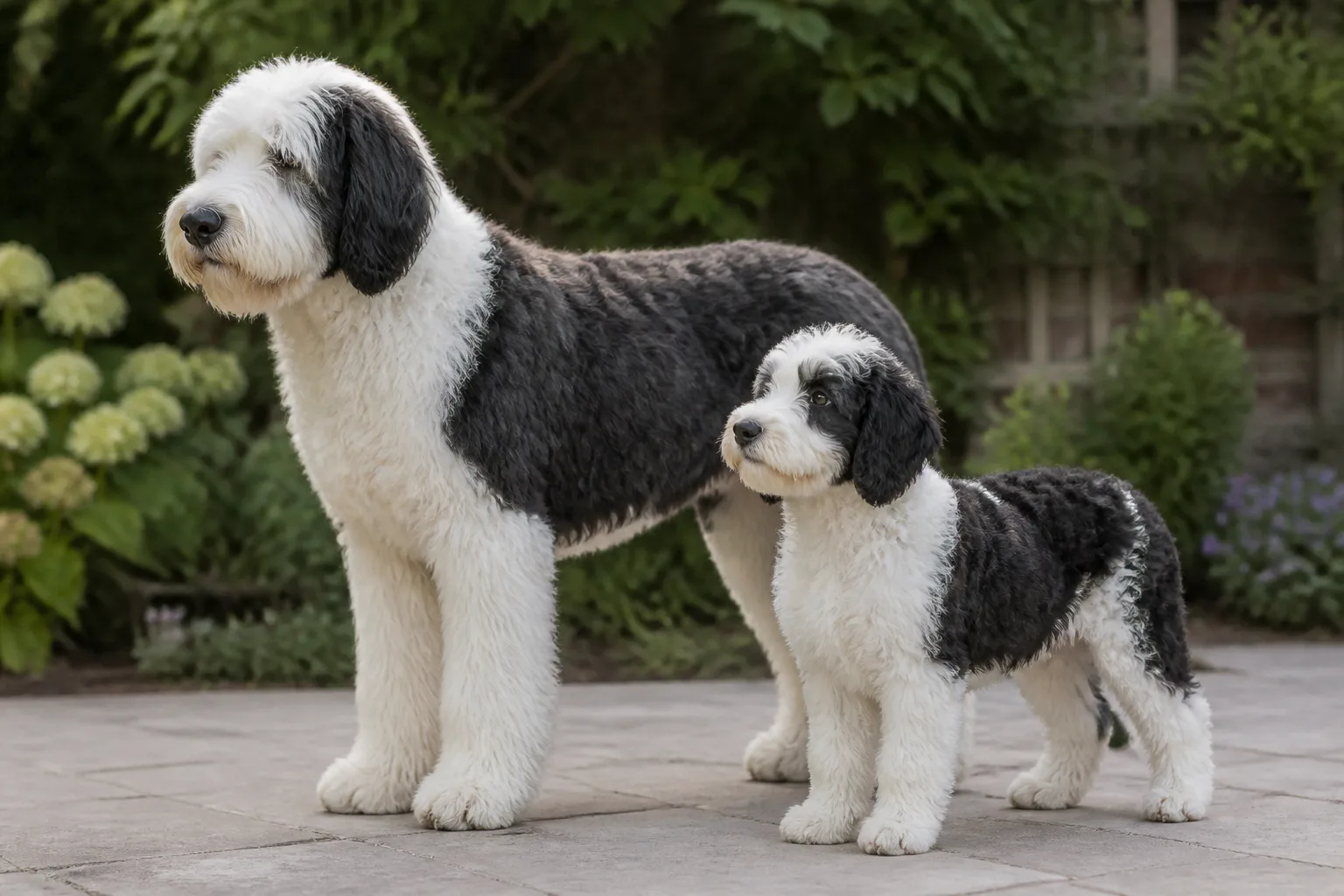
Adult size depends heavily on the Poodle parent and the dog’s inherited genetics. A Standard Sheepadoodle can weigh 65–85 pounds and stand 16–22 inches tall. A Miniature Sheepadoodle generally weighs 25–45 pounds and stands 15–20 inches. Breeders use small standard, moyen, and micro labels inconsistently, so the parents’ actual weights are more useful than the label alone.
- Coat: Long, dense, and usually wavy. Some dogs have tighter curls or a straighter texture.
- Colors: Black and white is common, while gray, blue, and cream also occur.
- Tail: A natural bobtail or a long tail.
- F1 coat: A first-generation Old English Sheepdog–Poodle cross with more variation in texture and shedding.
- F1B coat: A Sheepadoodle crossed back to a Poodle. The coat is often curlier, but this does not guarantee low shedding.
Many Sheepadoodles have a broad head, floppy ears, dark eyes, and a rounded, teddy-bear appearance. Coat color can fade as the dog matures, especially when the dog carries gray or blue genetics. Health, stable temperament, and realistic adult-size expectations matter more than appearance.
Sheepadoodle Temperament and Behavior
Sheepadoodles are generally affectionate, social, playful, and eager to join household activities. Their Poodle heritage supports fast learning, while their Old English Sheepdog heritage can create a strong attachment to family members and an instinct to monitor movement around the home.
- Intelligence supports obedience, tricks, scent work, and agility training.
- Sensitivity makes harsh corrections counterproductive and may lead to avoidance or anxiety.
- Herding instincts can appear as chasing, blocking, circling, or heel-nipping.
- Barking may increase around visitors, unfamiliar sounds, boredom, or separation.
- Early socialization helps dogs respond calmly to people, other dogs, handling, traffic, and new environments.
These dogs often suit active families that want an involved companion, but their social nature can make long periods alone difficult. Teach children to handle them respectfully and supervise young dogs around small children. A large, enthusiastic puppy can knock a child over without showing aggression.
Sheepadoodles are affectionate, but those with stronger herding instincts may also try to control the movement of people or other pets. Families can compare these traits with Aussiedoodle temperament, another dog shaped by an intelligent, energetic herding parent.
Daily Exercise and Training Needs
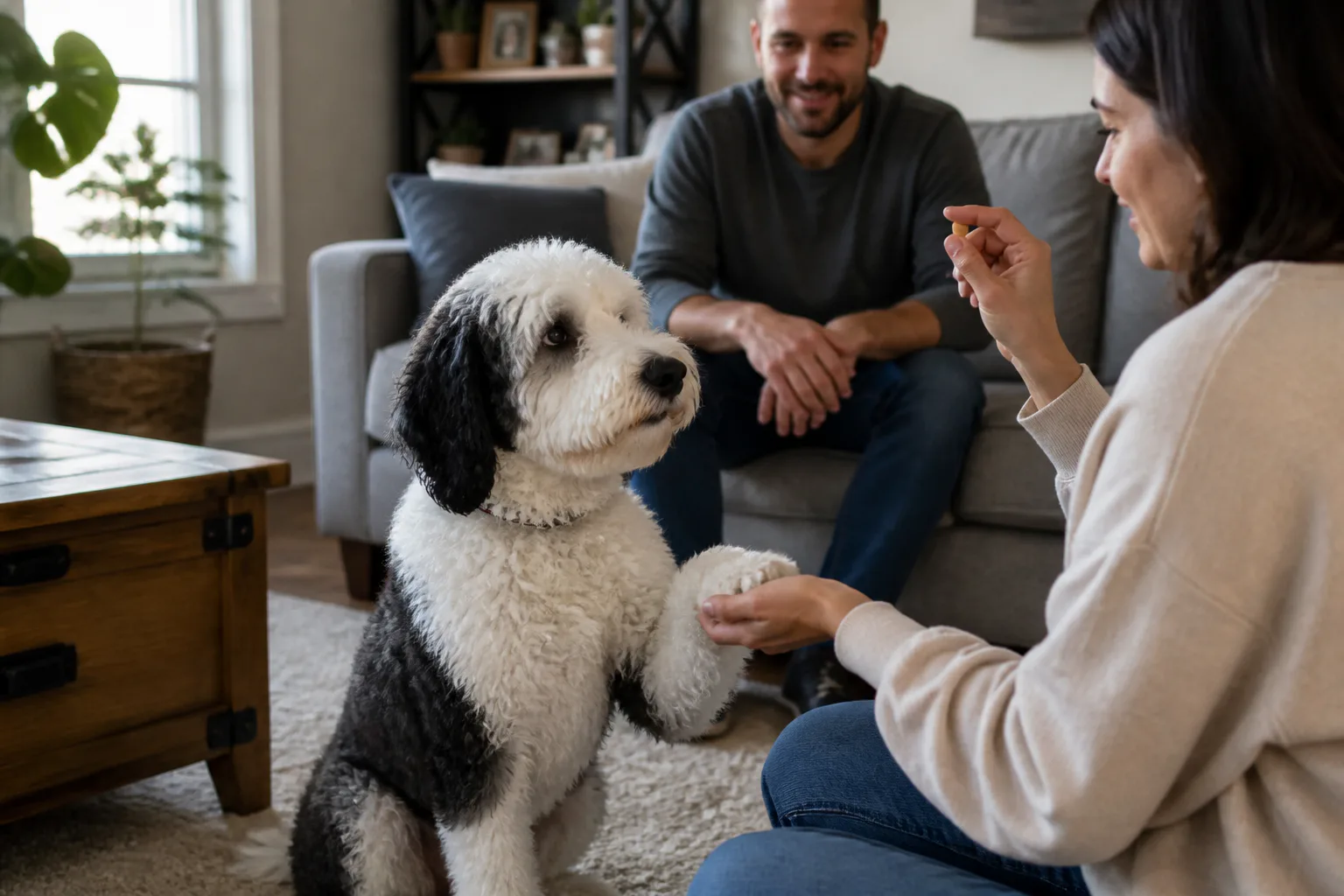
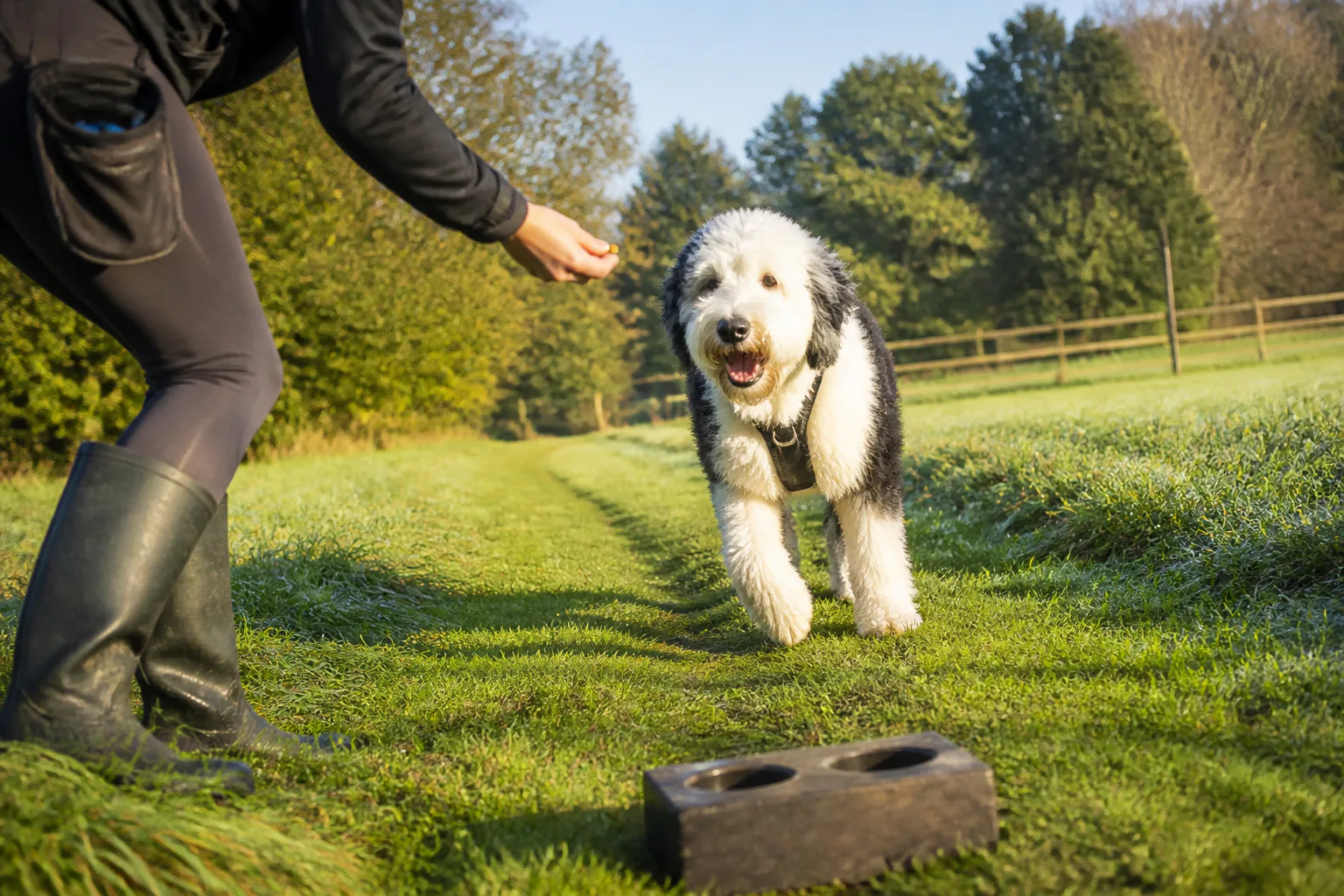
A healthy Sheepadoodle generally needs one to two hours of daily physical activity, divided between walks, play, and purposeful training. Mental stimulation matters as much as physical exercise. Without enough to do, an intelligent dog may resort to barking, chewing, counter-surfing, or herding people.
- Start the day with a predictable walk, toilet break, and short training session.
- Use fetch, tug, swimming, scent games, or controlled running for physical activity.
- Practice leash manners and recall in secure areas before allowing off-leash freedom.
- Introduce handling, grooming tools, vehicle travel, and veterinary routines during puppyhood.
- Use food puzzles, pattern games, and short obedience sessions for mental stimulation.
- Introduce a crate as a calm resting space and combine it with regular toilet trips.
A crate can create safe downtime and support house-training, but it should not replace exercise or become prolonged daily confinement. Reward-based training, consistent household rules, and early puppy classes are valuable for this sensitive and powerful cross.
Walks alone may not be enough for a Sheepadoodle with a strong working instinct. Short training sessions, scent games and structured play give your dog more to do and can help prevent boredom. Learning about Australian Shepherd needs helps explain why herding-influenced dogs often do best when exercise combines movement with a task.
Sheepadoodle Grooming and Shedding
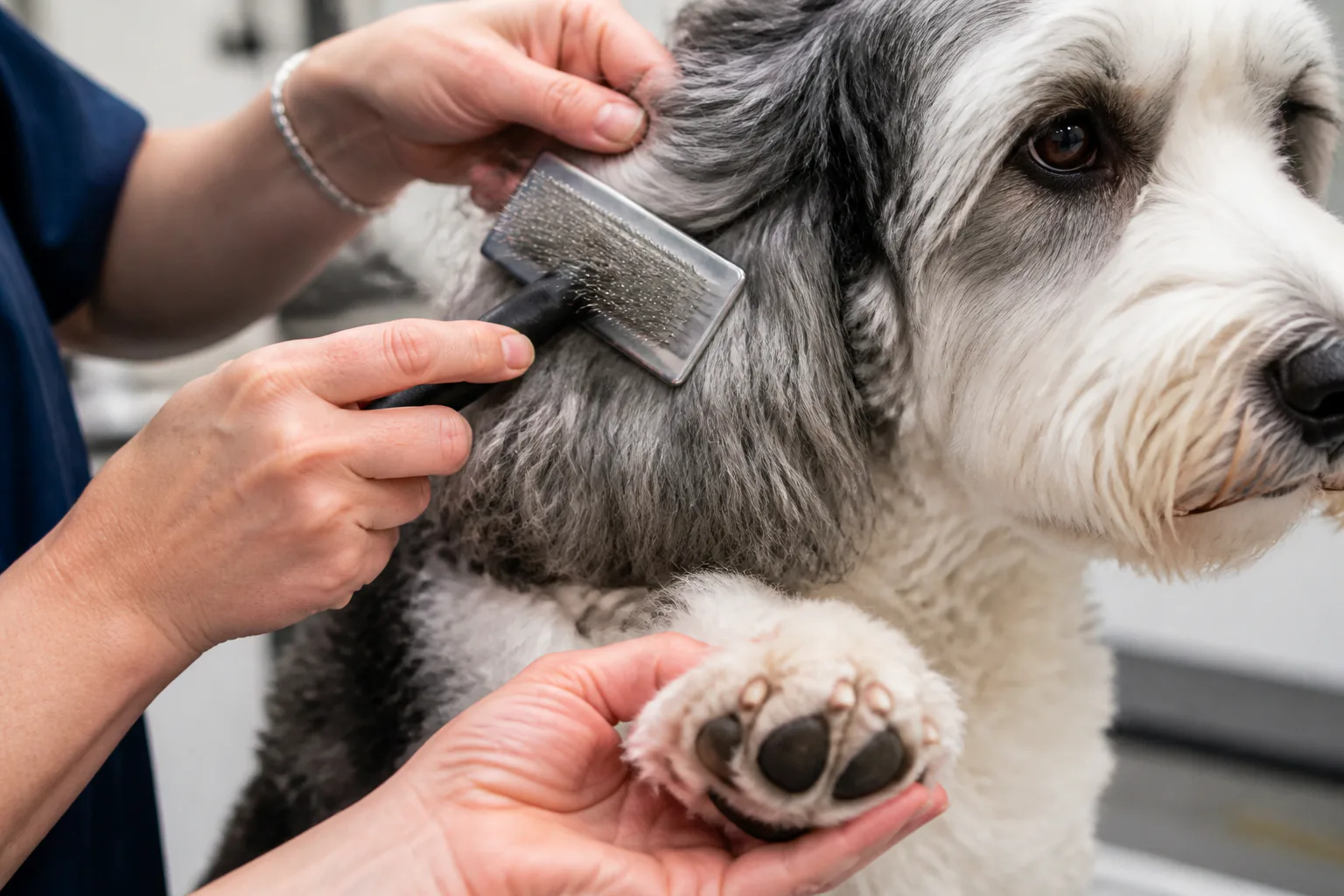
The Sheepadoodle coat needs regular maintenance from puppyhood through adulthood. Daily or every-other-day brushing helps prevent compacted mats, particularly behind the ears, under the legs, around the collar, and at the tail. Mats can pull the skin, trap moisture, and make professional grooming painful.
- Brush in sections down to the skin instead of only smoothing the outer coat.
- Check the ears regularly because dense hair and floppy ear structure can retain moisture.
- Trim the nails routinely and introduce paw handling before the dog becomes large.
- Schedule professional clipping every six to eight weeks.
- Use a professional groomer for bathing, drying, clipping, and severe tangles.
Low-shedding does not mean allergy-free or maintenance-free. Some Sheepadoodles shed noticeably, and allergens come from skin, saliva, and environmental debris as well as loose hair. If someone in the household has allergies, spend time with mature dogs before choosing a puppy.
Although Sheepadoodles may not shed heavily, their soft, dense coats can trap loose hair and mat quickly without regular brushing. Their grooming needs are similar to Schnoodle coat care: both mixes need regular brushing, careful trimming and professional grooming.
Sheepadoodle Health and Lifespan
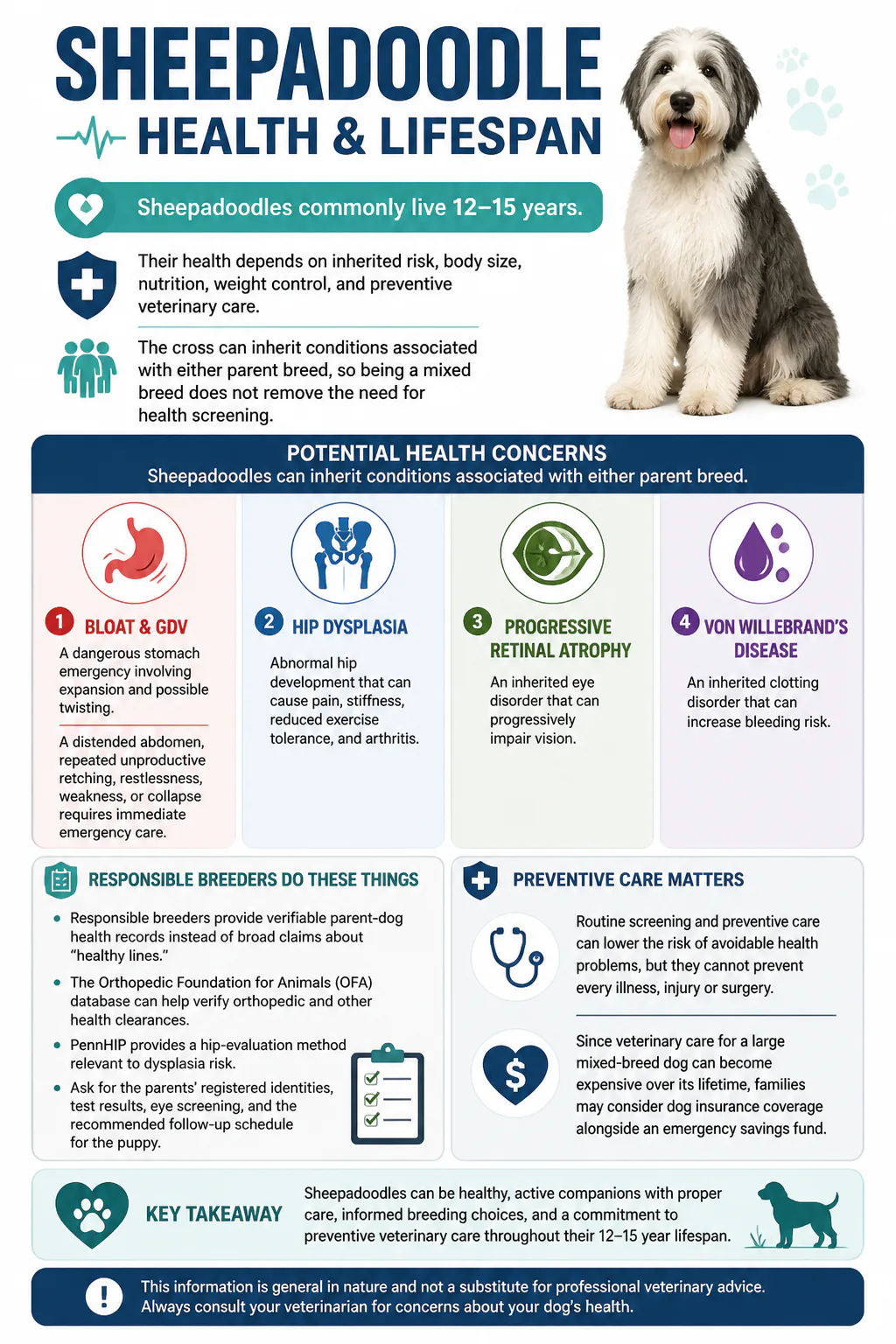
Sheepadoodles commonly live 12–15 years. Their health depends on inherited risk, body size, nutrition, weight control, and preventive veterinary care. The cross can inherit conditions associated with either parent breed, so being a mixed breed does not remove the need for health screening.
- Bloat and GDV: A dangerous stomach emergency involving expansion and possible twisting. A distended abdomen, repeated unproductive retching, restlessness, weakness, or collapse requires immediate emergency care.
- Hip dysplasia: Abnormal hip development that can cause pain, stiffness, reduced exercise tolerance, and arthritis.
- Progressive retinal atrophy: An inherited eye disorder that can progressively impair vision.
- Von Willebrand’s disease: An inherited clotting disorder that can increase bleeding risk.
Responsible breeders provide verifiable parent-dog health records instead of broad claims about “healthy lines.” The Orthopedic Foundation for Animals (OFA) database can help verify orthopedic and other health clearances. PennHIP provides a hip-evaluation method relevant to dysplasia risk. Ask for the parents’ registered identities, test results, eye screening, and the recommended follow-up schedule for the puppy.
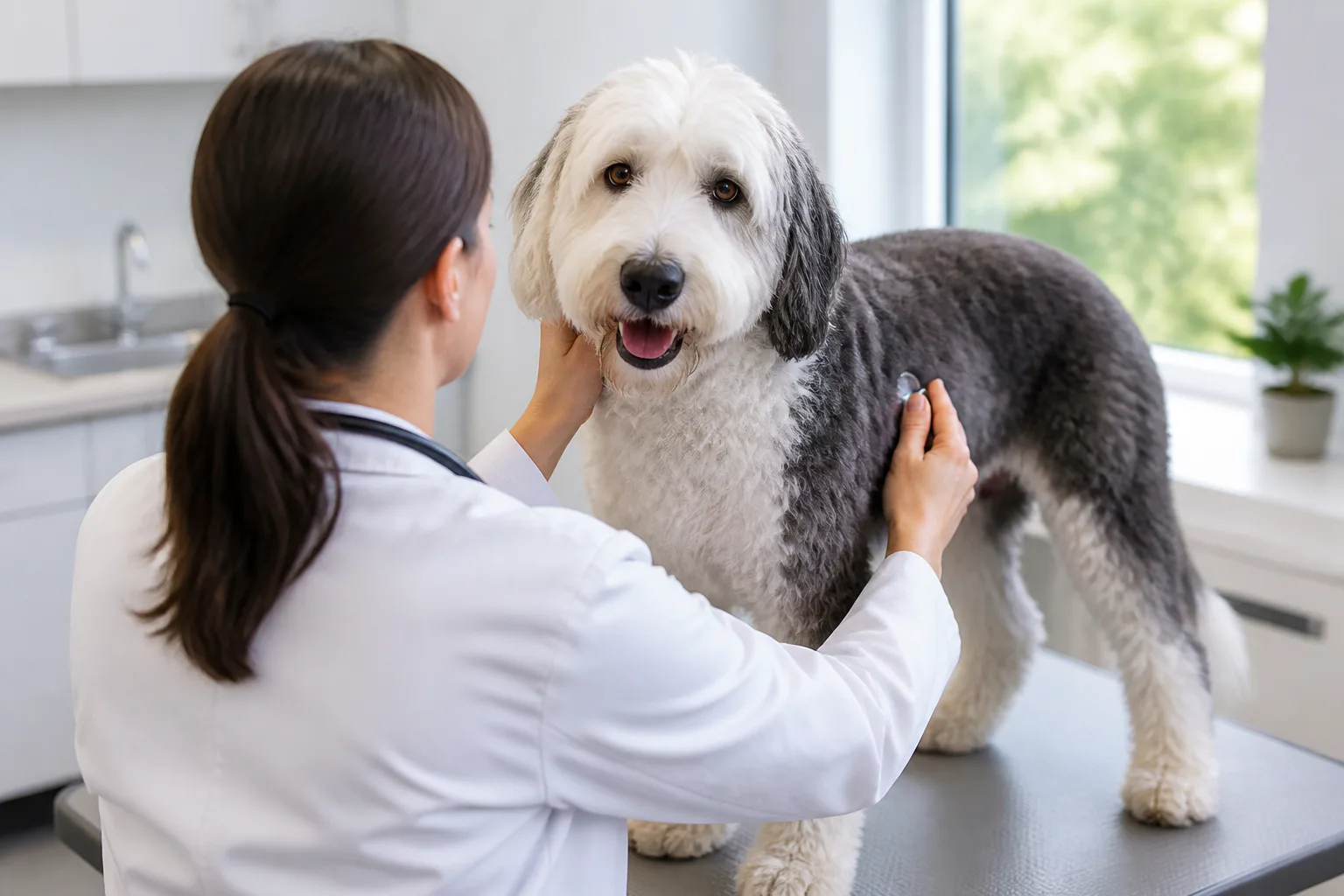
Routine screening and preventive care can lower the risk of avoidable health problems, but they cannot prevent every illness, injury or surgery. Since veterinary care for a large mixed-breed dog can become expensive over its lifetime, families may consider dog insurance coverage alongside an emergency savings fund.
Sheepadoodle Cost and Adoption Options
Sheepadoodle puppy prices range from $1,500 to $4,000, with some merle puppies priced above $4,000. A high price does not prove responsible breeding. Health testing, contracts, rearing conditions, and lifetime support matter more than color premiums.
| Expense | Estimated amount | Timing |
|---|---|---|
| Rescue adoption fee | $150–$650 | At adoption |
| Supplies and initial veterinary care | $500–$1,000 | First year |
| Professional grooming | $800–$1,200 | Annual estimate |
| Food and preventatives | $1,000–$1,500 | Annual estimate |
| Full-size haircut and bath | Approximately $90 plus tip | Per appointment |
| Bath-only appointment | Approximately $50 | Per appointment |
Adoption can reduce the initial expense and gives you the chance to assess an adult dog’s size and personality. Petfinder helps locate Sheepadoodles and Sheepadoodle mixes through shelters and rescues. Doodle Rock Rescue focuses on doodle placements, while IDOG Rescue specializes in doodle and Poodle-mix adoptions. Rescue applications can include a $10–$50 fee, an interview, veterinary references, and a home check.
Is a Sheepadoodle Right for You?
Choose this cross only if its daily care fits your schedule and budget for many years. An appealing coat and friendly personality do not reduce the work involved in caring for a large, energetic dog that needs regular human interaction.
- Time: You can provide daily exercise, training, companionship, and structured rest.
- Grooming budget: You can pay for professional appointments every six to eight weeks and brush the coat between visits.
- Living space: Your home can accommodate the dog’s adult size and movement needs.
- Physical control: Every handler can safely manage a 65–85-pound dog on leash.
- Family plans: Children and visitors can follow consistent rules for greetings and handling.
- Allergies: Everyone in the household understands that low-shedding does not mean hypoallergenic.
An apartment can work for an individual Sheepadoodle with enough outdoor activity and calmness training, but a yard does not replace interaction. Homes seeking a quiet, independent, low-maintenance dog should consider another type of companion.
How to Find One Responsibly
Whether you choose a breeder or rescue, treat the decision as a health and welfare matter rather than a fast online purchase.
- Decide whether your household can support the expected adult size, grooming schedule, and exercise level.
- Ask breeders for parent identities, OFA records, PennHIP results, eye testing, disease screening, and a written contract.
- Visit the breeding environment or arrange a live video tour showing the mother, puppies, housing, and daily care.
- Review vaccination, deworming, microchip, veterinary, return, and spay-neuter terms before paying.
- Apply through Petfinder, Doodle Rock Rescue, or IDOG Rescue if adoption is your preferred route.
- Use a traceable payment method and obtain a signed agreement identifying the dog and seller or rescue.
- Arrange pickup or documented transport only after the puppy or adult dog has passed its veterinary examination.
- Reject sellers who will not show the mother or provide health documentation.
- Avoid pressure to pay immediately because of a limited-time color or litter claim.
- Do not accept altered records, vague genetic guarantees, or delivery promises without a written contract.
- Confirm that the dog’s identification, medical records, and contract match before departure.
A responsible placement includes clear ownership paperwork, medical history, support after adoption, and a return plan if the home cannot keep the dog. Local licensing, vaccination, and leash rules also apply after placement and vary by jurisdiction.
FAQs
Are Sheepadoodles good for first-time owners?
They can be, provided you are prepared for daily training, substantial grooming, and energetic behavior. Professional puppy training and early grooming instruction can make the first year more manageable.
Can Sheepadoodles live with other pets?
Many can live successfully with dogs and other pets after gradual introductions and supervision. Manage herding behavior and chasing early, especially around cats, small animals, and excitable children.
How long can a Sheepadoodle be left alone?
There is no single safe duration for every dog. Puppies need frequent toilet breaks, while adult dogs need planned exercise and social contact. Long, routine isolation can contribute to anxiety, destructive behavior, and excessive barking.
Conclusion
A Sheepadoodle suits an active household that can pay for regular grooming, provide daily engagement, and choose a dog through transparent health and welfare practices. Before committing, confirm the expected adult size, meet the parent dogs when possible, and budget for recurring care instead of focusing only on the purchase or adoption fee.