Pomsky Dog: Traits, Care, Health, and Responsible Ownership
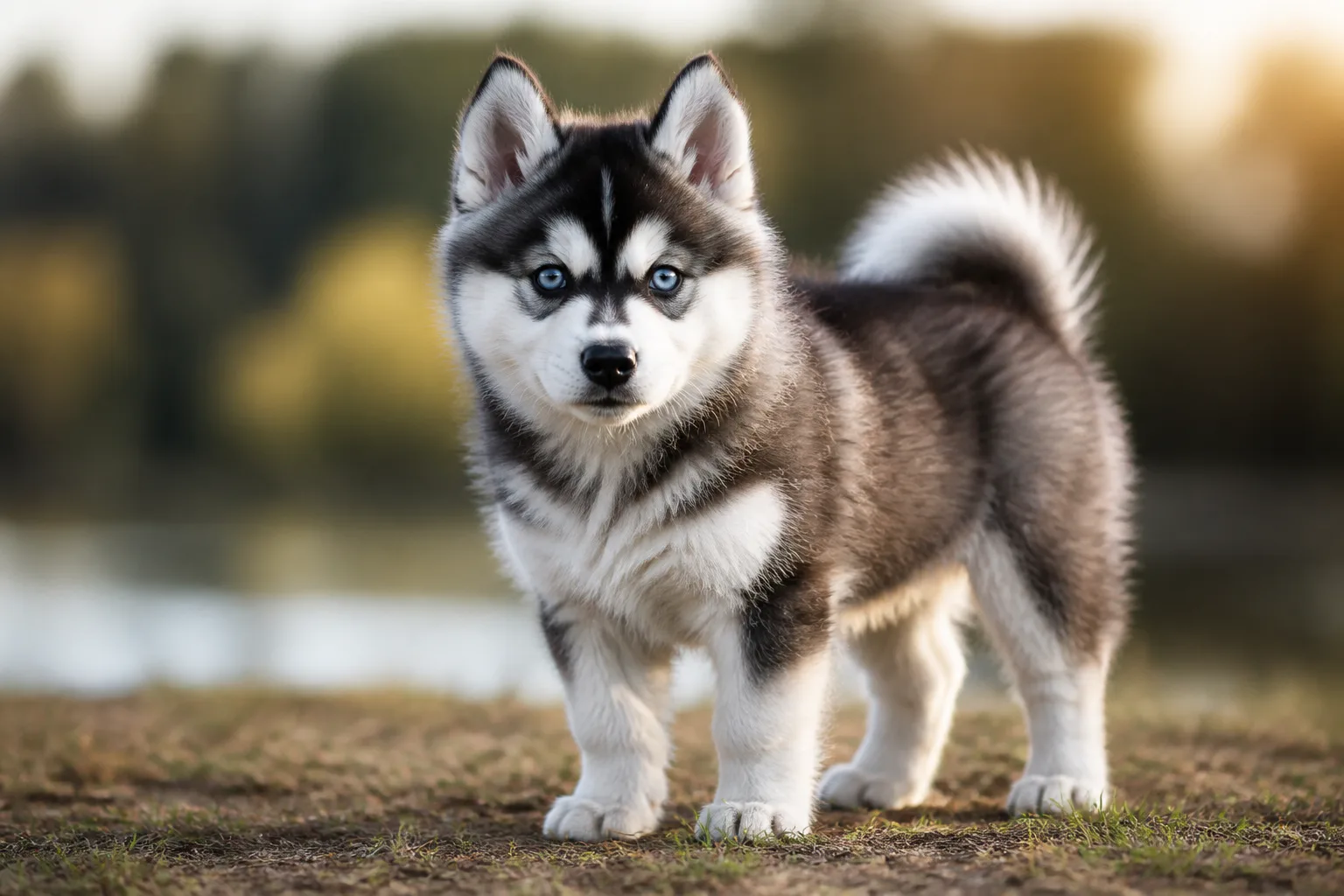
The Pomsky appeals to people who want a compact companion with Husky-like markings and a lively personality. Its small size does not make it a low-effort dog. The mix can inherit the Siberian Husky’s energy and vocal behavior along with the Pomeranian’s alertness and companion-dog traits. Consider exercise, grooming, training, noise and the breeder’s health practices before choosing one.
Pomsky Breed Snapshot
| Attribute | Details |
|---|---|
| Breed type | Siberian Husky and Pomeranian mixed breed |
| Origin | United States; around 2012 |
| Breeding method | Artificial insemination |
| Breed recognition | Not recognized as an AKC purebred |
| Height | 10–18 inches |
| Weight | 15–30 pounds |
| Coat | Dense double coat |
| Coat variations | Standard, plush, wooly, extreme-wooly |
| Eye colors | Brown, blue, amber, green, gray, hazel |
| Distinctive feature | Heterochromia |
| Temperament | Intelligent, playful, affectionate, loyal, social, energetic, vocal, headstrong |
| Exercise needs | Daily walks, play, training, mental enrichment |
| Grooming needs | Regular brushing; daily during heavy shedding |
| Health concerns | Patellar, dental, orthopedic, eye, respiratory, neurologic, cardiac conditions |
| Adult feeding | Two meals daily |
| Puppy feeding | Three or more meals daily |
| Life expectancy | 12–15 years |
What Pomskies Look Like
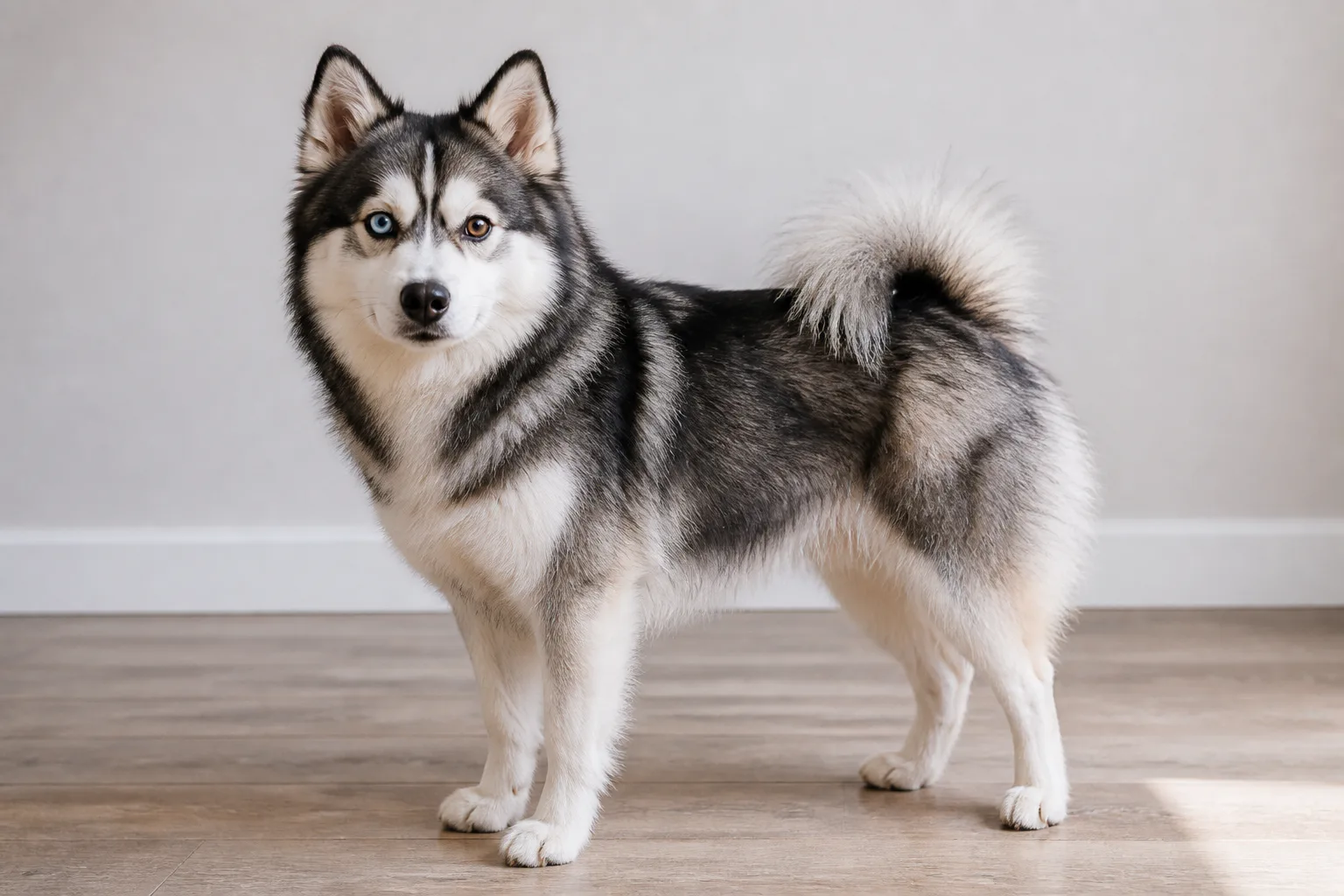
Pomskies do not have one fixed appearance because they are a mixed breed without a universally accepted conformation standard. Adults are usually about 10 to 18 inches tall and weigh 15 to 30 pounds, although individual dogs can fall outside those ranges. In informal breeding and marketing, terms such as “mini” describe smaller Pomskies rather than a separate standardized variety.
A Pomsky may have a compact Pomeranian-like body, a more athletic Husky-influenced frame, or a combination of both. Common features include upright ears, a pointed muzzle and Husky-style facial markings. Coat colors include black and white, silver and white, red and white, chocolate, agouti, sable, wolf gray, white, merle, brindle and piebald.
The coat is a dense double coat that may be standard, plush, wooly or extreme-wooly. Brown and blue eyes are common, while amber, green, gray and hazel eyes also occur. Some Pomskies have heterochromia, meaning their eyes are different colors. Appearance does not reliably predict adult temperament, shedding or final size.
A Pomsky may have the Pomeranian’s compact build along with the Husky’s thicker coat, erect ears and wolf-like expression. These northern features can also mean heavier seasonal shedding and regular coat care. Prospective owners should also consider other traits linked to sled-dog ancestry, including Alaskan Malamute traits.
Pomsky Temperament and Family Life
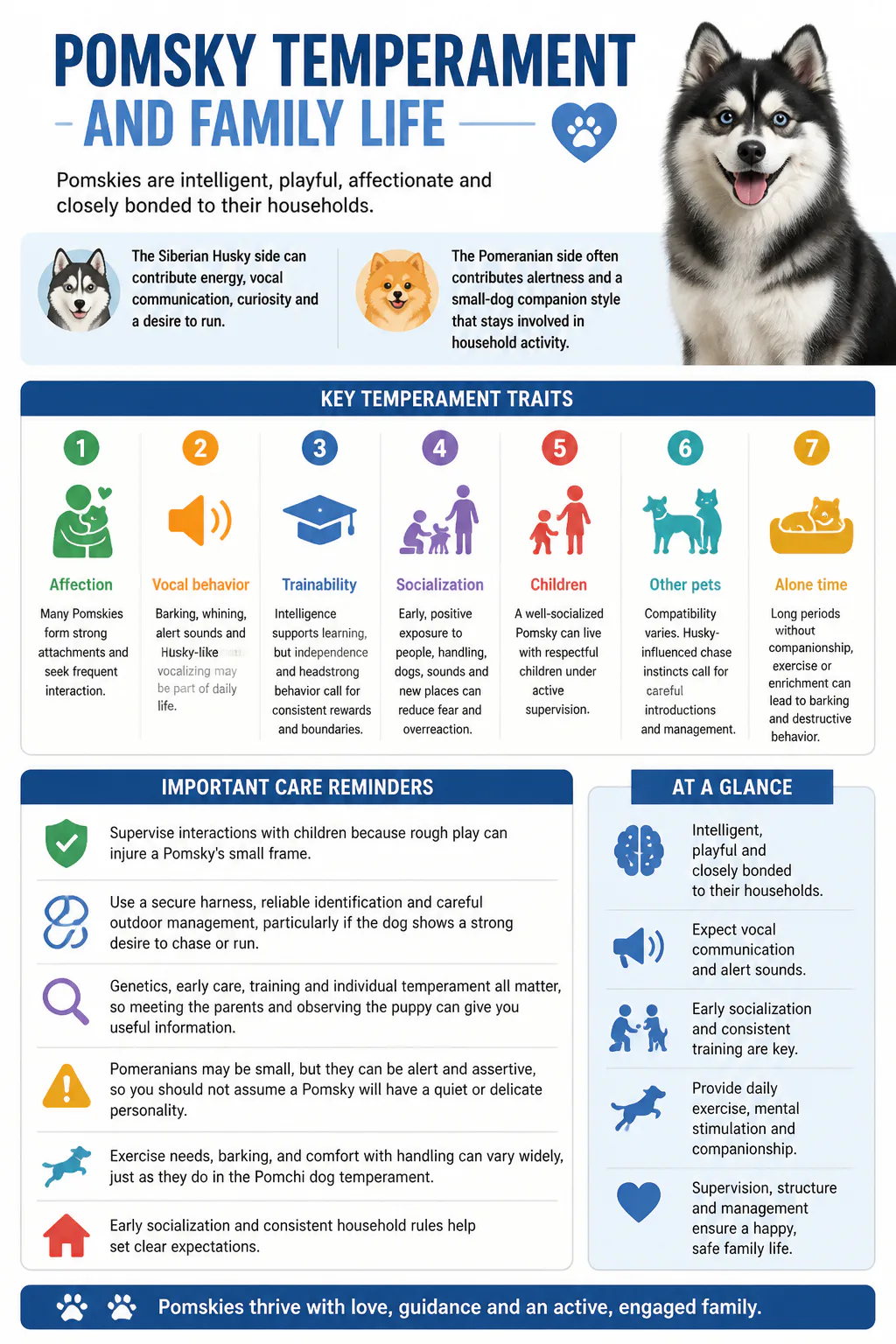
Pomskies are intelligent, playful, affectionate and closely bonded to their households. The Siberian Husky side can contribute energy, vocal communication, curiosity and a desire to run. The Pomeranian side often contributes alertness and a small-dog companion style that stays involved in household activity.
- Affection: Many Pomskies form strong attachments and seek frequent interaction.
- Vocal behavior: Barking, whining, alert sounds and Husky-like vocalizing may be part of daily life.
- Trainability: Intelligence supports learning, but independence and headstrong behavior call for consistent rewards and boundaries.
- Socialization: Early, positive exposure to people, handling, dogs, sounds and new places can reduce fear and overreaction.
- Children: A well-socialized Pomsky can live with respectful children under active supervision.
- Other pets: Compatibility varies. Husky-influenced chase instincts call for careful introductions and management.
- Alone time: Long periods without companionship, exercise or enrichment can lead to barking and destructive behavior.
Supervise interactions with children because rough play can injure a Pomsky’s small frame. Use a secure harness, reliable identification and careful outdoor management, particularly if the dog shows a strong desire to chase or run. Genetics, early care, training and individual temperament all matter, so meeting the parents and observing the puppy can give you useful information.

Pomeranians may be small, but they can be alert and assertive, so you should not assume a Pomsky will have a quiet or delicate personality. Exercise needs, barking, and comfort with handling can vary widely, just as they do in the Pomchi dog temperament. Early socialization and consistent household rules help set clear expectations.
Daily Care, Training, and Exercise
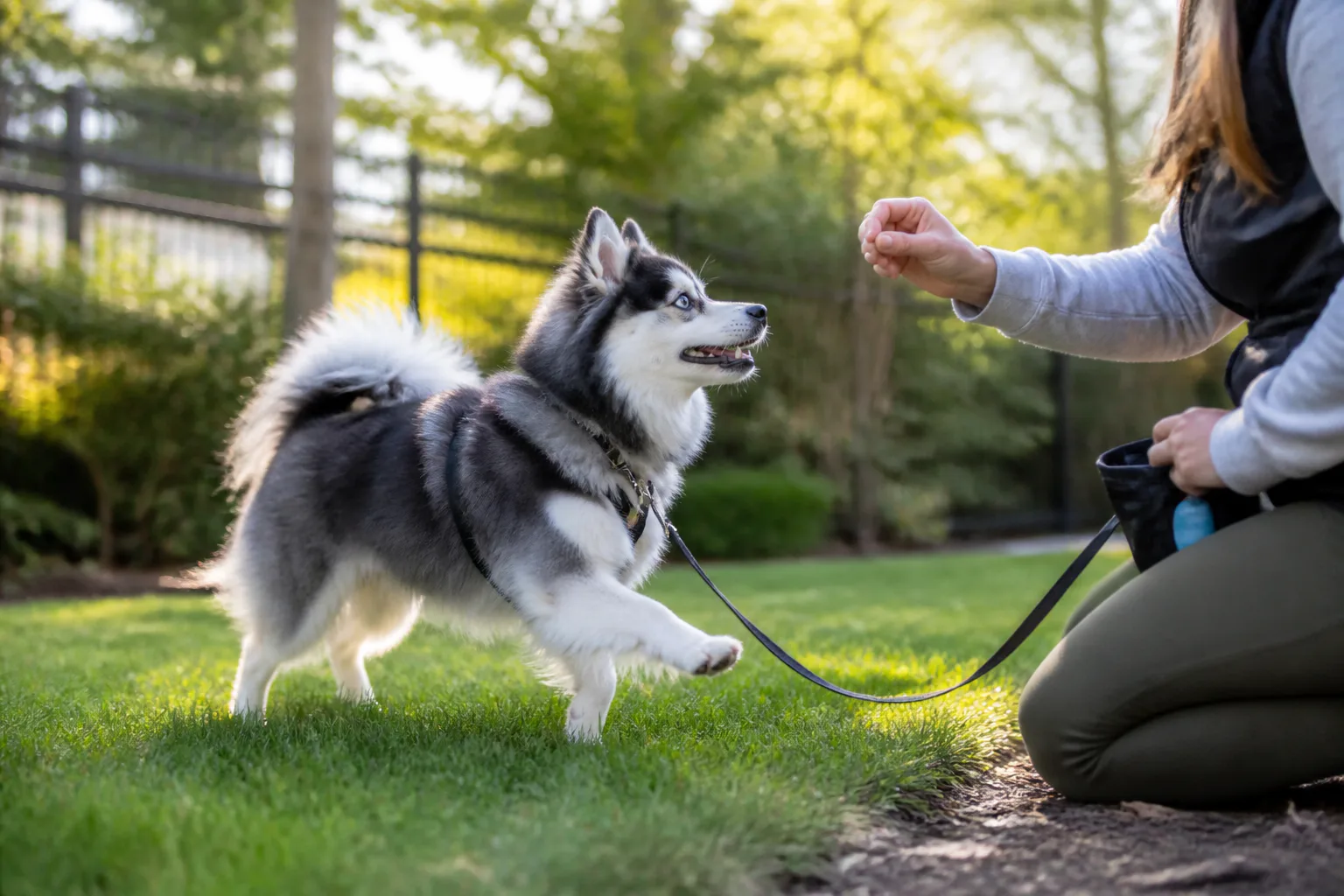
Pomsky care combines an active working-dog background with the upkeep of a fluffy companion coat. Two daily walks suit many adult dogs, but higher-energy Pomskies may need extra play, training, sniffing or other structured activity. Adjust exercise for the dog’s age, health, physical condition and the weather.
- Schedule a morning walk or active outing.
- Use short, reward-based training sessions throughout the day.
- Offer food puzzles, scent games, safe chews or problem-solving toys.
- Add afternoon or evening play and a second walk.
- Brush the coat regularly, increasing the frequency during heavy shedding.
- Check the ears, nails, teeth, paws and skin during routine handling.
- Feed measured portions based on the dog’s age, size, activity and veterinary plan.
Adult Pomskies generally eat two meals per day, while puppies may need three or more. Positive reinforcement is a better choice than harsh corrections, which can increase fear, frustration or resistance. Begin leash skills, recall, calm greetings and alone-time training early. Practice recall outdoors only with a secure leash or inside a fenced area.
Apartment living is possible if the dog receives consistent physical and mental activity. A small home does not remove the need for exercise, and barking can be difficult in close quarters. Regular grooming also matters because loose undercoat can mat behind the ears, around the legs and beneath the collar.
Walks alone may not be enough for a Pomsky with the Husky’s curiosity and the Pomeranian’s alert mind. Short training sessions, scent games, food puzzles and supervised play can help prevent boredom and destructive behavior, much like the enrichment activities recommended for Aussiedoodle dog needs.
Pomsky Health and Lifespan
A Pomsky can live approximately 12 to 15 years. Lifespan depends on inherited traits, breeding quality, preventive care, nutrition, weight control and veterinary treatment. Crossing two breeds does not remove the risk of genetic disease, and a Pomsky can inherit health problems associated with both Siberian Husky and Pomeranian lines.
- Patellar luxation, in which the kneecap shifts out of position
- Dental disease, especially when a small mouth has crowded teeth
- Hip or elbow dysplasia
- Allergies and chronic skin irritation
- Inherited or age-related eye conditions
- Collapsing trachea and other airway concerns
- Epilepsy
- Heart disease
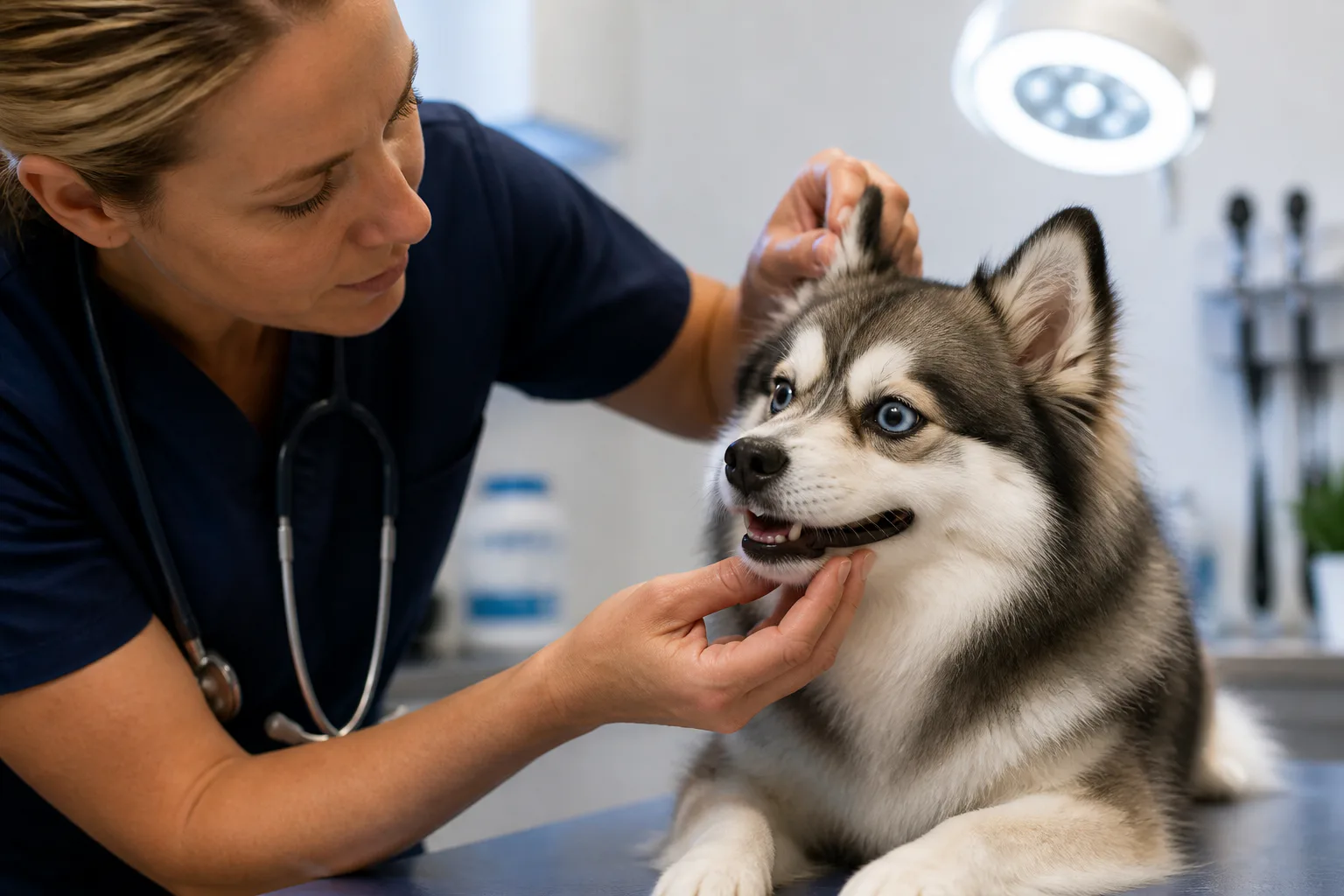
Responsible breeding programs may screen parent dogs with DNA testing and examinations of the eyes, hips, elbows and patellas. Ask for verifiable health records rather than a general claim that the parents are healthy. Dental care, weight monitoring, parasite prevention, vaccinations, annual examinations and prompt attention to limping, breathing changes, seizures, persistent itching or reduced appetite all support long-term health.
Is a Pomsky Right for You?
A Pomsky suits an involved owner who can provide daily activity, regular grooming, positive training, supervision and companionship for many years. Its manageable physical size may suit some homes, but a small body does not mean low exercise or maintenance needs.
- A strong fit: You enjoy daily walks, interactive play, training, brushing and an involved relationship with your dog.
- A possible fit: You live in an apartment but can consistently meet exercise, enrichment and noise-management needs.
- A difficult fit: You work long hours away from home, dislike shedding, need a quiet dog or want a pet that requires little training.
- Extra planning required: You have young children, cats, small pets or another dog and cannot provide careful introductions and supervision.
No breed is universally right or wrong for every household. A Pomsky becomes a poor choice when its inherited energy, vocal behavior, grooming needs or chase drive conflict with the home. Review your schedule, budget, housing rules, experience and tolerance for daily management instead of judging the dog by appearance alone.
A Pomsky can suit an active owner who has time for training, companionship and regular coat care. It may frustrate anyone looking for a low-maintenance lap dog. Compare those expectations with Cavapoo dog characteristics and consider the breed’s exercise needs, grooming, vocal nature and tolerance for being left alone before choosing one based mainly on appearance.
How to Find a Pomsky Responsibly
The source of a Pomsky affects how much you can learn about its lineage, health, early socialization, adult size and temperament. Take time to evaluate the people placing the dog, whether you are buying a puppy or adopting an adult.
- Decide whether a puppy, adolescent or adult dog fits your schedule and experience.
- Ask breeders for parent health testing covering DNA, eyes, hips, elbows and patellas.
- Review veterinary records, contracts, vaccination details and return-to-breeder provisions.
- Meet the puppy with its mother when possible and inspect the living environment.
- Ask how the puppies are handled, socialized, housed, transported and matched with homes.
- Use the American Pomsky Kennel Club for breeder standards, health guidance and Pomsky rehoming information.
- Use Petfinder to search shelters and rescues for Pomskies and similar dogs needing homes.
- Walk away from unusually cheap puppies, pressure to pay immediately or sight-unseen shipping arrangements.
The American Kennel Club recognizes purebred dogs and does not currently recognize the Pomsky as an AKC purebred breed. The International Pomsky Association supports Pomsky registration, pedigree records and efforts to establish breed standards. Registration with a breed organization does not replace independent health testing, veterinary records or direct evaluation of a breeding program.
A responsible breeder should be upfront about which traits you can reasonably expect and which may vary because Pomskies combine two distinct breeds. The same goes for Labradoodle dog breeding: a popular cross should not be presented as automatically healthier, non-shedding or suitable for every household without documented health testing and an honest discussion of possible variation.
Pomsky Ownership Costs
| Cost item | Amount | Timing |
|---|---|---|
| Breeder purchase | $1,500–$5,000 or more | One time |
| Initial setup | $400–$700 | Before arrival |
| Food and routine care | $800–$1,500 | Annual |
| Training | $200–$500 | Early ownership |
Purchase price varies with lineage, breeder practices, location, age, coat traits and the amount of health screening provided. Initial setup commonly includes a crate or pen, harness, leash, identification, food and water bowls, bedding, grooming tools, toys, cleaning supplies and early veterinary care.
The annual food-and-care estimate is not a complete financial ceiling. Emergency treatment, insurance or a savings fund, dental procedures, professional grooming, boarding, daycare, medication and replacement equipment can raise the total. Adoption fees often differ from breeder prices, but an adopted Pomsky still needs an ongoing budget for food, veterinary care, grooming, training and enrichment.

FAQs
Is a Pomsky a good dog?
A Pomsky can be an affectionate, intelligent and playful companion for an owner who accepts daily activity, training, grooming and vocal behavior. It is a poor match for a household seeking a quiet, highly independent or low-maintenance dog.
Are Pomskies high maintenance?
Yes, Pomskies often require significant time and attention. Their dense coats shed, their energy needs daily outlets, and their intelligence and headstrong behavior require consistent training and enrichment.
What is a Pomsky dog?
A Pomsky is a mixed-breed dog created from a Siberian Husky and a Pomeranian. The AKC does not currently recognize it as a purebred breed, and puppies can vary substantially in size, appearance, coat and temperament.
Can Pomskies live in apartments?
They can live in apartments when daily physical activity, mental enrichment, training and companionship are reliable. Barking and shedding need extra consideration in shared-wall housing.
Conclusion
A Pomsky suits an active, attentive household prepared for grooming, vocal behavior, training and long-term veterinary responsibility. Before committing, meet the dog or its parents, review health records, calculate the full ownership budget and choose a responsible breeder or adoption route.