Australian Cattle Dog: Temperament, Exercise, and Care
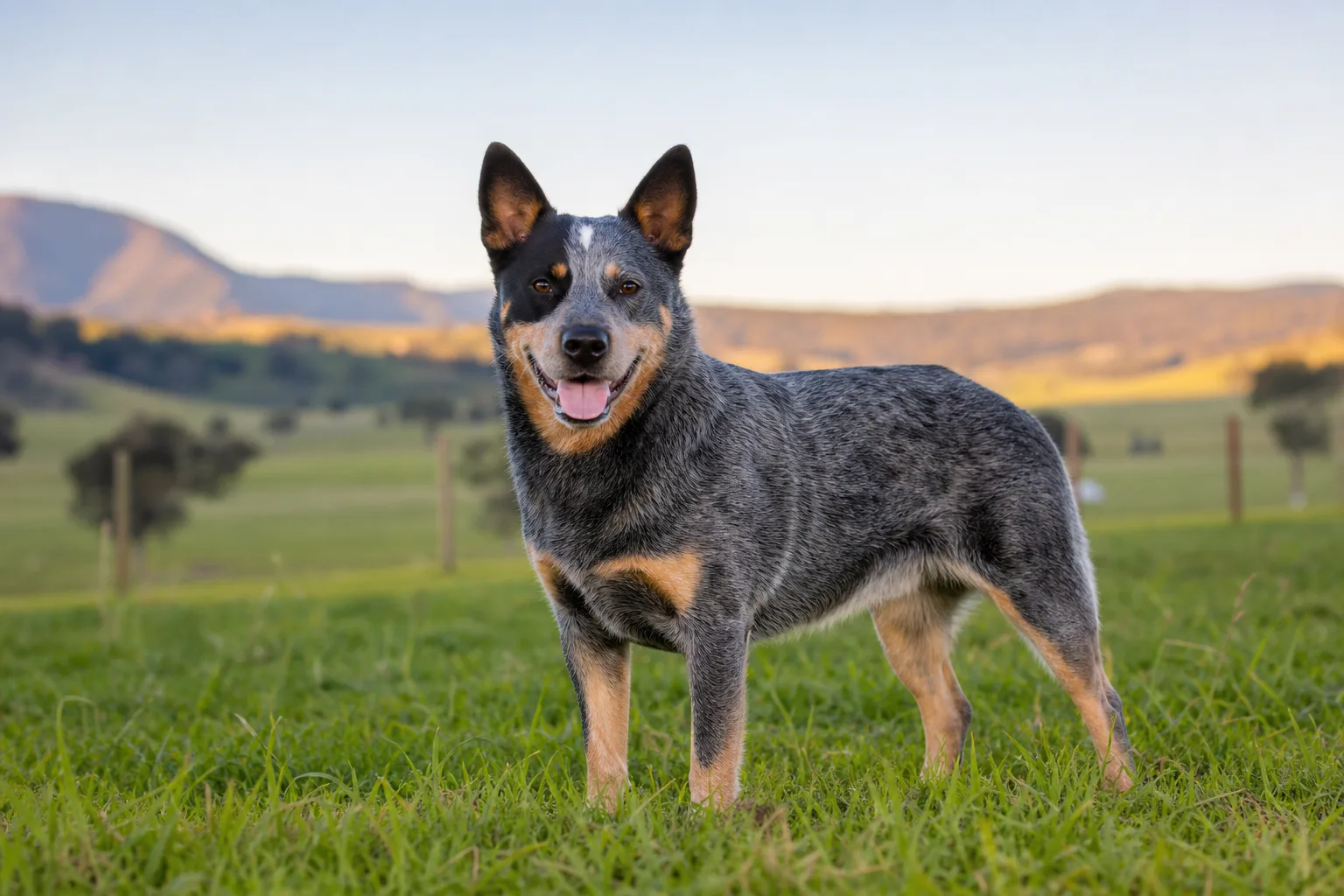
Compact, athletic, and exceptionally alert, the Australian Cattle Dog is built for demanding work rather than a quiet, low-effort household. Also known as the Blue Heeler, Red Heeler, or Queensland Heeler, this intelligent Australian herding breed can be a loyal and rewarding companion for an active owner who provides daily exercise, training, and purposeful engagement.
This guide explains the breed’s temperament, appearance, exercise needs, health considerations, suitability for families, and the practical advantages and challenges of ownership.
Australian Cattle Dog at a glance
| Characteristic | Details |
|---|---|
| Origin | Australia |
| Other names | Blue Heeler, Red Heeler, Queensland Heeler, Cattle Dog |
| Height | Males: 46–51 cm; females: 43–48 cm |
| Weight | Males: 20–30 kg; females: 15–22 kg |
| Coat | Short double coat |
| Recognized colors | Blue, blue mottled, blue speckled, red mottled, and red speckled |
| Working role | Cattle herding, farm work, companionship, and dog sports |
History and working purpose
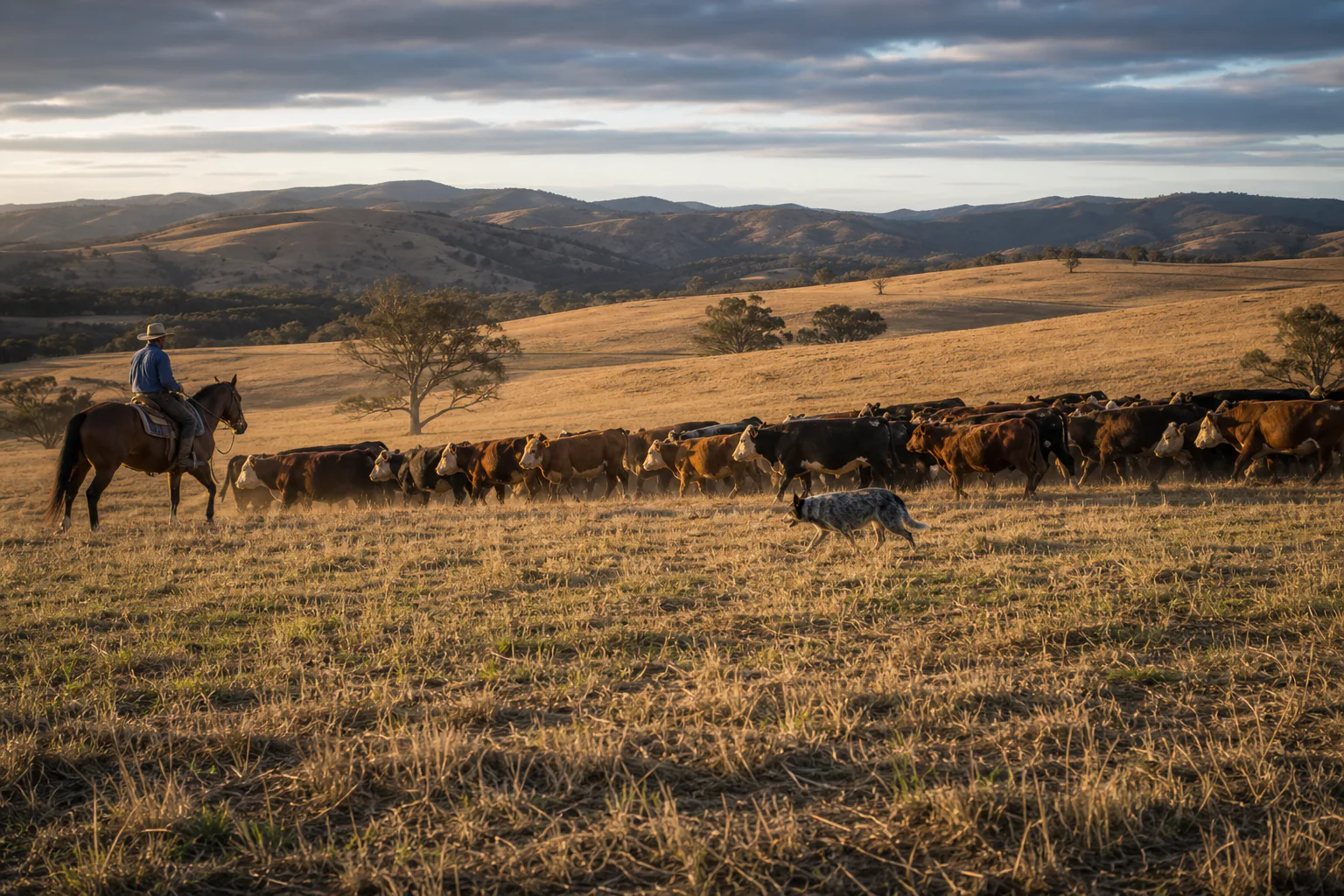
The Australian Cattle Dog was developed in Australia during the 19th century to move cattle across difficult terrain and long distances. Breeders selected dogs with stamina, resilience, intelligence, and enough independence to make quick decisions around large, untamed herds.
The breed is associated with the Dingo and descended in part from early working dogs known as Hall’s Heelers. Its herding method involves moving low to the ground and nipping at cattle heels, which explains the names Blue Heeler and Red Heeler.
Those working origins still shape the modern dog. An Australian Cattle Dog often notices movement quickly, learns patterns rapidly, and looks for a task even when the owner has not provided one.
Appearance and coat
The breed has a compact, muscular build that combines strength with speed. Its short double coat provides protection in outdoor conditions and requires less styling than a long-coated breed, although regular shedding is part of ownership.
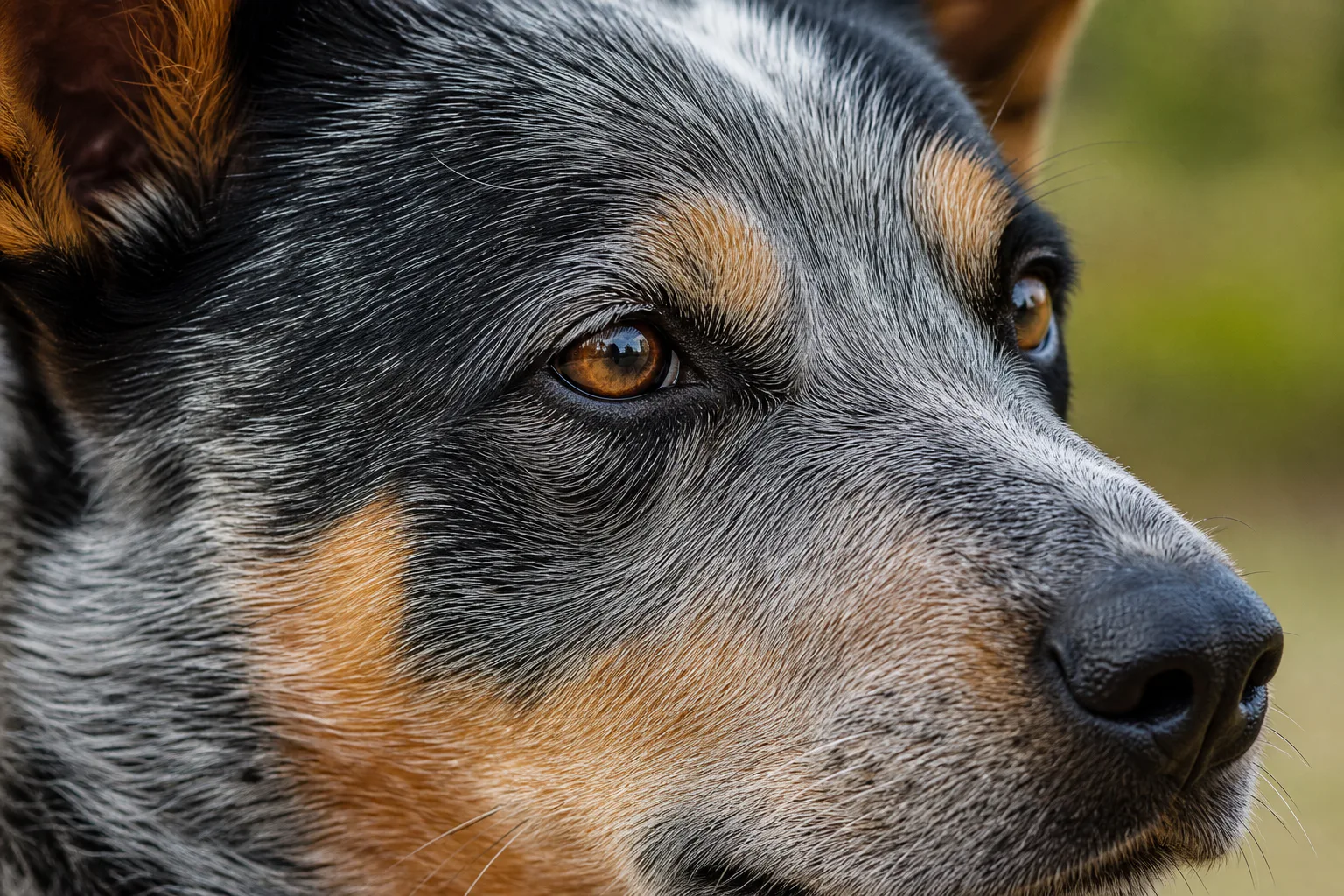
Blue coats can be blue speckled or blue mottled, while red coats can be red speckled or red mottled. Puppies can appear predominantly white at birth, with their adult mottling and speckling becoming clearer as they mature. Solid white is not the standard adult coat color.
Grooming needs
- Brush regularly to remove loose hair.
- Expect heavier shedding during seasonal coat changes.
- Check the ears, paws, and nails as part of routine care.
- Bathe when necessary rather than on a fixed frequent schedule.
The coat is straightforward, but grooming does not replace the need for training and activity. Owners should also arrange routine veterinary examinations and discuss breed-relevant screening with a qualified veterinarian.
Australian Cattle Dog temperament
This breed is intelligent, energetic, watchful, and strongly bonded to its family. It can be reserved or distrustful around unfamiliar people and may protect its owner, home, or territory.
An Australian Cattle Dog is not automatically aggressive, but poor socialization, insufficient exercise, or inconsistent boundaries can make its guarding and herding instincts difficult to manage. Early, positive exposure to people, dogs, handling, traffic, and different environments is important.
Training style
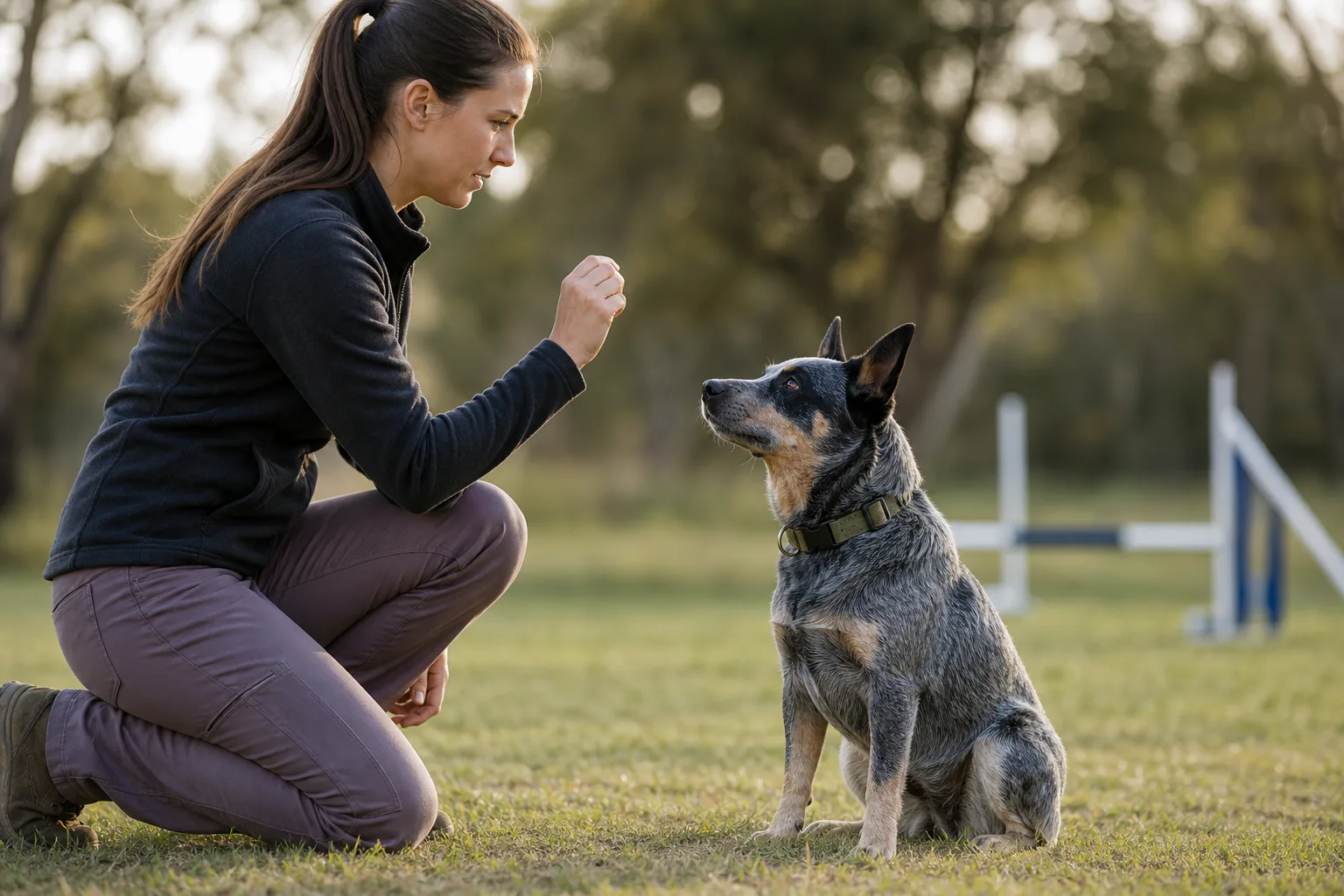
The breed learns quickly, including behaviors an owner did not intend to reinforce. Training works best when it is consistent, reward-based, and mentally engaging rather than repetitive or harsh.
- Teach recall, loose-leash walking, impulse control, and a reliable settle.
- Use short sessions that introduce new challenges gradually.
- Redirect heel-nipping, chasing, and ankle-focused herding into appropriate behaviors.
- Reward calm behavior, not only high-energy performance.
Owners who appreciate independent working breeds may also compare the ACD with a German Shepherd, another intelligent dog that needs structured training and meaningful daily activity.
Exercise and mental stimulation
A brief walk is rarely enough for this breed. Its physical needs are best met through a combination of purposeful walking, running or hiking where appropriate, interactive play, and training that requires concentration.
Mental work can include scent games, obedience exercises, food puzzles, trick training, and controlled dog sports. The goal is not simply to tire the dog out, but to give its intelligence and working instincts suitable outlets.
Signs of under-stimulation
- Destructive chewing or digging
- Persistent barking or pacing
- Chasing people, animals, bicycles, or vehicles
- Herding and nipping at family members
- Restlessness despite physical exercise
Exercise should match the individual dog’s age, conditioning, and health. A young puppy needs controlled activity and plenty of sleep, while an adult can gradually handle more demanding work.
Is it a good house dog?
An Australian Cattle Dog can live successfully in a house, but a home alone does not make it suitable. The dog needs daily outlets, clear rules, training, and enough interaction with its family.
A large yard is helpful but not sufficient. Without supervision and engagement, a yard can simply give an energetic dog more space to dig, patrol, bark, or chase. Apartment living is possible for some individuals when their exercise and training needs are met, but the arrangement requires careful planning.
This breed is usually a better fit for active adults, experienced dog owners, farms, and households interested in training or outdoor activities. It is less suitable for someone seeking a naturally placid dog that is content with short walks and long periods alone.
Family life and other pets
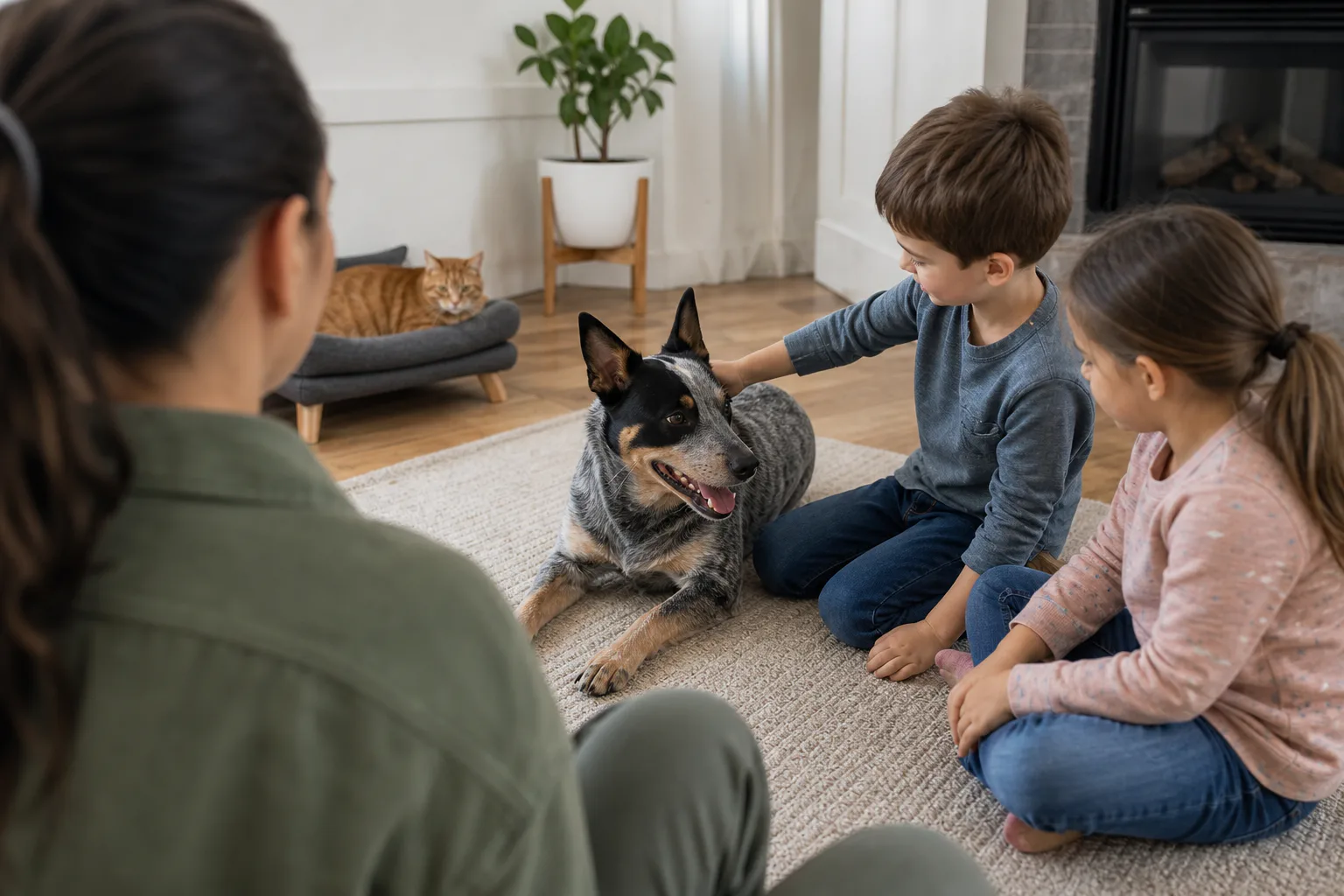
With appropriate socialization and supervision, an Australian Cattle Dog can be affectionate and dependable with its family. Its herding behavior can be frustrating around toddlers, running children, or guests who move unpredictably, so interactions should be managed rather than left to chance.
Some individuals live well with other dogs or cats, while others have strong chasing, controlling, or same-sex conflict tendencies. Introductions should be gradual, and owners should provide separate feeding, resting, and escape areas when needed.
Families comparing working breeds should assess lifestyle before appearance. For example, an Anatolian Shepherd has a different guarding role and physical profile, so breed choice should reflect the owner’s experience, space, and expectations.
Pros and cons
| Pros | Cons |
|---|---|
| Highly intelligent and trainable | Needs substantial daily exercise and mental work |
| Loyal and closely bonded to its owner | Can be reserved with strangers |
| Durable, athletic, and suited to outdoor activities | May herd, chase, nip, or control movement |
| Short coat with manageable grooming needs | Sheds and can become destructive when bored |
| Can excel in obedience and dog sports | Independent problem-solving can challenge inexperienced owners |
Health and lifespan
Australian Cattle Dogs are known for their hardiness, but no breed is free from inherited or age-related health problems. Responsible breeding, appropriate nutrition, weight control, exercise, dental care, and regular veterinary checks all support long-term wellbeing.
Potential concerns discussed for the breed include hearing problems, eye disorders, and orthopedic conditions. A prospective owner should ask breeders for relevant health-test information and review veterinary records before bringing home a puppy.
Many Australian Cattle Dogs live into their early or mid-teens, although individual lifespan varies. Owners can use a dog age calculator as a general way to discuss life stage, but veterinary assessment is more useful for decisions about diet, exercise, and preventive care.

Choosing a puppy or adult dog
An Australian Cattle Dog puppy needs early socialization, basic training, safe exposure to new experiences, and careful management of biting and chasing behaviors. The puppy’s environment should encourage curiosity and calmness rather than constant high-intensity stimulation.
- Meet the mother and, where possible, observe the puppy’s early environment.
- Ask for veterinary records, vaccination information, and identification details.
- Discuss hearing, eye, and orthopedic screening relevant to the breeding line.
- Choose a puppy with a temperament that suits the household.
- Be cautious of sellers who provide little history or pressure buyers to decide immediately.
Adult dogs can be an excellent option because their energy level, social behavior, and training needs are easier to evaluate. Whether buying from a breeder or adopting, the ongoing cost includes food, equipment, training, veterinary care, grooming supplies, and possible insurance or emergency expenses.
Common questions
Are a Blue Heeler and Australian Cattle Dog the same?
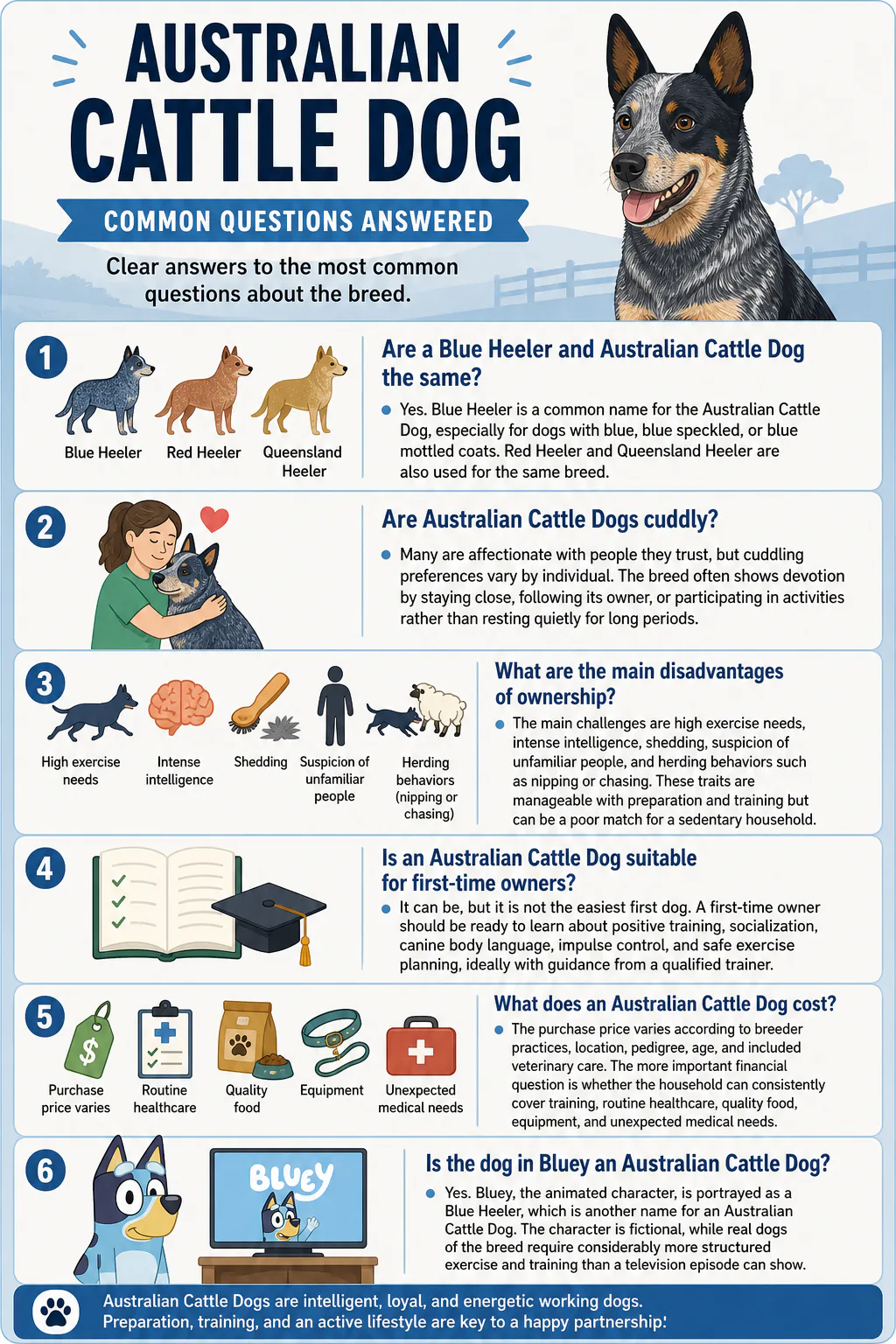
Yes. Blue Heeler is a common name for the Australian Cattle Dog, especially for dogs with blue, blue speckled, or blue mottled coats. Red Heeler and Queensland Heeler are also used for the same breed.
Are Australian Cattle Dogs cuddly?
Many are affectionate with people they trust, but cuddling preferences vary by individual. The breed often shows devotion by staying close, following its owner, or participating in activities rather than resting quietly for long periods.
What are the main disadvantages of ownership?
The main challenges are high exercise needs, intense intelligence, shedding, suspicion of unfamiliar people, and herding behaviors such as nipping or chasing. These traits are manageable with preparation and training but can be a poor match for a sedentary household.
Is an Australian Cattle Dog suitable for first-time owners?
It can be, but it is not the easiest first dog. A first-time owner should be ready to learn about positive training, socialization, canine body language, impulse control, and safe exercise planning, ideally with guidance from a qualified trainer.
What does an Australian Cattle Dog cost?
The purchase price varies according to breeder practices, location, pedigree, age, and included veterinary care. The more important financial question is whether the household can consistently cover training, routine healthcare, quality food, equipment, and unexpected medical needs.
Is the dog in Bluey an Australian Cattle Dog?
Yes. Bluey, the animated character, is portrayed as a Blue Heeler, which is another name for an Australian Cattle Dog. The character is fictional, while real dogs of the breed require considerably more structured exercise and training than a television episode can show.
Is this breed right for you?
Choose an Australian Cattle Dog if you want an intelligent, athletic partner and can provide daily activity, consistent training, early socialization, and clear management around children, visitors, and other animals.
If your priority is a calm dog that needs little exercise or spends much of the day alone, another breed may be a better choice. The best next step is to meet well-socialized adult dogs, speak with experienced owners, and assess whether the breed’s working instincts fit your everyday routine.